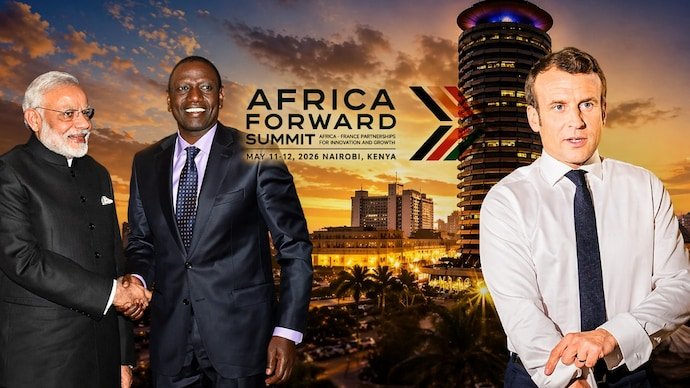
- The Africa Forward Summit: What Is Really at Stake?
- India-Africa Relations: Strong but Underleveraged
- Critical Minerals: The Silent Driver of India’s Interest
- Renewable Energy: A Natural Partnership Waiting to Scale
- Geopolitics: The Battle for Influence in Africa
- Comparison: India vs Other Global Players in Africa
- The Cost of Absence: More Than Symbolism
- The Unique Angle: India as a Bridge Power
- Future Outlook: A Defining Test of Strategic Intent
- Conclusion: A Moment India Cannot Afford to Miss
A Strategic Invitation at a Defining Moment
On May 11–12, 2026, Nairobi will host the Africa Forward Summit, a high-stakes gathering co-led by France and Kenya that could influence the trajectory of Africa-Europe relations for years to come. With heads of state, policymakers, and global business leaders expected to attend, the summit is more than a diplomatic event it is a platform where economic alliances, resource strategies, and geopolitical alignments will be negotiated.
India has been invited. Yet, as of now, New Delhi has not confirmed its participation.
This silence raises a critical question: Can India afford to miss a summit that directly intersects with its economic ambitions, Energy Security, and global positioning?
Understanding the significance of this moment requires looking beyond the invitation to the deeper strategic stakes involved.
The Africa Forward Summit: What Is Really at Stake?
The summit is designed as a deal-making platform, not a ceremonial gathering. Its agenda spans key sectors shaping the global economy:
- Energy transition and renewables
- Artificial intelligence and digital infrastructure
- Agriculture and food security
- Healthcare systems
- Blue economy and maritime resources
- Industrialisation and finance
Importantly, the outcomes of these discussions are expected to feed into the G7 Summit later in June, amplifying their global relevance.
Insight: Decisions made in Nairobi could influence policies and partnerships at the highest levels of global governance.
India-Africa Relations: Strong but Underleveraged
India already has a substantial presence in Africa, built over decades of trade, development cooperation, and diaspora connections.
Key Indicators of Engagement
| Area | India’s Presence in Africa |
|---|---|
| Trade | $100+ billion annually |
| Development Projects | 200+ projects across 40+ countries |
| Lines of Credit | Over $12 billion |
| Investment | $70+ billion cumulative |
| Diaspora | 3 million+ people |
Despite these numbers, India’s approach has often been described as reactive rather than strategic.
Long gaps between major summits and limited high-level engagement have created a perception gap where presence on paper does not always translate into influence on the ground.
This is precisely where the Africa Forward Summit becomes crucial.
Critical Minerals: The Silent Driver of India’s Interest
One of the most compelling reasons for India to engage deeply with Africa lies beneath the surface literally.
Africa holds an estimated 30% of the world’s critical mineral reserves, including:
- Lithium (essential for batteries)
- Cobalt (used in electric vehicles)
- Copper (key for electrification)
- Rare earth elements (vital for semiconductors and electronics)
These resources are central to India’s ambitions in:
- Electric mobility
- renewable energy
- Semiconductor manufacturing
The Challenge: china already dominates large parts of Africa’s mining and processing ecosystem.
The Opportunity: The summit provides India a platform to position itself as an alternative partner offering transparent investment, technology sharing, and long-term collaboration.
Unique Insight: This is not just about resource access it’s about shaping future supply chains before they become locked in.
Renewable Energy: A Natural Partnership Waiting to Scale
Africa’s renewable energy potential is vast, but largely untapped.
- Accounts for nearly 60% of global solar potential
- Yet contributes only a small fraction to electricity generation
This gap presents a unique opportunity for India.
Over the past decade, India has:
- Rapidly scaled solar energy capacity
- Built cost-effective renewable infrastructure
- Led initiatives like the International Solar Alliance
Why It Matters:
Africa needs scalable, affordable models not just capital. India’s experience positions it as a partner that understands both constraints and solutions.
Prediction: Countries that help build Africa’s renewable backbone today will shape its economic alignment for decades.
Geopolitics: The Battle for Influence in Africa
The summit also reflects a broader geopolitical shift.
Major global players are recalibrating their strategies:
- China: Expanding infrastructure and mining dominance
- Europe: Seeking balanced partnerships and reduced dependency
- United States: Reassessing global commitments
In this evolving landscape, India occupies a unique position:
- A leading voice of the Global South
- A democratic alternative to authoritarian models
- A technology-driven economy
But influence depends on presence.
Skipping such platforms risks ceding strategic ground to competitors.
Comparison: India vs Other Global Players in Africa
| Country/Region | Approach in Africa | Strength |
|---|---|---|
| China | Infrastructure & mining investments | Scale and speed |
| Europe | Policy-driven partnerships | Institutional influence |
| United States | Selective engagement | Technology and finance |
| India | Development partnership model | Trust and shared history |
Insight: India’s biggest advantage is trust but without active engagement, that advantage can erode.
The Cost of Absence: More Than Symbolism
diplomacy is often about signals as much as substance.
If India does not participate, the implications could include:
- Reduced visibility in key negotiations
- Missed bilateral opportunities with African leaders
- Weakened influence in shaping global agendas
In contrast, participation would allow India to:
- Reinforce its commitment to Africa
- Align its priorities with global discussions
- Strengthen its role as a bridge between developed and developing worlds
Key Point: In global diplomacy, being absent often speaks louder than being present.
The Unique Angle: India as a Bridge Power
What sets India apart is its ability to operate across multiple worlds:
- Global South leadership (BRICS, developing nations)
- Engagement with Western institutions (G7 partnerships)
- Technological innovation (digital public infrastructure)
The Africa Forward Summit offers a rare stage where all these identities can converge.
This is not just about Africa it’s about India’s global role.
Future Outlook: A Defining Test of Strategic Intent
The coming weeks will reveal whether India chooses to engage actively or remain on the sidelines.
Possible scenarios:
- Active Participation: Strengthened partnerships, increased influence
- Limited Engagement: Symbolic presence but reduced impact
- Absence: Strategic vacuum filled by competitors
Prediction: As global competition for resources and influence intensifies, such summits will become increasingly decisive not optional.
Conclusion: A Moment India Cannot Afford to Miss
The Africa Forward Summit 2026 is more than a diplomatic gathering it is a convergence point for economic strategy, energy security, and geopolitical influence.
India has the credentials, the relationships, and the strategic interest to play a central role.
But in International Relations, intent must be matched by presence.
The invitation is on the table. The stakes are clear.
The real question is whether India will step into the room where Africa’s future partnerships are being shaped or watch from the outside as others define it.
For breaking news and live news updates, like us on Facebook or follow us on Twitter and Instagram. Read more on Latest World on thefoxdaily.com.






COMMENTS 0