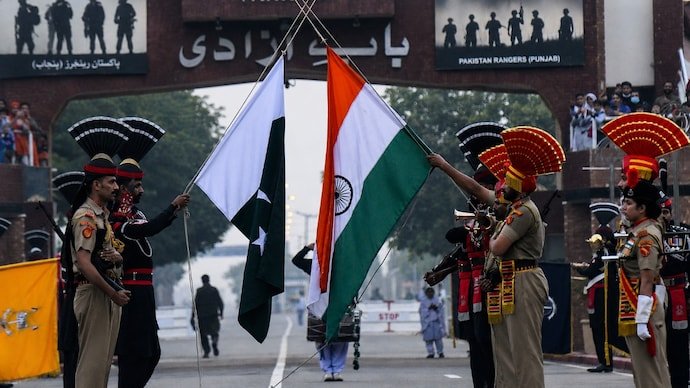
Fresh reports claiming that India and Pakistan resumed unofficial diplomatic engagement in Colombo have generated significant attention at a time when relations between the two nuclear-armed neighbours remain at one of their lowest points in decades. Some media reports suggested that retired military officials, former diplomats and even serving government representatives from both countries participated in what was described as a Track-2 or even Track-1.5 dialogue on the sidelines of an international security conference in Sri Lanka.
However, key participants have strongly rejected the characterization of the meeting as a dedicated India-Pakistan dialogue, arguing that it was merely part of a long-standing multilateral security forum attended by delegates from several countries. The conflicting narratives have once again highlighted how unofficial Diplomacy often becomes the subject of speculation, especially when formal diplomatic channels remain virtually frozen.
Understanding what actually happened requires separating verified facts from media interpretations while also examining the broader role of Track-2 diplomacy in managing conflicts between rival nations.
What Triggered the Speculation?
The controversy emerged after reports claimed that Indian and Pakistani delegates met during the International Institute for Strategic Studies (IISS) South Asia Dialogue held in Colombo, Sri Lanka. Some publications described the interaction as a fresh attempt to revive backchannel communication following months of heightened tensions between the two countries.
According to these reports, retired military officers, former diplomats, strategic affairs experts and political figures from both sides attended discussions alongside representatives from several other countries.
The speculation intensified because India and Pakistan currently have almost no active political engagement beyond essential military communication mechanisms. Any suggestion of renewed dialogue therefore immediately attracts regional and international attention.
The Background: Why India-Pakistan Relations Remain Frozen
Relations between New Delhi and Islamabad have steadily deteriorated over the past several years, with multiple developments deepening mistrust.
The diplomatic freeze intensified after India revoked the special constitutional status of Jammu and Kashmir in August 2019. Pakistan responded by downgrading diplomatic relations and suspending bilateral trade.
Tensions escalated further following the April 2025 terrorist attack in Pahalgam, Jammu and Kashmir, in which 26 civilians lost their lives. India blamed Pakistan-backed terrorists for the attack and launched Operation Sindoor in May 2025, targeting terrorist infrastructure across Pakistan and Pakistan-occupied Kashmir.
Since then, bilateral engagement has remained extremely limited, with the hotline between the Directors General of Military Operations (DGMOs) serving as one of the few remaining official communication channels.
Timeline of Recent India-Pakistan Relations
| Year | Major Development |
|---|---|
| 2019 | India revokes Article 370; Pakistan downgrades diplomatic relations. |
| 2025 (April) | Terrorist attack in Pahalgam kills 26 civilians. |
| 2025 (May) | India launches Operation Sindoor targeting terror infrastructure. |
| 2025 | Bilateral ties remain largely frozen except military hotline communication. |
| 2026 | Reports emerge regarding alleged Track-2 interactions in Colombo. |
What Is Track-1 Diplomacy?
Track-1 diplomacy refers to official government-to-government negotiations conducted by authorized representatives such as heads of government, foreign ministers, diplomats and senior officials.
These negotiations are formal and carry legal and political authority. Agreements reached during Track-1 diplomacy can result in treaties, ceasefires, trade agreements or policy changes.
Currently, there is no publicly acknowledged Track-1 dialogue taking place between India and Pakistan.
Understanding Track-1.5 Diplomacy
Track-1.5 diplomacy occupies the middle ground between official and unofficial engagement.
These discussions typically include both serving government officials and non-government experts, often under the sponsorship of academic institutions or international think tanks.
The presence of serving officials allows governments to test ideas informally without committing themselves to official policy positions.
Because of this hybrid nature, Track-1.5 dialogues can sometimes prepare the ground for future formal negotiations if political conditions improve.
What Is Track-2 Diplomacy?
Track-2 diplomacy is entirely unofficial.
Participants generally include retired diplomats, former military officers, academics, policy researchers, journalists and civil society representatives.
Their objective is not to negotiate agreements but to:
- Maintain communication during periods of political tension.
- Build mutual understanding.
- Reduce misunderstandings.
- Explore possible confidence-building measures.
- Generate ideas that governments may later consider.
Because participants act in their personal capacities rather than as government representatives, Track-2 discussions do not produce binding outcomes.
Why the Colombo Meeting Became Controversial
The controversy stems from differing interpretations of the same event.
Some reports suggested that serving Pakistani officials attended discussions alongside retired Indian officials, leading to claims that the interaction qualified as Track-1.5 diplomacy.
Other reports described the meeting simply as a Track-2 interaction among former officials and strategic experts.
However, Indian participant Ram Madhav publicly rejected both descriptions, stating that the conference was a broader regional security forum attended by delegates from multiple countries and should not be portrayed as a special bilateral India-Pakistan initiative.
What Participants Have Said
Ram Madhav dismissed reports describing the event as Track-2 diplomacy, calling such portrayals misleading.
According to his clarification, the Colombo conference brought together scholars, policy experts and officials from several countries including India, Pakistan, Sri Lanka, the United States, Afghanistan and the United Kingdom.
His position suggests that while Indian and Pakistani delegates may have been present at the same conference, that alone does not automatically constitute a structured bilateral dialogue.
Similarly, reports quoting Pakistani officials indicated that there was no official confirmation of any dedicated Track-1.5 negotiations.
Why Multilateral Conferences Often Create Misunderstandings
International security conferences regularly gather participants from countries that otherwise have strained diplomatic relations.
Delegates frequently share conference panels, participate in working groups, attend dinners and exchange views during informal networking sessions.
Such interactions are common features of multilateral diplomacy and should not necessarily be interpreted as the launch of a new diplomatic process.
This distinction is important because simply attending the same conference differs significantly from conducting organized bilateral negotiations.
Operation Sindoor Changed the Diplomatic Landscape
The military confrontation following Operation Sindoor fundamentally altered the diplomatic environment between India and Pakistan.
Beyond military operations, the crisis also affected water-sharing arrangements, trade, aviation routes and broader political engagement.
India’s decision to keep the Indus Waters Treaty in abeyance significantly increased pressure on Pakistan, whose agriculture and hydroelectric generation rely heavily on the Indus river system.
This broader context explains why even reports of informal dialogue attract intense scrutiny.
Comparison: Track-1 vs Track-1.5 vs Track-2 Diplomacy
| Feature | Track-1 | Track-1.5 | Track-2 |
|---|---|---|---|
| Participants | Serving government officials | Officials and independent experts | Retired officials and civil society |
| Official Status | Fully official | Partially official | Unofficial |
| Can Sign Agreements? | Yes | No | No |
| Main Purpose | Negotiation | Policy exploration | Confidence building |
The Strategic Value of Unofficial Dialogue
Even when governments are unwilling to negotiate directly, unofficial communication channels often remain valuable.
Track-2 diplomacy allows experienced former officials to discuss sensitive issues that serving governments may be politically unable to address publicly.
These conversations can reduce misunderstandings during crises and sometimes help identify areas where future cooperation may become possible.
However, Track-2 discussions should not be mistaken for policy decisions or diplomatic breakthroughs.
National Security Experts Urge Caution
Several strategic analysts have questioned whether the Colombo meeting deserved the attention it received.
They argue that similar international conferences have included Indian and Pakistani participants for many years without being portrayed as new diplomatic initiatives.
According to this view, describing every multilateral interaction as a revival of India-Pakistan dialogue risks overstating routine conference participation.
The key distinction lies between delegates attending the same event and governments deliberately opening a new channel of communication.
Why India Is Proceeding Carefully
New Delhi has consistently maintained that meaningful bilateral engagement depends on a secure environment free from cross-border terrorism.
This policy has shaped India’s diplomatic approach since relations deteriorated following multiple security incidents.
As a result, any future official dialogue is likely to depend not only on political willingness but also on measurable improvements in the overall security environment.
Could Informal Contacts Prepare the Ground for Future Talks?
History shows that unofficial contacts have occasionally preceded major diplomatic breakthroughs in various parts of the world.
Academic forums, think tank discussions and retired officials sometimes help maintain communication during periods when formal diplomacy becomes politically impossible.
Nevertheless, there is currently no public evidence that the Colombo meeting represents the beginning of a structured peace process or official negotiations between India and Pakistan.
Until governments themselves announce a change in diplomatic policy, claims of renewed dialogue should be viewed with caution.
The Bigger Picture: Dialogue and Deterrence Can Exist Together
An important aspect often overlooked is that countries can simultaneously maintain strong military deterrence while allowing limited unofficial exchanges through academic or strategic forums.
Participation in multilateral conferences does not necessarily indicate a shift in national policy. Governments often encourage experts to engage internationally while maintaining firm official positions on bilateral disputes.
This distinction helps explain why countries with strained relations continue to appear together at global conferences without signaling normalization.
Future Outlook
In the near term, India and Pakistan are expected to continue maintaining minimal official engagement while focusing on security concerns and regional stability.
Track-2 interactions, if they occur, may continue through international think tanks and academic conferences, but these should not be interpreted as substitutes for formal diplomacy.
Meaningful improvement in bilateral relations would require political decisions at the highest levels, supported by sustained confidence-building measures and an environment conducive to dialogue.
Conclusion
Reports describing the Colombo meeting as a fresh India-Pakistan Track-2 or Track-1.5 dialogue have generated considerable interest, but the available evidence presents a more complex picture. While Indian and Pakistani delegates attended the same international security conference, key participants have denied that it was a dedicated bilateral diplomatic initiative.
The episode highlights the importance of distinguishing between routine multilateral engagement and genuine diplomatic negotiations. Track-2 diplomacy remains an important tool for maintaining communication during periods of political tension, but it does not carry the authority of official government talks.
For now, India-Pakistan relations remain largely defined by strategic caution, limited official communication and unresolved security concerns. Unless both governments publicly decide to reopen formal dialogue, interactions at international conferences should be viewed primarily as part of broader multilateral engagement rather than evidence of a major diplomatic breakthrough.
For breaking news and live news updates, like us on Facebook or follow us on Twitter and Instagram. Read more on Latest India on thefoxdaily.com.




COMMENTS 0