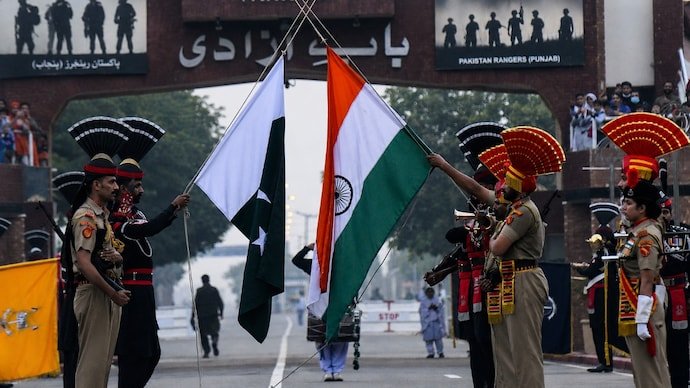
As geopolitical tensions reshape international Diplomacy, countries are increasingly being asked to define their roles in conflict resolution. During a discussion at the World Peace Forum in Beijing, India‘s Ambassador to China, Vikram Doraiswami, made it clear that New Delhi does not view mediation in the current West Asia conflict as serving its strategic interests. His remarks also rejected comparisons between India and Pakistan, arguing that the two nations occupy fundamentally different positions in the global political and economic landscape.
The statement comes at a time when conflicts in West Asia and Eastern Europe continue to test the international community’s ability to promote peace while balancing national interests. India’s carefully calibrated response reflects a broader Foreign Policy doctrine that prioritizes strategic autonomy, economic partnerships, and constructive diplomacy over high-profile mediation efforts.
What Did Vikram Doraiswami Say?
Addressing delegates at Beijing’s World Peace Forum, Ambassador Vikram Doraiswami responded to a question regarding India’s potential role in mediating the ongoing West Asia conflict and comparisons with Pakistan’s diplomatic outreach.
He stated that comparing India with Pakistan was inappropriate, arguing that countries should be evaluated based on their overall contribution to the international system, economic strength, and global engagement rather than isolated diplomatic initiatives.
Doraiswami emphasized that while India remains committed to supporting global peace and security, mediation is not an obligation. Instead, every country must determine whether assuming such a role advances its own national interests.
India’s Foreign Policy: Strategic Autonomy First
One of the defining features of India’s modern foreign policy is strategic autonomy the principle of making independent decisions without aligning exclusively with any geopolitical bloc.
This approach enables India to:
- Maintain relations with multiple global powers simultaneously.
- Promote dialogue without becoming directly involved in every conflict.
- Protect national economic and security interests.
- Retain flexibility in rapidly changing geopolitical environments.
- Expand diplomatic partnerships across diverse regions.
Rather than positioning itself as a universal mediator, India increasingly focuses on creating conditions that support stability while safeguarding its own strategic priorities.
Why India Rejected the Comparison with Pakistan
Ambassador Doraiswami’s remarks highlighted a broader distinction between the two neighboring countries.
He pointed to India’s extensive integration with the Global Economy, deep trade Relationships, expanding diplomatic partnerships, and growing international influence.
The implication was that international standing is determined by a country’s overall contributions across multiple sectors, including:
- Economic performance.
- Diplomatic engagement.
- Technological development.
- Security cooperation.
- Participation in global governance.
From New Delhi’s perspective, comparisons based solely on mediation initiatives overlook these broader dimensions of international influence.
India’s Position on the West Asia Conflict
India has consistently advocated for dialogue, regional stability, and peaceful resolution of international disputes.
Its policy toward West Asia reflects several long-standing priorities:
- Maintaining balanced relations with regional partners.
- Protecting Indian citizens living and working in the region.
- Ensuring uninterrupted energy supplies.
- Supporting freedom of international trade routes.
- Preventing wider regional instability.
These considerations often shape India’s diplomatic decisions more than symbolic leadership roles.
The Importance of West Asia for India
West Asia occupies a central place in India’s foreign policy due to its economic and strategic significance.
Key reasons include:
- Energy imports essential to India’s economy.
- Large Indian diaspora across Gulf countries.
- Expanding trade partnerships.
- Maritime security in the Indian Ocean region.
- Counterterrorism cooperation.
Given these interests, India generally seeks stability while avoiding actions that could complicate relationships with multiple regional stakeholders.
India and China’s Similar Approach to Recent Crises
One notable aspect of Doraiswami’s remarks was his observation that India’s position on recent conflicts including those in West Asia and Eastern Europe has been broadly similar to China’s.
Both countries have generally emphasized:
- Dialogue over escalation.
- Respect for sovereignty.
- Diplomatic engagement.
- Political solutions.
- Regional stability.
Although India and China differ on several bilateral issues, they occasionally share similar positions on broader questions of international conflict management.
Why Countries Choose Not to Mediate
Serving as a mediator in international conflicts requires significant diplomatic resources and carries substantial risks.
Governments typically consider several factors before assuming such a role:
- Likelihood of success.
- Acceptance by all parties.
- Potential impact on bilateral relationships.
- Domestic political implications.
- Long-term strategic interests.
If these conditions are not favorable, countries may choose to support peace through other diplomatic channels instead of direct mediation.
Comparison: Mediation vs. Diplomatic Support
| Direct Mediation | Diplomatic Support |
|---|---|
| Acts as an intermediary between parties. | Encourages dialogue without leading negotiations. |
| Requires consent from all sides. | Can support international peace initiatives. |
| Higher diplomatic responsibility. | Greater policy flexibility. |
| May affect bilateral relations. | Allows balanced engagement with multiple partners. |
India’s Expanding Global Role
Over the past decade, India’s international profile has grown significantly through expanding economic partnerships, participation in multilateral institutions, and leadership in emerging global initiatives.
India today plays an active role in discussions involving:
- Climate change.
- Global health.
- Digital governance.
- Supply chain resilience.
- Maritime security.
- Economic development.
This broader engagement reinforces New Delhi’s view that international influence extends well beyond conflict mediation.
Expert Insight: The Evolution of Indian Diplomacy
India’s diplomatic strategy has increasingly shifted toward issue-based partnerships rather than bloc politics. Instead of taking identical positions across every international issue, New Delhi evaluates each situation independently, balancing strategic, economic, and security considerations.
This approach allows India to maintain productive relationships with countries that may themselves have competing interests, reinforcing its image as an independent global actor rather than a traditional alliance partner.
Real-World Implications
Doraiswami’s comments offer important signals to the international community.
They suggest that India intends to:
- Continue supporting international peace efforts.
- Prioritize strategic autonomy.
- Expand economic diplomacy.
- Avoid unnecessary geopolitical entanglements.
- Make foreign policy decisions based on national interest.
For businesses, investors, and diplomatic partners, this reinforces the predictability of India’s long-term strategic approach.
Future Outlook
As geopolitical competition intensifies, India is likely to continue strengthening its role as a major economic and diplomatic power while carefully selecting areas where it can make meaningful contributions. Rather than seeking prominence through mediation alone, New Delhi appears focused on expanding its influence through economic growth, multilateral cooperation, regional connectivity, and constructive engagement with major global powers.
Future crises may still see India facilitating dialogue where its interests align, but any such involvement is expected to remain guided by strategic calculations rather than international pressure or symbolic expectations.
Conclusion
Vikram Doraiswami’s remarks at the World Peace Forum reflect the maturity and confidence of India’s evolving foreign policy. By rejecting comparisons with Pakistan and emphasizing strategic autonomy, India signaled that its international role will continue to be defined by national interest, economic integration, and responsible global engagement.
While New Delhi remains committed to supporting peace and international security, it has made clear that mediation is only one of many diplomatic tools not an obligation. As India’s global influence continues to expand, its carefully balanced approach is likely to remain a defining feature of its foreign policy in an increasingly complex international landscape.
For breaking news and live news updates, like us on Facebook or follow us on Twitter and Instagram. Read more on Latest World on thefoxdaily.com.




COMMENTS 0