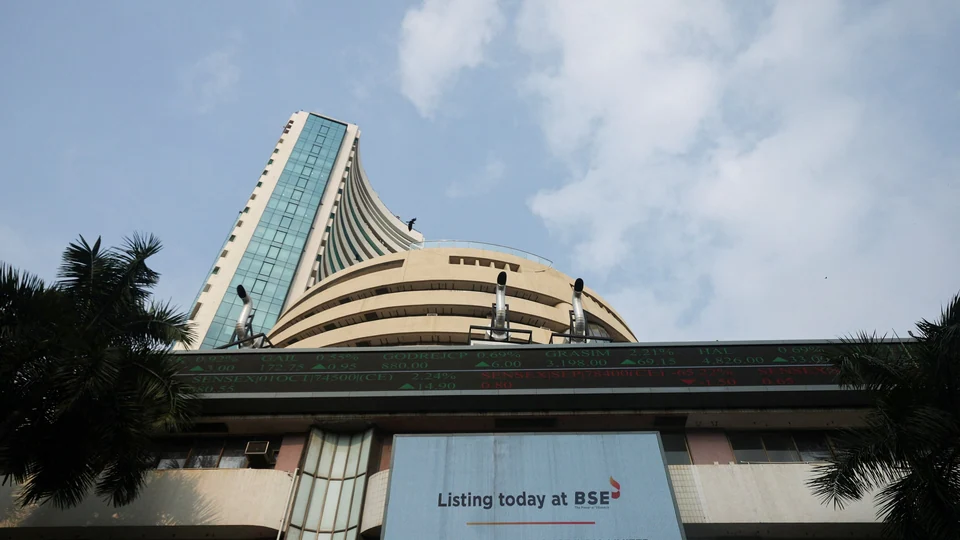
Indian equity markets opened on a subdued note on Thursday, November 19, as investors assessed global monetary policy signals, crude oil price expectations and foreign fund flows. The BSE Sensex initially opened marginally higher, while the NSE Nifty 50 started the session in negative territory. Selling pressure subsequently pushed the Sensex down by more than 150 points and the Nifty lower by over 60 points.
The muted start followed a sharp decline in the previous session, when both benchmark indices ended lower after a two-day rally. Profit-booking in consumer durables, metal and banking stocks weighed on market sentiment on Wednesday, while concerns about possible interest rate increases added to investor caution.
The Indian rupee remained unchanged at 93.41 against the US dollar in early trade, while investors continued to monitor developments in global financial markets.
Sensex and Nifty Start Thursday’s Session on a Mixed Note
The 30-share BSE Sensex opened marginally higher by 0.05% at 82,041.16 points, while the 50-share NSE Nifty 50 began the session 0.16% lower at 25,186.80. The early gains in the Sensex did not last, as selling pressure subsequently pulled the index down by more than 150 points.
The Nifty also remained under pressure, falling more than 60 points from its previous close. The contrasting opening movements reflected a cautious start to the trading session, with investors weighing domestic market conditions against developments in the global economy.
The rupee’s unchanged level of 93.41 against the US dollar provided another indicator of currency market conditions during early trading. Currency movements remain important for Indian equities because changes in the rupee can influence foreign investment returns, import costs and the outlook for companies with significant overseas exposure.
Wednesday’s Sell-Off Ends Two-Day Market Rally
Thursday’s cautious opening followed a significant decline on Wednesday, when Indian benchmark indices broke their two-day winning streak. Both the Sensex and Nifty fell as investors booked profits in several major sectors, including consumer durables, metals and banking.
The BSE Sensex declined 500.38 points, or 0.61%, to settle at 82,031.81. The NSE Nifty dropped 159.45 points, or 0.63%, to close at 25,227.95.
The decline indicated that investors were becoming more selective after the recent market advance. Profit-booking occurs when investors sell shares to secure gains following a rise in prices. Such activity can temporarily increase selling pressure, even when the broader market trend remains positive.
Concerns about a possible interest rate hike also contributed to the cautious mood. Expectations of higher borrowing costs can influence equity valuations by increasing the cost of capital and changing the relative attractiveness of stocks and fixed-income investments.
Titan, TCS and Bajaj Finance Among Wednesday’s Biggest Losers
Several heavyweight stocks contributed to Wednesday’s decline in the Sensex. Titan recorded the steepest fall among the listed stocks mentioned, dropping 4.82%. Tata Consultancy Services declined 2.49%, while Bajaj Finance and Eternal each lost 2.45%.
InterGlobe Aviation fell 1.97%, and Infosys declined 1.86%. Weakness in major companies can influence benchmark indices because their movements contribute to the overall performance of the market.
However, not all major stocks ended lower. State Bank of India, ITC, UltraTech Cement and Power Grid were among the leading gainers on Wednesday. Their positive performance provided some support, although it was insufficient to prevent the benchmark indices from closing sharply lower.
The difference between the performance of individual stocks highlights the selective nature of the selling. While several large companies faced profit-booking, gains in other stocks showed that buying interest remained present in parts of the market.
Consumer Durables and Metal Stocks Lead Sectoral Declines
Sectoral indices reflected broad selling pressure on Wednesday, with consumer durables and metal stocks recording some of the largest losses. The BSE Consumer Durables index declined 3.14%, making it the weakest among the sectors listed. The Metal index fell 2.15%.
Other notable declines included the MidSmall Private Banks Quality Tilt index, which dropped 1.49%, and the MidSmall Private Banks index, which lost 1.48%. The IT index declined 1.41%, while Capital Goods fell 1.32% and Insurance dropped 1.30%.
The performance suggested that selling was not restricted to a single industry. Consumer-facing companies, metal producers, information technology firms and financial stocks all experienced pressure during the session.
In contrast, healthcare, telecommunications and public sector bank indices ended higher. Their gains demonstrated that some sectors continued to attract buying interest despite the broader weakness in the market.
Strong Monthly Gains Keep the Broader Market in Focus
Despite Wednesday’s decline, Indian benchmark indices had recorded substantial gains earlier in November. Through November 17, the BSE Sensex had advanced nearly 11%, while the NSE Nifty had climbed more than 10%.
These gains provide important context for understanding the recent profit-booking. After a strong advance, investors may choose to lock in returns, particularly when uncertainty surrounding interest rates and global economic conditions increases.
However, a short-term decline does not necessarily indicate a reversal of the broader market trend. Investors typically assess whether weakness is limited to profit-taking or reflects a more significant change in earnings expectations, economic conditions or market liquidity.
The monthly performance figures also underline why individual trading sessions should be viewed within a wider timeframe. Even after Wednesday’s losses, both benchmark indices had maintained sizeable gains through November 17.
Global Market Cues and Federal Reserve Minutes Influence Sentiment
Global developments remained an important factor for Indian investors on Thursday. The latest minutes from the US Federal Reserve’s policy meeting attracted attention as market participants assessed the possibility of further changes in US interest rates.
Expectations about the Federal Reserve’s next policy steps can influence global bond yields, currency markets and investment flows. If investors anticipate higher US interest rates, dollar-denominated assets may become more attractive, potentially affecting capital movement into emerging markets such as India.
At the same time, expectations of easing crude oil prices could support sentiment in an oil-importing economy such as India. Lower crude prices, if sustained, may reduce pressure on import costs and inflation, although the actual impact depends on the scale and duration of the decline.
Foreign fund inflows are another important factor for domestic equities. Sustained overseas investment can provide additional demand for Indian shares, while changes in global risk appetite may affect the direction of those flows.
The combination of interest-rate expectations, oil prices and foreign investment therefore remains central to the near-term outlook for the domestic market.
Asian Markets Show Mixed Performance
Asian equity markets offered mixed signals during the latest trading session. South Korea’s Kospi, Japan’s Nikkei 225 and China’s Shanghai SSE Composite index closed higher, while Hong Kong’s Hang Seng index settled lower.
The mixed performance indicated that regional investors were responding differently to the prevailing economic and financial conditions. Gains in South Korea, Japan and mainland China contrasted with weakness in Hong Kong.
For Indian markets, international trends can influence sentiment, but domestic factors such as corporate earnings, sector-specific developments and foreign investment activity also play an important role.
What Investors Will Watch Next
Investors are likely to monitor the movement of the Sensex and Nifty after Wednesday’s sharp correction and Thursday’s weak opening. The ability of benchmark indices to stabilise following the recent selling pressure may help indicate whether the decline represents temporary profit-booking or a broader shift in sentiment.
Developments surrounding the Federal Reserve’s interest rate outlook will remain important, particularly for foreign fund flows and currency movements. Investors will also watch crude oil prices for signs of whether lower energy costs could provide support to the Indian Economy and corporate sectors.
At the sectoral level, the performance of banking, information technology, metal and consumer durable stocks could offer clues about the strength of buying interest. The contrast between Wednesday’s major losers and gainers also suggests that stock-specific developments may remain important.
For now, the Indian stock market is balancing strong monthly gains against short-term selling pressure and global uncertainty. The next direction for the Sensex and Nifty could depend on interest-rate expectations, crude oil movements and whether foreign investment flows remain supportive.
For breaking news and live news updates, like us on Facebook or follow us on Twitter and Instagram. Read more on Latest Business on thefoxdaily.com.






COMMENTS 0