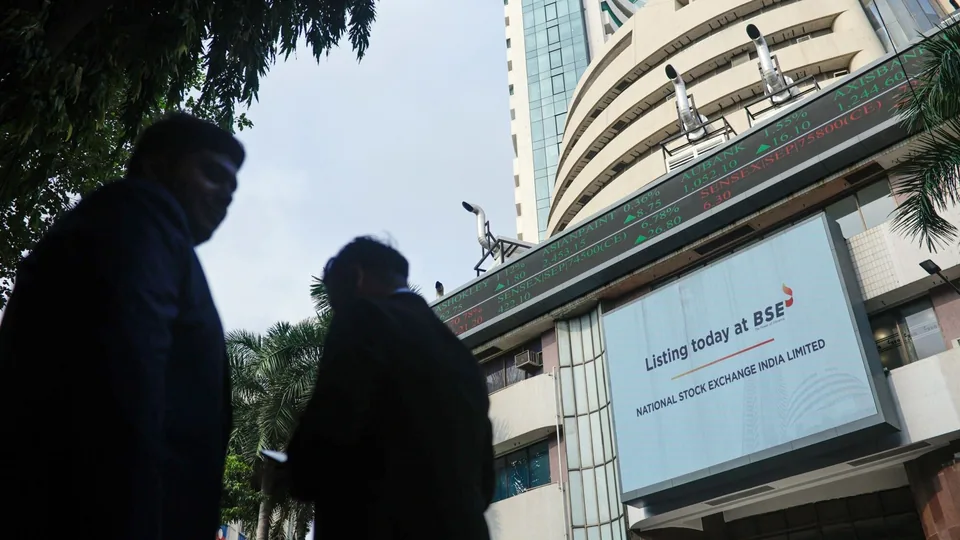
Indian stock markets opened lower on Wednesday, November 18, after the benchmark Sensex and Nifty closed near nine-month highs in the previous trading session. The cautious opening followed two consecutive sessions of gains, with investors assessing recent market momentum, global cues and the outlook for foreign fund flows.
Expectations of easing crude oil prices and continued foreign institutional investor inflows could help limit the downside, even as some investors choose to book profits after the recent rally. Market participants will also watch whether buying interest in banking stocks and heavyweight companies can support a recovery during the session.
The previous session had seen both benchmarks extend their winning streak, with the Sensex rising more than 427 points and the Nifty closing above 25,380. Buying in banking shares and Reliance Industries, along with steady foreign fund inflows and moderate crude oil prices, supported the gains.
Sensex and Nifty Decline at Opening After Tuesday’s Rally
The Sensex and Nifty began Wednesday’s session on a weaker note after recording strong gains on Tuesday. The opening decline indicates some caution among investors following the benchmarks’ move towards levels last seen around nine months ago.
On Tuesday, the 30-share BSE Sensex rallied 427.40 points, or 0.52 per cent, to settle at 82,532.19. During the session, the index had climbed as much as 792.7 points, or 0.96 per cent, to reach an intraday high of 82,897.49.
The broader 50-share NSE Nifty also ended higher, gaining 96.30 points, or 0.38 per cent, to close at 25,387.40.
The gains marked a second consecutive session of advances for both benchmarks. The market also showed resilience by moving higher despite a weak trend across global markets, supported by broad-based domestic buying.
Banking Stocks and Reliance Industries Support Market Gains
Banking shares were among the key contributors to Tuesday’s rally. Buying interest in banking stocks helped lift the benchmarks and supported the broader market’s positive performance.
Reliance Industries, one of the heavyweight companies in the Indian market, also contributed to the upward movement. Large-cap stocks can have a meaningful influence on benchmark indices because of their significant weightage.
The combination of buying in banking shares and heavyweight stocks helped the market overcome the weakness in global cues. It also indicated that the previous session’s gains were not limited to a narrow group of stocks.
However, investors will need to assess whether this buying interest continues on Wednesday. A sustained recovery would depend on participation from key sectors and the ability of heavyweight stocks to attract fresh demand.
Crude Oil Prices and Foreign Fund Inflows Remain Key Factors
Expectations of easing crude oil prices have emerged as a supportive factor for Indian equities. India imports a substantial portion of its crude oil requirements, making domestic economic conditions and corporate costs sensitive to changes in international energy prices.
Lower crude prices can help reduce the pressure on fuel costs, transportation expenses and the country’s import bill. They may also provide some relief to sectors that depend heavily on energy and logistics. However, the actual benefit depends on the scale and duration of any decline in oil prices.
Foreign fund flows are another important factor for the market. Steady inflows from overseas investors can support demand for Indian equities, particularly large-cap stocks. Such buying can help cushion the impact of temporary selling pressure during uncertain global conditions.
Investors will therefore monitor both crude oil movements and foreign institutional investor activity for clues about the market’s near-term direction.
Global Market Cues Could Influence Wednesday’s Trading
Indian benchmarks managed to close higher on Tuesday despite a weak global market trend. This relative resilience highlighted the role of domestic buying interest in supporting the rally.
Nevertheless, global developments remain important for the direction of Indian equities. Changes in international investor sentiment, commodity prices and overseas market performance can influence risk appetite across emerging markets.
Wednesday’s lower opening suggests that investors are approaching the market cautiously after the recent advance. If global cues remain weak, the benchmarks could face additional pressure. On the other hand, improving sentiment and continued domestic buying may help limit losses.
What Investors Should Watch Next
The immediate focus will be on whether the Sensex and Nifty can recover from their lower opening levels and sustain the gains recorded in the previous two sessions. The performance of banking stocks and heavyweight companies such as Reliance Industries will remain important for the benchmarks.
Investors should also track crude oil prices and foreign fund flows. A combination of softer oil prices and continued overseas investment could provide support to domestic equities, while a deterioration in global sentiment may encourage profit-booking.
The previous session’s broad-based rally demonstrated that domestic buying can help Indian markets withstand weak international signals. However, the lower opening on Wednesday shows that the upward momentum may not continue in a straight line.
For now, the market’s ability to absorb early selling pressure and attract fresh buying will be important. Investors may prefer to watch sectoral participation, heavyweight stock movements and global cues before drawing conclusions about the next directional move.
Market Outlook
The Sensex and Nifty began Wednesday on a cautious note after ending Tuesday near nine-month highs. The previous session’s gains were supported by banking stocks, Reliance Industries, steady foreign fund inflows and moderate crude oil prices.
While expectations of easing oil prices and continued foreign investment could limit downside pressure, global market weakness and profit-booking remain potential risks. The next move will depend on whether domestic buying can regain momentum and sustain the benchmarks after the lower opening.
For breaking news and live news updates, like us on Facebook or follow us on Twitter and Instagram. Read more on Latest Business on thefoxdaily.com.






COMMENTS 0