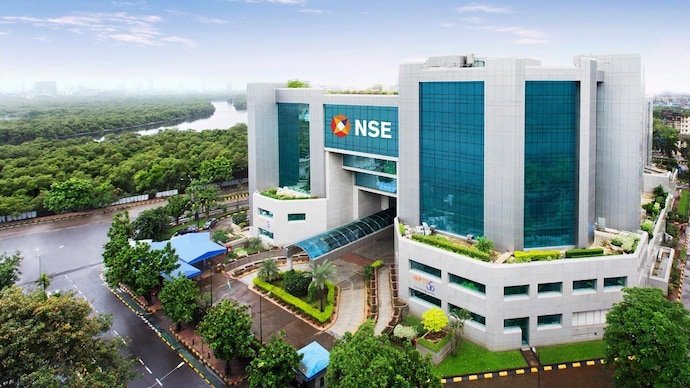
The National Stock Exchange (NSE) has spent decades serving as the backbone of India’s modern Financial Markets. Every day, millions of investors track stock prices, monitor the Nifty 50, invest through mutual funds, trade derivatives, and participate in IPOs without realizing that one institution sits at the center of almost every transaction.
That institution is now preparing to enter the public market itself.
After years of anticipation, the NSE has filed its Draft Red Herring Prospectus (DRHP), reviving one of India’s most closely watched IPO stories. Expected to be valued at around Rs 30,000 crore in issue size and carrying a market valuation estimated near Rs 5 lakh crore, the listing could become the largest IPO in Indian History.
But the real significance goes far beyond record-breaking numbers. The NSE IPO marks the public debut of an institution that has helped transform India’s financial landscape over the last three decades.
What Is the National Stock Exchange and Why Does It Matter?
Founded in the early 1990s, the National Stock Exchange emerged during a period when India’s financial markets were undergoing massive reforms. Before NSE’s arrival, stock trading was largely manual, fragmented, and limited to a relatively small investor base.
The exchange changed that forever.
NSE introduced electronic screen-based trading, improved transparency, reduced inefficiencies, and expanded access to investors across the country. What seems routine today was revolutionary at the time. The ability to trade shares electronically from different cities transformed how Indians interacted with capital markets.
Over the years, NSE became synonymous with India’s economic and financial modernization. The exchange played a critical role in enabling:
- Electronic trading Infrastructure
- Wider retail investor participation
- Growth of mutual funds and systematic Investing
- Foreign institutional investment flows
- Development of derivatives markets
- Efficient price discovery mechanisms
- Corporate fundraising through public offerings
Today, NSE is among the world’s largest exchanges by derivatives trading volume and remains India’s dominant equity trading platform.
The Nifty 50 index, which serves as the benchmark for Indian equities, has become a key indicator of economic sentiment and market performance. Every major investor, fund manager, analyst, and policymaker watches its movements closely.
In many ways, the story of NSE mirrors the story of India’s rise as a major economic power.
The IPO That Took Nearly 10 Years to Arrive
One of the biggest questions surrounding the NSE IPO is simple: why did it take so long?
The exchange first announced plans to go public in 2016. At the time, investors expected the listing process to proceed smoothly because NSE was already a profitable and strategically important institution.
Instead, the journey became one of the longest IPO sagas in Indian market history.
The primary obstacle emerged from the co-location Controversy, a case involving allegations related to trading access and market infrastructure advantages. Regulatory scrutiny, Governance concerns, investigations, and legal proceedings created uncertainty that effectively stalled the exchange’s listing ambitions.
As the years passed, the NSE IPO acquired an almost mythical reputation among market participants.
Every few months, reports would emerge suggesting regulatory approvals were imminent. Every few months, expectations would be pushed back again.
Meanwhile, India’s IPO market continued to evolve rapidly.
Insurance companies entered the stock market. Technology startups raised billions. Digital businesses went public. Traditional conglomerates unlocked value through listings.
Ironically, the exchange that facilitated many of these public offerings remained unlisted itself.
This prolonged delay only increased investor curiosity. Many viewed NSE as one of the most attractive businesses in India, making its absence from public markets even more noticeable.
Why the NSE IPO Is Different From Other Public Offerings
Most IPO candidates approach investors with promises of future growth. Many are still building profitability, expanding operations, or proving their business models.
NSE is fundamentally different.
It is already an established market leader with a dominant position in India’s financial infrastructure.
Unlike emerging businesses seeking capital for expansion, NSE operates a highly profitable and scalable business model that benefits directly from increasing market participation.
Whenever trading volumes rise, NSE earns more.
Whenever more investors open demat accounts, NSE benefits.
Whenever IPO activity increases, NSE gains.
Whenever derivatives trading expands, NSE generates additional revenue.
This creates a unique investment proposition. Buying shares of NSE is effectively a way to participate in the growth of India’s entire capital market ecosystem.
Rather than betting on a single industry, investors are gaining exposure to the infrastructure that supports multiple sectors simultaneously.
The Financial Strength Behind NSE’s Valuation
One of the key reasons investors have eagerly awaited the IPO is NSE’s financial performance.
The exchange has consistently demonstrated strong profitability, operational efficiency, and cash generation capabilities.
For FY26, NSE reported total income exceeding Rs 18,700 crore and profits of more than Rs 10,300 crore.
These numbers are remarkable even by global standards.
Profit margins above 50 percent place NSE among the most efficient businesses in India’s corporate landscape. Such margins reflect the advantages of operating critical financial infrastructure with significant scale benefits.
Once the trading platform, clearing systems, technology infrastructure, and regulatory framework are established, incremental transaction growth can generate substantial additional profits.
This scalability is one of the biggest attractions for investors.
As India’s Economy grows and financial participation deepens, NSE stands to benefit without requiring proportional increases in operating costs.
That dynamic explains why private market valuations have remained exceptionally strong over the years.
India’s Expanding Investor Base Creates a Powerful Growth Story
The timing of the NSE IPO coincides with a dramatic transformation in Indian investing behavior.
Over the past decade, India has witnessed an unprecedented surge in retail participation.
Several factors have contributed to this trend:
- Growth of digital trading platforms
- Increasing financial awareness
- Rising household incomes
- Expansion of SIP investments
- Easy online account opening processes
- Greater access to financial information
- Strong long-term market returns
Millions of first-time investors have entered the market since the pandemic era. Monthly SIP contributions continue to reach record levels, while demat account openings remain robust.
This structural shift is important because it suggests that India’s capital market growth story is still in its early stages compared to developed economies.
As more households transition from traditional savings instruments toward market-linked investments, exchanges like NSE are positioned to benefit directly.
The exchange therefore represents not merely a company but a reflection of India’s broader financialization journey.
Why Investors Have Been Buying NSE Shares Even Before the IPO
Long before the public offering became a reality, NSE shares were among the most sought-after securities in India’s unlisted market.
Demand from investors remained consistently high despite uncertainty surrounding the eventual listing timeline.
The reasons were straightforward.
NSE combines several characteristics that investors typically value:
- Market leadership
- Strong profitability
- High entry barriers
- Scalable operations
- Strategic national importance
- Consistent revenue generation
- Long-term growth potential
The company also has a large shareholder base, with more than 200,000 shareholders reportedly holding interests in the unlisted entity.
For many of these investors, the IPO represents the culmination of years of waiting.
A public listing provides liquidity, transparency, institutional participation, and potentially broader valuation discovery.
The Offer for Sale Structure Explained
An important aspect of the NSE IPO is that it will reportedly be structured as an Offer for Sale (OFS).
This means the company itself is not raising fresh capital.
Instead, existing shareholders will sell part of their holdings to public investors.
This distinction matters because it changes the purpose of the offering.
Rather than funding expansion projects, the IPO primarily serves as a mechanism for existing investors to unlock value and provide broader market access to NSE shares.
For institutional shareholders who have held stakes for years, the listing creates an opportunity to partially monetize investments while still participating in the company’s future growth.
For new investors, it provides access to a business that was previously available only through limited private market channels.
Potential Risks Investors Should Watch
Despite the excitement surrounding the IPO, investors should also consider potential challenges.
Like any financial institution, NSE operates within a highly regulated Environment.
Regulatory changes can affect trading activity, market structure, transaction costs, and operational practices.
Competition from other exchanges and evolving technology platforms also remains a factor, even though NSE currently enjoys a dominant position.
Market volatility can influence trading volumes in different ways. While periods of uncertainty often boost activity, prolonged downturns can affect investor sentiment and participation.
Additionally, valuation will remain a key consideration. Even great businesses can deliver disappointing returns if purchased at excessively high prices.
Investors will therefore closely examine pricing details once the final offer structure becomes available.
What the NSE IPO Means for India’s Financial Future
The significance of the NSE IPO extends beyond shareholders and traders.
Its listing represents another milestone in the maturation of India’s capital markets.
Over the past three decades, India has transformed from a relatively closed financial system into one of the world’s most dynamic investment destinations.
The institutions supporting that transformation have become increasingly sophisticated, technology-driven, and globally competitive.
NSE stands at the center of that evolution.
Its public debut symbolizes the confidence of India’s financial ecosystem and highlights the growing importance of capital markets in economic development.
The IPO also sends a broader message about the depth and maturity of Indian markets. When the country’s largest exchange itself becomes a publicly traded company, it reinforces the role of transparency, governance, and investor participation in shaping financial institutions.
Conclusion: A Historic Moment Decades in the Making
The NSE IPO is more than just another headline-grabbing public issue.
It is the culmination of a decade-long journey filled with regulatory hurdles, governance challenges, market speculation, and investor anticipation.
For years, the National Stock Exchange remained the most important unlisted institution in India’s financial system. It hosted thousands of listings, facilitated trillions of rupees in transactions, and helped build the modern Indian market while remaining outside the public spotlight itself.
Now that is finally changing.
As investors prepare to evaluate one of India’s most influential companies, the listing offers a rare opportunity to participate directly in the growth of the institution that powers much of the country’s investment ecosystem.
Whether measured by size, significance, profitability, or symbolism, the NSE IPO has the potential to become one of the defining market events of 2026.
After nearly ten years of waiting, India’s stock market is finally preparing to place a value on the exchange that helped build it.
For breaking news and live news updates, like us on Facebook or follow us on Twitter and Instagram. Read more on Latest Business on thefoxdaily.com.






COMMENTS 0