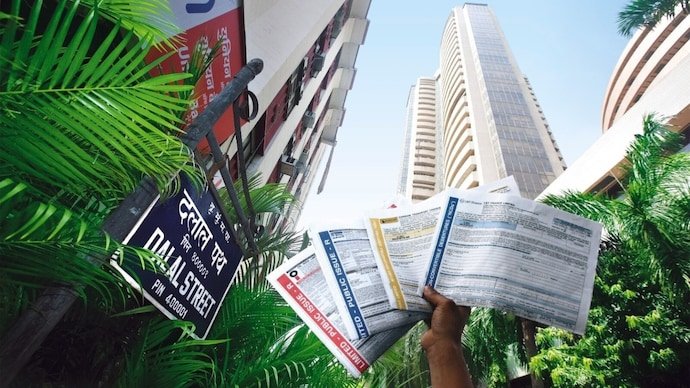
Indian benchmark indices opened lower on Tuesday, with the Sensex falling more than 300 points and the Nifty 50 slipping below the 24,500 mark. Rising crude oil prices remained a key concern for investors, although strength in IT stocks, steady foreign institutional buying and resilient corporate earnings helped limit the decline.
The BSE Sensex opened at 78,509.77 but was down 315.36 points, or 0.40%, at 78,227.08 as of 9:26 am. The Nifty 50 opened at 24,575.10 and was trading 94.05 points, or 0.38%, lower at 24,489.75.
Investors were also keeping an eye on corporate earnings, which have so far remained broadly resilient, as well as movements in crude oil prices and the rupee.
Higher crude oil prices weigh on Indian markets
Elevated crude oil prices remained one of the biggest concerns for domestic equities.
Brent crude was trading around $87.71 a barrel, while West Texas Intermediate crude stood at $82.13 in early trade.
For India, a sustained increase in crude prices can have a significant impact because the country relies heavily on imports to meet its oil requirements. More expensive crude can raise the import bill, increase inflationary pressure and potentially squeeze corporate profit margins.
Dr VK Vijayakumar, Chief Investment Strategist at Geojit Investments Limited, said rising Brent crude remained an irritant for the market even though other fundamentals continued to look supportive.
According to Vijayakumar, one of the important developments has been the return of foreign institutional investors as buyers. He attributed the shift to better-than-expected first-quarter results and stability in the rupee.
He said these factors could help keep the market resilient with a slight upward bias and added that strong domestic consumption could support earnings growth through FY27.
IT stocks buck the broader market trend
IT stocks emerged as one of the strongest pockets of the market in early trade, helping cushion the broader decline in the benchmark indices.
HCLTech was the top gainer among major stocks, rising 1.13%. Titan and Tech Mahindra gained 0.72% each, while Infosys advanced 0.57% and TCS rose 0.52%.
The Nifty IT index was up 0.74% in early trading.
The sector has remained in focus following a series of quarterly earnings announcements, with investors looking for evidence of an improvement in global Technology spending.
However, the outlook remains closely linked to global technology trends and corporate spending on IT services. Any sustained recovery in technology demand could support the sector, while uncertainty over global spending could continue to keep valuations and earnings expectations under scrutiny.
Banking and financial stocks drag benchmarks
Banking and financial stocks were among the biggest drags on the benchmark indices during the opening session.
The Nifty Private Bank index fell 0.72%, while the Nifty Financial Services 25/50 index declined 0.58%. The Nifty PSU Bank index was also lower by 0.42%.
Among individual stocks, Axis Bank fell 1.12%, while Bajaj Finance declined 1.20%. Bajaj Finserv was down 0.25% and HDFC Bank slipped 0.42%.
IndiGo was the biggest loser among the major stocks, declining 1.75%. UltraTech Cement fell 1.13%, while Bharti Airtel, Adani Ports and Reliance Industries also traded lower.
The weakness in financial stocks offset some of the gains seen in technology and consumer-related shares.
Adani Group shares remain in focus
Adani Group stocks were also on investors’ radar during the early trading session, with Adani Ports among the major stocks trading lower.
The broader market’s direction remained dependent on several competing factors, including crude oil prices, foreign fund flows, corporate earnings and sector-specific developments.
For investors tracking Adani Group companies, movements in the wider market and changes in risk appetite are likely to remain important alongside company-specific developments.
Broader market gives a mixed signal
The broader market did not move uniformly lower.
The Nifty Smallcap 100 was up 0.42% in early trade, while both the Nifty Midcap 50 and Nifty Midcap 100 declined 0.22%.
The Nifty 100 fell 0.32%, the Nifty 200 declined 0.30% and the Nifty 500 was down 0.22%.
Among sectoral indices, Nifty IT gained 0.74%, while Nifty Consumer Durables advanced 0.46%. Nifty Realty was marginally higher by 0.07%.
Nifty Auto and Nifty Oil & Gas were almost flat, gaining 0.04% each.
On the weaker side, Nifty Private Bank declined 0.72%, Nifty Financial Services 25/50 fell 0.58% and Nifty FMCG lost 0.35%.
The mixed performance suggests that investors were rotating between sectors rather than simply exiting equities across the board.
Foreign investors turn buyers
One of the key positives for Indian equities has been a shift in foreign institutional investor flows.
Vijayakumar said foreign investors had started turning buyers, supported by better-than-expected first-quarter earnings and stability in the rupee.
He also pointed to a possible shift in global capital away from the so-called “chip trade” in South Korea and Taiwan. According to him, foreign investors are attempting to compensate for their under-ownership of Indian stocks, potentially providing further support to domestic equities.
Vijayakumar also said that large FCNR (B) inflows could support the rupee, which in turn could encourage additional Foreign Investment into Indian equities.
According to his assessment, foreign investors are currently showing interest in sectors including telecom, renewable energy, capital goods and pharmaceuticals, even where valuations remain elevated. At the same time, they have been less focused on banking majors despite relatively attractive valuations.
What is driving the market today?
The opening session reflects a tug-of-war between negative and positive factors.
- Crude oil: Elevated prices remain a concern because India is a major crude importer.
- IT stocks: Technology shares are outperforming the broader market and helping limit losses.
- FII buying: Renewed foreign investor inflows are providing an important source of support.
- Corporate earnings: Better-than-expected first-quarter results are improving investor confidence.
- Domestic consumption: Strong consumption could support earnings growth through FY27.
- Banking stocks: Weakness in private banks and financial shares is weighing on the benchmark indices.
Crude oil versus earnings and foreign flows
The immediate direction of the Indian market is likely to remain influenced by the balance between elevated oil prices and improving domestic market fundamentals.
Higher crude prices can create pressure through inflation, imports and corporate margins. However, resilient earnings, stable currency conditions and renewed foreign buying could provide a counterweight.
Domestic consumption also remains an important support for the earnings outlook. If consumption remains robust and corporate results continue to exceed expectations, investors may be willing to look beyond some of the external pressures.
For now, however, crude oil remains a key risk factor that investors will continue to monitor closely.
Market outlook
The opening decline does not necessarily point to a broad-based deterioration in investor sentiment. The performance of individual sectors shows that investors are continuing to selectively deploy capital, with IT and some consumer-oriented stocks gaining even as banks and financial companies decline.
The next direction for the Sensex and Nifty will depend on how these competing forces develop through the trading session.
For Indian equities, the combination of foreign buying, corporate earnings and domestic consumption provides a supportive backdrop. Against that, elevated crude prices, pressure on financial stocks and global market uncertainty remain important risks.
Investors will therefore be watching crude oil, FII flows, the rupee and upcoming corporate earnings for signals on whether the current market weakness remains temporary or develops into a broader correction.
Disclaimer: The views, opinions, recommendations and suggestions expressed by experts or brokerages are their own and do not reflect the views of the Thefoxdaily. Investors should consult a qualified broker or financial adviser before making any investment or trading decisions.
For breaking news and live news updates, like us on Facebook or follow us on Twitter and Instagram. Read more on Latest Business on thefoxdaily.com.





COMMENTS 0