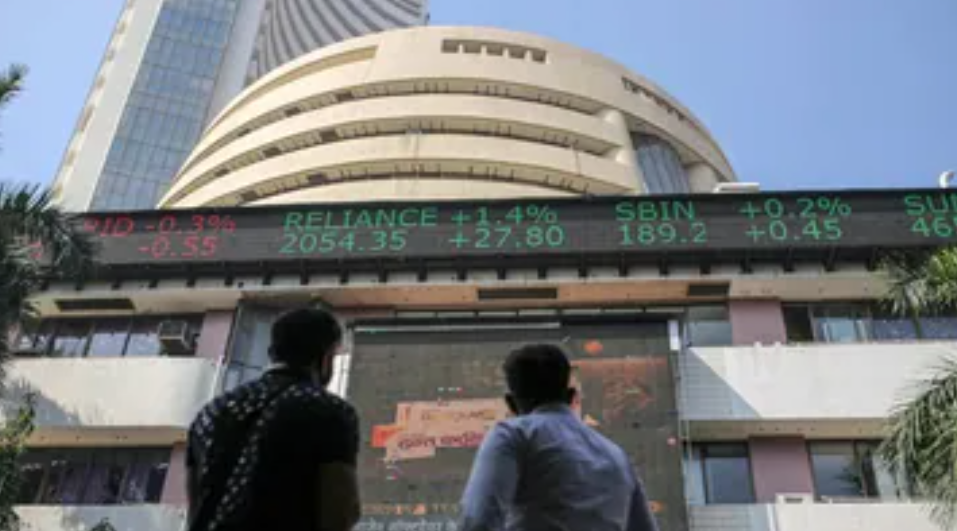
Sensex today: Indian stock markets opened in positive territory on Tuesday, September 15, 2026, offering some relief after five consecutive weekly declines. The BSE Sensex gained around 400 points in early trade, while the Nifty 50 moved above the important 23,500 mark.
At 9:15 am, the Nifty 50 rose 0.45% to 23,503.65, while the Sensex gained 0.53% to 75,178.20. The early recovery was supported mainly by information technology stocks and heavyweight private lender HDFC Bank.
However, the positive opening comes against a challenging global backdrop. Higher crude oil prices and rising global bond yields ahead of the US Federal Reserve‘s policy meeting could limit the strength of the recovery.
Sensex and Nifty Open in Green After Five Weekly Losses
The opening gains are significant because Indian equities had recently faced sustained selling pressure. The benchmark indices had recorded five consecutive weekly losses, reflecting concerns around expensive valuations, global interest rates, crude oil prices and geopolitical uncertainty.
The Tuesday recovery suggests that investors are willing to selectively buy stocks after the recent decline. However, a strong opening does not necessarily mean that the broader market trend has completely reversed.
| Index | Opening/early level | Change |
|---|---|---|
| Sensex | 75,178.20 | +0.53% |
| Nifty 50 | 23,503.65 | +0.45% |
Why Did the Indian Stock Market Open Higher Today?
Several factors contributed to the positive opening. The most visible support came from IT stocks and HDFC Bank, both of which helped lift the benchmark indices.
IT Stocks Lead the Early Recovery
Information technology stocks were among the strongest performers in early trade, rising as much as 4.5%. This was notable because IT companies have been among the major market laggards over the past year.
The sector has faced concerns that advances in artificial intelligence could disrupt traditional software-services business models. Investors have worried that increasingly capable AI tools could reduce demand for some conventional technology services and alter the economics of outsourcing.
The latest rebound indicates that investors may be reassessing the extent of those risks. Calls for a slower pace of AI development and concerns surrounding the potential consequences of rapid AI deployment appear to have provided some short-term support to traditional technology companies.
Still, the long-term question remains more complicated. AI can be both a competitive threat and an opportunity for Indian IT companies. Firms that successfully shift toward AI implementation, cloud transformation, cybersecurity and higher-value consulting could potentially benefit even as older technology-services models come under pressure.
HDFC Bank Shares Rise About 3%
HDFC Bank was another major contributor to the early market gains. Shares of India’s largest private-sector lender rose around 3% after the bank submitted nominations to the Reserve Bank of India for the position of its next chief executive officer.
The CEO succession process has attracted significant investor attention because leadership continuity is important for a bank of HDFC Bank’s size and systemic importance.
The Reserve Bank of India’s approval is required for the appointment of the managing director and CEO of a private-sector bank. Therefore, the nomination process represents an important step, although the final appointment remains subject to the regulatory process.
The strong share-price reaction suggests that investors may view progress on succession as a reduction in uncertainty surrounding the bank’s future leadership.
HDFC Bank CEO Succession Becomes a Key Market Focus
HDFC Bank’s leadership transition is particularly important because the bank has been operating under Sashidhar Jagdishan, who became CEO in 2020 and is due to retire at the end of his second term in October.
The bank has already strengthened its board structure, including the appointment of senior executives as whole-time directors. The succession process therefore extends beyond simply naming a new CEO; it is also about ensuring continuity in strategy, risk management and execution.
For investors, the most important questions will be whether the new leadership maintains the bank’s growth strategy, protects asset quality and manages the balance between loan growth and profitability.
Oil Prices Remain a Major Risk for Indian Equities
Despite the positive opening, crude oil remains one of the biggest risks for Indian markets. Oil prices have climbed sharply amid disruptions and uncertainty surrounding energy supplies in the Middle East.
India imports a large share of its crude oil requirements. Therefore, sustained increases in international oil prices can affect the country’s import bill, inflation, corporate costs and the broader economic outlook.
Higher crude prices can also complicate monetary policy because an energy-price shock can increase inflationary pressure at a time when global central banks are already closely watching price developments.
For equity investors, this creates an important tension: lower stock prices can encourage buying, but rising oil prices can simultaneously weaken the macroeconomic outlook.
US Federal Reserve Meeting Adds Another Layer of Uncertainty
The timing of Tuesday’s recovery is also important because global investors are awaiting the US Federal Reserve’s policy decision later this week.
Expectations surrounding US interest rates influence global capital flows. If investors anticipate higher US rates for longer, emerging markets such as India can face pressure as international investors reassess the relative attractiveness of assets across countries.
Rising US Treasury yields can also affect equity valuations because higher bond yields increase the return available from relatively lower-risk fixed-income assets.
Consequently, Indian markets may remain sensitive to US inflation data, Federal Reserve communication and movements in global bond yields even if domestic buying provides temporary support.
Broader Market Remains Less Convincing
The early gains were not equally distributed across the market. Reports indicated that eight of the 16 major sectors were higher, while small-cap and mid-cap stocks were relatively subdued.
This difference is important because a benchmark rally led by a limited number of heavyweight stocks can look stronger than the underlying market breadth actually is.
When large companies such as HDFC Bank and major IT stocks rise sharply, the Sensex and Nifty can gain even when many other stocks remain flat or weak. Investors therefore need to watch market breadth alongside index levels.
| Market factor | Current influence | Why it matters |
|---|---|---|
| IT stocks | Positive | Strong sector rebound is supporting benchmarks |
| HDFC Bank | Positive | CEO succession progress reduced leadership uncertainty |
| Crude oil | Negative risk | Higher energy costs can increase inflation and import pressure |
| Global bond yields | Negative risk | Higher yields can pressure equity valuations and capital flows |
| Fed policy | Uncertain | Rate expectations can influence global risk appetite |
| Market breadth | Mixed | Mid- and small-cap stocks were relatively unchanged |
Can the Sensex and Nifty Sustain the Recovery?
The key question for investors is whether Tuesday’s gains represent the beginning of a broader recovery or simply a relief rally after several weeks of losses.
The answer will depend on several factors. First, the indices need to hold their early gains rather than surrender them later in the session. Second, market participation needs to broaden beyond a handful of heavyweight stocks. Third, external risks such as crude oil and global bond yields need to stabilize.
The Nifty’s move above 23,500 is psychologically important because round-number levels often attract attention from traders. Sustaining levels above this zone could improve short-term sentiment, while a failure to hold the gains could indicate that selling pressure remains active.
What Investors Should Watch Today
- Nifty 50: Whether the index can sustain levels above 23,500.
- Sensex: Whether the early 400-point gain remains intact through the session.
- HDFC Bank: Further reaction to the CEO succession process.
- IT stocks: Whether the sharp rebound continues or faces profit-taking.
- Crude oil: Any further increase could weigh on Indian equities.
- US bond yields: Continued increases could pressure emerging-market stocks.
- Federal Reserve: Policy guidance will be crucial for global risk appetite.
- Market breadth: Whether gains spread to mid-cap and small-cap shares.
Why Today’s Rally Matters After Five Weekly Losses
Five consecutive weekly declines have made the market more vulnerable to short-term rebounds. When investors see benchmarks fall repeatedly, even modestly positive news can trigger bargain hunting among stocks that have already corrected.
However, investors should distinguish between a technical or sentiment-driven recovery and a fundamental change in market conditions. A sustainable recovery generally requires improvement across multiple factors rather than one strong session.
For Indian equities, those factors currently include corporate earnings, domestic liquidity, foreign investor flows, crude oil prices, inflation, interest-rate expectations and geopolitical developments.
Indian Stock Market Outlook: Relief Rally or Trend Reversal?
Tuesday’s opening provides a welcome change after a difficult stretch for Indian equities, but the broader outlook remains mixed.
The strength in IT stocks is encouraging because the sector had underperformed amid concerns about AI disruption. HDFC Bank’s rise also shows how company-specific developments can provide strong support to the indices.
At the same time, high crude oil prices and elevated global bond yields remain important headwinds. The Federal Reserve’s upcoming policy decision could further influence global markets and determine whether investors become more defensive or continue adding exposure to equities.
For now, the most important signal is not simply that the Sensex has gained around 400 points or that the Nifty has crossed 23,500. Investors will be watching whether the market can hold these gains, broaden participation and overcome external macroeconomic pressures.
Conclusion
The Indian stock market started Tuesday on a stronger note, with the Sensex up 0.53% at 75,178.20 and the Nifty 50 up 0.45% at 23,503.65 at 9:15 am. IT stocks and HDFC Bank were the key early drivers.
The rebound offers some relief after five consecutive weekly losses, but investors should remain cautious. Higher crude oil prices, global bond yields and uncertainty around US monetary policy could limit the durability of the recovery.
The immediate focus will therefore remain on whether the Nifty can sustain the 23,500 level, whether broader market participation improves and whether global risks ease. The next few trading sessions could help determine whether Tuesday’s gains mark a genuine stabilization or another temporary bounce within a volatile market.
For breaking news and live news updates, like us on Facebook or follow us on Twitter and Instagram. Read more on Latest Business on thefoxdaily.com.




COMMENTS 0