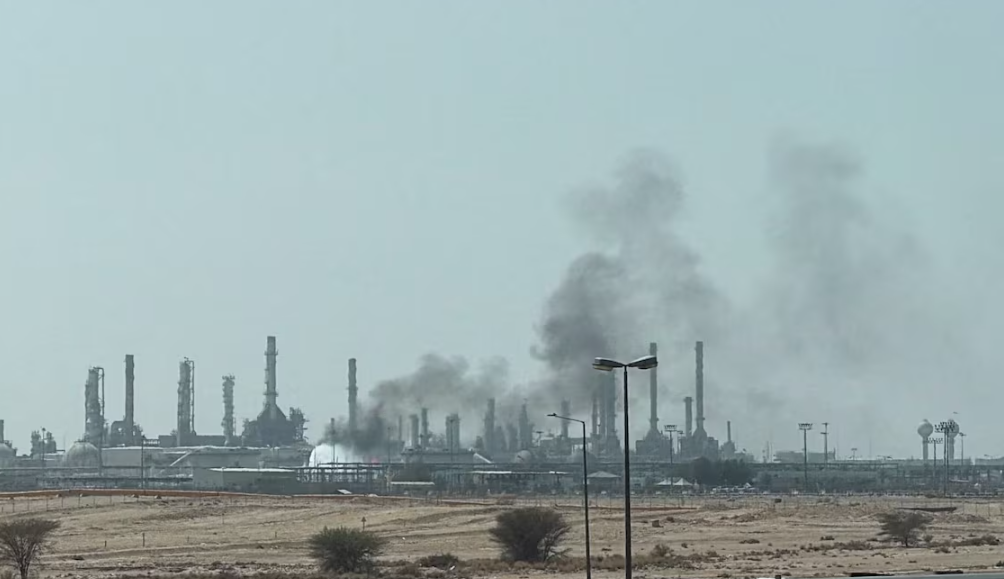
Oil Prices edged lower on Monday as rising crude exports from the Middle East and plans by Group of Seven nations to release emergency fuel stocks eased immediate concerns about global supply. However, ongoing attacks on energy infrastructure and commercial vessels in the Gulf continued to keep prices above $100 a barrel.
Brent crude futures fell 66 cents, or 0.65%, to $101.59 a barrel at 0240 GMT, while US West Texas Intermediate crude declined 95 cents, or 1.03%, to $90.12 a barrel. The market remained highly sensitive to developments surrounding the US-Israeli war on Iran and the security of Middle Eastern energy supplies.
Middle East Oil Exports Recover Toward Prewar Levels
One of the main factors weighing on oil prices was an increase in Middle Eastern crude exports. Shipping data showed that exports rose above prewar levels on four of the seven days during the final week of September.
The recovery came despite attacks on vessels traveling through the Strait of Hormuz, one of the world’s most important routes for oil transportation.
The improvement in export flows has helped ease some of the immediate concerns about physical crude availability. However, the cost and efficiency of transporting those barrels remain affected by security risks and disruptions across the region.
Tim Waterer, chief analyst at KCM Trade, said the G7 decision to use strategic reserves had reduced immediate supply concerns, while Saudi export volumes appeared to be moving closer to prewar levels.
He noted that oil prices remained vulnerable because the risk of additional damage to energy infrastructure across the Gulf had not disappeared.
G7 Plans Major Emergency Oil Stock Release
The latest price decline also followed a decision by G7 countries to release 100 million barrels of diesel and crude from emergency reserves.
The release was agreed after pressure from US President Donald Trump, who had urged major economies to take steps to increase fuel availability. G7 countries also pledged not to impose energy export restrictions as part of the agreement.
Strategic reserves are designed to provide additional supplies during severe disruptions. Bringing those barrels into the market can help reduce fears of shortages, particularly when geopolitical events threaten production or transportation routes.
The expected release therefore provided an additional source of supply at a time when traders were closely watching crude exports from the Middle East.
Why Oil Prices Remain Above $100
Despite Monday’s decline, Brent crude remained above the psychologically important $100-a-barrel level.
The market continues to price in a significant geopolitical risk premium because of the conflict involving Iran, attacks on commercial vessels and concerns about possible damage to oil production and transportation infrastructure.
ING analysts said persistent geopolitical tensions and an increase in attacks on commercial vessels in the Gulf were keeping Brent prices above $100.
This means that improving exports alone may not be enough to push oil prices sharply lower. Traders are also considering the possibility that another attack could disrupt production, shipping or refinery operations.
Houthi Attacks Add to Gulf Supply Concerns
Geopolitical risks increased further after Yemen’s Iran-backed Houthis said they had launched ballistic missiles and drones at Saudi Aramco sites in Riyadh and the Khurais area.
The Houthis said the attacks were carried out in response to 50 Saudi-led air and missile strikes in Yemen during the previous 12 hours. Saudi Arabia had not confirmed the Houthi claims at the time of the report.
Any confirmed damage to major oil facilities could have a significant impact on market sentiment because Saudi Arabia is one of the world’s largest oil producers and exporters.
Even without major physical supply losses, the possibility of attacks on energy infrastructure can increase the risk premium built into crude prices.
Saudi Arabia Cuts November Oil Prices for Asia
Saudi Aramco unexpectedly reduced its November Crude Oil prices for Asian customers to six-year lows.
The pricing decision comes as the oil market faces a complex combination of geopolitical supply risks and changing physical flows. Lower official selling prices can influence the competitiveness of Saudi crude in key Asian markets and provide an indication of how the producer views regional demand and market conditions.
At the same time, the continued geopolitical uncertainty means Saudi Arabia and other Gulf producers must balance commercial considerations with the security challenges affecting production and exports.
Saudi Oil Exports Move Closer to Normal
Saudi export volumes have shown signs of recovery toward prewar levels, helping to offset some concerns about supply shortages.
However, crude shipments are still facing higher costs and less efficient transportation routes because of security risks in the region.
This distinction is important for oil markets. An increase in export volumes does not necessarily mean that global supply conditions have returned completely to normal. Higher transportation costs, longer routes and security measures can continue to affect the economics of crude deliveries.
Strait of Hormuz Remains a Major Risk
The Strait of Hormuz remains one of the most important areas for the global oil market. Large volumes of crude and petroleum products move through the waterway, making its security critical for energy-consuming economies around the world.
Recent attacks on commercial vessels have increased concerns about the safety of shipping through the Gulf. Even when vessels continue to move, higher insurance costs, security precautions and alternative routes can increase transportation expenses.
For oil traders, the key question is whether these disruptions remain temporary or develop into a prolonged reduction in the movement of crude and refined fuels.
OPEC+ Delays 2027 Capacity Review
The geopolitical disruption is also affecting OPEC+ planning. The producer group has delayed a review that is expected to help determine members’ oil production quotas for 2027.
The review has become more difficult because the Iran war has disrupted projects aimed at expanding production capacity across the Middle East. As a result, estimates of future production potential have become less certain.
The capacity assessment is important because OPEC+ uses information about members’ production capabilities when determining how future output increases should be distributed.
With the review delayed, major changes to individual production quotas could also be pushed further into the future.
OPEC+ Supply Policy Faces More Uncertainty
OPEC+ has been gradually increasing production targets after years of supply cuts, but the conflict has made it difficult for some members to deliver their planned output.
The difference between official production targets and actual supply has become increasingly important for the market. Producers can have higher quotas on paper while physical exports remain constrained by infrastructure or security problems.
The delayed capacity review adds another layer of uncertainty because OPEC+ must determine future quotas at a time when the underlying production potential of several members is difficult to assess.
Ukraine Plans More Attacks on Russian Refineries
The global oil market is also facing supply risks outside the Middle East. Ukrainian President Volodymyr Zelenskiy told Reuters that Ukraine plans to intensify attacks on Russian oil refineries.
Refinery disruptions can affect the availability of petroleum products even when crude oil production remains relatively stable. Damage to refining facilities can reduce supplies of gasoline, diesel and other fuels, potentially affecting regional and global prices.
The development therefore adds another supply-side risk to an already volatile energy market.
Why the Oil Market Remains Volatile
Oil prices are currently being influenced by competing supply signals.
- Middle Eastern crude exports are recovering toward prewar levels.
- G7 countries are preparing to release emergency diesel and crude reserves.
- Saudi Arabia has reduced November crude prices for Asian buyers.
- Attacks on commercial vessels continue to threaten Gulf shipping.
- Houthi attacks are raising concerns about Saudi energy infrastructure.
- OPEC+ has delayed its review of future production capacity.
- Ukraine plans to increase attacks on Russian oil refineries.
These factors are pulling prices in different directions. Improving exports and strategic reserve releases can increase available supply, while attacks and geopolitical tensions can create expectations of future disruptions.
What Could Happen to Oil Prices Next?
The next major move in crude prices will likely depend on whether Middle Eastern exports continue to recover and whether attacks cause additional physical damage to energy infrastructure.
If exports return consistently to normal levels and emergency stock releases add significant supply, the immediate shortage premium could decline. That could put further downward pressure on Brent and WTI.
However, a major disruption to Saudi facilities, Gulf shipping or another critical part of the energy infrastructure could quickly reverse that trend.
Oil traders will therefore remain focused on actual shipments rather than official announcements alone. The physical availability of crude and refined products will be particularly important as the market assesses whether supply conditions are genuinely improving.
G7 Reserve Release Could Ease Short-Term Supply Pressure
The G7 decision to release emergency stocks provides an additional buffer for the global fuel market. Strategic reserves can help bridge temporary supply gaps and reduce the risk that short-term disruptions translate into severe shortages.
However, reserve releases cannot permanently replace lost production or exports. Their effectiveness depends on the scale and duration of the underlying disruption.
If Middle Eastern exports continue recovering, the G7 release could help accelerate the easing of supply concerns. If disruptions worsen, the additional barrels may provide only temporary relief.
Oil Market Enters a Critical Period
Monday’s decline in oil prices reflects improving supply signals rather than the disappearance of geopolitical risks.
Brent crude remains above $100 a barrel, showing that investors continue to attach a significant risk premium to Middle Eastern supply disruptions. The recovery in crude exports and planned G7 reserve releases have reduced some immediate concerns, but attacks on energy infrastructure and commercial shipping remain important threats.
OPEC+’s delayed capacity review further complicates the outlook for 2027, while potential attacks on Russian refineries add another source of uncertainty to global fuel supplies.
For now, the oil market is balancing improving physical flows against the possibility of renewed geopolitical disruptions. Whether Brent can move decisively below $100 will depend largely on the stability of Middle Eastern exports and the extent of any further damage to regional energy infrastructure.
Frequently Asked Questions
Why are oil prices falling on October 5, 2026?
Oil prices declined as Middle Eastern crude exports increased and G7 countries prepared to release emergency diesel and crude reserves, easing some immediate supply concerns.
What is the current Brent crude price?
Brent crude futures were around $101.59 a barrel in the latest market update, down 66 cents or 0.65%.
What is the current WTI oil price?
US West Texas Intermediate crude was trading around $90.12 a barrel, down 95 cents or 1.03%.
How much oil will the G7 release?
G7 countries agreed to release about 100 million barrels of diesel and crude from emergency reserves.
Why is Brent still above $100 a barrel?
Persistent geopolitical tensions, attacks on commercial vessels and concerns about potential damage to Gulf energy infrastructure continue to support a risk premium in oil prices.
What happened to Saudi Aramco sites?
Yemen’s Iran-backed Houthis said they launched missiles and drones at Saudi Aramco sites in Riyadh and the Khurais area. The claims had not been confirmed by Saudi Arabia at the time of the report.
Why has OPEC+ delayed its 2027 capacity review?
The Iran war has disrupted projects designed to expand production capacity across the Middle East, making estimates of future production potential more uncertain.
What factors will determine oil prices next?
Oil prices will depend on Middle Eastern export flows, the impact of G7 reserve releases, the security of the Strait of Hormuz, attacks on energy infrastructure, OPEC+ production policy and developments affecting Russian refinery output.
For breaking news and live news updates, like us on Facebook or follow us on Twitter and Instagram. Read more on Latest Business on thefoxdaily.com.






COMMENTS 0