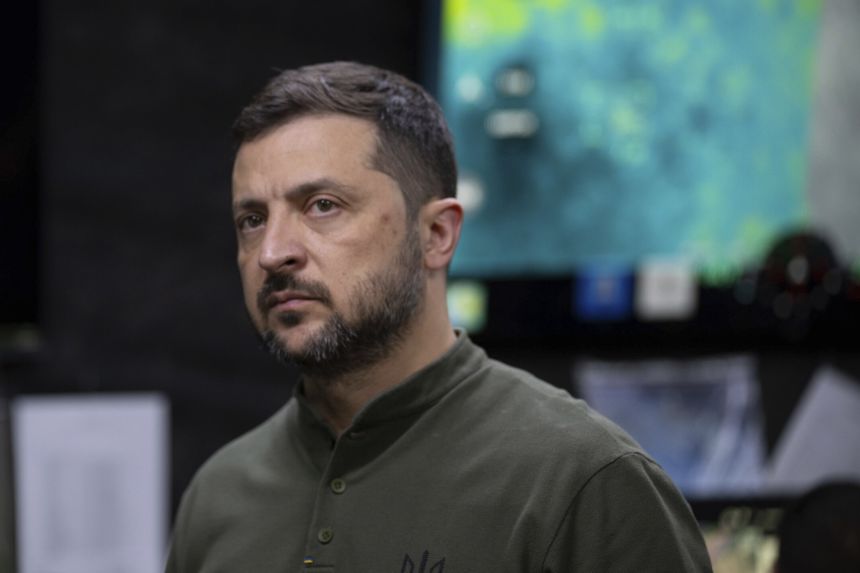
Ukraine plans to intensify attacks on Russian Oil refineries in response to what President Volodymyr Zelenskyy described as a new Russian strategy aimed at putting pressure on civilians and forcing people to leave Ukrainian cities.
Zelenskyy said Ukrainian intelligence had obtained documents indicating that Russian President Vladimir Putin had authorised a broader range of targets ahead of winter, including infrastructure, logistics and facilities in cities and villages.
According to Zelenskyy, Kyiv believes the strategy is designed to make life increasingly difficult for civilians and encourage people to abandon the capital and other Ukrainian cities. Ukraine, he said, intends to respond primarily by targeting infrastructure that supports Russia‘s war effort, particularly its energy sector.
Kyiv Plans More Attacks on Russian Oil Refineries
In an interview with Reuters, Zelenskyy said Ukraine would increase attacks on Russian oil refineries as Moscow intensifies strikes against Ukrainian energy infrastructure.
He said Kyiv’s response would focus on Russia’s energy sector rather than civilian targets. Oil refineries are strategically important because they process crude oil into fuels and other petroleum products that can support Military operations and the wider Russian Economy.
Zelenskyy described the strategy as a response to Russian attacks on Ukraine’s energy infrastructure and said Kyiv would seek to hit sources that generate revenue for Russia’s war effort.
At the same time, the Ukrainian president stressed that Ukraine would not deliberately target civilian objects. His comments draw a distinction between attacks on energy-related facilities supporting Russia’s military campaign and attacks on civilian infrastructure.
The remarks come as both sides prepare for another difficult winter, when damage to energy infrastructure can have consequences beyond electricity generation. Heating, transport, communications and other essential services can all be affected when critical infrastructure comes under sustained attack.
Ukraine Says Russia Has Broadened Its Winter Targeting
Zelenskyy said Ukrainian intelligence had obtained documents that point to what he described as a new Russian military doctrine for attacks during the winter period.
He said the documents indicate that Russian forces have been authorised to target a wider range of infrastructure and facilities, including logistics, roads, schools and hospitals in cities and villages.
Ukraine believes the objective is to put enough pressure on urban populations to encourage people to leave Kyiv and other cities.
These claims are based on Ukrainian intelligence assessments and statements from Zelenskyy. The supplied material does not provide independent confirmation of the alleged Russian documents or their contents.
Ukraine has nevertheless faced repeated Russian strikes affecting energy and civilian infrastructure throughout the war, making the prospect of another winter campaign a major concern for Kyiv.
Latest Russian Attacks Kill at Least Six
Russian attacks in Ukraine on Saturday killed at least six people and damaged Kyiv’s Northern Bridge, according to the supplied account of the latest fighting.
The damage to the bridge disrupted traffic for a third consecutive day, adding to the difficulties faced by residents of the Ukrainian capital.
The attacks follow earlier strikes that have affected apartment blocks, supermarket warehouses, petrol stations, data centres and other civilian or commercially important facilities.
Damage to transport infrastructure can create significant disruption even when a facility is not directly connected to the energy system. Roads and bridges are essential for the movement of people, goods and emergency services, particularly during periods of heightened military activity.
Ukraine Reports Gains in Eastern Donbas
Alongside the intensifying air war, Zelenskyy said Ukrainian forces have continued a counteroffensive known as Vivaldi.
According to his account, the operation has recaptured approximately 140 square kilometres, or 54 square miles, of territory in Ukraine’s eastern Donbas region.
Zelenskyy described the reported gains as a setback for Putin, who, according to the Ukrainian president, wants Russia to establish full control over the Donbas before agreeing to a peace deal.
The reported territorial gains come against the backdrop of prolonged fighting in eastern Ukraine, where both sides have sought to gain ground while attempting to exhaust the other’s military resources.
The significance of the reported counteroffensive will depend not only on the territory regained but also on whether Ukrainian forces can maintain their positions and continue disrupting Russian operations in the region.
Ukraine Faces Ammunition Pressure on Fighter Aircraft
Zelenskyy also highlighted a continuing challenge for Ukraine’s air defence and aviation capabilities: limited supplies of ammunition for its fighter aircraft.
Ukraine operates F-16s and MiG aircraft in its efforts to defend its airspace and intercept Russian aerial threats. Zelenskyy said these aircraft account for roughly 60% of Russian jet-powered drones brought down by Ukraine.
Maintaining the effectiveness of the fighter fleet therefore depends not only on having aircraft available but also on maintaining sufficient supplies of weapons and other equipment.
The shortage has encouraged Ukraine to pursue several additional layers of air defence, including electronic warfare, cheaper interceptors and domestically produced missile systems.
Kyiv Is Developing Better Drone Jamming
Ukraine is working to strengthen its electronic warfare capabilities as Russia develops and deploys increasingly sophisticated drones.
Zelenskyy said Kyiv is working to improve its jamming capabilities. Electronic jamming can interfere with communications, navigation or other systems used by certain unmanned aerial vehicles, potentially disrupting their ability to reach their intended targets.
The effectiveness of such systems varies depending on the design of the drone and the technologies being used to resist electronic interference. That makes the contest between Russian drone development and Ukrainian electronic warfare a rapidly evolving part of the conflict.
Ukraine is also pursuing physical interception as another layer of defence.
New Interceptors Planned for Jet-Powered Shahed Drones
Zelenskyy said Ukraine expected to receive its first shipment in the second half of October of small, relatively inexpensive air-defence missiles designed to intercept newer jet-powered Shahed drones.
The development reflects a basic problem faced by air-defence systems: using expensive missiles against relatively inexpensive drones can become difficult to sustain during prolonged attacks.
Smaller and cheaper interceptors could allow Ukraine to preserve more expensive air-defence ammunition for higher-value or more difficult targets while using lower-cost weapons against drones where appropriate.
The introduction of jet-powered versions of the Shahed family has also increased the challenge for Ukrainian defenders because faster drones can reduce the time available for detection, tracking and interception.
Ukraine Deploys Domestically Made FP-7 Missile
Ukraine has also begun deploying what Zelenskyy described as its domestically produced FP-7 ballistic missile.
He said the missile has a range of approximately 250 kilometres, or 155 miles.
Ukraine hopes to develop a longer-range version, identified as the FP-9, by autumn. If that target is achieved, the development could provide Kyiv with an additional domestically produced strike capability at a time when Ukraine is seeking to reduce dependence on foreign weapons supplies.
Long-range weapons have become an important element of Ukraine’s military strategy because they can allow Kyiv to strike targets supporting Russian operations at greater distances from the front line.
The development of indigenous missile and air-defence systems also reflects Ukraine’s broader effort to expand domestic defence production as the war continues.
Could Ukrainian Missiles Reach Moscow?
The expansion of Ukraine’s domestic missile programme also points to Kyiv’s wider effort to develop weapons capable of striking targets deeper inside Russian territory.
The FP-7 described by Zelenskyy has a reported range of around 250 kilometres, while Ukraine hopes to produce a longer-range FP-9. The supplied material does not provide a confirmed range for the FP-9 or establish that it will be capable of reaching Moscow.
What is clear from Zelenskyy’s comments is that Ukraine wants greater freedom to strike infrastructure supporting Russia’s military campaign without relying entirely on foreign-supplied weapons.
That ambition is closely connected to Kyiv’s plans for attacking Russian energy infrastructure, including oil refineries.
Latvia Election Reflects Continuing Russia Concerns
The war’s effects are also visible beyond Ukraine’s borders, particularly in neighbouring European countries. Latvia’s parliamentary election was dominated by concerns about Russia, National Security and the cost of living.
Exit polls published on Saturday night favoured Prime Minister Andris Kulbergs’s centrist, pro-Ukraine United List party, suggesting that Latvia would continue its pro-European and pro-Ukrainian direction.
With 72% of ballots counted, the United List stood at 36.5%, while the populist Latvia First was on 13.0%.
The results also indicated that domestic economic concerns remained important to voters. Populist parties performed strongly while campaigning on issues including the cost of living, particularly among Latvia’s Russian-speaking minority.
Latvia Rules Out Cooperation With Pro-Russian Parties
Kulbergs said his party would not cooperate with parties that support Russia.
He argued that economic ties with Russia could make Latvia more vulnerable because Moscow could potentially use those Relationships to exert influence.
The position reflects Latvia’s broader security concerns as a NATO member located close to Russia and within a region that has remained highly sensitive to the war in Ukraine.
Throughout the election campaign, Kulbergs also promised to expand Latvia’s anti-drone capabilities and maintain defence spending at 5% of gross domestic product, among the highest levels in NATO.
His pro-Kremlin rivals argued that Latvia should stop providing aid to Ukraine and place greater emphasis on domestic cost-of-living concerns, particularly among the country’s Russian-speaking population.
Baltic States Warn of Russian Hybrid Attacks
Latvia and its Baltic neighbours have repeatedly warned about what they describe as Russian sabotage, cyberattacks and other forms of hybrid activity across Europe.
The concern is that such operations could weaken European support for Ukraine, create fear among populations and place additional pressure on governments.
Some Western officials have questioned whether Russia has the capacity to launch a direct military attack against NATO, but the Baltic states remain particularly focused on strengthening their defences.
For Latvia, the combination of the war in Ukraine, Russia’s proximity and the possibility of cyber or sabotage operations makes defence policy a central domestic issue.
Cost of Living Complicates Latvia’s Ukraine Policy
Not all political debate in Latvia is centred on security. Populist and pro-Kremlin parties have argued that the government should reduce its focus on aid to Ukraine and devote greater attention to domestic economic pressures.
The cost of living has become particularly important for parts of Latvia’s Russian-speaking population, creating a political tension between national security concerns and immediate economic priorities.
The election results suggest that Latvia’s voters remain divided over how these priorities should be balanced, even as the country’s broader pro-European and pro-Ukrainian direction appears likely to continue.
Winter Could Intensify the Infrastructure War
The developments in Ukraine and Latvia point to the wider consequences of a war that has increasingly extended beyond conventional front-line battles.
For Ukraine, the approaching winter presents a familiar but potentially intensified challenge: protecting electricity, transport and other essential infrastructure while attempting to disrupt the systems that finance and support Russia’s military campaign.
Zelenskyy’s comments indicate that Kyiv intends to place greater emphasis on Russian oil refineries and other energy infrastructure while simultaneously strengthening its ability to defend against drones and missiles.
Ukraine’s strategy combines several approaches: more electronic warfare, cheaper air-defence interceptors, fighter aircraft, domestically produced missiles and continued strikes against infrastructure that supports Russia’s military effort.
Russia’s reported focus on infrastructure and cities, meanwhile, could place additional pressure on Ukraine’s civilian population during the colder months.
The War Is Becoming an Increasingly Complex Air Defence Battle
The latest developments underline how much the conflict has evolved into a contest of technology, industrial capacity and endurance.
Russia has continued developing and deploying drones, including faster jet-powered systems. Ukraine is responding with electronic warfare, fighter aircraft, new interceptors and domestic missile production.
At the same time, both sides are attempting to affect the other’s ability to sustain military operations by targeting infrastructure and economic resources.
For Ukraine, the immediate priority is to prevent Russian attacks from causing enough disruption to force large-scale civilian displacement while maintaining military pressure on Russian logistics and energy infrastructure.
Zelenskyy’s pledge to intensify refinery attacks signals that Kyiv intends to continue that strategy as winter approaches. Whether the approach changes the battlefield balance will depend on Ukraine’s ability to sustain its own weapons supplies, defend its cities and infrastructure, and convert reported territorial gains into lasting military advantages.
For breaking news and live news updates, like us on Facebook or follow us on Twitter and Instagram. Read more on Latest World on thefoxdaily.com.



COMMENTS 0