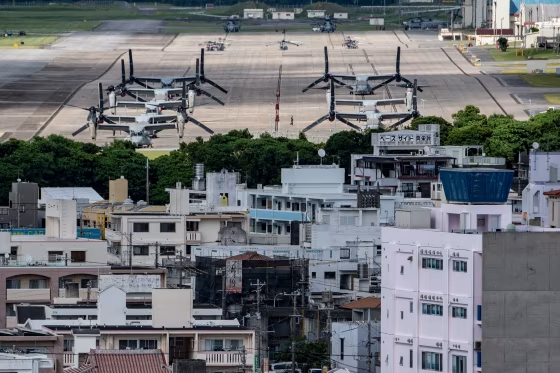
The U.S. Military in Okinawa, Japan, has paused operations for 48 hours, restricted troops from leaving their bases and ordered additional training after a Marine was arrested on suspicion of killing a local woman.
The measures follow the arrest of Lance CPL. Devin Jacob Ballard, a 20-year-old Marine stationed at Futenma Air Station, in connection with the death of 39-year-old Anna Yagi at a hotel in Naha, Okinawa’s capital.
The case has renewed longstanding concerns over the large U.S. military presence on Okinawa, where residents have repeatedly raised questions about Crime involving American service members and the impact of military installations on local communities.
U.S. Military Orders 48-Hour Pause in Okinawa
Lt. Gen. Benjamin Watson, commander of III Marine Expeditionary Force, announced the temporary restrictions in a letter posted on Social Media.
Watson said incidents such as the latest case “demand we pause for reflection” and emphasized that serving on Okinawa comes with responsibilities toward the local community.
The pause will run from Wednesday through Friday. During that period, service members will receive training focused on standards, discipline and their responsibilities as members of the Okinawan community.
Troops will also face restrictions on leaving military installations and interacting with people in the surrounding community.
Restricting the movement of service members after serious crimes is a measure military commanders can use to reinforce discipline while an incident is investigated and to remind personnel of expectations regarding conduct outside military facilities.
Watson emphasized that U.S. service members live and work alongside Okinawan residents and that their interactions with local people can influence trust in the military presence and the broader U.S.-Japan alliance.
Marine Arrested After Woman Is Found Dead
Okinawa prefectural police arrested Ballard on suspicion of strangling Yagi at a hotel in Naha early Saturday and stealing her wallet and backpack.
Ballard has denied the allegations, according to Japanese media reports. The Marine Corps said he is from Ohio.
police investigation into the case included security camera footage from the hotel. The footage showed a man entering the hotel with Yagi and later leaving alone.
Ballard was later arrested after a patrolling officer encountered him in an entertainment district in Okinawa City, roughly 15 miles northeast of Naha.
Kyodo News reported that the officer identified features including Ballard’s shaved head and tattoos on his arms as matching those visible in the security footage.
The allegations remain allegations as the Japanese legal process continues. An arrest does not establish guilt, and authorities will have to determine the facts and circumstances surrounding Yagi’s death through the investigation and subsequent proceedings.
Okinawa’s Longstanding Dispute Over U.S. Forces
The arrest has revived a much broader debate in Okinawa over the presence of American troops on the island.
Okinawa hosts a substantial concentration of U.S. military personnel and facilities, making the American military presence a major part of local life as well as a central element of the U.S.-Japan security relationship.
Okinawa was under U.S. occupation following World War II until control was returned to Japan in 1972.
Today, the U.S. population on the island is nearly 80,000, including about 30,000 active-duty troops from all four branches of the American armed forces. The Marine Corps accounts for a large share of the U.S. military presence there.
The scale of that presence has generated opposition among many Okinawans for decades, particularly over crime, noise, land use and the impact of military facilities on communities.
At the same time, the strategic importance of Okinawa has become increasingly prominent as Japan and the United States respond to security concerns involving china and the wider Indo-Pacific region.
Military-Related Crime Fuels Local Anger
Crime involving U.S. military personnel remains one of the most sensitive issues surrounding the American presence in Okinawa.
According to police figures cited in the supplied report, the number of military-related criminal cases increased to 101 last year from about 40 in 2020.
The figures have contributed to concerns among local residents about whether existing disciplinary measures and military education are sufficient to prevent serious incidents.
Kenji Higa, a resident of Okinawa City, criticized previous responses by the U.S. military to criminal cases, telling the Okinawa Times that discipline and troop education were not working effectively.
His comments reflect a broader frustration among some residents WHO argue that repeated training and temporary restrictions have not eliminated the problems associated with the presence of American troops.
1995 Rape Case Became a Major Turning Point
Okinawa’s opposition to the U.S. military presence has been shaped by several high-profile criminal cases.
One of the most consequential occurred in 1995, when three U.S. service members were involved in the rape of a 12-year-old girl.
The case sparked huge demonstrations and intensified demands for changes to the American military presence on Okinawa.
The protests demonstrated how crimes involving U.S. personnel can quickly develop into broader political disputes about the U.S.-Japan security arrangement and the distribution of military facilities across Japan.
The memory of the 1995 case continues to influence public attitudes toward the American military presence and the handling of later incidents.
2024 Case Renewed Questions About Transparency
More recent events have kept the issue politically sensitive.
There was anger in Okinawa after a U.S. service member was accused of raping a teenage girl in 2024. The case also generated criticism over the delayed disclosure of the crime.
For local residents and officials, such cases raise questions not only about the conduct of individual service members but also about how quickly authorities communicate information about serious crimes.
Transparency and accountability have therefore become recurring elements of the debate over the U.S. military presence.
The latest arrest is likely to bring those concerns back into public discussion as authorities investigate the circumstances surrounding Yagi’s death.
U.S.-Japan Security Ties Add Another Layer
The incident comes at a sensitive time for Japan’s defense policy.
Prime Minister Sanae Takaichi is seeking to strengthen Japan’s military capabilities on Okinawa and deepen cooperation with the U.S. military as Tokyo responds to security concerns related to China.
Okinawa’s strategic position makes the island particularly important to those plans. But expanding or strengthening military cooperation can be politically difficult when local residents remain concerned about the consequences of hosting large numbers of foreign troops.
That creates a complicated balance for Japanese authorities. The U.S. military presence is viewed as strategically significant by the two governments, while sections of the Okinawan population continue to oppose its scale and associated risks.
Why Okinawa Is Strategically Important
Okinawa is located in a strategically important part of the western Pacific. Its proximity to areas of increasing military competition has made it an important location for U.S. and Japanese defense planning.
For Washington and Tokyo, American bases on the island contribute to the broader regional security relationship. For Okinawan communities, however, the strategic importance of the bases does not necessarily eliminate concerns about their local impact.
This tension has existed for decades and has become more complicated as regional security concerns have increased.
Some residents who have historically opposed the U.S. military presence have also recognized its strategic value in light of what is widely viewed as a growing threat from China.
As a result, public opinion surrounding the bases cannot be reduced to a simple division between support and opposition. Security concerns, community safety and the economic and social consequences of hosting military facilities all form part of the debate.
Community Trust Is Central to the Military Response
Watson’s response to the arrest focused heavily on trust between American service members and Okinawan residents.
He said U.S. personnel live, work and socialize alongside the local population and that every interaction can either strengthen or undermine Relationships with the community.
That relationship has implications beyond individual military installations. Trust between the U.S. military and Okinawan communities is closely connected to public acceptance of the broader American presence.
Watson also linked the issue to the strength of the U.S.-Japan alliance and regional security, arguing that damage to local trust can have consequences for the wider partnership.
The 48-hour pause and mandatory training are intended to reinforce those responsibilities, but local reactions indicate that some residents remain skeptical about whether such measures can address deeper concerns.
Restrictions Aim to Reinforce Discipline
The decision to temporarily restrict troops from leaving their bases is not unusual following serious crimes involving military personnel.
Such measures allow commanders to reinforce standards and provide additional instruction while limiting interactions between service members and the surrounding community for a short period.
In Okinawa, however, the impact of the policy goes beyond internal military discipline because relations between American troops and local residents have a long and complicated history.
The effectiveness of the latest measures will therefore be judged not only within the military but also against the broader question of whether criminal incidents involving U.S. personnel can be reduced and whether local confidence in military accountability can be maintained.
What the Arrest Means for Okinawa
The investigation into Yagi’s death remains the immediate focus following Ballard’s arrest. Japanese authorities will determine the evidence and circumstances surrounding the case, while the U.S. Marine Corps will address its responsibilities regarding the service member.
For Okinawa, however, the incident has already reopened a much larger discussion about the costs and responsibilities associated with hosting a major American military presence.
The island remains strategically important to both Japan and the United States, particularly as regional security tensions increase. At the same time, the latest arrest demonstrates why community relations remain an important part of the military relationship.
The U.S. military’s temporary pause, restrictions on troop movement and additional training are intended to reinforce discipline and community responsibilities. Whether those steps ease local concerns will depend in part on the outcome of the criminal investigation and on how authorities address the longer-term issues surrounding crime, transparency and trust in Okinawa.
For breaking news and live news updates, like us on Facebook or follow us on Twitter and Instagram. Read more on Latest World on thefoxdaily.com.






COMMENTS 0