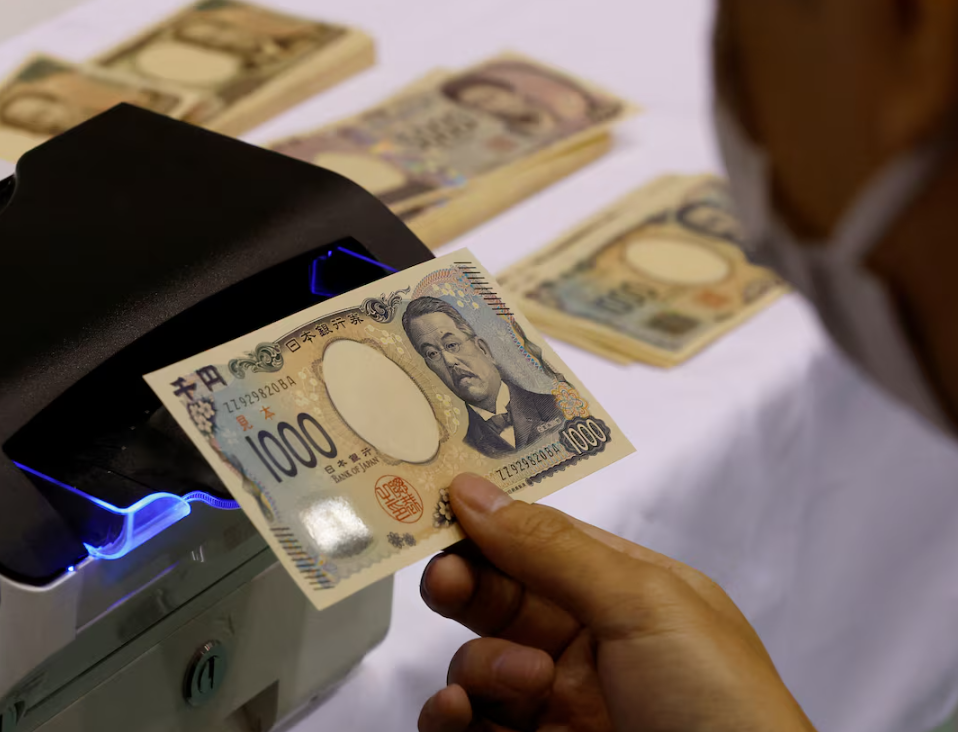
Japan’s long-awaited repatriation of overseas assets is beginning to emerge, but uncertainty over how high Japanese bond yields will rise is preventing major investors from moving money home at a faster pace. The cautious approach is keeping a huge pool of Japanese capital invested overseas and limiting the potential for a sustained strengthening of the yen.
The key issue for Japanese investors is increasingly the direction of domestic interest rates. The Bank of Japan (BOJ) raised rates last week and has signalled its determination to address inflation, but investors remain uncertain about how much further rates could rise and where Japanese government bond yields will eventually peak.
Japanese Investors Wait for Bond Yields to Stabilise
Japanese investors have historically held substantial amounts of overseas bonds and other assets, partly because domestic interest rates remained extremely low for many years. That investment strategy is now becoming less attractive as Japanese government bond yields climb.
The benchmark 10-year Japanese government bond yield has risen by roughly two percentage points in less than two years, reaching a 30-year high above 3%, according to the Reuters report. The sharp increase has changed the calculation for investors comparing domestic bonds with foreign assets.
However, the rise in yields also creates a dilemma. Investors who move into Japanese bonds too early could face valuation losses if yields continue climbing and bond prices fall further.
This is why some market participants are describing Japanese government bonds as a “falling knife” that investors do not want to catch before the market stabilises.
“Nobody wants to catch the falling knife,” State Street Global Advisors senior portfolio manager Aaron Hurd said, highlighting the concern that investors want clearer evidence that Japanese yields have reached their peak before making larger allocation changes.
Repatriation Has Started, But the Bigger Shift Is Still Pending
There are already signs that Japanese money is moving back toward domestic markets. Investors purchased 4.8 trillion yen of sovereign debt in the previous month, the largest net purchase in three months, according to Barclays analysis of Japan Securities Dealers Association data.
Banks and insurers were among the buyers, suggesting that some domestic institutions are already responding to the changing relative attractiveness of Japanese bonds.
Japanese banks have also reduced their holdings of foreign bonds. HSBC estimates that Japanese banks have sold about $70 billion of foreign bonds this year, compared with purchases of roughly $35 billion last year.
That shift matters beyond Japan because Japanese institutions are major participants in international bond markets. A sustained reduction in their overseas holdings could affect demand for government bonds and other fixed-income assets in markets such as the United States, Europe and Australia.
However, the available data does not yet indicate that Japan’s biggest institutional investors have completed a major strategic reallocation toward domestic bonds.
Life Insurers Could Become a Major Source of Repatriation
Japanese life insurers are particularly important to the repatriation story because of the enormous size of their balance sheets. The sector holds about 438.6 trillion yen, equivalent to roughly $2.78 trillion.
Because of the size and long-term nature of their portfolios, life insurers typically make allocation changes gradually rather than responding immediately to market movements.
That makes their behaviour one of the most important indicators for investors watching Japanese capital flows. If insurers begin increasing domestic bond allocations after yields stabilise, the resulting demand could be considerably larger than the initial moves already visible in the market.
For now, however, broad portfolio figures do not provide a clear picture of the scale of any such shift.
Yen Short Sellers Have Already Pulled Back
The currency market has already experienced a significant change in positioning. Speculative traders reduced their bearish bets against the yen during the first half of September, with positioning flipping from a deep net short to the largest net long position since July 2025.
The net long position reached about $9.7 billion, according to the report.
This reversal suggests that some of the faster-moving parts of the yen trade have already adjusted to the BOJ’s policy shift and the prospect of higher Japanese interest rates.
Deutsche Bank fixed-income strategist Shoki Omori described the distinction as one between “fast money” and “slow money.” According to his assessment, speculative carry trades have already been unwound, while the much larger structural repositioning of Japanese pensions and households has yet to fully begin.
Yen Gives Back Much of Its Early September Gains
Despite the change in speculative positioning, the yen has struggled to maintain its early September gains. The currency was trading near 159 yen per dollar on Friday, after briefly strengthening significantly earlier in the month.
The yen remains down only about 1% for the year, but its longer-term decline has been substantial. In July, the currency reached a near four-decade low, falling to just below 164 yen per dollar.
The current exchange rate remains close to the six-month median forecast of 157 yen per dollar from analysts surveyed by Reuters earlier in September.
The difference between speculative positioning and the actual exchange rate highlights an important feature of the current market. Traders may have reduced their bearish yen bets, but that does not automatically create the sustained capital flows required for a much stronger currency.
Global Interest Rates Complicate Japan’s Yen Outlook
Japan’s domestic policy shift is also taking place against a changing global interest-rate environment. Major central banks have been responding to inflationary pressure, including the effects of higher energy prices associated with the Middle East conflict.
If interest rates outside Japan continue to rise or remain elevated, the yield advantage available from overseas assets could remain significant even as Japanese yields climb.
This creates a challenge for the BOJ. Japanese rates may need to rise enough to make domestic assets more attractive, but aggressive tightening could also have broader consequences for economic activity and financial markets.
At the same time, rising US Treasury yields can continue to support the dollar against the yen by maintaining a relatively wide interest-rate differential between the two economies.
Why the Government Pension Investment Fund Matters
One of the biggest potential catalysts for faster repatriation is Japan’s Government Pension Investment Fund, commonly known as GPIF.
The fund manages approximately $1.8 trillion and is one of the world’s largest institutional investors. Its asset-allocation decisions can therefore have a significant impact on Japanese financial markets.
Japan’s finance minister has encouraged the GPIF to increase its allocation to domestic markets. Analysts say that an official shift by the fund toward Japanese assets could influence other large domestic investors.
If the GPIF were to formally increase its domestic Japanese government bond allocation, other pension funds, insurers and institutional investors could reassess their own portfolios.
The significance would go beyond the GPIF itself. A large institutional shift could provide investors with stronger evidence that Japanese yields are becoming sufficiently attractive relative to overseas assets.
Domestic Bond Demand Could Strengthen the Yen
A substantial increase in domestic bond purchases could affect the yen through several channels.
Japanese investors that sell overseas assets and bring the proceeds back into Japan need to convert foreign currencies into yen. Increased demand for yen can support the currency, particularly if the repatriation is large and sustained.
The impact would be especially important if large institutional investors such as life insurers and pension funds participate at the same time.
However, the timing remains uncertain. Investors are currently waiting for clearer evidence that Japanese interest rates and bond yields are approaching a level where further increases become less likely.
That waiting period is one reason why the yen has not yet entered a sustained strengthening trend despite the BOJ’s recent policy tightening.
What Could Trigger a Faster Repatriation Wave?
Several developments could encourage Japanese investors to accelerate the movement of overseas assets back into domestic markets.
- A clear peak in Japanese bond yields: Investors could become more comfortable buying JGBs if they believe yields have stopped rising.
- Further evidence of BOJ policy normalisation: Greater clarity about the central bank’s future rate path could reduce uncertainty.
- Higher domestic bond returns: If Japanese bonds offer more competitive returns than hedged overseas debt, domestic assets could become increasingly attractive.
- A GPIF allocation shift: A formal increase in domestic investments could encourage other large Japanese institutions to follow.
- Stabilisation in global yields: Lower pressure from rising US and other foreign yields could make Japanese assets relatively more appealing.
The combination of these factors could determine whether the current early-stage repatriation develops into a much larger capital-flow trend.
Why the Repatriation Story Matters for Global Markets
Japan’s overseas investment pool is large enough that even a gradual reallocation can influence international financial markets. Japanese institutions have historically been important buyers of foreign government bonds, corporate debt and other assets.
If those investors increasingly prefer domestic bonds, demand for overseas debt could decline. This could affect bond yields and currencies in markets where Japanese institutions have been significant investors.
The effects would not necessarily occur immediately. Large institutional portfolios are generally adjusted over time, and investors must consider currency hedging, asset-liability matching, liquidity and expected returns before moving large amounts of capital.
That is why market participants are watching the behaviour of Japan’s banks, life insurers and pension funds rather than relying only on short-term currency movements.
Japan’s Bond Market Is Now a Key Currency Indicator
The relationship between Japanese government bond yields and the yen has become increasingly important as Japan moves away from its long period of exceptionally low interest rates.
For years, investors could borrow cheaply in yen and invest in higher-yielding assets abroad. That strategy, commonly associated with the yen carry trade, contributed to persistent pressure on the Japanese currency.
With Japanese rates now higher, part of that trade has already been reversed. But the next stage depends less on speculative traders and more on whether Japan’s large institutional investors decide that domestic assets have become sufficiently attractive.
This makes the future path of JGB yields one of the most closely watched indicators for the yen and Japanese capital flows.
What Investors Are Watching Next
Markets are likely to focus on the BOJ’s future policy signals, movements in 10-year JGB yields, GPIF allocation decisions and portfolio activity by Japanese life insurers and banks.
They will also monitor US Treasury yields because the interest-rate gap between Japan and the United States remains a major influence on dollar-yen trading.
For now, Japan’s repatriation story remains in its early stages. Fast-moving speculative positions against the yen have already changed, but the much larger structural flow of Japanese household and institutional assets remains uncertain.
The central question is therefore not whether Japanese investors are beginning to look homeward, but whether they will become confident enough in domestic bond valuations and the BOJ’s rate path to move substantially more money back to Japan.
Until that confidence develops, the “falling knife” problem in Japanese bonds is likely to keep the repatriation wave measured rather than sudden, leaving the yen without the sustained capital-flow support needed for a major and lasting strengthening trend.
FAQs
Why are Japanese investors considering bringing money home?
Rising Japanese government bond yields have made domestic assets more attractive compared with some overseas investments, particularly after accounting for currency hedging costs.
Why are investors hesitant to buy Japanese government bonds?
Investors are concerned that yields could continue rising. Since bond prices generally fall when yields rise, buying too early could result in valuation losses.
What is the yen carry trade?
The yen carry trade generally involves borrowing or financing positions in a low-yielding yen and investing in assets that offer higher returns elsewhere. Higher Japanese interest rates can make this strategy less attractive.
How has yen positioning changed recently?
Speculative positioning shifted from a deep net short position to a net long position of about $9.7 billion during the first two weeks of September, according to the Reuters report.
Why is the GPIF important for Japan’s markets?
The Government Pension Investment Fund manages about $1.8 trillion, so changes in its asset allocation could influence other Japanese institutional investors and domestic bond demand.
Could Japanese repatriation strengthen the yen?
A large-scale repatriation could increase demand for yen as overseas assets are converted back into the Japanese currency. The actual impact would depend on the size and timing of the flows and other global market conditions.
What role do Japanese life insurers play?
Japanese life insurers manage hundreds of trillions of yen in assets and are major institutional investors. A significant shift toward domestic bonds could therefore have an important effect on capital flows.
When could Japanese repatriation accelerate?
Market participants cited in the report suggest that clearer evidence that Japanese yields have peaked could encourage larger investors to increase domestic allocations. The timing remains uncertain.
For breaking news and live news updates, like us on Facebook or follow us on Twitter and Instagram. Read more on Latest Business on thefoxdaily.com.






COMMENTS 0