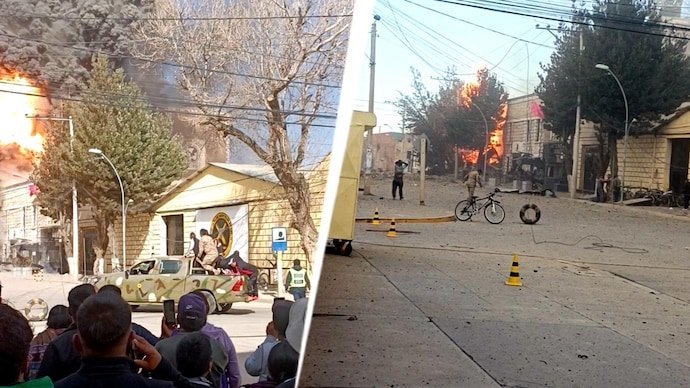
At least 10 people were reported killed and dozens more injured after a powerful Explosion struck a Military facility in Viacha, Bolivia, on Friday, September 4. The blast, which occurred in the afternoon, triggered panic across the city as people ran for cover and emergency crews rushed toward the affected compound.
Bolivian authorities said the explosion occurred at about 2:30 p.m. local time inside an area used to store fireworks or other pyrotechnic material. The incident caused extensive damage within the military compound and sent a heavy column of black smoke into the sky.
Early casualty figures changed rapidly as emergency operations continued. While local officials initially reported dozens of injuries and no confirmed fatalities, later reports indicated that the death toll could be significantly higher. Health officials also said the majority of those hurt were civilians rather than military personnel.
Videos recorded by people nearby showed the moment of the blast and the confusion that followed. The footage captured residents scrambling away from the explosion, while another widely circulated video showed thick smoke rising above the military facility.
What happened at the Bolivia military base?
The explosion took place at the Centro General de Mantenimiento of the RAM-2 “Bolívar”, a military installation in Viacha in Bolivia’s La Paz department. Local reports said the facility contained pyrotechnic materials that were part of the Ministry of Defence’s inventory.
Bolivia’s Defence Minister Ernesto Justiniano said the blast occurred in an area where fireworks were stored. Authorities described the event as an accidental detonation of pyrotechnic material, although an Investigation was launched to establish precisely how the explosion occurred and whether storage or handling procedures played a role.
The location of the facility added to the danger. The military complex is situated within the urban area of Viacha, meaning that the effects of the blast extended well beyond the walls of the installation.
The force of the explosion damaged surrounding structures and homes. Residents reported broken windows and other damage caused by the shock wave, demonstrating how powerful the blast was.
Death toll and injury figures remained fluid
The casualty count was uncertain during the first hours following the explosion. Initial official statements focused on material damage and did not immediately confirm deaths. As medical teams evaluated victims and authorities gathered information, reports of fatalities and injuries increased.
Local health authorities later estimated that between 10 and 15 people may have died, while more than 50 people were reported injured. Other updates put the number of injured at around 58 to 62 as hospitals and emergency services continued to receive patients.
Such rapidly changing numbers are common after major explosions because authorities must identify victims, assess people treated at multiple hospitals and determine whether individuals initially listed as missing are among those affected.
Defence officials said the majority of those injured were civilians. One early breakdown indicated that 52 civilians and six military personnel were among those injured, although subsequent local reports suggested the overall number could be higher.
Civilians were caught in the blast
The high number of civilian casualties reflects the location of the military facility and the scale of the explosion. Viacha is not an isolated military zone; the installation is surrounded by residential and urban areas.
People outside the base were therefore exposed to the shock wave, flying debris and shattered glass. Some of those injured were residents who happened to be near the military complex when the explosion occurred.
Local authorities also reported that homes were damaged by the blast. Windows were broken in nearby properties, while residents described the sound of the explosion as powerful enough to be heard across several parts of the city.
The civilian impact has increased pressure on authorities to determine how potentially hazardous pyrotechnic materials were being stored inside a facility located so close to homes and public areas.
Videos show panic as people scramble for cover
Mobile phone footage became an important record of the incident almost immediately after the explosion. Several videos showed people reacting to the sudden blast and attempting to move away from the area.
One of the most widely shared sequences captured the chaos surrounding the blast, with people scrambling for cover as smoke and debris filled the vicinity. Other footage showed a large plume of dark smoke rising from the military compound and becoming visible across Viacha.
The images helped illustrate the scale of the incident before authorities released a complete assessment. They also showed how quickly residents responded to the danger, with people leaving streets near the installation as emergency vehicles arrived.
Because the videos circulating online were recorded from different locations, they provide visual evidence of the explosion’s intensity but do not by themselves establish the exact sequence of events or the final casualty count.
Emergency response launched after the explosion
Ambulances, medical teams, firefighters and police were sent to the military facility following the blast. Emergency personnel worked to evacuate injured people and transport them to hospitals and other health centres.
Medical responders faced the additional challenge of operating near an active blast site. Local health authorities warned that a heat source remained at the location, creating the possibility of another explosion.
Residents were urged to remain away from the area while emergency crews secured the site. A safety perimeter of roughly 150 metres was recommended because of the continuing risk.
Rescue teams were also tasked with helping relatives of those who were injured or potentially missing. Officials said efforts were being made to assist affected families while authorities continued assessing the damage.
Why the presence of pyrotechnic material matters
The reported presence of fireworks or other pyrotechnic material is central to the investigation. Pyrotechnic substances can burn rapidly and, when stored in sufficient quantities or under unsuitable conditions, can turn an initial fire or detonation into a much larger incident.
Authorities have not publicly established what triggered the first detonation. It remains unclear whether the material ignited because of heat, an accidental event, an electrical problem, human error or another cause.
That distinction will matter because investigators will need to determine whether the explosion was an isolated accident or whether it exposed broader problems involving storage, inventory management, fire prevention or safety procedures.
Firefighters warned of another possible explosion
The emergency did not necessarily end with the initial blast. Local health officials said firefighters detected a remaining heat source at the site, prompting warnings that another explosion could occur.
The warning helps explain why authorities established a safety perimeter and asked residents to stay away from the military compound. Secondary explosions are a serious concern whenever unexploded or heat-sensitive materials remain inside a damaged storage area.
Keeping civilians at a safe distance also gives specialized emergency teams room to inspect the facility, identify dangerous materials and extinguish remaining hot spots without exposing large numbers of people to additional risk.
Homes damaged by the shock wave
The blast had consequences beyond the military compound itself. Police and local officials reported damage to dozens of homes in surrounding areas.
The shock wave was strong enough to break windows and damage residential property, adding to the disruption faced by people living near the base. For residents, the event was not simply a military accident occurring behind a secure perimeter; its physical effects reached directly into the surrounding community.
Authorities are expected to assess the structural and property damage as part of the wider response. Determining the extent of damage will also be important for understanding how far the explosion’s impact travelled from the original blast site.
Viacha’s location increased the impact
Viacha is a city of roughly 100,000 people located about 30 kilometres southwest of La Paz, Bolivia’s administrative capital. The city’s population density around the military facility meant that a major explosion had the potential to affect a large number of civilians.
The incident therefore carries implications beyond the immediate casualty figures. It has raised questions about the compatibility of storing explosive or pyrotechnic materials within an urban Environment and about the safeguards required when such facilities are located close to residential neighbourhoods.
Urban military installations often have to balance operational requirements with public safety. When an accident occurs, the proximity of civilians can dramatically increase the consequences of an otherwise contained incident.
Investigation into the cause begins
Bolivian authorities have opened an investigation into the explosion. Investigators will need to reconstruct what happened in the minutes before the blast, identify the material involved and determine the chain of events that caused it to detonate.
The condition of the storage area, the amount and type of pyrotechnic material present, safety measures, maintenance records and possible ignition sources are likely to be central to the inquiry.
Officials will also have to establish whether the event involved a single detonation or a sequence of explosions. Witnesses in Viacha reported multiple loud blasts, while early local reports described more than one powerful explosion.
Until the investigation is completed, the precise cause should not be assumed. The fact that pyrotechnic material was involved identifies an important part of the incident but does not by itself explain what initiated the explosion.
What happens next?
The immediate priority for authorities is likely to remain medical treatment, Search and Rescue operations, site security and the prevention of another detonation. Families of victims will also need clear information as casualty figures are confirmed.
A separate phase of the response will focus on documenting damage to homes and Infrastructure. The government may also have to examine whether residents affected by the blast require assistance with repairs or temporary relocation.
Once the site has been made safe, investigators will be able to conduct a more detailed examination of the military facility. Their findings could determine whether changes are needed in the way pyrotechnic materials are stored, transported or handled at military installations.
For Viacha residents, the central concern is likely to be whether the military facility can operate safely in such close proximity to a populated area. The deaths, injuries and property damage from the September 4 explosion have turned that question into a matter of immediate public concern.
Bolivia military base blast highlights wider safety concerns
The Viacha explosion is a reminder of the risks created when combustible or explosive materials are stored in environments where military operations and civilian life exist side by side.
The evolving death toll has also shown why casualty figures following large explosions can change substantially in the first hours. Initial assessments often capture only patients who reach medical facilities quickly, while missing persons, critically injured victims and deaths confirmed later can alter the overall picture.
As emergency crews continue their work and investigators establish the cause, the full consequences of the Bolivia military base blast will become clearer. What began as a sudden explosion at a military installation has already left civilians injured, homes damaged and a city shaken, with authorities now facing the difficult task of explaining how such a devastating incident occurred.
For breaking news and live news updates, like us on Facebook or follow us on Twitter and Instagram. Read more on Latest World on thefoxdaily.com.





COMMENTS 0