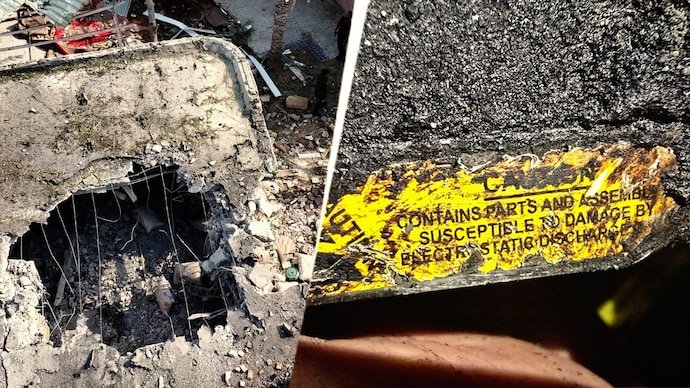
A deadly explosion at a wedding gathering in southern Iran has intensified scrutiny of Civilian Casualties in the ongoing US-Iran conflict after weapons experts concluded that the damage was likely caused by a direct hit from a US munition.
The blast struck a home in Kuhestak, in Hormozgan province, on September 1 as dozens of people were attending a wedding. Iranian authorities and local monitoring groups initially reported four deaths and more than 50 injuries. A fifth person, a 22-year-old woman, later died in hospital, bringing the reported death toll to five, with nearly 70 people injured.
The incident has become one of the most closely watched cases involving civilian casualties during the latest phase of the US military campaign against Iran. The United States says it did not intentionally target civilians and has launched an Investigation into what happened.
US Vice President JD Vance said Thursday that Washington was investigating the reports. He said the administration wanted to determine whether US forces were responsible and whether an error had occurred during the operation.
The Pentagon has also acknowledged awareness of the reports and said the circumstances were being reviewed.
The evidence now emerging from the site, however, has raised difficult questions about the intended target, the accuracy of the strike and the risks of attacking military or dual-use Infrastructure near populated areas.
What happened at the Kuhestak wedding?
The explosion occurred late on September 1 in the coastal town of Kuhestak, an area close to the strategic Strait of Hormuz.
According to eyewitness accounts, dozens of residents had gathered at a private home for a wedding ceremony when an explosion struck the building.
Images and video from the aftermath showed extensive damage to the structure, debris scattered around the property and personal belongings left among the rubble. Shoes and wedding decorations were visible at the site, illustrating how quickly a celebration had turned into a mass-casualty scene.
One eyewitness described several nearby homes as also having been damaged and said people were trapped under the rubble immediately after the explosion.
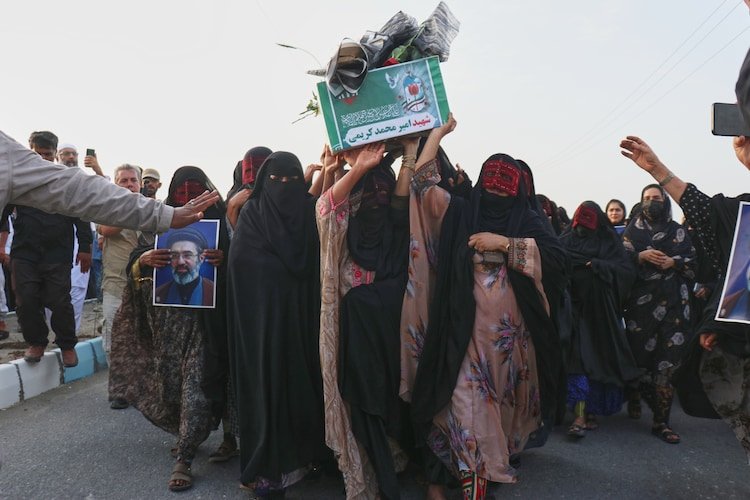
Local residents later attended funerals for those who died. Images from the funeral showed mourners carrying coffins through the community, including the small coffin of a four-year-old child identified as Amir Mohammad Karimi by Human Rights groups and Iranian media.
The reported victims included wedding guests as well as another person who was killed near the communications facility targeted in the area.
Why experts believe the house was hit directly
The most significant development in the case came from a review of visual evidence by weapons specialists.
Images and video of the strike site were verified and then examined by military and explosives experts. Their analysis focused on the point of impact, the pattern of structural damage and the trajectory suggested by the damage to the building.
The experts concluded that the hole and blast damage on the roof were consistent with a munition hitting the structure directly or detonating immediately above it.
That finding is important because one possibility under examination by US officials was that the damage might have resulted from an Iranian air-defence missile or from fragments or debris produced by a nearby strike.
The weapons experts who reviewed the evidence considered that explanation unlikely.
Trevor Ball, a former US Army explosive ordnance disposal technician and weapons analyst, said the visible damage appeared consistent with a munition detonating on contact with the roof or just above it.
British Army veteran Gareth Collett, who specialised in bomb disposal and explosives engineering, similarly assessed the evidence as more consistent with a US air-dropped weapon than an Iranian air-defence missile.
Researcher Sebastian Schutte of the Peace Research Institute Oslo also concluded that the available visual evidence did not support the theory that the house had simply been struck by a ricocheting projectile from the nearby target.
The experts’ assessment does not by itself establish who fired the weapon with absolute certainty. But it significantly narrows the possible explanations for how the building was destroyed.
Was the US targeting a communications tower nearby?
Two US officials said American forces had carried out strikes in the Kuhestak area on September 1 and that a telecommunications tower was among the intended targets.
The tower was reportedly about 135 metres from the wedding site, according to satellite imagery.
Iranian media reported that the tower was struck at about 9:30 p.m. local time.
The location of the tower is central to the investigation because it provides a possible explanation for why US forces were operating in the immediate area when the wedding house was hit.
Iranian telecommunications authorities have said the facility was a civilian communications structure providing mobile, telephone and internet services to people in the surrounding Sirik County.
The US, however, has targeted Iranian communications and radar infrastructure during the conflict because some of these facilities are considered to have military value.
This creates a particularly complicated question for investigators: even when a communications facility has a military function, an attack carried out close to civilian homes carries the risk of unintended casualties.
Could the munition have missed its intended target?
One possible explanation being examined is that the munition intended for the nearby communications facility missed its target and struck the wedding house instead.
Collett said accidental misses can occur even when highly sophisticated weapons are used, particularly in large-scale military operations involving numerous strikes.
That possibility is now part of the US investigation.
The distinction matters because a deliberate attack on civilians and an unintended civilian casualty caused by a strike on a military or dual-use target raise very different legal and operational questions.
Determining what happened requires investigators to establish the intended target, the weapon used, its flight path, the precise point of impact, the circumstances surrounding the strike and whether appropriate precautions were taken to minimise civilian harm.
The available independent analysis provides evidence about the physical impact, but it does not answer every question about the decision-making behind the strike.
Why US officials are investigating the incident
Vance said the United States was investigating because Washington wanted to establish the facts and learn from any mistakes made during military operations.
At the same time, he expressed scepticism about Iranian state media accounts of the conflict and reiterated the US position that its military does not intentionally target civilians.
The US military has also said it is aware of reports regarding the wedding strike.
The investigation is particularly significant because of the scale of the reported casualties and the possibility that American forces may have caused them.
Any official finding could influence scrutiny of the US campaign in Iran, especially if investigators determine that a US munition directly struck the home.
It could also raise questions about the identification of targets near civilian communities and the procedures used to assess collateral damage before attacks.
Five people are now reported dead
The death toll has changed since the initial reports of the strike.
Human rights monitoring groups Balochistan Human Rights Documentation Network and Haalvsh initially reported four deaths and 68 injuries. Iranian state television later reported that a 22-year-old woman died in hospital, bringing the total number of deaths to five.
Among those reported killed were wedding guests and a child.
The victims identified by the monitoring organisations included 43-year-old Kolsoom Mollahi Najhandania, 50-year-old Zarkhatoon Taheri and four-year-old Amir Mohammad Karimi. Sixteen-year-old Mohammad Mallahi was also reported killed while riding his motorcycle near the communications tower.
The names were subsequently reported by Iranian media.
The identities matter because civilian casualty investigations often rely not just on physical evidence but also on reconstructing who was at the location and why they were there.
In this case, the fact that a wedding was taking place inside the damaged home means investigators will also have to establish the number of people present and distinguish casualties at the residence from those injured elsewhere in the surrounding strike area.
Why this strike is drawing comparisons with the Minab school attack
The Kuhestak explosion has renewed attention on another major civilian casualty incident during the conflict: the destruction of a primary school in Minab on February 28.
Iranian officials said more than 175 children and teachers were killed in that attack, making it the deadliest reported civilian incident associated with the opening phase of the current conflict.
The Pentagon has not publicly released a complete investigation into the Minab strike. However, reporting earlier this year indicated that an initial internal US military assessment concluded that American forces were likely responsible.
That unresolved history has made the latest wedding strike particularly sensitive.
If the US investigation concludes that an American weapon directly struck a civilian gathering again, questions will likely intensify about how targets are selected and how civilian risks are evaluated during operations in populated areas.
The comparison does not establish that the two incidents occurred for the same reasons. The circumstances of each strike still need to be established independently.
Why communications facilities are being targeted
The location of the Kuhestak strike is closely linked to the military importance of communications infrastructure around the Strait of Hormuz.
Throughout the conflict, American forces have repeatedly targeted Iranian radar, air-defence and communications facilities in areas surrounding the strategic waterway.
The objective is to limit Iran’s ability to monitor and threaten commercial vessels and oil tankers operating through the strait.
The Strait of Hormuz is one of the world’s most important energy corridors. Disruption there can affect oil and gas supplies, Shipping costs and Global energy prices.
That strategic importance has made military infrastructure along Iran’s southern coastline a significant target for US operations.
But the same geography creates a civilian-risk problem. The southern Iranian coast contains towns and settlements located relatively close to military and communications infrastructure.
When precision strikes are conducted near those communities, even a weapon that reaches or is aimed at a legitimate target can create serious danger for nearby civilians.
The difficult question of dual-use infrastructure
The Kuhestak case also raises broader questions about dual-use facilities.
A communications tower may serve civilians by providing phone and internet connectivity while also being considered useful to military forces.
That dual role can make such infrastructure a military target under the circumstances of an armed conflict. But it does not eliminate the need to consider the presence of civilians nearby.
Investigators therefore have to examine more than whether the tower had military value. They must also consider whether the expected military advantage justified the foreseeable risks to civilians and whether there were practical steps that could have reduced those risks.
The distance between the reported target and the wedding house is likely to become an important part of that assessment.
Satellite imagery places the two locations about 135 metres apart. Determining exactly what happened between them will require more information about the weapon, trajectory, intended aim point and timing of the strike.
Evidence from fragments could help identify the weapon
Fragments recovered from the wider area could provide another important clue.
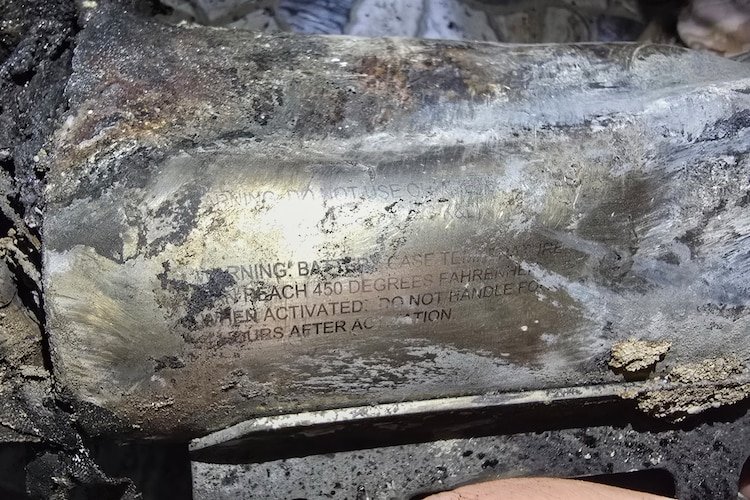
Iranian media published images of projectile remnants found after the strike. Ball identified some of those remnants as potentially associated with the Joint Standoff Weapon, or JSOW, a US-made glide weapon.
However, the fragments could not be independently verified as having come from the munition that struck the wedding house.
That caveat is critical. Identifying a fragment from the general vicinity of a strike does not necessarily prove which weapon produced the specific damage under investigation.
Forensic examination normally requires fragments to be matched with the damage pattern, location and other evidence from the scene.
The images of the strike site provide a strong basis for assessing the likely mechanism of damage, but a definitive determination of the weapon used would ideally require additional physical and operational evidence.
What international law could mean for the investigation
The outcome of the US investigation could also carry legal significance.
International humanitarian law distinguishes between attacks directed at military objectives and attacks intentionally directed against civilians. It also requires parties to armed conflicts to take feasible precautions to avoid or minimise civilian harm.
That means establishing civilian casualties alone does not automatically prove that a war crime occurred.
Investigators would need to determine the nature of the intended target, what the attacking force knew at the time, what precautions were taken and whether the attack complied with the applicable rules governing distinction and proportionality.
Those questions cannot be answered solely by looking at photographs of the damaged building.
Nevertheless, independent weapons analysis can be an important part of reconstructing an incident, particularly when official information is limited or contested.
Iran says the strike hit civilians at a wedding
Iranian authorities and state media have presented the incident as an American strike on a civilian gathering.
The funerals held after the attack reinforced the human impact of the incident, with residents mourning a child and other victims killed in the blast.
Iran has repeatedly accused the United States of causing civilian deaths during the conflict and is likely to use the Kuhestak case as further evidence for its criticism of the American campaign.
Washington, meanwhile, has not accepted responsibility for the strike and has said the circumstances are being investigated.
This difference means the incident remains politically charged even as technical evidence begins to provide a clearer picture of the physical damage.
What happens next in the US investigation?
The most important unanswered question is whether the US military ultimately concludes that an American munition struck the wedding house.
Investigators will likely need to reconstruct the September 1 operation, determine which weapons were used in the area and compare strike data with satellite imagery and physical evidence from the scene.
They will also need to establish whether the communications tower was the intended target and whether the weapon that hit the wedding house was aimed at that facility or another nearby location.
The investigation could eventually determine whether the strike was a targeting error, a weapon failure, an unintended consequence of another attack or something else entirely.
Until those findings are made public, the weapons experts’ assessment should be understood as evidence-based analysis rather than a final official determination of responsibility.
A new test for civilian protection in the Iran war
The Kuhestak wedding strike has emerged as a major test of Washington’s claims that its military operations are designed to avoid civilian casualties.
The physical evidence reviewed by weapons experts points toward a direct impact on the wedding house and away from an explanation involving fragments from a nearby target. Several experts also considered a US weapon more likely than an Iranian air-defence missile.
At the same time, the United States has not officially accepted responsibility and is investigating the circumstances.
The significance of the case extends beyond one town in southern Iran. If the investigation confirms that a US munition directly struck the wedding gathering, attention will shift to the decisions that led to the strike, the status of the nearby communications tower as a target and the precautions taken to protect civilians.
For the families who lost loved ones, however, the debate is much more immediate. A wedding celebration ended in a mass-casualty scene, and a community is now holding funerals instead of continuing a celebration.
As Washington investigates and more evidence emerges, the central question will be whether the tragedy was the unintended result of a strike gone wrong or evidence of a broader failure to adequately account for civilians living near strategic military targets.
For breaking news and live news updates, like us on Facebook or follow us on Twitter and Instagram. Read more on Latest World on thefoxdaily.com.






COMMENTS 0