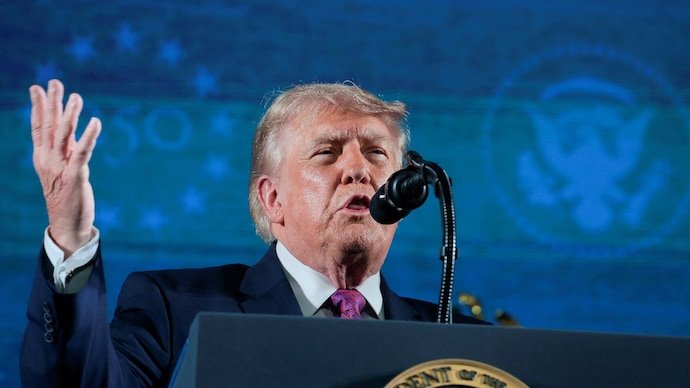
The latest escalation between the United States and Iran has entered a new and highly sensitive phase after President Donald Trump declared that he had left standing military instructions to launch massive strikes against Iran if Tehran were ever to assassinate him. The statement has drawn global attention not only because of its military implications but also because it raises important constitutional, legal, and geopolitical questions about how the United States responds to threats against its commander in chief.
The central issue extends beyond Trump’s remarks. It touches on how presidential authority transfers during a national crisis, what military orders remain valid after a president’s death, and whether deterrence through public threats can prevent further escalation. As tensions between Washington and Tehran continue to rise, the situation has become one of the most closely watched developments in international security.
What Trump Said About Potential US Military Retaliation
Trump stated that the United States would respond with overwhelming military force if Iran were responsible for his assassination. His message suggested that American military assets were prepared to launch large-scale missile strikes against Iranian targets should such an event occur.
The statement appears designed to strengthen deterrence by making the potential consequences of any attack unmistakably clear. Public warnings of this nature are intended to convince adversaries that the cost of aggression would far outweigh any potential benefit.
However, military experts point out that such statements do not automatically become binding operational orders after a president leaves office through death or incapacity.
How Presidential Military Authority Actually Works
One of the biggest misconceptions surrounding Trump’s remarks is the belief that the United States has an automatic retaliation system that activates if the president is assassinated.
In reality, no such constitutional mechanism exists.
The President serves as Commander in Chief of the US Armed Forces, but that authority is tied directly to the individual holding the office. If a president dies, resigns, or becomes unable to perform official duties, presidential authority immediately transfers under established constitutional procedures.
This means that any future military response would require approval from the new president rather than occurring automatically.
Who Would Become President If a Sitting President Were Assassinated?
Under the US Constitution and the Presidential Succession Act of 1947, the vice president immediately becomes president upon the death of the sitting president.
If such a scenario occurred today, Vice President JD Vance would instantly assume presidential authority and become Commander in Chief.
That transfer happens within moments and does not require a separate election or congressional approval.
Once sworn into office, the new president would receive intelligence briefings, consult military leaders, National Security advisers, and allied governments before deciding whether to authorize military retaliation.
Why There Is No “Dead Man’s Switch” in US Military Doctrine
Some online discussions have described Trump’s comments as creating a “dead man’s switch.” Military historians and constitutional scholars strongly disagree with that interpretation.
A true dead man’s switch refers to an automated system that activates after a person’s death without requiring human authorization.
The United States has never adopted such a policy for military operations or nuclear weapons.
Instead, every major military action requires lawful authorization from the sitting commander in chief. This principle exists to prevent accidental wars, unauthorized launches, and constitutional uncertainty during national emergencies.
Why Presidential Succession Matters During International Crises
The continuity of government has been a cornerstone of American national security planning for decades.
Since the Cold War, the United States has invested heavily in ensuring that government functions continue even after catastrophic attacks.
These plans include:
- Protected government facilities
- Emergency communication systems
- Airborne command centers
- Secure presidential succession procedures
- Redundant military command networks
The objective is simple: even during the most severe national crisis, civilian leadership remains intact and military decisions remain under constitutional authority.
Historical Background: US-Iran Relations Have Been Tense for Decades
The latest confrontation cannot be viewed in isolation. Relations between Washington and Tehran have experienced repeated crises over more than four decades.
Major turning points include:
| Year | Key Development | Significance |
|---|---|---|
| 1979 | Iranian Revolution and US Embassy hostage crisis | Diplomatic relations collapse |
| 1988 | Operation Praying Mantis | Largest US naval battle since World War II |
| 2020 | Killing of Qasem Soleimani | Major escalation between both countries |
| 2022-2024 | Repeated assassination threat allegations | Security concerns for senior US officials increase |
| 2026 | Renewed military confrontation and Trump’s warning | Regional tensions intensify significantly |
Each crisis has deepened mistrust and increased the possibility of direct confrontation between the two countries.
Why Iran Is Considered a Serious Security Concern
American intelligence agencies have repeatedly stated that threats against current and former US officials linked to previous military operations remain an ongoing security concern.
Successive US administrations from both political parties have publicly warned that attacks against American officials would trigger severe consequences.
Security agencies continuously monitor intelligence regarding potential foreign plots targeting high-ranking American leaders.
The Role of Deterrence in Modern Military Strategy
Trump’s warning reflects a classic military concept known as deterrence.
Rather than encouraging conflict, deterrence seeks to prevent war by making the consequences of aggression appear unacceptable.
Countries often communicate military capabilities publicly to influence an adversary’s decision-making process.
The effectiveness of deterrence depends on three factors:
- Military capability
- Political credibility
- Clear communication
If any one of these elements is questioned, deterrence becomes less effective.
Legal Questions Surrounding Standing Military Orders
Legal experts note that presidential military authority is not permanent after death.
Even if operational plans were prepared in advance, execution would ultimately require authorization from the individual serving as president at that moment.
This safeguard exists because constitutional authority belongs to the office rather than the individual WHO previously occupied it.
As a result, any successor would have full discretion to approve, modify, delay, or reject military action.
How the Pentagon Would Likely Respond During Such a Crisis
If a catastrophic attack against a sitting president occurred, the Department of Defense would immediately activate continuity-of-government procedures.
Initial priorities would likely include:
- Protecting national leadership
- Confirming command authority
- Assessing the source of the attack
- Securing nuclear command systems
- Coordinating with intelligence agencies
- Consulting allied governments
Only after verifying intelligence would military options be formally presented to the new commander in chief.
Economic Consequences Could Extend Far Beyond the Battlefield
A direct military confrontation between the United States and Iran would almost certainly have global economic consequences.
Financial analysts frequently monitor Middle East tensions because the region plays a critical role in global energy supplies.
Potential impacts include:
- Higher oil prices
- Stock market volatility
- Disruptions to international shipping
- Increased insurance costs for maritime trade
- Pressure on global inflation
Even without full-scale war, heightened geopolitical uncertainty often affects investment decisions and commodity markets.
How Allies Would View Any US Response
Any American military action would likely involve extensive consultation with NATO allies and strategic partners across Europe, the Middle East, and the Indo-Pacific.
Diplomatic coordination becomes especially important during high-risk crises because allies may provide intelligence, logistical support, sanctions enforcement, or mediation efforts.
The international response would depend heavily on the evidence presented regarding responsibility for any attack.
Comparison: Constitutional Process vs Public Perception
| Public Assumption | Actual Constitutional Process |
|---|---|
| Military retaliation happens automatically | The new president decides |
| Standing orders cannot be changed | Successor has full legal authority |
| Military launches immediately | Threat assessment and consultation occur first |
| Previous president controls future decisions | Current commander in chief holds all authority |
Why This Situation Matters Beyond US Politics
The implications extend well beyond domestic American politics.
The credibility of US deterrence influences security calculations across the Middle East, Europe, and Asia.
Global rivals carefully observe how the United States communicates threats, manages crises, and transfers presidential authority during emergencies.
The constitutional resilience demonstrated during such moments can influence international confidence in American leadership.
Expert Insight: Stability Depends on Institutions, Not Individuals
One important lesson emerging from this episode is that the American national security system is intentionally designed to function independently of any single individual.
Presidential succession laws, military command structures, intelligence coordination, and constitutional safeguards ensure that strategic decisions remain governed by established institutions rather than personal directives alone.
This institutional continuity reduces the risk of confusion during moments of extreme national crisis while preserving civilian oversight of military operations.
Future Outlook: Could US-Iran Tensions Escalate Further?
Much will depend on diplomatic developments, regional military activity, intelligence assessments, and political decisions made in both Washington and Tehran.
While both governments continue to demonstrate military readiness, they also face significant incentives to avoid a conflict that could destabilize the broader Middle East and disrupt the global economy.
Future negotiations, international mediation, and regional diplomacy may ultimately determine whether current tensions evolve into a larger confrontation or gradually move toward de-escalation.
Conclusion
Donald Trump’s warning has intensified international attention on one of the world’s most sensitive geopolitical rivalries. Although his comments projected a powerful deterrent message, the constitutional reality remains clear: the United States has no automatic military retaliation system tied to the death of a president. Any response would rest with the individual who lawfully succeeds to the presidency.
Beyond the political headlines, this episode highlights the importance of constitutional continuity, military command procedures, and strategic deterrence in preserving national security during periods of heightened international tension. As the United States and Iran continue navigating one of their most challenging Relationships in decades, the decisions made by political leaders not automatic systems will remain the defining factor shaping regional stability and global security.
For breaking news and live news updates, like us on Facebook or follow us on Twitter and Instagram. Read more on Latest World on thefoxdaily.com.




COMMENTS 0