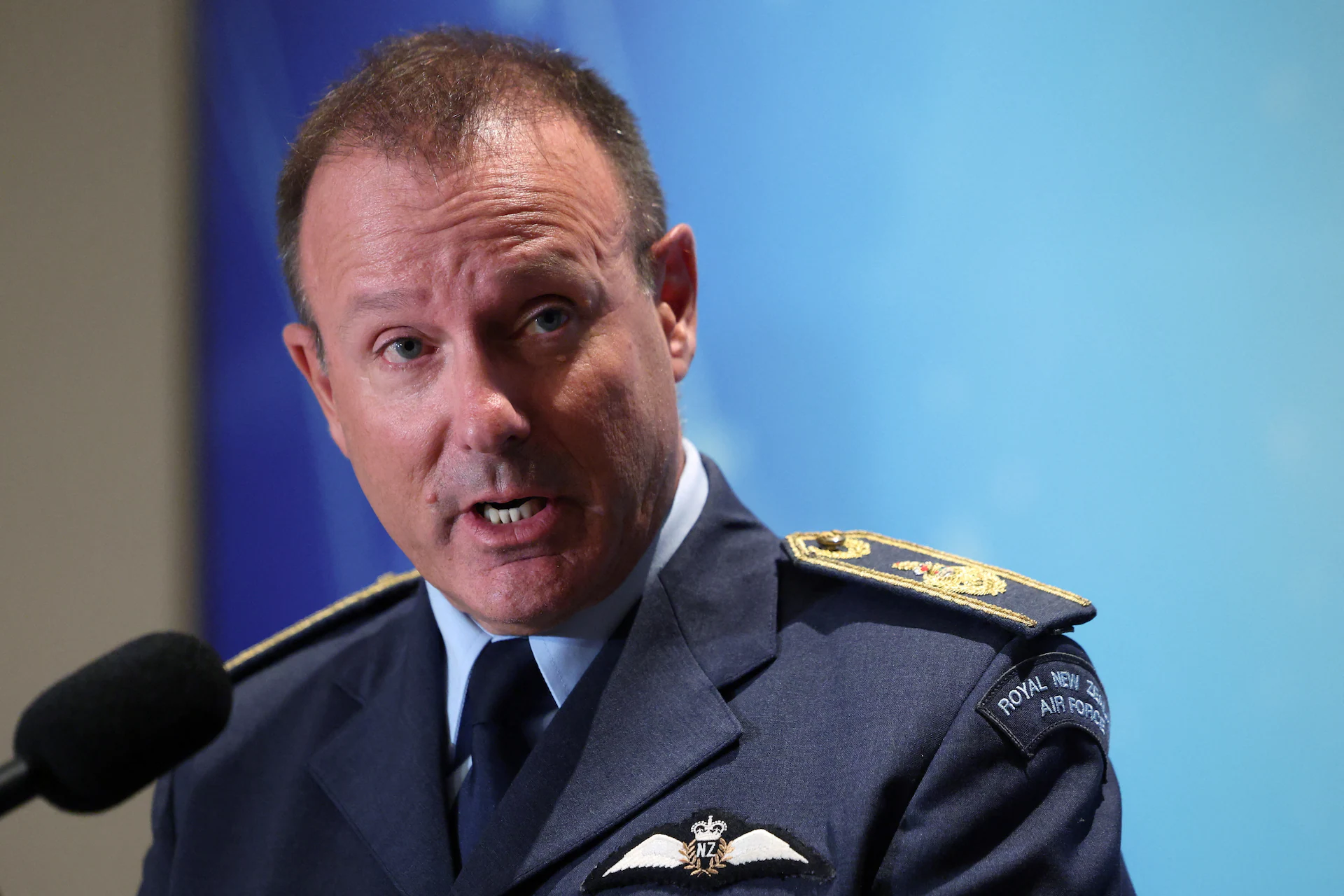
New Zealand Defence Force chief Tony Davies resigned on Friday, October 23, following revelations about an “inappropriate relationship” he had while serving in a position of command. Davies said he was stepping down to take responsibility for past errors of judgement, including his failure to disclose the relationship when he had the opportunity to do so.
The New Zealand Defence Force confirmed that Davies had informed Defence Minister Paul Goldsmith of his resignation. The development marks a significant leadership change for the country’s Military, with Vice Chief of Defence Force Mat Williams set to take over as acting chief.
Davies acknowledged that his past conduct was contrary to the values of the Defence Force. Goldsmith also said the chief’s position was “no longer tenable”, citing integrity matters that had not previously been disclosed.
The defence minister said he would recommend to the Governor-General that she accept Davies’ resignation. The announcement brings an end to Davies’ tenure as the country’s top military officer, a position he took up in 2024 after joining the military in 1984.
Why Did New Zealand Defence Force Chief Tony Davies Resign?
Tony Davies resigned after acknowledging that he had been involved in an inappropriate relationship while serving in a position of unit command. He also admitted that he had failed to disclose the matter when he had the opportunity to do so.
In a statement issued by the New Zealand Defence Force, Davies said his decision was based on personal reasons and past errors of judgement for which he was taking responsibility.
“The resignation is for personal reasons, and results from errors of judgement made by me in the past, for which I am taking responsibility. The errors of judgement were contrary to the values of the Defence Force,” Davies said.
He further explained that the issues centred on a relationship he had while holding a command position and expressed regret over his failure to disclose it.
“These matters revolved around an inappropriate relationship I had when in a position of unit command, and I regret not disclosing this when I had the opportunity to do so,” he said.
Davies’ statement acknowledged both the relationship and the failure to disclose it. However, the announcement did not provide further details about the circumstances of the relationship, the identity of the other person involved or when it took place.
Defence Minister Paul Goldsmith Says Davies’ Position Was ‘No Longer Tenable’
New Zealand Defence Minister Paul Goldsmith confirmed that he had been informed of Davies’ decision to resign. He said he agreed that the chief’s position had become untenable because of integrity matters that had not previously been disclosed.
Goldsmith said: “The reasons regarding his decision relate to integrity matters that he did not previously disclose.”
The minister also confirmed that he would recommend to the Governor-General that she accept Davies’ resignation.
“I will be recommending to the Governor-General that she accepts Mr Davies’ resignation,” Goldsmith said.
The minister’s comments underline the importance of integrity and disclosure in senior military leadership. The head of a national defence force occupies a position of significant responsibility, and questions about undisclosed conduct can affect confidence in the office.
Although Davies described his departure as a personal decision, Goldsmith’s statement made clear that the undisclosed integrity matters were central to the circumstances surrounding the resignation.
The available announcement does not detail the process through which the matter came to light or whether any additional disciplinary or administrative action will follow.
Who Is Tony Davies?
Tony Davies is a senior New Zealand military officer who served as chief of the New Zealand Defence Force from 2024 until his resignation announcement on Friday, October 23.
According to the Defence Force’s statement, Davies joined New Zealand’s military in 1984. Over the course of his career, he progressed through the organisation before being appointed to its top position in 2024.
As chief of the Defence Force, Davies held the senior military leadership role within New Zealand’s armed forces. The position involves responsibility for military leadership and the organisation’s broader command structure.
His resignation therefore represents a change at the highest level of the country’s military leadership. The announcement comes after Davies acknowledged that his conduct while in a position of unit command had been inconsistent with the values expected of the Defence Force.
The statement provided limited information about the circumstances of the relationship and did not outline the full sequence of events leading to his departure.
Vice Chief Mat Williams to Serve as Acting Defence Force Chief
Following Davies’ resignation, Vice Chief of Defence Force Mat Williams will serve as acting chief, according to the New Zealand Defence Force’s statement.
The appointment provides for an interim leadership arrangement while the resignation process moves forward. Williams, in his role as vice chief, is positioned to assume the responsibilities of the top military office on an acting basis.
The Defence Force did not provide further details in the announcement about the duration of Williams’ acting appointment or when a permanent successor to Davies might be selected.
The immediate priority will be maintaining continuity in military leadership and ensuring that the organisation’s operations continue during the transition.
Davies’ departure also places renewed attention on the standards expected of senior officers, particularly those entrusted with command responsibilities and the leadership of personnel across the armed forces.
What Did Tony Davies Say About the Relationship?
Davies acknowledged that he had an inappropriate relationship while serving in a unit command position. He also said he regretted not disclosing the matter when he had the opportunity.
His statement framed the resignation as an acceptance of responsibility for past mistakes. He said those errors of judgement were contrary to the Defence Force’s values, indicating that he recognised the seriousness of the issue in relation to the standards expected of military personnel.
However, the statement did not specify the nature of the relationship or explain why it had not been disclosed earlier. It also did not identify the other person involved or establish whether the matter resulted in any other formal findings.
Without additional information, it would be inappropriate to draw conclusions about details that have not been publicly confirmed. What is clear from Davies’ own remarks is that the relationship occurred while he was in a position of unit command and that his failure to disclose it formed part of the circumstances behind his resignation.
Why Integrity Matters in Military Leadership
Integrity is a central expectation for senior military leaders, who are responsible for exercising authority, maintaining discipline and upholding the standards of their organisation.
Command positions carry particular responsibilities because officers in these roles are entrusted with making decisions that affect personnel, operational readiness and the functioning of military units. Conduct that raises questions about disclosure or judgement can therefore become an issue of institutional confidence.
In Davies’ case, both his statement and the defence minister’s comments placed emphasis on the failure to disclose the relationship. Davies acknowledged that the matter was contrary to the Defence Force’s values, while Goldsmith referred to integrity issues that had not previously been disclosed.
The resignation highlights how questions of personal conduct can become significant when they involve senior officials in positions of authority. It also illustrates the importance of transparency in maintaining confidence in military leadership.
The available information does not establish that the resignation resulted from any particular legal finding or provide details of a formal investigation. The confirmed explanation from Davies centres on his acknowledgement of the relationship, his failure to disclose it and his decision to take responsibility by resigning.
What Happens Next for New Zealand’s Defence Force?
The next immediate step is the formal consideration of Davies’ resignation. Goldsmith said he would recommend to the Governor-General that she accept it.
In the meantime, Vice Chief Mat Williams is expected to serve as acting chief of the Defence Force. This interim arrangement is intended to provide leadership continuity following the announcement.
The Defence Force has not announced a timetable for appointing a permanent replacement. Further information would be needed to establish how the succession process will proceed and whether any additional steps will be taken in relation to the circumstances surrounding Davies’ departure.
The organisation will also continue to operate under its existing command structure during the leadership transition. The resignation is a significant personnel development, but the announcement did not indicate any changes to the military’s operational responsibilities.
Key Facts About Tony Davies’ Resignation
- Officer: Tony Davies, chief of the New Zealand Defence Force.
- Resignation announced: Friday, October 23.
- Reason given: An inappropriate relationship while serving in a position of unit command and a failure to disclose it.
- Davies’ response: He described the matter as an error of judgement and said he was taking responsibility.
- Defence minister: Paul Goldsmith said Davies’ position was no longer tenable because of previously undisclosed integrity matters.
- Acting chief: Vice Chief of Defence Force Mat Williams.
- Military career: Davies joined New Zealand’s military in 1984.
- Appointment as chief: He took up the top position in 2024.
- Next formal step: Goldsmith said he would recommend that the Governor-General accept the resignation.
Conclusion
New Zealand Defence Force chief Tony Davies has resigned after acknowledging an inappropriate relationship during his time in a position of unit command and admitting that he failed to disclose it when he had the opportunity. Davies said the errors of judgement were contrary to the Defence Force’s values and that he was taking responsibility for his actions.
Defence Minister Paul Goldsmith said the chief’s position was no longer tenable because of integrity matters that had not previously been disclosed. He will recommend that the Governor-General accept the resignation, while Vice Chief Mat Williams will serve as acting chief.
Davies joined the military in 1984 and became its top officer in 2024. His departure marks a significant leadership change for New Zealand’s armed forces, although details about the relationship and the circumstances surrounding its non-disclosure have not been made public in the available statement.
For breaking news and live news updates, like us on Facebook or follow us on Twitter and Instagram. Read more on Latest World on thefoxdaily.com.




COMMENTS 0