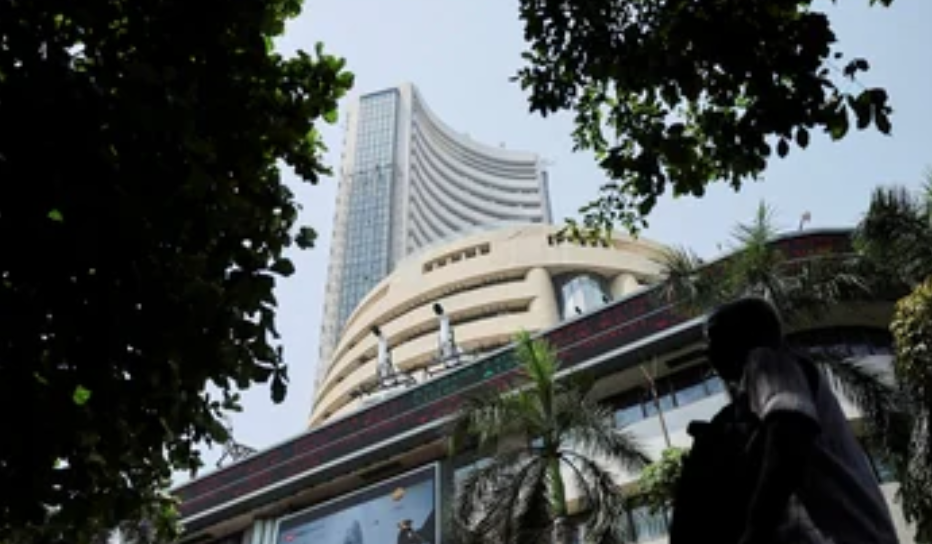
Indian equity benchmark indices opened lower on Thursday, October 1, as continued foreign investor selling pressured market sentiment, while easing crude oil prices offered some relief to investors.
The BSE Sensex opened at 72,192.89, down 287.40 points, or 0.40%, while the NSE Nifty opened at 22,543.70, lower by 76.75 points, or 0.34%. Reuters also reported that GIFT Nifty futures were at 22,570 points at 7:38 a.m. IST, indicating a weak start for the domestic market. 0
Sensex and Nifty Start October on a Weak Note
The opening decline extended the recent weakness in Indian equities. The Nifty 50 had closed at 22,620.45 on Wednesday, while the Sensex also ended September under pressure.
September was a difficult month for Indian benchmarks. Reuters reported that the Nifty 50 declined 6.1% during September, while the Sensex fell 5.8%. It was the second consecutive monthly decline for both indices. 1
The latest opening therefore comes after a prolonged period of selling pressure, with investors entering October closely watching foreign fund flows, crude prices, global interest rates and developments in the Middle East.
Foreign Investor Selling Remains a Major Pressure Point
Foreign Investors sold Indian shares worth approximately ₹10,148 crore on Wednesday, according to provisional data cited in the report.
The latest selling added to a broader wave of foreign outflows. Investors had reportedly withdrawn about $3.6 billion from Indian equities during the previous five sessions, taking year-to-date foreign selling to around $27.8 billion.
Reuters reported separately that foreign investors sold approximately $2.7 billion of Indian equities in September, bringing their total outflows for the year to $26.8 billion based on the data available at the end of the month. 2
Persistent foreign selling can weigh on benchmark indices because large institutional transactions can affect liquidity and market demand, particularly during periods of elevated global uncertainty.
Crude Oil Prices Provide Some Relief
One positive factor for Indian markets was the decline in crude oil prices. Brent crude futures slipped toward $98 a barrel after Iran said it had received the US response to its latest ceasefire proposal.
Oil prices have been closely watched by Indian investors because India imports a large share of its crude oil requirements. Higher crude prices can increase the country’s import bill and put pressure on inflation, corporate margins and the rupee.
Reuters reported that India imports nearly 90% of its crude requirements, making Indian financial markets particularly sensitive to major movements in global oil prices. 3
The recent decline in oil prices therefore offered some relief even as foreign equity outflows continued to weigh on sentiment.
Middle East Developments Remain Important for Markets
Investors are also monitoring developments surrounding the conflict and diplomatic efforts involving the United States and Iran because changes in the situation can quickly affect energy prices and global risk sentiment.
Recent oil-market movements have reflected changing expectations around possible negotiations. Reuters reported that uncertainty surrounding US-Iran discussions had previously pushed Brent crude toward $108 a barrel, while subsequent easing in oil prices provided some relief to Indian assets. 4
For Indian equities, the direction of crude oil remains particularly important because sustained higher energy prices can affect inflation expectations, the trade balance and the value of the rupee.
Indian Stocks End September With Significant Losses
The weak October opening followed a sharp decline across the Indian equity market during September.
According to Reuters, the Nifty 50 lost 6.1% during September, while the Sensex declined 5.8%. Mid-cap and small-cap stocks also recorded losses, with the mid-cap index falling 7.6% and the small-cap index declining 3.4% during the month. 5
All 16 major sectors tracked in the Reuters report declined during September. The IT sector recorded one of the largest declines, falling 11.2% during the month amid concerns about weaker US client spending and broader global economic pressures. 6
Global Interest Rates Add to Market Uncertainty
Indian stocks have also been affected by changes in global interest-rate expectations. Higher interest rates in major developed economies can make dollar-denominated assets more attractive and reduce the relative appeal of emerging-market investments.
Reuters reported that higher US rates, geopolitical tensions and rising oil prices contributed to foreign investor selling in Indian equities during September. 7
The global bond market has also been under pressure, with higher government bond yields creating another challenge for emerging-market assets.
Indian investors are therefore watching international bond yields and central-bank policy alongside domestic economic indicators.
Rupee Movement Adds Another Market Factor
The Indian rupee has also faced pressure from high oil prices and global financial conditions.
Reuters reported that the rupee declined 0.7% in September and 1.2% during the July-September quarter. The currency ended September at around ₹95.83 per US dollar after moving through a volatile period in which crude prices fluctuated sharply. 8
A weaker rupee can create additional challenges for companies that depend heavily on imported commodities or overseas inputs, while exporters can experience different effects depending on their revenue and cost structures.
Market participants are also watching the Reserve Bank of India’s policy actions and foreign-exchange operations as the central bank seeks to manage volatility in the currency market. 9
Why Foreign Outflows Matter for Indian Equities
Foreign institutional investors are major participants in Indian financial markets. Their buying and selling can have a significant short-term effect on market liquidity and benchmark indices.
The latest selling comes after a difficult September derivatives series. Reuters reported that the Nifty 50 declined 6.7% during the September derivative series, while foreign investors increased their net index-futures short positions from about 184,000 contracts to approximately 267,000 contracts. 10
Domestic institutional investors have provided some support during the selloff, but the continued difference between foreign and domestic positioning remains an important feature of the market.
Investors Enter October After a Volatile September
The beginning of October comes after a period of broad-based market weakness. Investors are assessing whether lower oil prices can provide relief from some of the pressures that affected equities in September.
At the same time, continued foreign selling means that market sentiment remains sensitive to global developments. Any significant movement in crude prices, bond yields, the rupee or geopolitical conditions could influence trading activity.
Reuters reported that brokerages were monitoring support and resistance levels after the September derivatives selloff, while noting that the market’s near-term direction would remain connected to global sentiment and foreign positioning. 11
What Investors Are Watching on October 1
- Foreign fund flows: Continued overseas selling remains a major source of pressure for Indian equities.
- Crude oil prices: Brent crude moving below $100 could reduce some concerns surrounding India’s import bill and inflation.
- US-Iran developments: Any change in diplomatic or geopolitical conditions could affect energy markets.
- Rupee movement: Currency stability remains important for foreign investors and companies exposed to imported costs.
- Global bond yields: Higher yields can affect capital flows toward emerging markets such as India.
Market Outlook Depends on Multiple Factors
The October 1 opening shows that Indian equities are beginning the new month under pressure after a significant September decline. Foreign investor selling remains a key factor, while softer crude prices are providing some counterbalance.
The direction of the market will depend on how several factors develop together, including foreign capital flows, energy prices, global interest rates, currency movements and geopolitical developments.
For now, the latest session reflects a continuation of the cautious trading environment that dominated Indian equities toward the end of September, with investors closely monitoring both domestic and international developments.
Frequently Asked Questions
Why did Sensex and Nifty open lower on October 1?
Indian benchmark indices opened lower mainly because continued foreign investor selling weighed on sentiment. Easing crude oil prices provided some relief.
At what level did the Sensex open?
The Sensex opened at 72,192.89, down 287.40 points, or 0.40%, from its previous close.
At what level did the Nifty open?
The Nifty opened at 22,543.70, down 76.75 points, or 0.34%.
How much did foreign investors sell on Wednesday?
Foreign investors sold Indian shares worth approximately ₹10,148 crore on Wednesday, according to provisional data cited in the report.
Why is crude oil important for Indian markets?
India imports a large share of its crude oil requirements. Higher oil prices can increase the import bill and put pressure on inflation, the rupee and corporate costs.
How did Indian markets perform in September 2026?
The Nifty 50 fell 6.1% during September, while the Sensex declined 5.8%, according to Reuters. Both benchmarks recorded their second consecutive monthly decline. 12
What happened to the Indian rupee in September?
The rupee declined 0.7% during September and 1.2% during the July-September quarter, according to Reuters. 13
What factors are investors watching in October?
Investors are monitoring foreign fund flows, crude oil prices, global bond yields, the rupee, interest-rate expectations and developments affecting energy markets.
“`14
For breaking news and live news updates, like us on Facebook or follow us on Twitter and Instagram. Read more on Latest Business on thefoxdaily.com.






COMMENTS 0