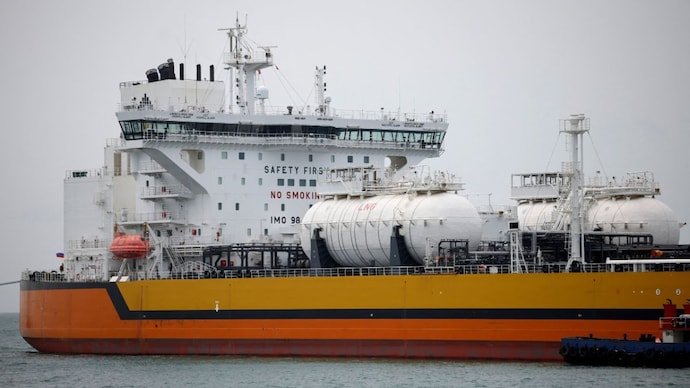
India’s Russian crude imports reached a record 2.8 million barrels per day in July, accounting for about 55.5% of the country’s total crude imports even as Washington moved closer to giving President Donald Trump authority to impose tariffs of up to 100% on major buyers of Russian energy.
India’s dependence on Russian crude reached a new high in July, highlighting the difficulty of balancing Energy Security with growing pressure from the United States over purchases of Russian oil.
Indian buyers imported a record 2.8 million barrels of Russian crude per day during the month, according to the Centre for Research on Energy and Clean Air (CREA). That represented roughly 55.5% of India’s total crude imports of just over 5 million barrels per day.
The increase came despite a fresh escalation in the pressure surrounding India’s Russian oil purchases. The US Senate has passed legislation that could give President Donald Trump authority to impose tariffs of up to 100% on goods from countries among the largest buyers of Russian oil and gas. The measure still requires action in the House of Representatives before it can become law.
Rather than falling in response to the threat, India’s Russian crude intake rose for a second consecutive month to a record level.
India’s Russian crude imports hit another record
CREA’s July assessment shows just how deeply Russian crude has become embedded in India’s oil supply.
Indian imports of Russian crude were valued at about 5.5 billion euros in July, while crude accounted for 87% of India’s total Russian fossil-fuel purchases during the month. India’s overall Russian fossil-fuel imports were valued at approximately 6.4 billion euros, making the country the second-largest buyer of Russian fossil fuels after China.
The increase from June was about 2.1% in volume terms. More importantly, the July figure of 2.8 million barrels per day represented a new monthly record and a substantial increase from India’s average Russian crude intake in earlier years.
The figures show that Russian oil is no longer a marginal part of India’s import basket. More than half of India’s crude imports in July came from Russia, according to CREA’s analysis.
That level of dependence gives Indian refiners a significant commercial incentive to maintain access to Russian barrels, particularly when alternative supplies can carry different pricing and logistical costs.
Why India buys so much Russian oil
India’s reliance on Russian crude changed dramatically after Russia launched its full-scale invasion of Ukraine in February 2022.
Before the war, Russia was a relatively small supplier to India. According to US Energy Information Administration data cited in the supplied analysis, Russia provided less than 100,000 barrels per day to India in 2021, representing about 2.5% of the country’s crude imports.
That changed after Western sanctions and the departure of many European buyers disrupted Russia’s traditional oil markets. Russian producers increasingly offered crude at discounted prices to attract buyers in Asia.
Indian refiners responded by increasing purchases.
Russian crude supplies to India rose to about 740,000 barrels per day in 2022 and nearly 1.8 million barrels per day in 2023. Russia became India’s largest crude supplier that year, accounting for roughly 39% of total imports.
India continued importing about 1.8 million barrels per day of Russian crude on average in 2024. The July 2026 figure of 2.8 million barrels per day therefore represents a significant jump from that earlier level.
Russia has become central to India’s oil supply
The growth of Russian crude imports has changed the geography of India’s energy sourcing.
India traditionally buys crude from a wide range of producers in the Middle East, Africa, the Americas and elsewhere. Maintaining a diversified supply basket remains important for an economy that relies heavily on imported crude.
Russian oil, however, has become an unusually large component of that basket because of the commercial opportunities created after the disruption of Russia’s traditional European market.
For Indian refiners, the decision is ultimately influenced by factors such as price, availability, refinery compatibility, shipping costs and payment arrangements. A discounted barrel can remain commercially attractive even when geopolitical pressure makes the transaction more complicated.
That helps explain why political pressure from Washington has not immediately produced a corresponding reduction in India’s Russian oil purchases.
Smaller Indian ports drove the July increase
The record was not primarily the result of a surge at India’s two biggest destinations for Russian crude. Instead, several smaller terminals recorded significant increases in receipts.
Imports through HMEL Mundra increased 58% from June, while volumes received at Indian Oil’s Vadinar SMPL terminal rose 35%. Imports through Mumbai also increased by 37%.
At the same time, shipments through Jamnagar remained broadly unchanged from June. Jamnagar is home to one of the world’s largest refining complexes and has played a major role in India’s processing of Russian crude.
Imports through Paradip fell 22%, but the decline was more than offset by higher receipts at other ports.
| Indian destination | Change in Russian crude imports in July |
|---|---|
| HMEL Mundra | Up 58% |
| Vadinar SMPL | Up 35% |
| Mumbai | Up 37% |
| Jamnagar | Unchanged |
| Paradip | Down 22% |
The port-level data is significant because it shows that the record was not simply the result of one refinery suddenly taking much more Russian crude. The increase was distributed across several receiving points, allowing overall imports to rise despite lower volumes at Paradip.
India is Russia’s second-largest crude buyer
India’s growing importance to Russia’s oil trade extends well beyond its own energy requirements.
According to CREA’s analysis, India accounted for 37% of the Russian crude exports covered by its assessment, making it the second-largest buyer after China, which accounted for 50%.
This creates an important strategic relationship. Russia needs large markets for crude after losing much of its traditional European customer base, while India benefits from access to a large supply of crude that can be commercially attractive to its refiners.
The relationship has therefore become economically significant for both sides.
It also explains why any attempt by the United States or other Western countries to reduce Russia’s oil revenue increasingly has to consider the role of major Asian buyers.
Russian oil revenue remains under pressure despite India’s purchases
Higher Indian imports do not necessarily translate into proportionally higher Russian oil revenue.
CREA estimated that Russian crude export revenues were broadly flat in July at about 392 million euros per day. A 21% monthly decline in pipeline crude earnings was offset by a 7% increase in revenue from seaborne crude.
The average price of Russia’s Urals crude also declined 3% in July to $60.22 per barrel, according to CREA.
That price remained above the $44.10-per-barrel G7 and European Union price cap that took effect in February 2026, according to the supplied data.
The difference between volumes and revenue is important. Russia can export more crude while receiving less revenue per barrel if market prices decline. For India, meanwhile, lower prices can strengthen the commercial incentive to purchase Russian crude.
Russia’s oil-product exports are weakening
The broader Russian fossil-fuel picture was less favourable in July.
Russian oil-product loadings fell 23% during the month to 4.7 million tonnes, according to CREA. That was described as the lowest level on record and less than half the 9.6 million tonnes loaded in July 2025.
This contrast is important. While Indian purchases of Russian crude reached a record, Russia’s overall energy trade faced pressure in other parts of the market.
The data suggests that Crude Oil remains the strongest part of Russia’s fossil-fuel export relationship with India, even as other petroleum-product flows face greater pressure.
India is also a major refining hub for Russian crude
India’s role in the Russian oil trade does not end when crude reaches its ports.
Indian refineries process Russian crude into refined products such as fuels that can then be exported to international markets. This makes India’s refining industry an important intermediary in global petroleum trade.
CREA said refineries in India, Turkey, Brunei and Georgia that process Russian crude exported oil products worth 633 million euros to countries that have sanctioned Moscow in July.
Of that amount, approximately 214 million euros went to the European Union, 184 million euros to Australia and 234 million euros to the United States.
CREA estimated that 284 million euros of those exports were refined from Russian crude.
The trade has attracted particular scrutiny because Western countries have imposed restrictions on Russian oil and petroleum products. The movement of refined products through third countries can therefore become an important part of the debate over whether sanctions are effectively reducing Russia’s energy revenues.
Jamnagar remains particularly important
The Jamnagar refining complex is central to India’s position in this trade.
According to CREA, Russian crude represented about 35% of the refinery’s feedstock during the three months through July.
Jamnagar was also a source of refined-product shipments to the United States, adding another layer to the increasingly complex trade flows surrounding Russian crude.
CREA said five cargoes from Indian refineries using Russian crude were unloaded at European Union ports in July, despite the bloc’s ban on imports of oil products made from Russian crude that took effect on January 21.
These flows illustrate why the Russian oil trade cannot be understood simply by tracking where crude is shipped. The same barrel can move through several stages of the Global Energy system, with crude sold to one country and refined products later exported elsewhere.
The 100% US tariff threat raises the stakes
India’s record July purchases come at a particularly sensitive moment in US-India economic relations.
The US Senate has passed the Lindsey O. Graham Sanctioning Russia and Iran Act of 2026 by an 86-11 vote. The legislation would give the US president authority to impose tariffs of up to 100% on goods from countries among the world’s largest buyers of Russian oil and gas.
India is among the countries that could potentially face such measures because of its position as a major buyer of Russian crude.
However, the Senate vote does not mean a 100% tariff has already been imposed on Indian goods. The bill still needs to move through the US House of Representatives before it can become law, and the tariff authority would be discretionary.
The House is scheduled to reconvene on August 31, meaning the next major step in the legislation is still ahead.
Why India has not immediately backed away from Russian crude
The July figures show that the threat of future US Tariffs has not yet translated into a reduction in Russian crude purchases.
There are several reasons why a change in sourcing cannot happen instantly.
India’s refiners operate large and complex facilities designed to process different grades of crude. Replacing millions of barrels per day of supply requires access to alternative cargoes, shipping capacity, commercial agreements and refinery planning.
There is also the question of price. If Russian crude remains commercially attractive compared with alternatives, refiners have a strong incentive to continue buying it unless sanctions or tariffs materially alter the economics.
This does not mean India’s purchasing strategy cannot change. It means the response to external pressure is likely to involve a calculation of energy security, refinery economics, diplomatic considerations and access to the US market.
What the tariff threat could mean for India’s oil strategy
If the US legislation ultimately becomes law and tariffs are imposed, Indian policymakers and refiners would have to weigh the cost of continued Russian purchases against the potential impact on access to the American market.
A 100% tariff would be significant because it would affect goods exported to the United States rather than directly placing a tax on the Russian crude entering India. The economic consequences would therefore depend on how the measure is structured and implemented.
Indian exporters could face higher costs in the US market, while companies with significant American exposure would have an incentive to assess the risk associated with continued Russian energy purchases.
For the oil market itself, a rapid reduction in India’s Russian imports could also alter global crude flows. India would need to replace at least part of the lost Russian supply with barrels from other producers, potentially affecting prices and shipping patterns.
Conversely, if India continues buying at current levels, Russia would retain one of its most important markets outside China.
India’s Russian oil strategy is entering a more difficult phase
July’s record is striking because it came at the same time as pressure on Russian energy buyers was intensifying.
India imported about 2.8 million barrels of Russian crude per day, equivalent to 55.5% of its total crude imports. Russia’s share has risen from a small fraction of India’s oil basket before the Ukraine war to more than half in July.
That transformation has delivered clear commercial advantages to Indian refiners, but it has also created a new vulnerability: the greater India’s dependence on Russian crude becomes, the more closely its energy strategy is linked to Western sanctions and the geopolitical dispute surrounding Russia’s war in Ukraine.
The record July imports therefore do not necessarily mean India has decided to ignore the US pressure permanently. They show that, at least during the month, the commercial and energy-security incentives for buying Russian crude remained strong enough to support another record.
What happens next
The next major test will be whether India’s Russian crude purchases remain at elevated levels as the US legislative process advances.
The House of Representatives is expected to return from its recess on August 31, when the sanctions legislation could move forward. Until then, the prospect of tariffs remains a potential threat rather than an automatic measure.
For India, the key calculation will be whether the benefits of discounted and readily available Russian crude continue to outweigh the broader economic and geopolitical risks associated with buying it.
For Russia, India’s continued demand provides an important outlet for crude at a time when Moscow is under sustained pressure to reduce fossil-fuel revenues.
And for global oil markets, India’s record July imports demonstrate how difficult it is to reshape international energy flows through sanctions and tariff threats alone. Russia’s crude has been redirected toward major Asian buyers, while Indian refineries have become an increasingly important link between Russian crude supplies and global refined-fuel markets.
For now, the numbers tell a clear story: despite the prospect of much tougher US trade measures, Russian crude reached its highest-ever share of India’s Oil Imports in July. Whether that record marks the peak of India’s Russian-oil dependence or the beginning of another phase of growth will depend heavily on what Washington does next and how Indian refiners respond.
For breaking news and live news updates, like us on Facebook or follow us on Twitter and Instagram. Read more on Latest Business on thefoxdaily.com.






COMMENTS 0