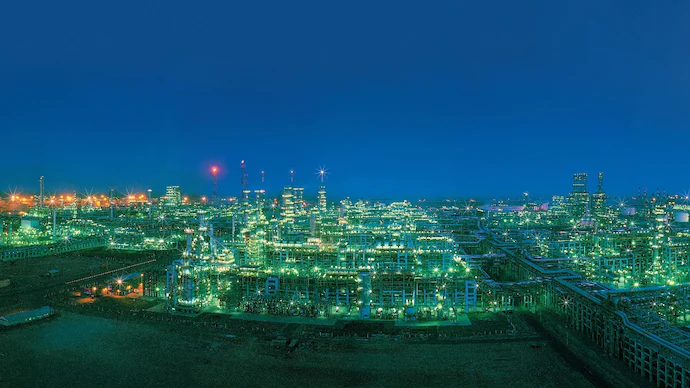
India has emerged as one of the world’s leading oil-refining countries despite importing most of the crude oil it consumes. From the country’s first refinery at Digboi in Assam to Reliance Industries’ massive Jamnagar complex in Gujarat, India’s refining industry has transformed into a major force in the global energy market.
The country’s growing refining capabilities recently attracted attention from US Secretary of State Marco Rubio, who described India as a “refining superpower”. Speaking during his visit to Mumbai, Rubio highlighted India’s ability to process different varieties of crude oil, including heavy Venezuelan crude that many refineries around the world are not equipped to handle efficiently.
The remark underscores an important feature of India’s Energy Industry: although the country depends heavily on imported crude, it has invested in the infrastructure, technology and industrial capacity needed to convert that crude into valuable products such as petrol, diesel and aviation turbine fuel (ATF).
India’s refining network serves two important purposes. It supplies petroleum products to a large domestic market while also supporting exports to international customers. This combination has helped the country become a major participant in global petroleum trade, even without possessing crude oil reserves comparable to those of some leading oil-producing nations.
According to the figures provided in the source report, India’s installed refining capacity reached approximately 258.1 million tonnes per annum across 22 operational refineries in 2026. The country exported 61.5 million tonnes of petroleum products during the financial year 2025-26, highlighting the scale of an industry that has expanded considerably since independence.
But India’s rise as a refining powerhouse was not inevitable. It reflects decades of investment, technological improvements, economic reforms and the development of large-scale industrial facilities capable of processing crude oil from a wide range of suppliers.
Why Did Marco Rubio Call India a Refining Superpower?
Rubio’s description of India as a refining superpower focused on its ability to process different crude oil grades, particularly heavy Venezuelan crude. His comments came during a visit to Mumbai, where he met External Affairs Minister S Jaishankar. He was also scheduled to visit Reliance Industries’ Jamnagar refinery in Gujarat.
During his remarks to reporters, Rubio emphasised that producing crude oil is only one part of the energy supply chain. Countries also need the industrial capability to turn raw petroleum into fuels and other usable products.
“Petroleum is useless if you don’t refine it into a usable product,” Rubio said in remarks to Network18 ahead of his scheduled visit to Reliance Industries. He praised the company’s capacity to refine energy and highlighted the importance of processing infrastructure in the global energy system.
His comments also reflected the growing importance of refining during periods of geopolitical uncertainty. Conflicts, sanctions, shipping disruptions and changes in oil production can affect the availability and price of crude oil. However, the impact on consumers also depends on whether refineries can process available supplies and produce the fuels that markets need.
India’s refining sector has developed capabilities that allow it to handle a broad selection of crude grades. This flexibility gives refiners more options when deciding where to source oil, depending on factors such as price, availability, shipping costs and the technical characteristics of the crude.
Rubio said Indian companies had previously processed Venezuelan crude and could potentially do so as more supplies became available. He also linked energy infrastructure to national security, arguing that reliable access to usable energy is important for economic stability and a country’s ability to withstand international crises.
The comments placed India’s refining industry at the intersection of commercial trade and geopolitics. Its facilities can serve domestic demand, support exports and potentially process crude from suppliers whose oil may not be suitable for every refinery.
Jamnagar Refinery: The Centrepiece of India’s Refining Strength
At the centre of Rubio’s interest in India’s refining industry is the Jamnagar Refinery Complex in Gujarat, operated by Reliance Industries, the conglomerate led by Mukesh Ambani. Recognised as the world’s largest refining complex, Jamnagar illustrates how India has developed industrial capabilities that extend far beyond meeting its domestic fuel requirements.
The complex comprises two refineries with a combined capacity of approximately 1.4 million barrels of crude oil per day. Its advanced processing infrastructure allows it to handle a wide variety of crude grades, including heavy and high-sulphur varieties that require specialised treatment.
According to the source report, Jamnagar can process at least 240 grades of crude oil. This flexibility is commercially important because crude oil varies considerably in its density, sulphur content and other characteristics. Different grades require different combinations of processing equipment to produce fuels that meet market specifications.
Heavy crude oil, such as the variety produced in Venezuela, generally requires more complex processing than lighter grades. Refineries must have suitable equipment to convert these heavier hydrocarbons into valuable products such as diesel, petrol and other petroleum derivatives.
Jamnagar’s configuration gives Reliance an advantage in accessing a diverse range of crude supplies. Rather than depending exclusively on one grade or supplier, the company can evaluate different crude varieties according to market conditions and the capabilities of its facilities.
This flexibility can also create export opportunities. After importing crude oil and processing it into finished petroleum products, Indian refiners can sell those products to international markets where demand and prices justify the trade.
However, the ability to process a particular crude grade does not automatically make every purchase commercially attractive. Refiners must consider the cost of crude, transportation, processing requirements, product prices and the availability of alternative supplies before deciding which oil to buy.
Why Venezuelan Crude Matters to the United States
Venezuela possesses some of the world’s largest proven crude oil reserves, but much of its production is associated with heavy crude. Processing this oil efficiently requires specialised refining capabilities that are not available at every refinery.
Venezuela’s petroleum industry has also faced years of sanctions, deteriorating infrastructure and other operational challenges. These factors have affected its ability to maintain and expand production, despite the country’s substantial underground resources.
The source report links Rubio’s interest in Jamnagar to Washington’s efforts to increase Venezuelan oil production following the capture of Venezuelan President Nicolas Maduro. In this context, India’s refining capabilities could become relevant to the commercial arrangements surrounding additional Venezuelan supplies.
Reliance has emerged as a significant buyer of Venezuelan oil, according to the report. Its ability to process heavy crude makes the company a potential customer for supplies that require specialised refining infrastructure.
For the United States, the issue extends beyond selling crude oil. Increasing production has limited value if producers cannot find buyers with the technical capacity to process the available grades. Refiners equipped to handle heavy crude can therefore play an important role in connecting production with end-user markets.
India’s position offers a potential commercial link between Venezuelan production and international fuel demand. Indian refineries can import suitable crude, process it into finished products and export those products to markets where they are needed.
Nevertheless, any expansion of this trade would depend on commercial arrangements, regulatory requirements, applicable sanctions and the terms under which Venezuelan oil can be purchased and transported. Refining capacity alone does not guarantee that additional supplies will reach the market.
How India’s Refining Industry Developed Over More Than a Century
India’s emergence as a refining powerhouse began long before the construction of the Jamnagar complex. The industry’s history stretches back to the early 20th century, when refining infrastructure was established to process crude oil produced in the country’s northeastern region.
1901: The Digboi refinery begins India’s refining journey.
India’s first oil refinery was established at Digboi in Assam in 1901. The facility became an early landmark in the development of the country’s petroleum industry, although refining capacity remained extremely limited during the decades that followed.
By the time India gained independence in 1947, the country’s refining capacity stood at approximately 0.50 million metric tonnes per annum, according to the figures cited in the source report. The gap between domestic refining capacity and the country’s future energy requirements was substantial.
1950s: Refining expands after independence.
After independence, India began expanding its industrial infrastructure, including petroleum refining. The Mumbai Refinery, initially established by Esso in 1954 and subsequently associated with Hindustan Petroleum, became an important part of this expansion.
Other oil companies, including Burmah Shell and Caltex, also played roles in developing refining infrastructure. Facilities in Mumbai and Visakhapatnam contributed to the growth of the industry and helped establish the foundations for a larger domestic petroleum supply network.
These early investments were important because a growing economy required reliable supplies of transport fuels and other petroleum products. Building domestic refineries offered India a way to reduce its dependence on imported finished fuels while developing industrial expertise.
1970s: The oil crisis reinforces the need for domestic capacity.
The global oil crisis of 1973 exposed the vulnerability of countries that depended heavily on imported petroleum. Sharp increases in oil prices affected economies around the world, encouraging governments to reconsider their energy strategies.
India responded by increasing attention to domestic exploration and refining infrastructure. A 1977 World Bank report, cited in the source material, described the expansion of refining construction following the surge in global oil prices.
For India, the lesson was that energy security required more than finding reliable suppliers. The country also needed sufficient infrastructure to process crude oil and distribute the resulting fuels across its economy.
1980s: Technological improvements expand crude-processing capabilities.
As the industry matured, Indian refineries began investing in more sophisticated technologies, including hydrocracking, catalytic cracking and desulphurisation.
These processes allow refineries to convert heavier hydrocarbon fractions into more valuable products, improve fuel quality and reduce sulphur content. They also help facilities process a wider variety of crude oils than simpler refineries can handle.
The improvements became increasingly important as India expanded its sources of imported crude. A refinery capable of processing different grades has greater flexibility when international prices, supply availability or geopolitical conditions change.
1990s: Economic liberalisation opens the door to private investment.
India’s economic reforms during the 1990s helped reshape the refining industry by creating greater opportunities for private-sector investment. Until then, the sector had been dominated largely by public-sector enterprises.
Reliance Industries commissioned its Jamnagar refinery in July 1999, marking a major milestone in the expansion of private refining capacity. The Essar refinery at Vadinar, which later became part of Nayara Energy, followed in 2006.
The entry of large private refiners increased the scale of India’s refining infrastructure and strengthened its ability to serve both domestic and international markets.
These investments helped transform refining from an industry primarily concerned with supplying domestic fuel into a major component of India’s industrial and export economy.
How India Became a Net Exporter of Refined Petroleum
One of the most striking developments in India’s petroleum industry is the country’s transition into a major exporter of refined products despite importing most of its crude oil.
India became a net exporter of refined petroleum products around 2001, according to the source report. This marked an important change in the country’s position in the international energy market.
The underlying business model is straightforward, although its execution requires substantial investment and technical expertise. Indian refiners purchase crude oil from domestic and overseas sources, process it in their facilities and sell the resulting fuels to domestic consumers or international buyers.
The difference between crude oil costs and the value of the products produced can create a commercial opportunity, provided that refining expenses, freight, financing and other costs are managed effectively.
India’s geographic position also helps it serve customers across several international markets. Its refineries can supply petroleum products to parts of Asia, Africa and other regions, depending on demand, shipping economics and commercial arrangements.
According to the source report, India exported 61.5 million tonnes of petroleum products during the financial year 2025-26. The figure illustrates the scale of the country’s refining and export operations, although export volumes can vary with domestic demand, refinery maintenance and international market conditions.
Separate data from Kpler, as reported by Reuters in the source material, indicated that India exported 47 million tonnes of petrol, diesel and jet fuel during calendar year 2025, compared with China’s 25.4 million tonnes.
The two figures cover different reporting periods and product categories, so they should not be treated as directly interchangeable. Both nevertheless point to India’s substantial role in international trade in refined fuels.
Refined petroleum exports also have implications for India’s trade balance. By exporting higher-value processed products, the country can generate foreign-exchange earnings and support industrial activity, even though the crude used as feedstock is predominantly imported.
However, this model does not eliminate India’s exposure to global oil prices. Because imported crude accounts for such a large share of its requirements, changes in international prices can affect the cost of domestic fuel production, the trade deficit and inflationary pressures.
India’s Dependence on Imported Crude Oil Remains High
India’s refining strength should not be confused with crude oil self-sufficiency. The country remains heavily dependent on imports to meet its petroleum requirements.
Domestic crude production comes from fields and basins including Gujarat, Assam, Rajasthan, Mumbai High and the Krishna-Godavari region. However, these resources are insufficient to satisfy national consumption.
The source report states that India imported approximately 89% of the crude oil it consumed during the financial year 2025-26. The figure highlights the fundamental difference between the country’s ability to refine oil and its ability to produce crude oil domestically.
Crude imports expose India to international price fluctuations, shipping disruptions and geopolitical developments affecting major producing regions. A conflict or sanctions regime that changes the availability of oil from a key supplier can force refiners to reconsider their purchasing strategies.
This is one reason why the ability to process different crude grades is commercially significant. Refineries with flexible configurations can potentially switch between suitable suppliers rather than relying entirely on one source.
Nevertheless, switching suppliers is not always straightforward. Crude varieties differ in quality and processing requirements, while shipping costs, contractual commitments and the availability of replacement supplies can constrain decisions.
India’s refining capabilities therefore help manage certain energy risks, but they cannot remove the country’s dependence on imported crude. Long-term energy security also depends on supply diversification, domestic production, strategic reserves, efficient consumption and the development of alternative energy sources.
Public-Sector and Private Refineries: Two Pillars of India’s Oil Industry
India’s refining network combines public-sector enterprises with large private companies. This mixed structure has helped the industry expand while maintaining a significant role for government-owned energy businesses.
Public-sector companies have historically been central to building domestic refining capacity, distributing petroleum products and supporting the country’s energy infrastructure. Indian Oil Corporation, Bharat Petroleum Corporation and Hindustan Petroleum are among the major participants in the sector.
Indian Oil Group is identified in the source report as the country’s largest refining operator, with nine refineries. Its facilities contribute to the supply of petroleum products across a large and geographically diverse domestic market.
Private-sector investment has added another dimension. Reliance Industries operates the Jamnagar complex, while Nayara Energy operates the Vadinar refinery. These facilities contribute substantial processing capacity and participate in international crude procurement and petroleum-product trading.
Large private refineries have also demonstrated the commercial importance of scale and technological sophistication. Their ability to process different crude grades and optimise product output can help them respond to changing market conditions.
The coexistence of public and private operators gives India a broad refining base. The sector’s overall performance depends on investment, operational efficiency, access to crude, domestic fuel demand and the ability to compete in international markets.
India’s Refining Capacity and Global Ranking in 2026
India’s position among the world’s leading refiners reflects the expansion of its installed capacity over several decades.
The source report cites installed refining capacity of approximately 258.1 million tonnes per annum across 22 operational refineries in 2026. It also refers to a Ministry of Petroleum and Natural Gas figure of 248.866 million metric tonnes per year and describes a network of 23 refineries.
These figures differ, potentially because of differences in reporting dates, refinery classifications or the distinction between installed capacity and operational facilities. They should therefore be read in the context of the specific measure and reporting period rather than treated as identical totals.
Based on the capacity figures cited in the report, India ranked as the world’s fourth-largest refining country in 2026, behind the United States, China and Russia.
The country’s installed refining capacity was also reported at approximately 5.6 million barrels per day. This scale allows India to process large volumes of imported crude and supply a substantial domestic market while maintaining a significant export business.
India’s ranking is important, but capacity alone does not determine a country’s influence in the energy market. Refinery utilisation, processing complexity, product quality, operating costs and access to crude supplies also shape competitiveness.
The ability to refine a wide range of crude grades is one of India’s key advantages. Facilities such as Jamnagar demonstrate how sophisticated processing infrastructure can help a country convert imported raw materials into valuable fuels for domestic and international markets.
How India’s Refining Industry Supports Energy Security
A large refining network provides India with several strategic advantages. First, it allows the country to process crude oil closer to its domestic markets rather than relying exclusively on imports of finished fuels.
Second, it creates flexibility in international purchasing. Refiners with suitable technology can evaluate different crude grades from multiple suppliers, potentially reducing dependence on any single source when market conditions permit.
Third, a large refining industry can help maintain supplies of petrol, diesel, aviation turbine fuel and other petroleum products. This is particularly important for transport, agriculture, manufacturing and other sectors that continue to depend heavily on liquid fuels.
Fourth, refining supports industrial employment, logistics, engineering and related services. Large complexes require specialised workers, maintenance operations, transport networks and supporting businesses.
Finally, exports can help India participate more actively in international energy markets. When domestic requirements and commercial conditions allow, Indian refiners can supply finished products to overseas buyers rather than limiting their operations to the domestic market.
However, these advantages must be balanced against the risks associated with dependence on imported crude. International disruptions can affect supplies and prices even when domestic refining capacity is substantial.
Energy security therefore requires a broader strategy that combines refining capability with diversified imports, resilient infrastructure, strategic reserves and continued efforts to improve efficiency and expand cleaner energy options.
What Rubio’s Remarks Mean for India-US Energy Relations
Rubio’s description of India as a refining superpower highlights an area of potential commercial cooperation between New Delhi and Washington.
The United States is interested in the relationship between Venezuelan oil production and the refineries capable of processing its heavy crude. India’s large refining industry, particularly Jamnagar’s technical capabilities, could make Indian companies relevant to future trade arrangements involving such supplies.
India’s refiners may benefit from access to a wider range of crude sources if the commercial and regulatory conditions are favourable. At the same time, the United States could see additional refining capacity as one route through which more crude production might be converted into internationally traded fuels.
Reliance’s investments in US refining capacity, mentioned in the source report, add another dimension to the relationship. Cross-border energy investments can connect producers, refiners and consumers across different markets, although their value depends on commercial viability and regulatory conditions.
The broader relationship is not limited to Venezuelan oil. Refining, petroleum-product trade and energy investment form part of a wider set of economic and strategic issues between the two countries.
Rubio’s remarks also underline a basic principle of the global oil industry: access to crude reserves is only one part of energy power. The ability to transport, refine, store and distribute petroleum products is equally important in determining how effectively a country can participate in international energy markets.
Can India Strengthen Its Position as a Global Refining Hub?
India’s future position will depend on whether its refiners can maintain their competitive advantages as global energy markets change.
Continued investment in advanced processing technology could help facilities improve efficiency, manage different crude grades and produce fuels that meet changing quality standards. Improvements in logistics and storage could also help refiners respond more effectively to supply disruptions.
Access to reliable crude supplies will remain essential. India will need to balance cost, quality, geopolitical risk and transport requirements when purchasing oil from different regions.
International demand will also influence the industry’s prospects. Petroleum products remain important for transport and industrial activity, but energy transitions, vehicle electrification and improvements in efficiency could change the pattern of demand over time.
Refiners will therefore need to consider both current market opportunities and longer-term changes in the energy system. Facilities that can operate efficiently and adapt to evolving fuel specifications may be better positioned to compete.
India’s export performance will also depend on domestic requirements. If domestic demand rises substantially, more refinery output may be absorbed at home, affecting the volumes available for overseas markets.
The country already possesses substantial refining capacity, sophisticated processing facilities and an established petroleum-product export industry. Maintaining these advantages will require continued investment, careful management of crude procurement and the ability to respond to shifts in global demand.
Conclusion: How a Crude-Importing Nation Became a Refining Superpower
India’s transformation into a major refining power is the result of more than a century of industrial development. Beginning with the Digboi refinery in Assam, the country gradually expanded its capacity through public-sector investment, technological upgrades and the entry of large private companies.
The construction of the Jamnagar complex marked a particularly important stage in this transformation. Its scale and ability to process a broad range of crude grades illustrate how India has developed the technical capabilities needed to compete in international petroleum markets.
Today, India occupies a distinctive position in the global energy industry. It imports most of the crude oil it consumes, yet it also processes enormous quantities of petroleum and exports substantial volumes of finished fuels.
Marco Rubio’s description of India as a “refining superpower” captures this combination of dependence and industrial strength. India’s refining capacity gives it commercial opportunities and strategic flexibility, even though the country remains exposed to international crude prices and supply disruptions.
The challenge ahead will be to preserve the competitiveness of the refining industry while strengthening energy security and adapting to changes in global fuel demand. India’s future influence will depend not only on how much oil it can process, but also on how efficiently it can do so, how reliably it can obtain crude and how successfully it can serve domestic and international markets.
For breaking news and live news updates, like us on Facebook or follow us on Twitter and Instagram. Read more on Latest India on thefoxdaily.com.






COMMENTS 0