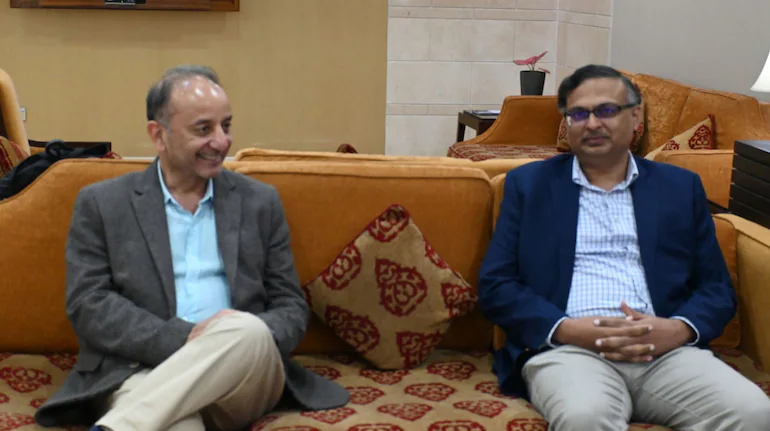
Pakistan’s Climate Change and Environmental Coordination Minister, Musadik Masood Malik, is in New Delhi to attend the Shanghai Cooperation Organisation (SCO) Civilisational Dialogue Forum, bringing a senior pakistani political representative to India amid strained bilateral relations. His visit has drawn attention not only because of the diplomatic significance of the gathering but also because of his previous controversial remarks on the Indus Waters Treaty (IWT).
Malik, a senior member of the Pakistan Muslim League (Nawaz) and a sitting senator, has held several important government positions under different Pakistani administrations. He assumed the climate change portfolio in March 2025 under Prime Minister Shehbaz Sharif and has frequently represented Islamabad’s position on sensitive political and international issues.
His participation in the New Delhi forum comes at a time when relations between India and Pakistan remain tense following the April 2025 Pahalgam terror attack and India’s subsequent military operation against terrorist infrastructure in Pakistan and Pakistan-occupied Kashmir. The visit has therefore attracted attention beyond the formal agenda of the SCO meeting.
Who Is Musadik Masood Malik? Pakistan’s Climate Change Minister
Musadik Masood Malik is a Pakistani politician and senator affiliated with the Pakistan Muslim League (Nawaz), commonly known as PML-N. He currently serves as Pakistan’s Minister for Climate Change and Environmental Coordination in the government led by Prime Minister Shehbaz Sharif.
Malik took charge of the climate portfolio in March 2025. Although his current ministerial responsibilities focus on environmental policy and climate-related coordination, his political career has also involved energy, water resources and public communication on major national issues.
He is among the Pakistani government’s prominent public representatives and frequently appears in television discussions and interviews to explain Islamabad’s official positions. His experience across multiple ministries has given him a role in discussions involving energy security, water management and international policy.
His presence in New Delhi is particularly notable because it represents a diplomatic engagement between the two countries at a time when high-level political relations remain difficult.
Musadik Malik’s Political Career and Previous Ministerial Roles
Malik has held several government positions over the past decade, particularly in sectors connected to Pakistan’s water and energy requirements. His experience in these departments has also shaped his public involvement in debates over regional water security.
Minister of Water and Power in 2013
Malik served as Pakistan’s Minister of Water and Power in the caretaker government led by Mir Hazar Khan Khoso between March and June 2013. The caretaker administration was responsible for overseeing the transition during a period of political change in Pakistan.
Water Resources and Energy Minister Under Shehbaz Sharif
He later returned to government in the earlier Shehbaz Sharif administration, serving as Minister for Water Resources and Minister of Energy during 2022–2023.
These roles placed him in departments dealing with electricity generation, energy supply, water management and the country’s broader infrastructure requirements. His experience in the water sector is relevant to his subsequent public statements about the Indus Waters Treaty, although the treaty itself falls under the responsibilities of Pakistan’s water resources authorities rather than his current climate portfolio.
Spokesperson for Nawaz Sharif
Malik also served as spokesperson for former Pakistan Prime Minister Nawaz Sharif in 2014. The position involved communicating the former prime minister’s political and government positions during a period of significant political debate in Pakistan.
His experience as a spokesperson helped establish him as a familiar public face of the PML-N leadership. He has continued to play a prominent role in presenting the government’s position on major domestic and international issues.
What Was Musadik Malik’s Controversial ‘Will Cut Hands’ Remark?
One of the most widely discussed aspects of Malik’s public profile is his warning over India’s position on the Indus Waters Treaty. In June 2025, during a press conference, he said Pakistan would “cut off those hands” attempting to control the flow of Indus waters.
The remark came amid escalating tensions over India’s decision to place the Indus Waters Treaty in abeyance following the Pahalgam terror attack. Pakistan has repeatedly criticised the move, arguing that it threatens the country’s water security and the rights of downstream users.
Malik’s statement attracted attention because of its aggressive language. The warning was made in the context of Pakistan’s opposition to India’s position on the treaty and became one of the most recognisable public comments associated with the minister.
Although Malik does not directly oversee the treaty through his current climate change portfolio, he has emerged as one of Pakistan’s public representatives in the international debate surrounding the agreement.
Why Is Pakistan Raising the Indus Waters Treaty Issue Internationally?
The Indus Waters Treaty is a water-sharing agreement signed by India and Pakistan in 1960 with the involvement of the World Bank. It established a framework for the use of the Indus river system, allocating the eastern rivers largely to India and the western rivers primarily to Pakistan, subject to specific treaty provisions.
The agreement has remained an important part of India-Pakistan relations for decades, surviving wars and repeated diplomatic crises. Pakistan depends heavily on the Indus river system for agriculture, irrigation and other essential water requirements, making any change to the treaty a major political and economic concern in Islamabad.
India announced in April 2025 that the treaty would be held in abeyance following the Pahalgam terror attack, which killed 26 people. New Delhi linked the decision to the broader security situation and its position that normal cooperation cannot continue under the prevailing circumstances.
Pakistan has strongly opposed the decision and has sought to take the dispute beyond bilateral discussions. Malik has said Islamabad intends to raise the issue at the United Nations and through international arbitration mechanisms, describing it as a matter of justice and the rights of downstream communities.
The dispute has become one of the most sensitive dimensions of the wider India-Pakistan confrontation. While water management is a technical and economic issue, the treaty’s political significance means that disagreements over its implementation can quickly become part of broader diplomatic tensions.
Why Is Musadik Malik Visiting India for the SCO Civilisational Dialogue Forum?
Malik is in New Delhi to participate in the SCO Civilisational Dialogue Forum, a gathering involving representatives of member countries. The event is scheduled from November 20 to November 22, 2026, and provides a platform for discussions involving the civilisational, cultural and diplomatic dimensions of cooperation among SCO members.
His participation is significant because Pakistani political representation in India has been limited amid the deterioration in bilateral relations. The visit offers an opportunity for engagement within a multilateral framework, even as major disagreements between New Delhi and Islamabad remain unresolved.
It may also be viewed in the context of Pakistan’s interest in maintaining engagement with the SCO. The country is scheduled to host the organisation’s summit in Islamabad in 2027, making diplomatic participation and cooperation among member states important for its regional standing.
However, attendance at the forum should not automatically be interpreted as a breakthrough in India-Pakistan relations. The visit is taking place under the SCO framework, and there has been no indication that it will lead to a formal bilateral dialogue or resolve the disputes between the two countries.
India-Pakistan Relations After the Pahalgam Attack and Operation Sindoor
Relations between India and Pakistan deteriorated sharply after the April 22, 2025, terror attack in Pahalgam, Jammu and Kashmir, in which 26 people were killed. India blamed Pakistan-linked terrorist networks for the attack, an allegation Islamabad has denied.
On May 7, 2025, India launched Operation Sindoor, targeting what it described as terrorist infrastructure in Pakistan and Pakistan-occupied Kashmir. The operation marked a major escalation in the confrontation between the two nuclear-armed neighbours.
The developments were followed by a period of heightened military and diplomatic tensions. India maintained that cross-border terrorism remained a central obstacle to normal relations, while Pakistan rejected India’s accusations and raised concerns over the military action.
The Indus Waters Treaty dispute added another major point of friction. The disagreement over water-sharing has since become part of the wider diplomatic confrontation, with both countries maintaining sharply different positions on the treaty’s status and future.
Against this background, Malik’s presence in New Delhi is diplomatically notable. It demonstrates that multilateral platforms can still bring representatives of the two countries into the same institutional setting, even when direct bilateral engagement remains strained.
What Is the Shanghai Cooperation Organisation?
The Shanghai Cooperation Organisation is a Eurasian intergovernmental grouping focused on political, economic, security and regional cooperation. It brings together countries across Central Asia, South Asia and other parts of Eurasia.
Its full members include India, China, Russia, Kazakhstan, Kyrgyzstan, Tajikistan, Iran, Uzbekistan, Pakistan and Belarus. The organisation provides a platform for member states to discuss regional security, economic connectivity, trade, cultural cooperation and other shared concerns.
India and Pakistan became full members in 2017, creating a multilateral setting in which both countries participate alongside China, Russia and Central Asian states. Their membership has not removed bilateral disagreements, but it has provided channels for continued institutional engagement.
The SCO also discusses terrorism and regional security, issues that India has repeatedly highlighted during its participation. New Delhi has called for a united approach against terrorism and its financing, arguing that member states should avoid double standards when addressing cross-border threats.
Can Musadik Malik’s Visit Improve India-Pakistan Ties?
Malik’s participation in the Delhi forum may create limited diplomatic space for engagement, but expectations of an immediate improvement in bilateral relations remain uncertain. The visit takes place amid continuing disagreements over terrorism, the Indus Waters Treaty and the aftermath of the 2025 military confrontation.
For Pakistan, participation in an event hosted by India offers an opportunity to remain engaged with the SCO and maintain contact with other member countries ahead of the 2027 summit in Islamabad. For India, the forum provides a multilateral setting in which it can continue raising concerns about terrorism and regional security.
The most important question is whether such institutional engagement can eventually create conditions for broader dialogue. At present, Malik’s visit is a diplomatic interaction within the SCO framework rather than evidence of a change in either country’s core position.
His controversial remarks on the Indus Waters Treaty also underline the challenges involved. The same minister attending a dialogue forum in New Delhi has previously used confrontational language while discussing one of the most sensitive disputes between the neighbours.
Ultimately, the significance of Malik’s visit will depend less on the symbolism of his arrival and more on whether the SCO engagement contributes to sustained communication. With major political and security disagreements still unresolved, any meaningful improvement in India-Pakistan relations is likely to require a much broader diplomatic effort.
For breaking news and live news updates, like us on Facebook or follow us on Twitter and Instagram. Read more on Latest India on thefoxdaily.com.






COMMENTS 0