Pakistan’s imports from India rose sharply in the first quarter of the 2026-27 fiscal year despite restrictions on direct and indirect trade between the two countries. Pakistan imported goods worth $61.74 million, equivalent to Rs 5,876 crore as reported, between April and June 2026, marking a 69% increase from $36.55 million in the corresponding period a year earlier, according to a report by Dawn citing data from the State Bank of Pakistan.
At the same time, Pakistan recorded no exports to India during the quarter. The figures have raised questions about how Indian-origin goods continue to reach Pakistani buyers when formal bilateral trade remains suspended.
The available trade data does not establish the routes used to transport these goods or explain how their country of origin was recorded. Trade experts have suggested that some products may be reaching Pakistan through third-country hubs, including the United Arab Emirates (UAE), Singapore and Sri Lanka.
The reported increase highlights a gap between restrictions on formal trade and the continued commercial demand for products associated with India. However, the figures alone do not prove that every recorded import originated in India or that the goods were deliberately routed through third countries to circumvent the restrictions.
Pakistan’s Imports from India Rise 69%
According to the reported figures, Pakistan’s imports from India increased from $36.55 million in the first quarter of 2025-26 to $61.74 million in the same period of 2026-27. This represents a year-on-year increase of approximately 69%.
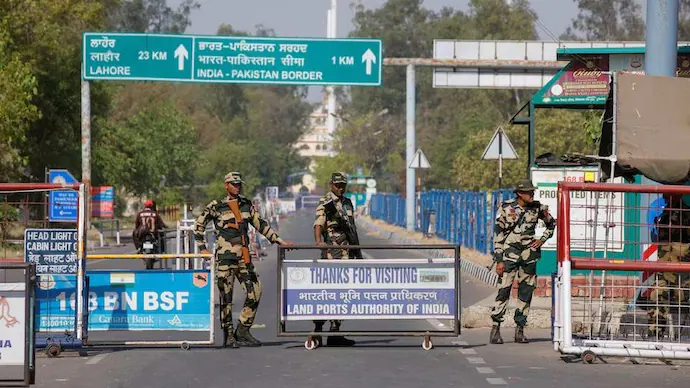
The increase is notable because India and Pakistan have sharply restricted their trade relations since April 2025, following the Pahalgam terror attack and the subsequent deterioration in bilateral relations. India closed the Wagah-Attari land border crossing for trade and introduced restrictions on goods originating in or exported from Pakistan. Pakistan subsequently announced the suspension of trade with India, including trade routed through third countries.
Despite these measures, the State Bank of Pakistan’s reported figures show that imports recorded as coming from India have continued. Pakistan’s lack of recorded exports to India during the same quarter adds another dimension to the trade imbalance.
Geopolitical expert Ravinder Singh Robin questioned how the goods were reaching Pakistan and how their origin was being recorded. He suggested that third-country routes could help explain the apparent continuation of trade despite the restrictions.
The figures have also renewed questions about whether the continued demand for Indian products could create commercial incentives for businesses to explore indirect supply routes. Establishing the precise explanation, however, requires more detailed information about product categories, customs declarations, shipping routes and the countries recorded as the goods’ origin.
Which Indian Goods Does Pakistan Import?
Pharmaceutical products have historically been among the important categories of Indian goods supplied to Pakistan. According to a Reuters report cited in the supplied material, India’s pharmaceutical exports to Pakistan amounted to $208 million up to March 2025.
Medicines and pharmaceutical ingredients can be particularly important in cross-border trade because healthcare systems depend on reliable access to a range of products and raw materials. Where direct supply channels become restricted, buyers may face higher costs or need to identify alternative suppliers and distribution arrangements.
Other categories associated with trade between the two countries include plastics, petroleum products, dyes, organic chemicals, rubber, coffee, tea, vegetables, spices, dairy products and cereals.
The continued appearance of Indian-related imports in Pakistan’s trade data does not necessarily mean that all these categories are moving through indirect routes. The available figures do not provide a complete product-by-product breakdown of the imports recorded during the first quarter of 2026-27.
Nevertheless, the historical importance of pharmaceuticals and other industrial inputs helps explain why traders may continue to seek access to products associated with Indian suppliers, even as formal trade relations remain severely restricted.
How Could Indian Goods Reach Pakistan Through Third Countries?
Trade experts have suggested that some Indian goods could be reaching Pakistan through commercial hubs such as Dubai, Singapore and Colombo. Under this possible arrangement, products would first be shipped from India to an intermediary market before being transported onward to Pakistan.
Such routes can form part of legitimate international supply chains. Goods may pass through distribution centres, bonded warehouses or processing facilities before reaching their final destination. The legal treatment of these transactions depends on the applicable customs rules, sanctions or trade restrictions, documentation requirements and the actual origin of the products.
In cases where products are merely stored or transferred between ships, their country of origin does not automatically change. Repackaging, relabelling or changing shipping documents also does not necessarily establish a new origin under customs rules. Whether a product qualifies as originating in a third country depends on the relevant legal requirements and the nature of any processing undertaken.
The distinction matters because the use of an intermediary country does not, by itself, demonstrate that a trade ban has been circumvented. Detailed customs records would be needed to determine whether particular shipments were permitted, incorrectly declared or in violation of applicable restrictions.
What Is the ‘Grey-Zone Strategy’?
The Global Trade Research Initiative (GTRI), a trade-focused think tank, has described a possible pattern of indirect trade as a “grey-zone strategy”. According to GTRI founder Ajay Srivastava, Indian products may be sent to intermediary hubs, stored in bonded warehouses and then re-exported to Pakistan.
In the scenario described by Srivastava, goods could pass through facilities in Dubai, Singapore or Colombo before being shipped onward. He suggested that documentation or labelling may be altered during the process, potentially making it more difficult to identify the original source of the products.
These claims describe a possible explanation for the trade figures rather than a verified account of every shipment. The available data does not independently confirm which routes were used, whether documents were changed or whether the reported imports breached either country’s restrictions.
GTRI has estimated that unofficial Indian exports to Pakistan could amount to $10 billion annually. This is an estimate attributed to the think tank, not an official figure established by the reported State Bank of Pakistan data. The scale and composition of any unofficial trade would require independent verification.
Why India and Pakistan Suspended Trade
Trade relations between India and Pakistan have deteriorated over several years, with political and security tensions repeatedly affecting commercial ties.
In 1996, India granted Pakistan Most-Favoured-Nation status under the international trading framework. India withdrew that status in 2019 following the Pulwama suicide bombing, which killed 40 Indian security personnel.
Trade declined further after the 2025 Pahalgam terror attack, in which 25 tourists were killed, according to the supplied report. The attack triggered a major deterioration in bilateral relations, with India announcing restrictions that included closing the Wagah-Attari land port for trade.
India also prohibited the direct or indirect import or transit of goods originating in or exported from Pakistan, as described in the supplied material. Pakistan responded by suspending trade with India, including through third countries.
These measures sharply restricted formal commercial exchanges. They also increased the importance of understanding how customs authorities record a product’s origin, its exporting country and the route it takes before reaching its final destination.
India-Pakistan Trade Has Declined Sharply Since 2019
The broader decline in bilateral trade provides context for the latest import figures. According to the supplied data, trade between India and Pakistan fell from $2.41 billion in 2018 to $1.2 billion in 2024.
Pakistan’s exports to India also dropped substantially, declining from $547.5 million in 2019 to approximately $480,000 in 2024. Products historically exported from Pakistan included glassware, copper, sulphur, fruits and nuts.
In the period from April 2024 to January 2025, the last full pre-ban period cited in the report, India’s exports to Pakistan amounted to $447.65 million, while Pakistan’s exports to India stood at approximately $420,000.
These figures illustrate the imbalance between the two countries’ recorded trade flows before the latest restrictions took effect. The subsequent suspension of formal trade further reduced the scope for direct commercial transactions.
Against this background, the reported increase in Pakistan’s imports recorded as coming from India is striking. It raises questions about the distinction between the country from which goods are shipped and the country where they originally originate.
What the Latest Trade Figures Do and Do Not Show
The latest figures indicate that Pakistan recorded a 69% increase in imports from India during the first quarter of 2026-27 compared with the same period a year earlier. They also show that Pakistan recorded no exports to India during the quarter, according to the report.
However, the figures do not reveal the full supply-chain history of the imported products. They do not identify every supplier, the exact route followed by each shipment or whether the products were declared under India’s name of origin or another country’s customs classification.
To determine how much trade is moving through intermediary markets, authorities and researchers would need detailed customs declarations, shipping records, product-level import data and information about the rules applied to origin declarations. Those records would help distinguish legitimate third-country trade from transactions that may breach restrictions.
The distinction is also important for businesses. Traders using intermediary markets must comply with applicable customs and trade rules, while importers need to understand the origin and regulatory status of the goods they purchase.
What Happens Next for India-Pakistan Trade?
The future of India-Pakistan trade will depend on political and security developments, the continuation of existing restrictions and the extent to which businesses can legally source goods through international supply chains.
Demand for pharmaceuticals, industrial materials and other products may continue to create incentives for traders to seek available supplies. However, higher transportation costs, additional intermediaries and compliance requirements can make indirect sourcing more expensive and complicated than direct trade.
The latest figures also raise questions about the effectiveness and enforcement of restrictions when goods can move through complex international distribution networks. Establishing whether the reported imports reflect re-exports, origin-classification practices or prohibited transactions will require evidence beyond aggregate trade totals.
Key takeaway: Pakistan’s reported imports from India rose 69% to $61.74 million in the first quarter of 2026-27 despite the suspension of direct trade. Experts have suggested that third-country hubs such as Dubai, Singapore and Colombo may help explain the figures, but the available data does not establish the route or legal status of individual shipments.
For breaking news and live news updates, like us on Facebook or follow us on Twitter and Instagram. Read more on Latest Business on thefoxdaily.com.





COMMENTS 0