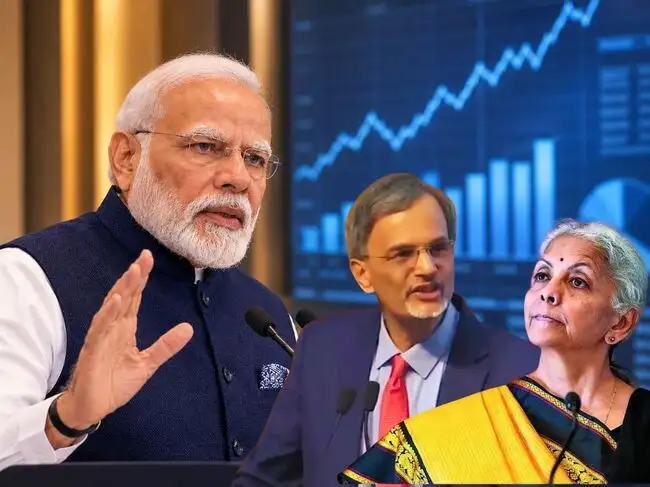
Prime Minister Narendra Modi‘s pointed criticism of corporate India has prompted business leaders to reassess their expectations from the government ahead of the next Union Budget. His message was clear: after receiving substantial tax relief and policy support, companies must demonstrate that the benefits are translating into more jobs, better salaries and stronger investment.
Speaking at the Federation of Indian Chambers of Commerce and Industry’s (FICCI) annual general meeting and convention in New Delhi on November 19, Modi questioned whether businesses had increased employee numbers or raised wages after successive government measures to reduce the tax burden and improve the business environment.
The remarks have added a new dimension to the relationship between the government and India Inc. While companies have traditionally approached successive Budgets with demands for tax concessions, incentives and regulatory changes, executives are now considering whether the Prime Minister’s comments indicate a tougher government position on further corporate relief.
According to reports on the industry’s reaction, some business leaders interpreted the criticism as a warning that requests for additional concessions could receive a less favourable response. Companies are expected to prepare employment and salary data to demonstrate their contribution to economic growth, while also explaining the financial pressures affecting hiring and investment decisions. :chatgpt-content-reference{index=”0″}
Why Modi’s Message Has Put Corporate Tax Demands Under Scrutiny
At the centre of Modi’s remarks is the government’s argument that lower taxes should contribute to broader economic benefits rather than simply improving corporate profitability. The Prime Minister referred to the reduction in India’s basic corporate tax rate from 30% to 22% in 2019, alongside other measures intended to support businesses and encourage economic activity.
He also highlighted the income-tax relief introduced for individuals with annual incomes of up to Rs 12 lakh under the new tax regime. According to the Prime Minister, these measures were intended to increase purchasing power, strengthen consumption and create conditions for businesses to expand.
However, Modi questioned whether companies had responded by increasing employee salaries or expanding their workforces. He criticised what he described as an expectation among businesses that the government should continue providing concessions while companies themselves did not do enough to support employment and income growth.
His remarks were particularly significant because they were delivered directly to business leaders at a major industry gathering. Rather than focusing exclusively on the government’s responsibility to improve the business environment, Modi placed greater emphasis on the obligations of companies as participants in India’s economic development.
For businesses preparing their Budget submissions, the message creates an additional consideration. Tax relief may remain an important industry demand, but companies could increasingly be expected to explain how previous policy benefits have supported hiring, wage increases, capital expenditure and domestic manufacturing.
India Inc May Present Jobs and Salary Data
Corporate executives are preparing to make a case that employment and employee compensation have increased despite the economic challenges faced by businesses. The industry’s response is likely to focus on measurable indicators, including workforce expansion, salary revisions and the investments required to sustain future job creation.
Some companies argue that employment decisions cannot be assessed without considering the broader operating environment. Rising fuel and input costs, currency fluctuations, demand uncertainty and pressure on profit margins can affect the ability of businesses to expand their workforce or offer substantial salary increases.
These concerns are particularly relevant for companies operating in sectors where production costs and international competition influence profitability. Businesses may also argue that investments in technology, automation and productivity can change the relationship between revenue growth and the number of employees required.
Nevertheless, the Prime Minister’s intervention has placed employment outcomes firmly in the discussion surrounding corporate tax policy. Industry leaders may now need to show not only that their businesses are growing, but also how that growth contributes to jobs and household incomes.
The data also matters because employment figures can tell different stories depending on the indicator being used. An increase in total employment does not automatically mean an equivalent increase in permanent, formal-sector jobs. Similarly, higher nominal salaries do not necessarily translate into stronger purchasing power when inflation is taken into account.
That distinction could become important as companies and policymakers debate whether the benefits of economic growth are reaching workers across different income groups and employment categories.
Profit Growth and Employee Pay in Focus
The debate over corporate tax relief is closely connected to the distribution of business profits. The Economic Survey 2024-25 highlighted a gap between the growth in corporate profitability and the pace of employment expansion, raising questions about how much of the improvement in company earnings was translating into additional jobs and higher employee compensation.
According to figures cited in the Survey, corporate profits increased by 22.3% in 2023-24, while employment among the companies covered by a State Bank of India analysis of around 4,000 listed firms grew by approximately 1.5%. Employee expenses increased by 13%, compared with 17% growth in the preceding year.
These figures do not represent every company or the entire Indian workforce, but they illustrate why the relationship between corporate profitability and employee income has attracted attention. Stronger profits can improve a company’s capacity to invest, expand operations and reward employees. However, businesses may also use earnings to reduce debt, build reserves, upgrade technology or strengthen their financial position.
For policymakers, the central question is whether these decisions collectively generate sufficient employment and income growth to support the wider economy.
Employment and wage indicators also require careful interpretation. Data from the Annual Survey of Industries showed that the number of persons engaged in the surveyed industrial sector increased by 7.2% to around 2.1 crore in 2024-25. Total emoluments rose 12.1% to approximately Rs 8 lakh crore, while profits increased 7.7% to around Rs 11.6 lakh crore.
The figures suggest that employment and compensation did increase in the surveyed industrial sector. They also show why a broad assessment of corporate performance needs to consider multiple indicators rather than relying on a single comparison between profits and hiring. :chatgpt-content-reference{index=”1″}
Private Investment Remains a Concern
Employment is only one part of the government’s expectations from corporate India. Private-sector investment has also remained an important issue in discussions about India’s economic growth, particularly because sustained investment is needed to expand production capacity, create industrial infrastructure and generate employment opportunities.
Government spending and policy incentives can help establish favourable conditions for investment, but private companies ultimately make decisions about whether to build new factories, expand existing facilities, purchase equipment or enter new markets.
Modi’s comments reflect the government’s expectation that businesses should take a more active role in translating policy support into economic activity. The Prime Minister has also urged industry leaders to use opportunities created by India’s trade agreements and strengthen the country’s position in international markets.
He cautioned businesses against treating India’s large domestic consumer market as a guaranteed source of sales. Companies, he argued, should improve product quality and develop the ability to compete with international manufacturers rather than depending primarily on domestic demand.
This approach connects the debate over taxes and employment with a broader industrial strategy. Higher-quality manufacturing, stronger exports and increased domestic production can support investment and create opportunities for workers. However, achieving these outcomes requires companies to commit capital and take commercial risks over longer periods.
For businesses, the challenge is balancing the government’s expectations with practical investment conditions. Companies may seek further policy support while arguing that long-term expansion also depends on predictable regulations, competitive input costs, infrastructure and stable demand.
Industry Leaders Respond to the Prime Minister’s Challenge
The Prime Minister’s remarks have also prompted business leaders to highlight steps their companies are taking to improve employee compensation and support their workforces.
Vedanta Group Chairman Anil Agarwal, for example, said the company had introduced a special Chairman Grant providing nearly 100,000 employees with an additional amount equivalent to 10% of their annual salary. His response was among the examples of industry leaders pointing to existing initiatives after Modi’s criticism.
Other industry representatives have indicated that businesses are contributing to employment and economic activity, while also identifying sector-specific challenges that could affect further expansion.
The responses underline an important distinction in the debate: companies may agree with the objective of generating more jobs and improving salaries without necessarily accepting that every business has the same financial capacity or employment model.
Large manufacturers, financial services companies, technology firms and smaller enterprises operate under different cost structures. Their ability to increase wages or hire additional workers can vary considerably depending on demand, access to finance, productivity and the level of competition in their respective markets.
As a result, the discussion ahead of the Budget is likely to involve both industry-wide employment data and sector-specific arguments about the conditions needed to support investment.
What Modi’s Remarks Could Mean for the Next Union Budget
Modi’s comments do not, by themselves, establish that the government will reject all future requests for tax concessions. The Prime Minister also invited industry leaders to submit suggestions for further reforms, indicating that the government remains open to discussions about improving the business environment.
However, the remarks could change the way companies frame their demands. Instead of relying only on arguments about lower taxes and regulatory relief, industry representatives may need to demonstrate how proposed measures would generate additional investment, expand production, improve wages or create employment.
For the government, the challenge will be to balance corporate competitiveness with the wider economic objective of improving household incomes. Tax incentives can influence business decisions, but their impact depends on how companies respond and whether improved profitability leads to productive investment.
There is also a broader economic consideration. Household consumption is an important driver of India’s economy. When workers receive higher real wages, they generally have greater capacity to spend on goods and services. That spending can support demand, encourage businesses to increase production and create further employment opportunities.
Conversely, if corporate earnings rise without a comparable improvement in employee incomes, the benefits of growth may not translate into stronger household purchasing power at the same pace.
This is why the relationship between company profits, wages, employment and private investment has become central to the discussion. The government wants businesses to contribute more directly to economic expansion, while companies want policies that make investment commercially viable.
A Shift in the Conversation Between Government and Corporate India
The significance of Modi’s message extends beyond the immediate debate over tax concessions. It places greater emphasis on the outcomes expected from corporate India in return for government support.
For years, industry Budget discussions have included demands for lower taxes, easier compliance, incentives and measures to improve competitiveness. Those issues are unlikely to disappear. However, the Prime Minister’s comments suggest that employment generation, wage growth and investment could receive greater attention when the government evaluates the industry’s requests.
Companies, meanwhile, will have to explain how their operations contribute to the wider economy while making the case for measures that could support future growth. Employment and salary figures may become an important part of that argument, alongside capital expenditure, manufacturing expansion and export performance.
The next Union Budget will provide a clearer indication of how the government intends to balance these priorities. For now, Modi’s intervention has made one expectation unmistakable: policy support and corporate growth must be accompanied by a stronger contribution to jobs, employee incomes and India’s long-term economic development.
For breaking news and live news updates, like us on Facebook or follow us on Twitter and Instagram. Read more on Latest Business on thefoxdaily.com.






COMMENTS 0