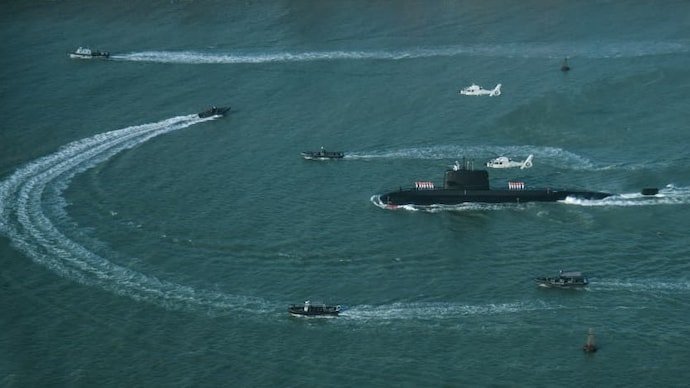
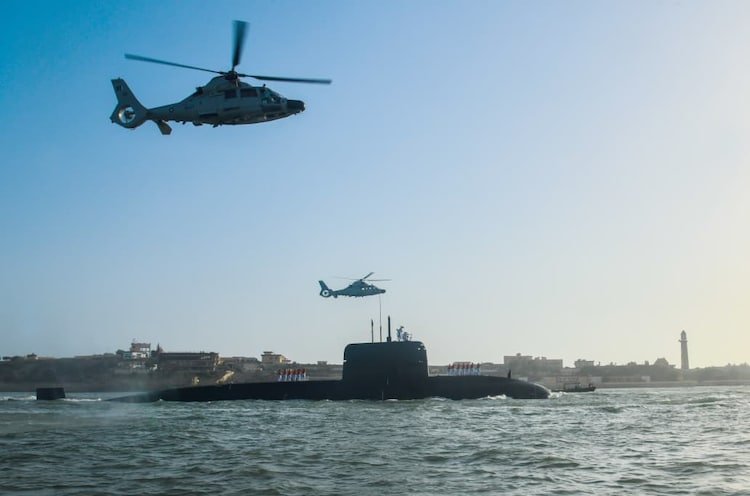
The arrival of Pakistan’s first China-built Hangor-class submarine has sparked renewed discussion about naval competition in the Indian Ocean Region. More importantly, comments from senior Pakistani naval officials suggesting a future presence in the Bay of Bengal have drawn attention from strategic observers across South Asia.
For decades, Pakistan’s naval focus remained concentrated in the Arabian Sea. However, the induction of advanced submarines, improving ties with Bangladesh, and increasing Chinese influence across the Indo-Pacific are creating conditions that could allow Islamabad to project maritime power much farther from its traditional operating zones.
The development raises important questions. Can Pakistan realistically maintain a sustained naval presence in the Bay of Bengal? What role could China play in this strategy? How might India respond? And what does this mean for the broader security architecture of the Indian Ocean?
Understanding Pakistan’s Hangor-Class Submarine Programme
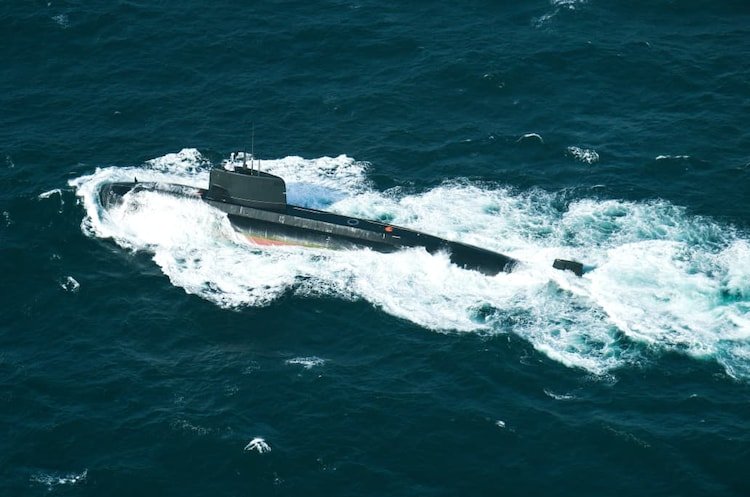
The Hangor-class submarine project is the largest naval modernization effort undertaken by Pakistan in decades. The country plans to induct eight submarines under the programme, with the first vessel already commissioned.
The submarines are being built with Chinese assistance and are expected to significantly improve Pakistan’s underwater warfare capabilities.
| Feature | Hangor-Class Submarine |
|---|---|
| Origin | China-Pakistan collaboration |
| Type | Diesel-electric attack submarine |
| Technology | Air Independent Propulsion (AIP) |
| Operational Advantage | Extended underwater endurance |
| Planned Fleet Size | 8 submarines |
| Primary Objective | Maritime deterrence and sea denial |
The most significant feature is Air Independent Propulsion Technology. Traditional diesel-electric submarines must surface periodically to recharge batteries, increasing the risk of detection. AIP systems allow submarines to remain underwater for much longer periods, making them more difficult to track.
This capability enhances Pakistan’s ability to conduct surveillance, intelligence gathering, and deterrence operations across a wider maritime area.
Why the Bay of Bengal Matters More Than Ever
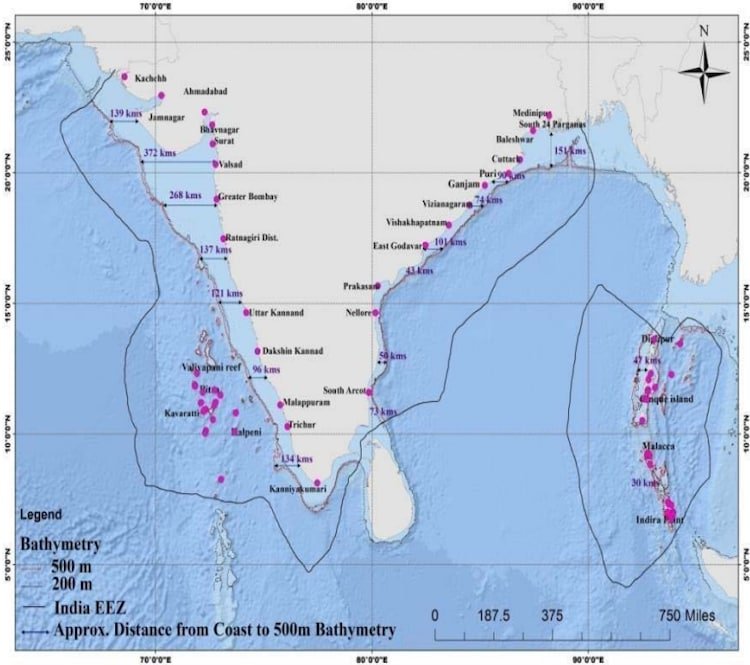
The Bay of Bengal has evolved into one of the world’s most strategically important maritime regions.
Stretching between India, Bangladesh, Myanmar, Thailand, Sri Lanka, Indonesia, and Malaysia, it serves as a crucial gateway connecting the Indian Ocean to Southeast Asia.
Several major shipping routes carrying energy supplies, manufactured goods, and raw materials pass through these waters.
For India, the Bay of Bengal is particularly significant because it hosts:
- The Eastern Naval Command at Visakhapatnam
- Key shipping lanes connecting India with East Asia
- The strategically vital Andaman and Nicobar Islands
- Growing Indo-Pacific security initiatives
- Important energy and trade corridors
Any increase in foreign military activity within this maritime space naturally attracts attention from Indian security planners.
The Historical Shadow of 1971
Pakistan’s Bay of Bengal ambitions cannot be separated from the historical legacy of the 1971 India-Pakistan War.
During that conflict, the Indian Navy successfully isolated East Pakistan, cutting off maritime supply routes and contributing significantly to Pakistan’s defeat.
The war resulted in the creation of Bangladesh and effectively eliminated Pakistan’s meaningful military presence in the Bay of Bengal.
For more than five decades afterward, Pakistan’s naval operations remained largely confined to the Arabian Sea.
The revival of the name “Hangor” is therefore symbolic. The original PNS Hangor gained prominence after sinking INS Khukri during the 1971 conflict. By naming its new submarine class after that vessel, Pakistan is invoking one of the few naval successes it achieved during a war it ultimately lost.
This symbolism suggests the programme is not only military but also psychological and political.
The Bangladesh Factor: A Changing Strategic Equation
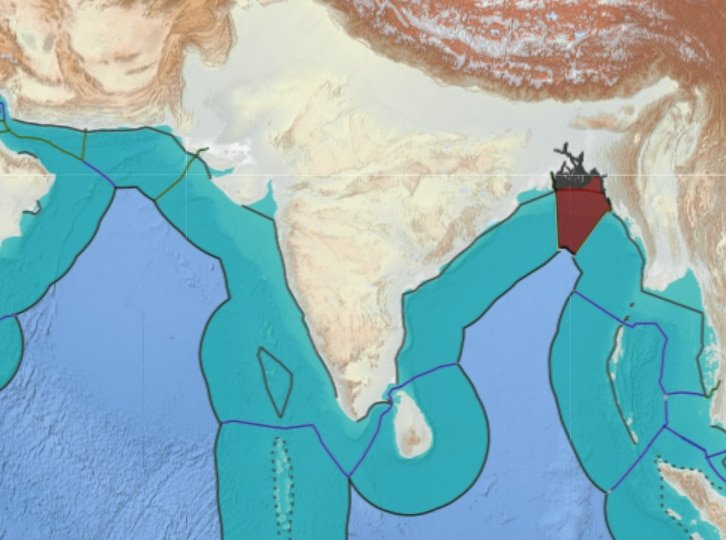
One of the most important developments behind Pakistan’s renewed eastern maritime ambitions is the improvement in relations with Bangladesh.
For decades after Bangladesh’s independence, relations between Dhaka and Islamabad remained complicated and often distant.
Recent years, however, have witnessed increased diplomatic engagement, trade expansion, military exchanges, and cultural interactions.
Several developments have attracted strategic attention:
- Resumption of direct flights between Bangladesh and Pakistan
- Growth in bilateral trade volumes
- Increased military-to-military contacts
- Participation in joint maritime exercises
- Visits by senior defence officials
- Renewed port and shipping cooperation
Perhaps the most notable event was the visit of a Pakistani naval vessel to Bangladesh, the first such visit since 1971.
Although there is currently no evidence that Bangladesh intends to host Pakistani military assets, improved bilateral ties create opportunities for greater naval interaction and logistical cooperation.
Can Pakistan Actually Sustain Operations in the Bay of Bengal?
Projecting presence and sustaining presence are two very different things.
While Pakistan may be capable of sending submarines into the Bay of Bengal, maintaining a regular operational footprint presents substantial challenges.
Distance and Logistics
The Bay of Bengal lies significantly farther from Pakistan’s primary naval bases than its traditional operating Environment in the Arabian Sea.
Submarine deployments over such distances require:
- Reliable logistical support
- Maintenance Infrastructure
- Intelligence networks
- Supply chains
- Operational coordination
Without overseas facilities or strong regional partnerships, sustaining long-term deployments becomes difficult.
Indian Maritime Surveillance
India possesses extensive maritime monitoring capabilities, including:
- Long-range maritime patrol aircraft
- Satellite surveillance systems
- Anti-submarine warfare platforms
- Integrated coastal radar networks
- Naval aviation assets
These capabilities significantly complicate any effort by a foreign submarine force to operate undetected near critical Indian maritime zones.
Operational Costs
Maintaining a distant submarine presence requires substantial financial resources. Pakistan’s defence budget remains considerably smaller than India’s, making sustained deployments more challenging.
As a result, Pakistan may prioritize symbolic presence missions rather than continuous operational patrols.
The China Connection Cannot Be Ignored
Any discussion about Pakistan’s submarine modernization inevitably leads to China.
China has become Pakistan’s most important defence partner, providing military equipment, technology transfers, and strategic support across multiple domains.
The Hangor-class itself is a product of this partnership.
China’s broader maritime strategy includes expanding influence across the Indian Ocean through investments in ports, infrastructure projects, and naval cooperation agreements.
From Gwadar in Pakistan to facilities across the Indo-Pacific, Beijing has steadily increased its maritime footprint.
While Pakistan’s submarine deployments would officially remain independent operations, many analysts view them as part of a wider regional security environment shaped by China’s growing presence.
This adds an additional layer of strategic complexity for India.
How India Is Positioned to Respond
India’s naval capabilities today are dramatically different from those of 1971.
Over the past five decades, New Delhi has transformed its navy into one of the most capable maritime forces in the Indo-Pacific.
| Capability Area | India’s Position |
|---|---|
| Aircraft Carriers | Two operational carriers |
| Nuclear Submarines | Operational fleet available |
| Maritime Surveillance | Advanced multi-layer monitoring |
| Island Infrastructure | Andaman & Nicobar Command |
| Strategic Partnerships | QUAD and Indo-Pacific cooperation |
The Andaman and Nicobar Islands provide India with a unique strategic advantage. Located near major maritime chokepoints, these islands allow India to monitor shipping routes connecting the Indian Ocean with the Pacific.
This geography makes it difficult for any external naval power to establish a significant presence in the Bay of Bengal without attracting attention.
What This Means for the Indo-Pacific Region
Pakistan’s submarine ambitions reflect a broader trend unfolding across Asia: increasing maritime competition.
Countries throughout the region are investing heavily in naval modernization as trade routes, Energy Security, and strategic influence become increasingly tied to maritime power.
The Bay of Bengal is emerging as a critical arena in this transformation.
Beyond India and Pakistan, regional stakeholders including Bangladesh, Sri Lanka, Myanmar, Thailand, Japan, Australia, and the United States all have interests connected to stability in these waters.
The growing importance of the Indo-Pacific means that even relatively small shifts in naval posture can carry wider geopolitical implications.
A Strategic Insight Often Missing from the Debate
Much of the discussion focuses on whether Pakistan can challenge India militarily in the Bay of Bengal.
That may be the wrong question.
The more relevant issue is whether Pakistan can create strategic uncertainty.
Modern naval competition is not always about dominance. Sometimes it is about forcing an adversary to devote additional resources to monitoring, surveillance, and contingency planning.
Even a limited Pakistani submarine presence could require India to allocate greater attention and assets to areas that have historically faced relatively low levels of Pakistani naval activity.
In strategic terms, that alone may represent a meaningful objective.
Future Outlook: Symbolic Gesture or Long-Term Shift?
The induction of the Hangor-class submarines and Pakistan’s stated interest in the Bay of Bengal represent more than a routine military modernization programme.
They signal Islamabad’s desire to expand its strategic reach, increase maritime relevance, and participate more actively in the evolving Indo-Pacific security landscape.
However, ambition does not automatically translate into capability.
Pakistan still faces significant operational, logistical, financial, and geopolitical hurdles before it can establish a sustained presence far from its traditional naval sphere.
India, meanwhile, retains substantial advantages in geography, naval strength, surveillance capabilities, and regional partnerships.
Conclusion
Pakistan’s plan to deploy Hangor-class submarines into the Bay of Bengal is one of the most significant naval developments in South Asia in recent years. It reflects changing regional dynamics, deeper Pakistan-Bangladesh engagement, growing Chinese influence, and Islamabad’s desire to project power beyond the Arabian Sea.
While the move is unlikely to alter the overall balance of power in the near future, it could reshape strategic calculations across the Indian Ocean. The Bay of Bengal is no longer merely a regional waterway; it has become a central theatre in the broader Indo-Pacific competition.
The real significance of Pakistan’s submarine ambition lies not in whether it can dominate these waters, but in how it changes the strategic conversation. As naval modernization accelerates across Asia, the Bay of Bengal is set to become an increasingly important arena where Diplomacy, deterrence, and maritime power intersect.
For breaking news and live news updates, like us on Facebook or follow us on Twitter and Instagram. Read more on Latest World on thefoxdaily.com.






COMMENTS 0