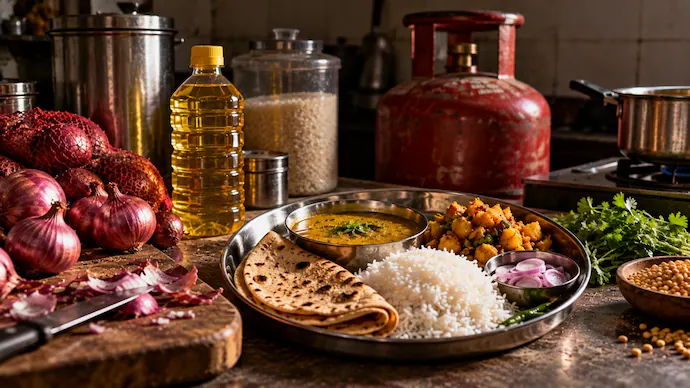
The cost of preparing a home-cooked meal in India has increased as rising vegetable prices, weaker crop production, global uncertainty and higher cooking costs put pressure on household budgets. From onions and rice to edible oil and liquefied petroleum gas (LPG), several everyday essentials have become more expensive, making it harder for families to manage their monthly food expenses.
According to CRISIL Intelligence’s monthly Roti Rice Rate indicator, the estimated cost of preparing a vegetarian thali at home rose 10% year-on-year in September to Rs 30.80, compared with Rs 28.10 a year earlier. The cost of a non-vegetarian thali increased 6% to Rs 59.50 over the same period.
The monthly increase was also significant. Between August and September, the estimated cost of a vegetarian meal rose 4%, while the cost of a non-vegetarian meal increased 3%.
The figures highlight how inflation is affecting more than individual food items. When vegetables, staples, cooking oil and fuel become expensive at the same time, households have fewer opportunities to reduce their overall spending by switching to cheaper alternatives.
Government inflation data also showed an acceleration in price pressures. Retail inflation increased to 5.54% in September from 4.83% in August, while Food Inflation climbed to 7.74% from 5.97%. Rural food inflation was higher at 8.06%, compared with 7.18% in urban areas.
How Much Has the Cost of a Home-Cooked Thali Increased?
CRISIL’s Roti Rice Rate indicator tracks the estimated cost of preparing everyday meals at home using the prices of essential ingredients. It offers a practical way to understand how changes in Food Prices affect household expenses.
The September figures showed increases across both vegetarian and non-vegetarian meals, suggesting that the pressure was not confined to one category of food.
- Vegetarian thali: Rs 30.80 in September, up 10% from Rs 28.10 a year earlier.
- Non-vegetarian thali: Rs 59.50 in September, up 6% year-on-year.
- Monthly vegetarian meal cost: Increased 4% between August and September.
- Monthly non-vegetarian meal cost: Rose 3% over the same period.
These estimates represent the cost of ingredients used to prepare meals at home, rather than the price of restaurant food or a ready-made thali. Actual household spending can differ depending on portion sizes, location, shopping habits and the ingredients families use.
Even a seemingly modest increase in the cost of one meal can become significant when repeated every day. Families that prepare multiple meals at home may face a noticeable rise in monthly expenses, particularly when other household costs are increasing at the same time.
Onion Prices Surge as Domestic Supplies Tighten
Onions were among the biggest contributors to the rise in the cost of a home-cooked thali. Their prices increased 89% year-on-year to Rs 53 per kilogram, according to the figures provided by CRISIL.
The sharp increase was linked to tighter supplies following a decline in rabi onion production and weather-related delays affecting the arrival of the next crop. Seasonal demand added to the pressure on prices.
CRISIL estimated that rabi onion production declined by 5–6%. It also noted that rainfall in June was around 40% below the long-period average, delaying kharif onion transplanting and the arrival of fresh produce in markets.
Onions are widely used in Indian cooking, including in vegetable dishes, curries, gravies and meat preparations. When their prices rise sharply, households may reduce their use or substitute other ingredients, but completely removing them from everyday cooking is not always practical.
Will Onion Prices Fall?
The near-term outlook offered some prospect of relief. CRISIL expected onion prices to moderate towards the end of October as kharif crop arrivals improved.
However, the timing and extent of any decline would depend on how quickly fresh supplies reached markets. Festive demand could also keep prices elevated before arrivals increased sufficiently to ease the pressure.
Even if onion prices begin to fall, the effect on the overall household food bill will depend on the movement of other essentials. Lower prices for one vegetable may not fully offset higher costs for rice, cooking oil and LPG.
Rice Becomes More Expensive as Production Faces Pressure
Rice prices increased 8% year-on-year, adding another source of pressure to the cost of preparing everyday meals. CRISIL linked the increase to an estimated 5–6% decline in paddy production amid lower acreage and weaker yields.
Rice is a staple food for a large number of Indian households, particularly in regions where it forms a central part of daily meals. Unlike some vegetables, it can be difficult for families to reduce rice consumption significantly without changing their usual diets.
When a staple becomes more expensive, the effect can extend across household food budgets. Families may respond by adjusting portion sizes, buying different varieties or replacing some meals with less expensive alternatives, but these changes may not always deliver substantial savings.
Production estimates are also important because domestic crop availability can influence the balance between supply and demand. Lower output may put upward pressure on prices, although the final effect depends on inventories, arrivals, procurement and other market conditions.
Vegetable Oil Prices Rise Amid Global Uncertainty
The pressure on household budgets extends beyond domestic crops. Vegetable oil prices increased 12% year-on-year, with CRISIL linking elevated prices to geopolitical uncertainty and concerns that an El Niño weather pattern could affect palm oil production.
India imports a substantial share of the edible oil it consumes, making domestic prices sensitive to international commodity markets, import costs and supply disruptions.
When international edible oil prices increase, the impact can reach Indian consumers through higher costs for cooking oils. Currency movements, freight charges, import duties and domestic distribution costs can also influence the final retail price.
Cooking oil is used in a wide range of everyday meals, from vegetables and lentils to snacks and fried foods. Families may try to reduce consumption or switch brands when prices rise, but oil remains an important ingredient in many cooking traditions.
How Geopolitical Tensions Affect Food Prices
Geopolitical tensions can affect food prices when they disrupt trade routes, raise transportation costs or increase uncertainty about the availability of globally traded commodities. These disruptions can influence the prices paid by importers and eventually affect consumers.
Weather patterns can add another layer of uncertainty. If agricultural production in major exporting countries is affected by adverse weather, international supplies may tighten and prices may rise.
However, the impact on Indian retail prices is not automatic or uniform. Domestic inventories, alternative suppliers, import policies and local demand all influence how much of an international price movement reaches consumers.
LPG Prices Add to the Cost of Preparing Meals
Cooking gas has also become more expensive. LPG prices were 10% higher than a year earlier, according to the figures cited in the report.
For households that rely on LPG for daily cooking, higher cylinder costs increase the expense of preparing food even before ingredients are purchased. The impact can be particularly difficult for families already facing higher grocery bills.
Unlike some food items, cooking fuel cannot always be replaced easily or immediately. Households may be able to adjust the quantity or type of vegetables they buy, but they still need an energy source to prepare most cooked meals.
Energy prices can also affect the wider food supply chain. Transportation, storage, processing and distribution all involve costs that can be influenced by fuel prices. If these expenses rise, businesses may pass some of the additional burden on to consumers.
West Asia Tensions and Supply-Chain Disruptions Add to Inflation Risks
The Reserve Bank of India’s October Bulletin highlighted renewed geopolitical tensions in West Asia and supply-chain disruptions as factors amplifying global inflationary pressures.
The bulletin also noted continued increases in rice and wheat prices, a sequential rise in pulses and broad-based increases in edible oil prices, led by mustard and palm oil.
These pressures can affect Indian households through several channels. International disruptions may raise the cost of imported commodities, while higher energy and transportation expenses can increase the cost of moving agricultural produce from farms to wholesale markets and retailers.
When several costs rise simultaneously, the impact can spread across the food supply chain. Farmers, traders, processors, transporters and retailers may all face different cost pressures, and the extent to which these costs are passed on depends on market conditions.
Nevertheless, geopolitical tensions are only one part of the explanation for food inflation. Domestic crop production, rainfall, seasonal demand and the availability of stored supplies remain important factors in determining the prices consumers pay.
Retail and Food Inflation Accelerate in September
India’s September inflation figures showed a clear increase in price pressures compared with August. Retail inflation rose to 5.54% from 4.83%, while food inflation increased to 7.74% from 5.97%.
The acceleration in food inflation is especially important because food represents a recurring and often unavoidable expense for households. Families cannot simply stop buying staples and vegetables when prices rise, so increases in these categories can affect spending on other essentials.
The pressure was more pronounced in rural areas. Food inflation stood at 8.06% in rural India, compared with 7.18% in urban areas.
The difference can reflect variations in consumption patterns, local prices and the timing of changes in food availability. Rural households may also have different income sources and spending priorities from urban households, influencing how price increases affect their budgets.
Why Food Inflation Can Feel Worse Than the Headline Rate
The headline retail inflation rate measures changes across a broad basket of goods and services. Individual households, however, experience inflation through the products they buy most frequently.
For a family that spends a large share of its income on food, rising prices for onions, rice, cooking oil and LPG may create a greater sense of financial pressure than the overall inflation figure suggests.
Food prices are also highly visible because households encounter them during regular shopping trips. A sharp increase in a commonly purchased item can quickly affect perceptions of the cost of living, even when prices for other goods remain stable.
When several everyday essentials become more expensive together, families have fewer opportunities to offset the increases through substitutions. This is one reason food inflation can have a disproportionate effect on lower- and middle-income households.
Households Expect Inflation to Remain Elevated
Household surveys conducted by the Reserve Bank of India also indicated that consumers were feeling the effects of rising prices.
In its September survey of 5,987 respondents across 19 cities, the RBI found that median current inflation perceptions increased to 8.4% from 7.8%.
Expectations for inflation over the next three months rose to 9.9% from 9.2%, while one-year inflation expectations increased to 10% from 9.4%.
These figures measure what households believe inflation to be and what they expect in the future. They are not the same as the official inflation rate calculated from price data.
Even so, rising inflation perceptions can indicate that consumers are experiencing greater pressure on their budgets. Expectations also matter because households may adjust their spending, savings and purchasing decisions when they anticipate further increases in everyday costs.
If consumers expect food and fuel prices to remain high, they may reduce discretionary spending to preserve money for essential purchases. Such adjustments can affect demand for goods and services beyond the food sector.
Why a Resilient Economy Does Not Automatically Mean Cheaper Food
India’s broader economic indicators have remained resilient, with the RBI Bulletin pointing to strength in high-frequency measures of industrial activity and services. However, a strong economy does not necessarily produce immediate relief from rising food prices.
Food inflation can be driven by factors that are difficult to change quickly, including rainfall, crop yields, seasonal supply patterns and international commodity prices.
Monetary policy can influence overall demand and inflation expectations, but it cannot immediately restore a delayed harvest or increase the supply of onions available in local markets. The effect of policy measures on food prices may therefore differ from their effect on other parts of the economy.
Supply-side measures, better storage, efficient transportation and improved agricultural planning can help reduce some sources of price volatility over time. However, the impact of such measures depends on implementation and the specific causes of a price increase.
For households, the immediate concern is more practical: how to manage a grocery bill that is rising faster than available income. Even when the increase in one item appears manageable, simultaneous increases across multiple essentials can create a significant burden.
Will the Cost of Your Everyday Thali Come Down?
The near-term outlook depends partly on whether fresh crop arrivals ease the pressure on vegetable prices. CRISIL expected onion prices to moderate towards the end of October as kharif supplies improved, although festive demand could delay relief.
Rice production, edible oil prices and the movement of global energy costs will also influence the overall cost of preparing meals. If vegetable prices ease but staples and cooking fuel remain expensive, the decline in the total thali cost may be limited.
International developments will remain relevant because India relies on imports for a substantial share of its edible oil requirements. Geopolitical uncertainty, weather-related production risks and disruptions to transportation can all influence the cost of imported commodities.
The direction of food inflation will also depend on domestic supply conditions. Stronger crop arrivals and improved availability can help moderate prices, while supply shortfalls or unusually strong seasonal demand may keep them elevated.
It is therefore too early to assume that a temporary decline in the price of one ingredient will reverse the broader increase in meal costs. The most meaningful relief would come from a sustained moderation across several major food and cooking expenses.
How Households Can Manage Rising Food Costs
Although families cannot control wider inflation, a few practical adjustments may help them manage food spending without compromising the nutritional value of their meals.
- Compare local prices: Checking prices across nearby markets can help households identify more affordable sources for vegetables and staples.
- Plan meals around seasonal produce: Choosing vegetables that are readily available may help reduce grocery costs.
- Limit food waste: Planning purchases and using ingredients efficiently can reduce the amount of food that goes unused.
- Compare cooking oil options: Households can compare available brands and pack sizes while considering suitability for their cooking needs.
- Track recurring expenses: Reviewing monthly spending on groceries and LPG can help families identify where adjustments are possible.
- Maintain dietary variety: Substitutions should preserve a balanced diet rather than relying only on the cheapest available foods.
These steps cannot eliminate the effects of broad-based inflation, especially when essential commodities rise together. They may, however, help households manage spending while waiting for supply conditions to improve.
Key Takeaway
The rising cost of India’s everyday thali reflects a combination of domestic supply constraints, weather-related disruptions, seasonal demand and global uncertainty. CRISIL estimated that a vegetarian thali cost Rs 30.80 in September, up 10% year-on-year, while a non-vegetarian thali cost Rs 59.50, up 6%.
Onion prices recorded a particularly sharp increase, while rice, vegetable oil and LPG also became more expensive. September’s higher retail and food inflation figures, together with rising household inflation expectations, underline the pressure on family budgets.
Some relief could emerge if fresh crop arrivals moderate vegetable prices, but the broader outlook will depend on domestic production, edible oil markets, energy costs and global supply-chain conditions. Until these pressures ease more broadly, households may continue to face higher costs for preparing everyday meals.
For breaking news and live news updates, like us on Facebook or follow us on Twitter and Instagram. Read more on Latest Business on thefoxdaily.com.






COMMENTS 0