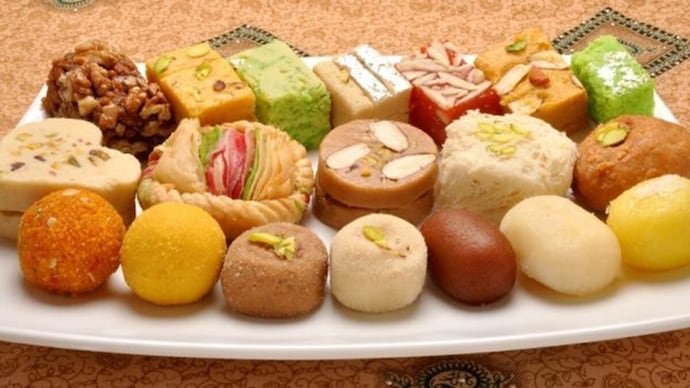
India’s festive season could become more expensive for consumers as elevated Sugar Prices put pressure on manufacturers of sweets, biscuits, cookies, chocolates, confectionery and other sugar-heavy products.
The increase comes at an especially sensitive time for the food industry. Demand for traditional sweets and packaged treats usually rises sharply around major festivals, while households and businesses stock up ahead of celebrations. That combination is forcing food companies to reassess costs at a time when sugar remains significantly more expensive than it was a few months ago.
Manufacturers now face a familiar choice when raw-material costs rise: absorb the increase and accept lower margins, increase retail prices, reformulate products, or reduce the quantity in a package.
For consumers, that could translate into two different forms of inflation. A box of sweets or a packet of biscuits could cost more, or the price could remain unchanged while the quantity quietly becomes smaller.
Government intervention has begun to ease some wholesale and retail pressure, but the impact has yet to fully work its way through the food supply chain. With the festive period approaching, sugar prices remain a closely watched factor for both food companies and households.
Why sugar prices have become a major concern
The recent rise in sugar prices reflects a combination of supply concerns, seasonal demand and tighter expectations about availability.
Government price data showed the average retail price of sugar at around Rs 62 per kg in September, compared with roughly Rs 47 per kg in June. Prices accelerated particularly sharply through July and August before showing signs of easing following government measures.
By September 2, the average retail price was reported at Rs 62.57 per kg, while the average wholesale price stood at around Rs 57.62 per kg. Although the latest weekly movement indicated some moderation, prices remained elevated compared with earlier in the year.
The government’s own assessment is that the recent price pressure reflects several factors rather than a single shortage. Market speculation, lower expected production, seasonal buying and supply management have all played a role.
That distinction is important. Higher prices do not necessarily mean that India is running out of sugar. Rather, the market has been dealing with tighter availability at a time when demand expectations are rising.
Festive demand is making the timing particularly difficult
Sugar consumption typically increases during the August-to-November festive period, when festivals such as Ganesh Chaturthi, Dussehra and Diwali boost demand for traditional sweets and packaged foods.
Sweet shops begin buying ingredients in advance, while households purchase larger quantities for celebrations, gifting and religious functions. Food manufacturers also prepare inventory for stronger seasonal sales.
That means companies are entering the busiest period for sugar-intensive products at precisely the moment when raw-material prices have been under pressure.
The effect can be particularly strong for products where sugar represents a meaningful share of ingredient costs. A manufacturer that purchases millions of kilograms of sugar has little ability to completely absorb a prolonged increase in procurement prices.
For smaller sweet shops and bakeries, the impact can be even more immediate because ingredient costs make up a larger portion of their production expenses.
India’s sugar supply outlook has tightened
A major concern for the market is the outlook for domestic sugar production.
Estimates for the 2025-26 sugar season have been revised downward from an initial projection of around 34.3 million tonnes to approximately 30.6 million tonnes, according to the figures cited in the current market assessment.
Adverse weather conditions and crop-related problems have affected sugarcane production in some important growing regions. Excess rainfall, disease and other disruptions have added to concerns about how much sugar will ultimately be available.
India’s sugar market is particularly sensitive to these changes because sugarcane output determines the volume of sugar that mills can produce, while government policy also influences how much cane is diverted toward ethanol and how much sugar can be exported or imported.
A lower production estimate does not automatically translate into a shortage at retail outlets, but it reduces the cushion available to the market during a period of unusually strong consumption.
Is India actually facing a sugar shortage?
The answer is more complicated than the headlines surrounding the recent price surge might suggest.
Industry representatives have argued that India has enough sugar stocks to meet festive-season demand and that speculation has contributed significantly to the recent rally in prices.
That means the situation is not necessarily one where consumers should expect empty shelves. The immediate issue is the price at which sugar is changing hands and how those costs move through the supply chain.
The distinction matters for food manufacturers. Even if physical availability is sufficient, a higher procurement price still raises the cost of making sweets, biscuits, beverages and other products.
In other words, consumers can face food-price pressure without a traditional supply shortage. A market can have enough product available while still experiencing higher prices because of production expectations, inventory conditions, seasonal demand and trading behaviour.
Food companies have limited options when costs rise
When the price of a key ingredient jumps, food manufacturers generally have several ways to respond.
The most straightforward option is a price increase. Companies can raise the recommended retail price of a packet or product and pass part of the additional cost to consumers.
Another option is to absorb the increase. This protects market share and keeps the consumer price stable, but it reduces profit margins.
Companies can also seek savings elsewhere, alter recipes, negotiate procurement contracts or improve manufacturing efficiency.
Then there is shrinkflation, where the selling price remains unchanged but the quantity of product is reduced.
This can be particularly attractive in highly competitive consumer markets because a small change in pack size may be less visible to shoppers than an obvious price increase.
Why shrinkflation could become more visible before festivals
Festive shoppers are often highly price-sensitive, particularly when buying multiple packets or boxes at once.
A direct price increase from Rs 100 to Rs 110, for example, is immediately visible. A smaller pack selling for the same Rs 100 may be less noticeable unless consumers compare net quantities carefully.
That makes pack-size adjustments one potential way for companies to manage higher ingredient costs without immediately changing the headline price.
However, shrinkflation also has limits. Consumers and retailers can compare package quantities, and repeated reductions can damage brand trust.
Companies therefore have to balance the need to protect margins against the risk of upsetting customers during a period when competition between food brands is particularly intense.
Bikaji has already begun adjusting prices
The pressure is already visible in parts of the packaged-food industry.
Bikaji Foods has started implementing a price increase of roughly 2% across its sweets portfolio. Company chief financial officer Rishabh Jain said sugar procurement costs remained around 20% higher than they had been a few months earlier.
The example illustrates an important point about Food Inflation: a sharp increase in the cost of one ingredient does not always lead to an equally large increase in the final retail price.
A company may pass through only part of the increase while absorbing the rest through operating efficiencies or lower margins.
That also means the consumer impact may vary significantly from one product category to another.
Which products could feel the biggest impact?
Products that use large quantities of sugar are naturally more exposed to changes in sugar procurement costs.
Traditional Indian sweets are an obvious example because sugar is a major ingredient in products such as laddoos, jalebis, peda, barfi and other confectionery.
Packaged biscuits and cookies can also be affected, as can chocolates, confectionery, cakes and certain beverages.
The impact will depend on how much sugar each product uses and what proportion sugar represents in its overall cost structure.
Products with lower sugar content or a larger share of packaging, dairy, flour, nuts or other ingredients may experience a different cost impact.
For this reason, consumers should not expect an identical price increase across all food categories.
Sweet shops could face a sharper squeeze
Small and medium-sized sweet shops may be especially vulnerable because they often work with relatively tight operating margins and have fewer opportunities to hedge commodity costs.
A packaged-food company can sometimes negotiate large supply contracts or adjust product formulations. A local sweet shop may have less room to change its production model during the busiest part of the year.
At the same time, raising prices too aggressively can drive customers toward competitors.
Sweet sellers therefore face a difficult balance between maintaining margins and preserving demand during a season when consumers are already dealing with higher household expenses.
Some businesses may respond by increasing prices modestly, reducing discounts or adjusting the composition and size of gift boxes rather than imposing large headline increases.
Government has opened the door to duty-free sugar imports
The Centre has taken several steps to increase domestic availability and contain the price rise.
One of the most significant measures is permission for duty-free imports of 1 million metric tonnes of raw sugar. The government recently opened applications for the remaining 202,550 tonnes under the quota, after 797,450 tonnes had already been allocated.
The quota is designed to supplement domestic supply ahead of the period when sugar demand normally rises.
Imports can provide a buffer when domestic production expectations are weaker. By bringing additional sugar into the country without import duty, the government can potentially reduce pressure on domestic prices and improve availability for industrial users and refiners.
However, imports do not instantly solve a price problem. It takes time for imported sugar to arrive, be processed where necessary and move through the distribution network.
Government tightens stock limits to curb hoarding
The Centre has also tightened restrictions on how much sugar different categories of market participants can hold.
From September 1, bulk consumers using more than 10 metric tonnes of sugar per month have been restricted to holding stocks equivalent to no more than 15 days of consumption.
The measure affects large institutional buyers, including food processors, confectionery manufacturers, sweet sellers and other businesses that use sugar as a raw material.
The objective is to prevent excessive stock accumulation and speculative buying from amplifying price pressures during the festive period.
The government has also reduced the maximum stock that sugar dealers can hold. From September 15 to November 30, the standard dealer limit will fall from 4,000 quintals to 2,000 quintals.
Kolkata and its extended metropolitan area have retained a higher limit because of the region’s specific supply and distribution role.
Why stock limits matter for consumers
Stock limits are aimed at controlling the behaviour of participants across the supply chain rather than directly setting the retail price.
The basic idea is straightforward: if traders and large users can accumulate very large inventories when they expect prices to rise, available market supply can become tighter even without a physical shortage.
That can reinforce speculative buying and encourage further price increases.
By limiting inventories, the government is attempting to keep more sugar circulating in the market and reduce the possibility of artificial scarcity.
The effectiveness of such measures depends on enforcement and market conditions, but the policy shows the government’s concern about ensuring supplies during the peak consumption period.
Retail prices have started to ease, but the problem is not over
There is some evidence that the government’s measures are beginning to moderate sugar prices.
The average retail price was reported to have fallen by 3.85% over the week leading to September 2, while wholesale prices also declined.
However, the level remains substantially above where it was earlier in the year.
More importantly, a decline in the price of raw material does not immediately translate into lower prices for finished food products.
Manufacturers may have already purchased expensive inventory, signed procurement contracts at higher prices or incurred additional logistics and operating costs. Retail products therefore tend to respond to commodity-price movements with a lag.
That is why consumers could continue seeing higher prices even after sugar-market indicators begin to improve.
The ethanol question adds another layer
India’s sugar market is also influenced by the amount of sugarcane diverted toward ethanol production.
During the current sugar season, around 3 million tonnes of sugar equivalent have been diverted toward ethanol, according to industry and government assessments cited during the recent price discussions.
The government has considered measures to prioritise sugar availability over some forms of cane-based ethanol production if necessary.
The policy challenge is complicated because ethanol blending is an important part of India’s energy strategy. Increasing sugar output by redirecting more cane toward sugar could help consumers in the short term, but it can also affect the economics of ethanol production.
That makes sugar policy a balancing act between food prices, farmer payments, sugar-mill economics and energy goals.
Why companies may not immediately cut prices when sugar falls
Consumers may reasonably wonder why the price of biscuits or sweets should increase when sugar costs rise but fail to come down just as quickly when sugar prices ease.
The answer lies in the structure of manufacturing costs.
Sugar is only one component of a finished food product. Companies also pay for flour, milk products, edible oils, nuts, cocoa, packaging, labour, transportation, Electricity, warehousing and distribution.
Retailers and distributors also operate with their own margins.
That means a short-lived decline in sugar prices may have only a limited effect on the final product. Manufacturers may need to see a sustained reduction before changing product prices again.
This creates a lag between commodity prices and consumer prices that can make food inflation feel sticky even when wholesale markets start moving in a more favourable direction.
Festive buyers could see different strategies from different brands
Consumers are unlikely to face a single nationwide pattern across every sugar-based product.
Some brands may raise prices directly. Others may alter pack sizes, reduce promotional discounts or delay changes depending on their inventory positions.
Large brands also have to consider competitors. A company that raises prices too quickly can lose volume if rivals decide to absorb more of the increase.
Local sweet shops face similar pressures, but their pricing decisions may depend heavily on neighbourhood competition and the cost of other ingredients.
The result could be an uneven festive market, with some products becoming more expensive while others maintain their existing prices.
What consumers should watch during the festive season
For households, the most visible effect may not always be an obvious increase in the printed price.
Consumers should also pay attention to the net quantity of packaged products. Indian packaged-commodity rules require manufacturers to disclose net quantity and other mandatory information on packaging, making the quantity declaration an important comparison point when pack sizes change.
A product priced at the same amount as last year does not necessarily offer the same value if the package contains less.
Comparing the price per kilogram or per 100 grams can provide a clearer picture than comparing the headline price alone.
This becomes particularly useful during festivals, when products are often sold in multiple sizes and gift packs.
Sugar prices are also an inflation concern
Sugar is a politically sensitive commodity because it affects both households and a large food-processing ecosystem.
When sugar becomes more expensive, the impact can extend beyond the retail price of loose sugar. It can feed into sweets, biscuits, chocolates, beverages and other processed foods.
That gives sugar prices a broader inflationary effect than its weight in a typical household shopping basket might suggest.
At the same time, the government must balance consumer interests with the financial Health of sugar mills and the incomes of sugarcane farmers.
Policies that push prices too low can hurt producers, while allowing excessive increases can create pressure on consumers.
The next few weeks will be crucial
The market’s direction before the peak festive period will depend on several factors at once.
Imported raw sugar must reach the domestic market in sufficient quantities. Stockholding restrictions need to prevent speculative accumulation without disrupting legitimate distribution. Weather conditions and expectations for the next sugar season will influence production forecasts, while the government’s policy on cane diversion to ethanol could affect future availability.
At the same time, consumer demand will determine how easily food manufacturers can pass higher costs through to the market.
If sugar prices stabilise or decline, companies may be able to avoid larger price increases. If prices rise again as festive demand accelerates, pressure for price adjustments is likely to become stronger.
What could happen to sweets, biscuits and chocolates?
| Product category | Potential impact from higher sugar costs |
|---|---|
| Traditional sweets | High exposure because sugar is a major direct ingredient; shops may raise prices or adjust box sizes |
| Biscuits and cookies | Moderate to high pressure depending on sugar content and other ingredient costs |
| Chocolates and confectionery | Potential price pressure from sugar combined with other commodity and packaging costs |
| Beverages | Impact varies significantly by recipe and sugar content |
| Bakery products | Higher ingredient costs could affect cakes, pastries and other sweet products |
| Packaged snacks with limited sugar | Generally less exposed directly, although broader food and packaging inflation can still matter |
Why the festive season could feel more expensive even without a sugar shortage
The current sugar episode demonstrates how consumer prices can rise even when the country has sufficient physical supplies.
A tighter production outlook, strong seasonal demand, speculative activity and inventory management can all influence market prices. Food manufacturers then have to decide how much of the increase they can absorb and how much they must pass on.
Government measures are designed to expand availability and limit hoarding, and early signs suggest that some price pressure is easing. But the improvement will need to be sustained before it is fully reflected in the finished products consumers buy.
That is why the coming festive season could still bring a mixed picture. Consumers may find some sweets, biscuits and chocolates costing more, while other companies keep prices unchanged but offer smaller quantities.
Sugar shock puts food makers and consumers on alert
India’s sugar-price surge has put the food industry in a difficult position just before one of the country’s biggest consumption periods of the year. Manufacturers of sweets, biscuits, cookies, chocolates and other sugar-intensive products are confronting higher input costs at the same time that consumers are preparing for a sharp rise in festive demand.
The pressure is real, but it does not necessarily mean that every product will become significantly more expensive. Companies have several tools at their disposal, including selective price increases, smaller packs, cost savings and margin adjustments.
The government’s response has also been substantial. Duty-free raw sugar imports, tighter stock limits for bulk users and reduced dealer inventories are all intended to improve availability and curb speculative pressure. Official data already shows some easing in prices, although retail sugar remains much more expensive than it was earlier in the year.
The biggest question now is whether that easing continues long enough to influence the prices paid by food manufacturers. If sugar stabilises, the impact on festive treats could remain manageable. If the market tightens again as demand peaks, consumers could feel the increase through both higher prices and smaller packs.
For shoppers, the practical lesson is simple: this festive season, the price printed on the packet may not tell the whole story. Comparing pack size, unit price and competing brands could matter just as much as the headline price when sugar costs remain under pressure.
For breaking news and live news updates, like us on Facebook or follow us on Twitter and Instagram. Read more on Latest Business on thefoxdaily.com.





COMMENTS 0