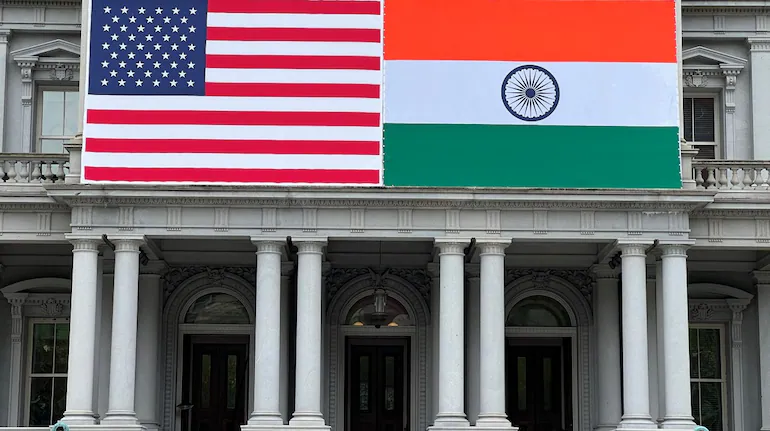
The United States has assured India that its exporters will receive comparatively favourable tariff treatment against competing economies, but the finalisation of the bilateral trade framework remains linked to clarity on Washington’s tariff structure and ongoing trade investigations.
A senior Indian government official said the US had indicated that India would be given a comparative advantage over its peers in the tariff arrangement. The assurance is significant for New Delhi, which has been seeking preferential terms to ensure Indian exporters are not placed at a disadvantage against suppliers from countries such as Vietnam and Bangladesh.
However, the final terms of the proposed India-US trade agreement are yet to be settled. The two sides need greater clarity on the additional duties that Washington may impose under its trade policy, including measures arising from investigations conducted under Section 301 of the US Trade Act of 1974.
India Seeks Better Tariff Terms Than Competing Export Economies
India has made a comparative tariff advantage a central demand in negotiations with the US. New Delhi wants the agreement to provide Indian businesses with more favourable access to the American market than that available to competing exporters in other countries.
The concern is particularly relevant for labour-intensive and manufacturing sectors, where Indian companies compete with suppliers from Bangladesh, Vietnam, Indonesia and Malaysia. If competing economies receive lower tariff rates, Indian exporters could face difficulties maintaining their price competitiveness in the US market.
For this reason, India has been pushing Washington to establish a tariff structure that recognises the competitive position of Indian industries. The proposed arrangement is not limited to reducing duties in isolation; it also needs to account for the tariff treatment of rival exporting countries.
According to the senior government official, the US has assured India that it will receive a comparative advantage over its peers. The precise structure, however, will depend on how Washington finalises its broader tariff framework.
Why the Section 301 Investigation Matters
Section 301 of the US Trade Act of 1974 gives Washington the authority to investigate foreign government policies and practices that it considers unreasonable, discriminatory or harmful to American commerce. Depending on the findings, the US government can take trade action, including imposing additional tariffs.
One major investigation initiated by the Office of the United States Trade Representative (USTR) on March 12, 2026, covered 60 economies, including India. It examined whether these economies had failed to introduce and effectively enforce prohibitions on importing goods produced wholly or partly through forced labour.
The US position is that goods made using forced labour can gain an artificial cost advantage because producers may avoid labour standards and costs followed by businesses operating under stronger protections. Washington argues that this can distort international competition and disadvantage American workers and companies.
The investigation therefore examined the laws, enforcement systems and practices of the economies concerned. It was not limited to identifying individual shipments or companies allegedly involved in forced labour. Instead, it assessed whether governments had effective measures to prevent such products from entering their markets.
India Was Among 60 Economies Examined by Washington
The March investigation covered a broad group of US trading partners across Asia, Europe, Africa and the Americas. India was included alongside economies such as China, Bangladesh, Vietnam, Japan, South Korea, Indonesia, Malaysia, Mexico, the United Kingdom and the European Union.
The scale of the investigation reflected the importance Washington attached to forced-labour import restrictions in its trade policy. USTR said the inquiry would assess whether the policies and practices of the economies concerned were unreasonable or discriminatory and whether they burdened or restricted US commerce.
India engaged with the US authorities during the proceedings through submissions and consultations. The government also took steps concerning the import of goods produced using forced labour, an issue that became relevant to the eventual tariff determination.
However, inclusion in the investigation did not mean that every Indian export was found to involve forced labour. The central question was whether India’s regulatory and enforcement framework met the standards being examined by the US authorities.
Forced-Labour Investigation Produced a Separate Tariff Outcome
The forced-labour investigation has an important distinction in the context of the current trade negotiations: its final measures were announced in July 2026. The USTR determined that action was appropriate in the investigations covering the 60 economies and announced different additional tariff rates depending on the measures taken by each economy.
India was placed in the lower tariff category, with an additional Section 301 duty of 10 per cent. The rate was lower than the 12.5 per cent initially proposed in June. The US also assigned the 10 per cent rate to a group of other economies that had introduced forced-labour import prohibitions, made relevant commitments or adopted partial measures.
Other investigated economies were assigned a 12.5 per cent rate under the final measures, subject to the applicable exemptions and product-specific provisions. The Indian government described the lower rate as a relative advantage for Indian exports.
The July decision means the forced-labour investigation itself should not be described as an inquiry still awaiting its conclusion. The broader India-US tariff negotiations, however, continue to involve questions about how different US tariff measures will interact and what preferential treatment can be incorporated into the bilateral agreement.
India Wants Tariff Stability Before Signing the Trade Agreement
For India, the objective is to secure more than a headline reduction in import duties. The government wants a predictable tariff arrangement that gives exporters confidence when planning production, pricing and long-term supply contracts for the US market.
Frequent changes in additional duties can make it difficult for businesses to calculate the final cost of selling goods overseas. They can also affect investment decisions, particularly in sectors where companies need to commit capital to factories, machinery, workers and supply-chain arrangements before receiving export orders.
A preferential tariff structure could help Indian manufacturers compete more effectively with businesses in other exporting economies. It could also support India’s efforts to attract investment into manufacturing and expand its role in international supply chains.
At the same time, the exact advantage will depend on the products covered, the applicable tariff rates and the exemptions available to individual sectors. A lower headline rate does not necessarily translate into the same benefit for every exporter.
What the India-US Trade Framework Is Expected to Address
India and the US announced a framework for an interim trade agreement in February 2026. The arrangement was presented as a step towards a broader bilateral trade agreement, with both countries seeking to expand market access and strengthen commercial ties.
The framework envisaged preferential access for Indian goods in the American market, including products from sectors such as textiles and apparel, leather and footwear, plastics and rubber, organic chemicals, home décor, artisanal goods and selected machinery.
It also outlined tariff concessions and market-access commitments by India for a range of American industrial, food and agricultural products. The proposed agreement was intended to address trade barriers and create a more structured basis for bilateral commerce.
However, the framework still requires detailed negotiations and legal finalisation. The tariff treatment of Indian goods remains a particularly important issue because the benefits of improved market access depend on the duties exporters ultimately face at the US border.
Why India’s Competitors Are Central to the Negotiations
India’s demand for comparative tariff treatment reflects the competitive nature of global manufacturing and export markets. American buyers can source similar products from several countries, and even a modest difference in import duties can influence sourcing decisions when suppliers offer comparable quality and delivery conditions.
Bangladesh and Vietnam are important competitors in labour-intensive exports, while Indonesia and Malaysia also compete with Indian manufacturers in several product categories. The relative tariff burden can therefore affect how attractive Indian goods are to US importers.
If Indian exporters receive more favourable terms, they could gain an advantage when competing for orders. Conversely, if rival economies secure lower duties or broader exemptions, the benefits of an India-US agreement could be reduced.
The government is consequently seeking a tariff arrangement that considers the treatment of competing countries rather than evaluating India’s duties independently. This is also why the finalisation of the agreement is tied to the wider structure of US trade measures.
What Happens Next?
The immediate task for both governments is to settle the remaining details of the bilateral trade arrangement and establish how the agreed tariff benefits will operate alongside other US trade measures. The final outcome will depend on the legal terms, product coverage and tariff provisions accepted by both sides.
For India, the priority remains securing stable and competitive access to the American market. The government’s position is that the agreement should provide Indian exporters with a meaningful advantage over competing suppliers, rather than simply formalising access without improving their relative position.
The US assurance of comparative tariff treatment is an indication of progress in discussions, but it does not by itself establish the final rates or guarantee identical benefits across all sectors. Exporters will need to wait for the completed framework and its detailed provisions to understand the commercial impact.
The eventual agreement could influence trade flows, investment decisions and the competitiveness of Indian manufacturing in the US market. Until the tariff structure and remaining terms are formally settled, however, the extent of India’s advantage over its peers will remain dependent on the final negotiated arrangement.
For breaking news and live news updates, like us on Facebook or follow us on Twitter and Instagram. Read more on Latest Business on thefoxdaily.com.






COMMENTS 0