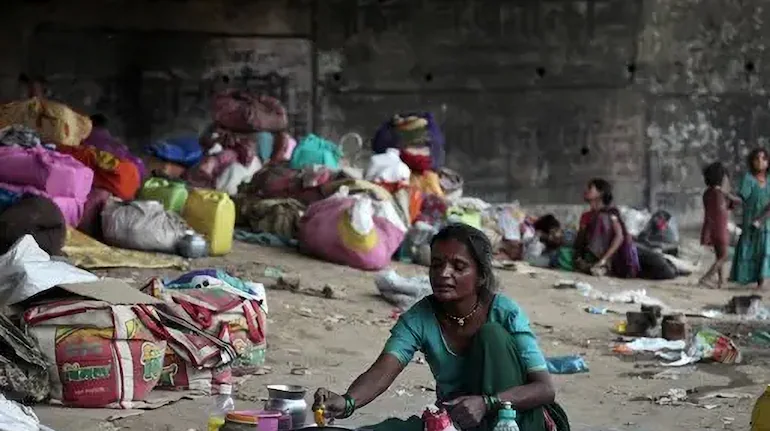
The Bharatiya Janata Party (BJP) on Saturday said the sharp decline in India’s extreme poverty rate reported by the World Bank reflects the impact of policy initiatives implemented under Prime Minister Narendra Modi‘s government. The party described the findings as evidence of India’s progress towards inclusive growth, pointing to a substantial reduction in the proportion of people living below international poverty thresholds between 2011 and 2023.
The World Bank’s October 2026 India Poverty and Equity Brief reported that India’s extreme poverty rate fell from 27.1 per cent in 2011-12 to 2.6 per cent in 2023-24. It also estimated that 496 million people moved above the lower-middle-income poverty line of $4.20 per day during the period, with the share of the population below that threshold declining from 57.7 per cent to 16.1 per cent. :chatgpt-content-reference{index=”0″}
Reacting to the findings, BJP national media convenor Ashish Usha Agarwal called the progress a significant milestone in India’s development journey. He said the figures reflected sustained policy efforts and the expanding reach of development initiatives across the country, describing the country as a “New India, moving towards prosperity with inclusive growth”.
What the World Bank Report Says About Poverty in India
The World Bank’s latest assessment highlights a considerable reduction in monetary poverty in India over a 12-year period. Its estimates use two international poverty thresholds: the $3-per-day line to measure extreme poverty and the $4.20-per-day line used for lower-middle-income countries.
Both thresholds are calculated using 2021 purchasing power parity (PPP), an international measurement that adjusts for differences in the cost of goods and services between countries. They are not direct conversions of dollar amounts into Indian rupees at current market exchange rates.
According to the report, the share of India’s population living below the $3-per-day extreme poverty threshold declined from 27.1 per cent in 2011-12 to 2.6 per cent in 2023-24. The reduction represents a substantial change in the proportion of people living at the lowest end of the international poverty scale.
The broader lower-middle-income poverty measure also recorded a significant decline. The proportion of people living below $4.20 per day fell from 57.7 per cent to 16.1 per cent over the same period.
The World Bank estimated that approximately 496 million people moved above this $4.20 threshold between 2011-12 and 2023-24. This figure relates to the lower-middle-income poverty line, rather than the narrower extreme poverty measure. The distinction is important because the two thresholds capture different levels of economic deprivation. :chatgpt-content-reference{index=”1″}
BJP Credits Modi Government’s Development Policies
Responding to the report, BJP national media convenor Ashish Usha Agarwal said the decline in poverty demonstrated the impact of the Modi government’s development initiatives. In a post on X, he highlighted the reduction in both extreme poverty and the broader lower-middle-income poverty rate.
Agarwal said India’s extreme poverty rate had declined from 27.1 per cent to 2.6 per cent, while the share of the population living below the $4.20-per-day poverty threshold had fallen from 57.7 per cent to 16.1 per cent.
He described the progress as a remarkable achievement in the country’s efforts to reduce poverty and expand economic opportunities. According to the BJP leader, the results reflected the sustained implementation of development policies and the wider reach of government initiatives.
Agarwal also placed Poverty Reduction, financial inclusion and improved living standards at the centre of the government’s development agenda. He credited Prime Minister Narendra Modi’s leadership for the policy direction, arguing that the latest figures demonstrated progress towards a more inclusive economy.
The BJP’s response presents the World Bank findings as support for its account of the government’s development record. The poverty estimates themselves, however, measure changes in household consumption and living standards over a period that includes years before and after the Modi government took office in 2014.
How the World Bank Measures Extreme Poverty
The $3-per-day international poverty line is used by the World Bank to measure extreme poverty. It represents a benchmark for identifying people whose consumption falls below a level associated with the most severe forms of monetary deprivation.
The $4.20-per-day threshold serves a different purpose. It is the international poverty line used for lower-middle-income countries and captures a wider population that may remain economically vulnerable even if it is no longer classified as living in extreme poverty.
Both measures are expressed in 2021 PPP terms. Purchasing power parity allows researchers to compare living standards across countries by accounting for differences in the prices of goods and services. As a result, the figures should not be interpreted as the amount of money an individual must earn in India after converting the dollar thresholds at the prevailing exchange rate.
The World Bank’s estimates draw on household consumption expenditure data, including surveys conducted in 2011-12 and 2023-24. The figures therefore reflect changes in reported household consumption over time rather than a simple count of people receiving government benefits or crossing a particular income threshold.
This distinction matters when interpreting the political claims surrounding the report. The World Bank provides the poverty estimates and discusses factors associated with the decline, while the BJP’s statement offers the party’s assessment of how government policies contributed to the outcome.
World Bank Identifies Consumption Growth, Employment and Social Transfers
The World Bank’s assessment points to several factors behind India’s reduction in poverty. These include strong growth in household consumption, increased employment, particularly among women, and expanded social transfers such as subsidised food assistance.
Household consumption is an important indicator in monetary poverty assessments because it provides information about the goods and services available to people. When households are able to spend more on food, clothing, housing and other essential needs, their measured consumption levels can rise above international poverty thresholds.
Employment growth can also contribute to poverty reduction by expanding household earnings and improving access to economic opportunities. The report particularly identifies rising employment among women as one of the factors associated with the improvement.
Social transfers, including food subsidies, can support household welfare by reducing the amount families need to spend on essential items. Such assistance can help protect consumption levels, particularly among households with limited and irregular incomes.
The World Bank’s findings therefore describe poverty reduction as the result of several economic and social factors rather than attributing the change to a single programme. The BJP has highlighted the findings as evidence of its government’s policy efforts, while the report identifies consumption, employment and social transfers as important contributors to the wider trend. :chatgpt-content-reference{index=”2″}
Why the Decline in the $4.20 Poverty Rate Matters
Although the fall in extreme poverty has attracted considerable attention, the reduction in the broader lower-middle-income poverty rate is also significant. The $4.20 threshold covers people who may have moved out of extreme poverty but remain vulnerable to economic shocks, rising living costs or interruptions in their income.
The decline from 57.7 per cent in 2011-12 to 16.1 per cent in 2023-24 suggests that a much smaller share of the population was living below this international benchmark by the end of the period.
The World Bank’s estimate that 496 million people moved above the lower-middle-income poverty line gives a sense of the scale of the change. However, moving above an international poverty threshold does not necessarily mean that every household has achieved long-term financial security. People just above the line may still face difficulties related to employment stability, healthcare expenses, education costs and access to essential services.
The distinction between extreme poverty and broader economic vulnerability is important for policymakers. Reducing extreme poverty addresses the most severe deprivation, while improving conditions for people near the $4.20 threshold requires sustained growth in earnings, productive employment and access to basic services.
India Records Progress Across Monetary and Non-Monetary Poverty Measures
The World Bank said India had made substantial progress in reducing poverty across both monetary and non-monetary dimensions. Monetary poverty measures focus on household consumption or resources, while non-monetary measures examine disadvantages in areas such as education, health and access to basic services.
These dimensions provide different perspectives on living conditions. A household may have consumption above an international poverty threshold but still face difficulties accessing quality healthcare, education, sanitation or other essential services.
Assessing both monetary and non-monetary indicators can therefore provide a broader understanding of poverty than relying on a single measure. The World Bank’s description of India’s progress reflects improvements across these dimensions, although the pace and distribution of progress can differ between regions and population groups.
The report described India’s poverty reduction as one of the fastest declines in the world. That assessment places the country’s progress in an international context, while the underlying estimates continue to depend on the poverty thresholds and household data used for comparison. :chatgpt-content-reference{index=”3″}
Why the Findings Are Politically Significant for the Modi Government
Poverty reduction has been a central theme in the Modi government’s development messaging. The BJP has repeatedly highlighted welfare delivery, financial inclusion and access to essential services as important parts of its governance approach.
The latest World Bank estimates provide the party with an opportunity to point to measurable changes in poverty levels over the past decade. By highlighting the decline from 27.1 per cent to 2.6 per cent in extreme poverty, the BJP is presenting the figures as evidence that its policy priorities have contributed to improved living conditions.
Financial inclusion and welfare delivery are particularly relevant to this argument because they connect government programmes with household access to financial services and essential support. The World Bank’s identification of social transfers, including food subsidies, as a contributor to poverty reduction also places welfare assistance within the broader discussion of India’s progress.
At the same time, the reporting period begins in 2011-12, before the Modi government came to power in 2014. The decline therefore covers a longer period of economic and policy changes. The estimates show the overall change in poverty, while determining the contribution of individual governments and programmes requires a separate assessment of their effects.
This distinction does not alter the scale of the reduction reported by the World Bank, but it is important when separating the statistical findings from political interpretations of the results.
Challenges Remain Despite the Sharp Reduction in Poverty
The fall in India’s extreme poverty rate represents substantial progress, but it does not mean that economic vulnerability has disappeared. The World Bank’s figures show that around 2.6 per cent of the population remained below the $3-per-day extreme poverty threshold in 2023-24.
The broader $4.20-per-day measure also indicates that a section of the population continued to live below the lower-middle-income poverty line. The estimated 496 million people who moved above that threshold represent a major change, but the remaining population below it continues to face economic challenges.
Employment quality, income stability and access to essential services remain important issues for future poverty reduction. Rising employment can improve household welfare, but the long-term impact depends partly on whether workers can access stable and productive opportunities.
Regional differences also matter. National poverty figures provide an overall picture but cannot, by themselves, explain the economic conditions of every state, district or community. The distribution of poverty and the pace of improvement can vary across rural and urban areas and among different population groups.
Continued progress will therefore depend not only on reducing the number of people below international poverty thresholds but also on improving their ability to maintain better living standards over time.
World Bank Figures Become Part of India’s Development Debate
The BJP’s response to the October 2026 World Bank report has brought poverty reduction back into the political discussion over India’s economic and social development. Ashish Usha Agarwal described the findings as confirmation of the impact of the Modi government’s sustained policy efforts and its focus on inclusive growth.
The World Bank’s estimates show that extreme poverty declined from 27.1 per cent in 2011-12 to 2.6 per cent in 2023-24, while the proportion below the $4.20 lower-middle-income poverty line fell from 57.7 per cent to 16.1 per cent. The institution also estimated that 496 million people moved above the broader poverty threshold during the period.
Its assessment identifies rising household consumption, increased employment, particularly among women, and expanded social transfers as important factors associated with the decline. These findings provide a wider economic context for the BJP’s claim that government policies have contributed to poverty reduction.
For India, the next challenge will be to sustain the gains, expand productive employment and improve living standards for households that remain economically vulnerable. The latest figures mark a significant change in the country’s poverty indicators, while the broader development task will involve ensuring that progress reaches communities and families that continue to face deprivation.
For breaking news and live news updates, like us on Facebook or follow us on Twitter and Instagram. Read more on Latest India on thefoxdaily.com.






COMMENTS 0