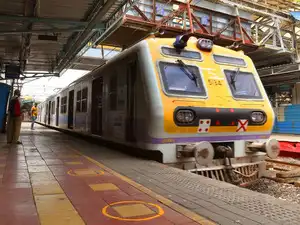
Mumbai has received its first non-air-conditioned suburban local train equipped with automatic sliding doors, marking a significant development in commuter safety. The new 12-coach train is designed to address risks associated with open doorways while offering improved passenger facilities, including better legroom, CCTV cameras, fire detection systems and emergency communication equipment.
The introduction comes after a serious train-related incident in 2025 renewed concerns about passenger safety on Mumbai’s crowded suburban railway network. However, the train will not immediately enter regular passenger service. Central Railway will first conduct trials across different sections of the suburban network to assess its performance and operational suitability.
Key Highlights
- Mumbai has received its first 12-coach non-AC local train featuring automatic sliding doors.
- The train includes CCTV cameras, fire detection systems and emergency communication facilities.
- Improved legroom, louvred doors and roof ventilators are designed to improve passenger comfort and ventilation.
- Central Railway will conduct trials before introducing the train into regular passenger operations.
- Automatic doors could increase station halting times and affect punctuality during peak hours.
12-Coach Automatic-Door Local Train Arrives in Mumbai
The new train is a non-AC suburban local designed specifically for Mumbai’s high-density commuter network. Its most important feature is an automatic door system intended to reduce the risks associated with passengers travelling near open doorways.
Open doors have long been a safety concern on Mumbai local trains, particularly during peak hours when coaches become heavily crowded. Automatic sliding doors are expected to improve passenger protection by keeping the doors closed while the train is moving.
The 12-coach configuration will allow the train to operate within the existing suburban railway environment, subject to successful trials and operational approval.
Automatic Sliding Doors Designed to Improve Commuter Safety
The automatic door system is the central feature of the new local train. Unlike conventional non-AC suburban trains with open doorways, the new design aims to prevent passengers from accidentally falling from moving trains.
This feature is particularly relevant for Mumbai, where large numbers of commuters travel daily and overcrowding can create dangerous conditions near coach entrances.
However, automatic doors also introduce operational challenges. Passengers will need to enter and exit within the time available at each station, making efficient boarding and alighting important for maintaining the train’s schedule.
Improved Legroom and Passenger Comfort
Apart from safety improvements, the new train is designed to offer better passenger comfort. Improved legroom is among the features intended to make journeys more convenient, particularly for commuters travelling longer distances across the suburban network.
The train also incorporates louvred doors and roof ventilators to support air circulation inside the non-AC coaches. These features are important because the train does not rely on air conditioning to maintain passenger comfort.
The ventilation arrangements are intended to allow air to circulate through the coaches while retaining the automatic-door design.
CCTV Cameras, Fire Detection and Emergency Communication Facilities
The new local train includes several additional safety and monitoring systems. CCTV cameras will provide surveillance inside the coaches, helping improve monitoring of passenger areas.
Fire detection systems are another important addition. They are designed to identify potential fire-related incidents and support a quicker response to onboard emergencies.
Emergency communication facilities will also allow passengers to communicate during critical situations. Together, these features are intended to strengthen onboard safety beyond the automatic door system.
Central Railway to Conduct Trials Before Passenger Operations
Central Railway will conduct trials on different sections of Mumbai’s suburban network before the train begins regular passenger services. These tests will help officials assess how the automatic doors perform under actual railway operating conditions.
The trials are also important for examining the train’s compatibility with existing infrastructure, station platforms and operating schedules.
Only after the necessary testing and operational assessments will the train be considered for regular passenger operations. The arrival of the train therefore does not mean that commuters can immediately begin using it.
Automatic Doors May Affect Local Train Punctuality
One of the major operational concerns surrounding automatic-door local trains is the possibility of longer station halts. Mumbai’s suburban network operates on a demanding timetable, especially during morning and evening peak hours.
With conventional trains, passengers can enter and exit through open doorways relatively quickly, although this can create serious safety risks. Automatic doors require a controlled opening and closing process, which could increase the time needed at stations.
If station halts become longer, the additional time could affect punctuality and create delays across busy sections of the network. Railway authorities will therefore need to evaluate passenger movement and door operations carefully during the trial phase.
The challenge will be to improve commuter safety without significantly reducing the frequency and reliability of suburban services.
Western Railway’s 2019 Automatic-Door Experiment Did Not Take Off
Mumbai’s latest automatic-door train initiative also brings attention to an earlier experiment by Western Railway in 2019. That attempt to introduce automatic doors on suburban local trains did not progress into regular operations.
The earlier experience highlights the challenges involved in adapting automatic-door technology to Mumbai’s crowded suburban system. Passenger movement, station dwell times, operational requirements and infrastructure compatibility all need to be considered before such trains can be deployed on a large scale.
The latest train will therefore undergo trials to assess whether the design can work effectively within the demands of the city’s suburban railway network.
What the New Local Train Means for Mumbai Commuters
The introduction of an automatic-door non-AC local train represents an effort to improve safety while retaining the familiar suburban rail service model. CCTV surveillance, fire detection, emergency communication and improved ventilation add further features to the train’s design.
However, its success will depend on how effectively the automatic doors operate during crowded peak-hour conditions. Railway authorities will need to balance passenger protection, boarding convenience and timetable reliability.
Conclusion
Mumbai’s first non-AC automatic-door local train brings several proposed improvements to suburban rail travel, including safer doorways, better legroom, CCTV cameras, fire detection systems and emergency communication facilities.
Central Railway will conduct trials before allowing regular passenger operations. While the train could improve commuter safety, its impact on station halts and peak-hour punctuality will be important factors in determining how successfully automatic-door technology can be introduced across Mumbai’s suburban railway network.
For breaking news and live news updates, like us on Facebook or follow us on Twitter and Instagram. Read more on Latest Business on thefoxdaily.com.






COMMENTS 0