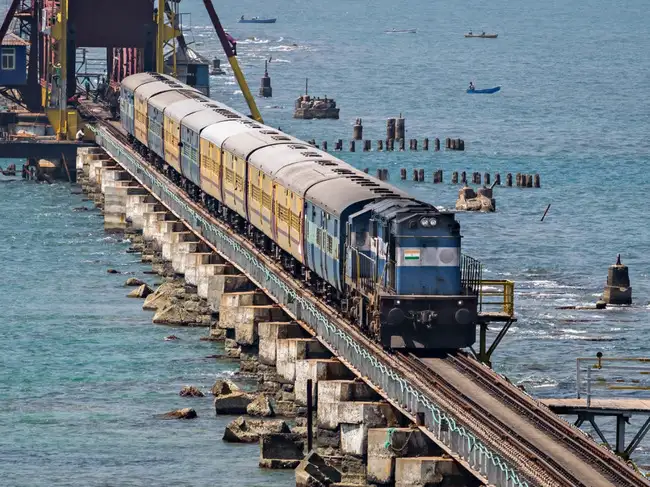
Union Railway Minister Ashwini Vaishnaw has called for a comprehensive 25-year infrastructure master plan to coordinate railway expansion, port connectivity and industrial development across coastal Karnataka. The proposal aims to bring government departments, elected representatives, industrial organisations and local stakeholders together to prepare a long-term roadmap for the region.
During a consultation meeting in Mangaluru on November 13, 2026, Vaishnaw asked Dakshina Kannada MP Captain Brijesh Chowta and Udupi-Chikkamagaluru MP Kota Srinivas Poojary to lead the planning exercise. He emphasised that railway infrastructure, port facilities and industrial development should be planned together rather than treated as separate projects.
The proposed plan will involve representatives from industry, Mangalore Refinery and Petrochemicals Limited (MRPL), the New Mangalore Port Authority (NMPA) and the general public. The objective is to identify infrastructure requirements, coordinate investments and establish priorities that can support regional development over the next 25 years.
Alongside the long-term proposal, the Railway Ministry has highlighted several immediate infrastructure priorities, including doubling the Bengaluru-Mangaluru railway line, improving important railway stations, strengthening port-related freight connectivity and expanding passenger services.
Why Coastal Karnataka Needs an Integrated Infrastructure Plan
Coastal Karnataka occupies an important position in India’s western transport and industrial network. The region combines a major seaport, industrial facilities, railway connections and access to important commercial centres in Karnataka and neighbouring states.
Mangaluru is particularly significant because it connects coastal industries with inland markets. However, railway capacity, geographical challenges and coordination between different railway jurisdictions have affected the development of its transport infrastructure.
The proposed 25-year master plan is intended to address these issues through coordinated planning. Instead of developing railway lines, port facilities and industrial projects independently, the approach would consider how each investment supports the others.
For example, expanding railway capacity without considering the future cargo requirements of the port could limit the benefits of additional infrastructure. Similarly, industrial expansion may create transportation demand that existing railway and road networks cannot efficiently accommodate.
An integrated approach could help identify these requirements before major investments are made. It could also improve coordination between public authorities and private industries when determining project priorities.
MPs and Industry Representatives to Lead the Planning Exercise
Vaishnaw has asked Captain Brijesh Chowta and Kota Srinivas Poojary to take a leading role in preparing the proposed roadmap. Their involvement is expected to bring regional development requirements into discussions with railway officials, industrial representatives and port authorities.
The consultation process is also expected to include MRPL and the New Mangalore Port Authority. Their participation is relevant because industrial production and port operations generate significant transportation requirements.
Local residents and other stakeholders are also expected to be part of the exercise. Their involvement could help identify passenger connectivity problems, station requirements and infrastructure gaps that may not be fully reflected in industrial development plans.
However, the proposed master plan remains a planning initiative. Its effectiveness will depend on the projects eventually identified, their funding arrangements, approval processes and implementation schedules.
Bengaluru-Mangaluru Railway Line Doubling Among Key Priorities
One of the most important infrastructure priorities highlighted by Vaishnaw is the doubling of the railway line connecting Bengaluru and Mangaluru.
The existing railway connection plays an important role in linking the coastal region with Karnataka’s capital and inland industrial centres. However, the challenging terrain of the Western Ghats creates engineering difficulties and limits the scope for expanding railway capacity.
Vaishnaw said the Railways was progressing with the Detailed Project Report (DPR) for the proposed doubling project despite the geographical challenges associated with the ghat section.
He also indicated that construction could begin on suitable stretches without necessarily waiting for the completion of the entire DPR. According to his statement, sections with relatively uncomplicated terrain could be considered for earlier execution.
Western Ghats Create Engineering Challenges
The Bengaluru-Mangaluru railway connection passes through the Western Ghats, where steep gradients, sharp curves and difficult terrain make railway construction more complicated than on relatively flat routes.
The existing Hassan-Mangaluru broad-gauge section provides useful context for understanding these challenges. According to information presented by the Railway Ministry in Parliament in December 2024, the section is approximately 183 kilometres long and was commissioned in 2006 after conversion from metre gauge to broad gauge.
The parliamentary response also identified sharp curves and gradients in the Western Ghats as important characteristics of this railway corridor. These geographical conditions affect the planning and execution of capacity-enhancement projects.
Doubling the railway line would require detailed engineering assessments, land-related considerations, construction planning and safety arrangements. The final project scope and execution schedule will depend on the findings of the DPR and subsequent approvals.
How Railway Doubling Could Improve Connectivity
A single railway line must accommodate trains travelling in both directions, making train scheduling and operational capacity more complicated as traffic increases.
A second track can provide additional operational flexibility by allowing trains to move in opposite directions without depending as heavily on crossing arrangements along single-line sections.
For passengers, additional capacity could create opportunities for improved train frequency and more reliable scheduling. For freight operators, it could provide greater flexibility in transporting goods between coastal Karnataka and inland destinations.
However, the actual benefits will depend on the length of the section doubled, the availability of supporting infrastructure and the capacity of connecting railway routes.
Mangaluru’s Railway Jurisdiction Shifted to South Western Railway
Another significant development highlighted during Vaishnaw’s visit is the transfer of Mangaluru’s railway jurisdiction to South Western Railway (SWR), effective October 15, 2026.
Previously, jurisdictional arrangements involving Southern Railway and South Western Railway had created administrative coordination challenges for railway development in the Mangaluru region.
Vaishnaw said the jurisdictional issue had finally been resolved after efforts spanning approximately 35 years. He described the change as an important step towards improving railway administration and facilitating infrastructure development.
The transfer is particularly relevant to the proposed long-term infrastructure plan because railway projects often require coordination between regional railway authorities, operational departments and central railway administration.
Why the Jurisdictional Change Matters
Railway jurisdiction determines which zonal authority is responsible for important administrative and operational functions across a particular railway area.
Changes in jurisdiction do not automatically increase track capacity or eliminate infrastructure bottlenecks. However, clearer administrative responsibility can make coordination between railway officials more straightforward.
For Mangaluru, the transfer to South Western Railway could provide a more unified administrative framework for planning station development, railway operations and connectivity improvements.
The long-term impact will depend on how effectively the new administrative arrangement supports project execution, operational coordination and investment decisions.
Rs 98 Crore Announced for Mangaluru Central Railway Station Development
Station infrastructure is another important component of the railway development programme for coastal Karnataka.
During the visit, Dakshina Kannada MP Captain Brijesh Chowta said that Rs 98 crore had been announced for the development of Mangaluru Central railway station.
The station is an important passenger transportation facility for Mangaluru and surrounding areas. Its development is expected to form part of broader efforts to improve railway infrastructure and passenger convenience in the region.
In addition to Mangaluru Central, Vaishnaw said development work had begun at Mangaluru Junction and Udupi railway stations.
Proposed Railway Station Near Mangaluru Airport
The Railway Ministry has also identified the possibility of developing a new railway station near Mangaluru airport.
Such a facility could improve connections between air and rail transportation, particularly for passengers travelling between the airport, Mangaluru city and nearby districts.
However, the proposal should be distinguished from an approved and operational railway project. Further details about its location, construction schedule, funding and connectivity arrangements have not been established in the available announcement.
Better integration between railway stations and airports can help passengers access different transportation options more conveniently. The practical benefits would depend on the final location of the proposed station and the availability of suitable onward transport.
New Mangalore Port Seeks Stronger Railway Links for Cargo Movement
The New Mangalore Port Authority has also highlighted the importance of improving railway connectivity to support cargo transportation and regional logistics.
Sushil Kumar Singh, chairman of the New Mangalore Port Authority and Deendayal Port Authority, called for doubling the Mangaluru-Bengaluru railway line and strengthening rail connections between the port and its hinterland.
The hinterland refers to the inland geographical area that a port serves. It includes industrial centres, manufacturing facilities, agricultural markets and other locations that depend on the port for importing or exporting goods.
Efficient railway connections are particularly important for ports because they allow large quantities of cargo to move between coastal terminals and inland destinations.
Why Port-Rail Connectivity Is Important
Ports depend on transportation networks to move goods beyond their terminals. Once cargo arrives at a port, it must be transported to factories, warehouses, distribution centres or other destinations.
Railways can play an important role in this process, particularly when large volumes of goods need to travel over longer distances.
Stronger railway links could provide several potential benefits for New Mangalore Port:
- Improved cargo movement: Additional railway capacity could help transport goods between the port and inland markets.
- Better industrial connectivity: Stronger links could improve access for manufacturing and processing facilities across the region.
- Greater freight flexibility: Additional railway capacity could provide more options for scheduling cargo movements.
- Regional logistics integration: Better coordination between ports, railways and industries could improve the movement of goods across the supply chain.
The importance of railway connectivity is also reflected in the existing infrastructure serving the port. In a December 2024 parliamentary response, the Railway Ministry identified several projects related to port connectivity, including doubling and electrification between Panambur and Mangaluru Junction, electronic interlocking at selected locations and yard modifications at Panambur.
The same response described the Hassan-Mangaluru railway connection as an important link between Mangaluru Port and Karnataka’s hinterland.
Freight Capacity Could Become a Long-Term Planning Priority
The proposed 25-year master plan creates an opportunity to consider passenger and freight requirements together.
Railway infrastructure used for passenger services must also accommodate freight operations, particularly on routes serving important industrial and commercial centres.
If industrial activity and port cargo volumes increase, the demand for reliable freight transportation could also rise. Planning railway capacity around these requirements could help reduce future infrastructure constraints.
Nevertheless, stronger rail connectivity alone cannot guarantee improvements in cargo handling. Terminal facilities, loading infrastructure, last-mile connections and coordination between logistics operators will also influence the overall performance of the transport network.
Vande Bharat Express Makes Inaugural Journey from Mangaluru
Passenger connectivity received attention during Vaishnaw’s visit with the inauguration of a new Vande Bharat Express service connecting the Mangaluru region with Bengaluru and Goa.
The minister flagged off the inaugural service from Mangaluru Junction on November 13, 2026. The introduction of the service provides an additional premium passenger rail option for people travelling along the coastal and inland corridor.
The inaugural journey also highlighted the importance of improving connectivity between Mangaluru, Bengaluru and other destinations along the western coastal railway network.
Vaishnaw travelled on the train following the flag-off ceremony and interacted informally with passengers at Kabaka Puttur and Subrahmanya Road railway stations.
Electrification of the Ghat Section Supports Railway Modernisation
The inauguration of the Vande Bharat service followed the completion of electrification work on the challenging ghat section of the railway network.
Electrification is an important part of railway modernisation because it allows electric locomotives and train services to operate on equipped routes without depending on diesel traction.
Completing electrification in difficult geographical conditions represents an important infrastructure development for the region. It also provides a foundation for operating modern electric train services across the corridor.
The Vande Bharat service and the proposed railway line doubling, however, represent different stages of infrastructure development. The new train provides an additional passenger service, while doubling is a longer-term capacity expansion proposal that requires further planning and construction.
What the 25-Year Plan Could Mean for Coastal Karnataka
The proposed infrastructure roadmap could have implications beyond railway transportation. Its broader significance lies in the possibility of coordinating investments across industries, ports and transport networks.
Coastal Karnataka’s development requirements are interconnected. Industrial facilities need dependable transportation to receive raw materials and distribute finished products. Ports require efficient inland connections to serve businesses. Passengers need reliable railway services to access employment, education and commercial centres.
A coordinated infrastructure strategy could help address these requirements through a common development framework.
Potential Economic Benefits
Better transportation infrastructure could improve the movement of goods and people across the region. Businesses may benefit from more predictable logistics arrangements, while improved passenger connectivity could make travel between coastal and inland destinations more convenient.
Industrial development could also create additional demand for supporting services, including warehousing, transportation, distribution and maintenance.
However, these are potential outcomes rather than confirmed economic projections. Their scale would depend on actual investment, project completion and the level of industrial activity generated over time.
Coordination Will Be as Important as Investment
One of the main challenges in implementing a 25-year infrastructure plan will be coordinating the responsibilities of different organisations.
Railway authorities, port administrators, industrial companies and local government bodies operate under different administrative and financial arrangements. Their investment priorities and project timelines may not always be aligned.
The proposed consultation process could help identify common requirements and establish a framework for cooperation.
For the plan to produce measurable results, it would need clearly defined projects, realistic implementation schedules, funding commitments and mechanisms to monitor progress.
What Happens Next?
The immediate next step is the preparation of the proposed 25-year master plan through consultation with elected representatives, railway officials, industrial stakeholders, the New Mangalore Port Authority and the general public.
Several infrastructure priorities have already been identified, including Bengaluru-Mangaluru railway line doubling, station redevelopment, improved port connectivity and additional passenger services.
However, the announcement does not establish a complete implementation schedule or confirm that all proposed projects have received final approvals and funding.
The railway line doubling project will particularly depend on the findings of the Detailed Project Report, engineering assessments and decisions about construction on suitable stretches.
Similarly, the proposed airport-area railway station and the broader station development programme will require further details about their scope and execution.
The central test for the proposed roadmap will be whether it can translate long-term infrastructure priorities into coordinated projects with clear responsibilities and achievable milestones.
The Bigger Picture: Linking Transport Infrastructure With Industrial Growth
Vaishnaw’s proposal reflects a broader infrastructure planning principle: transportation networks are most effective when they develop alongside the economic activities they serve.
For coastal Karnataka, the relationship between Mangaluru’s port, the Bengaluru-Mangaluru railway corridor and regional industrial facilities makes this coordination particularly relevant.
The proposed 25-year plan seeks to bring these elements into a common development strategy. If supported by detailed project preparation, appropriate funding and consistent implementation, it could provide a framework for addressing the region’s long-term infrastructure requirements.
For now, the railway line doubling proposal, the transfer of Mangaluru’s railway jurisdiction, station development initiatives and the introduction of the Vande Bharat service represent the key developments highlighted during the minister’s visit.
The outcome will depend on how effectively these individual initiatives are integrated into the larger infrastructure roadmap and translated into projects that improve passenger mobility, freight transportation and industrial connectivity across coastal Karnataka.
For breaking news and live news updates, like us on Facebook or follow us on Twitter and Instagram. Read more on Latest Business on thefoxdaily.com.






COMMENTS 0