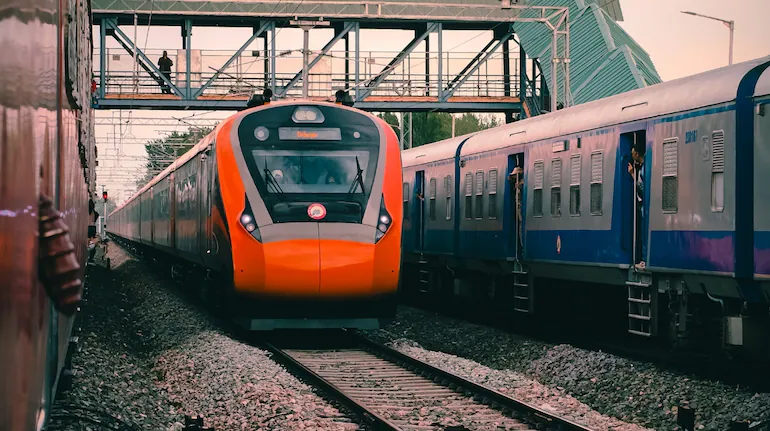
India is preparing to take its indigenously developed Vande Bharat trains to international markets, with Railway Minister Ashwini Vaishnaw announcing plans to export complete trainsets within the next three to four years. The announcement came on November 1, 2026, during the flag-off ceremony of the Bengaluru-Mumbai Vande Bharat Sleeper Express.
Vaishnaw said Indian Railways has been improving Vande Bharat trains with every new version, using lessons from earlier models to enhance their design and performance. While India has already started exporting advanced railway components to several countries, the next target is to supply complete trains to overseas markets.
The development could mark a new phase in India’s railway manufacturing ambitions, extending the country’s role from exporting individual railway systems and equipment to supplying complete passenger trainsets internationally.
India Plans to Export Complete Vande Bharat Trains
Speaking at the launch event, Vaishnaw said India has made progress in developing railway technologies and manufacturing equipment for international customers. He noted that Indian manufacturers are already exporting complex railway components, including propulsion systems and bogies, to countries such as Switzerland, Germany, France, Italy and the United States.
“With every version of the Vande Bharat train, we are improving. Each time we manufacture a new version, we make improvements based on learnings from the previous versions,” the minister said.
He added that India would move towards exporting complete Vande Bharat trains in the coming years. The proposed three-to-four-year timeline would represent a significant expansion of the country’s railway export programme.
However, the announcement concerns a future export plan. No specific overseas buyer, destination country or export contract was identified in the supplied announcement.
India’s Railway Manufacturing and Export Progress
India’s proposed Vande Bharat exports build on an existing railway manufacturing and export base. According to information provided by the Railway Ministry to Parliament in March 2026, exports of Indian railway rolling stock and components reached approximately ₹26,000 crore between 2016-17 and January 2026.
Indian manufacturers are supplying several types of railway equipment to international markets. These include locomotives, passenger coaches, traction motors, propulsion systems and other specialised components.
Exporting complete Vande Bharat trainsets would expand this activity beyond individual components and equipment. It would require India to supply integrated train systems designed for passenger operations in overseas markets.
260 Vande Bharat Sleeper Trainsets Planned
Vaishnaw had also informed Parliament in February 2026 that Indian Railways planned to manufacture 260 Vande Bharat Sleeper trainsets. The programme involves BEML, Chennai’s Integral Coach Factory and technology partners.
Production and induction of these trains into passenger service are planned in phases. The manufacturing programme is expected to support the expansion of long-distance sleeper services within India while contributing to the development of the country’s railway manufacturing capabilities.
Bengaluru-Mumbai Vande Bharat Sleeper Express Begins Operations
The export announcement coincided with the launch of the Bengaluru-Mumbai Vande Bharat Sleeper Express. The new service will cover approximately 1,118 kilometres in around 16 hours, offering an overnight travel option between the two major cities.
Union Minister of State for Railways V Somanna said the service would reduce journey time by nearly eight hours compared with existing trains operating on the route.
The fully air-conditioned train has 16 coaches and a total of 823 berths. Passengers can travel in three accommodation categories:
- First AC: Premium sleeper accommodation.
- AC Two-Tier: Air-conditioned two-tier sleeper berths.
- AC Three-Tier: Air-conditioned three-tier sleeper berths.
Vaishnaw said the train incorporates improved facilities for passengers using middle and upper berths. It also features advanced couplers designed to minimise jerks during travel and improve the passenger experience.
Bengaluru-Mumbai Vande Bharat Sleeper: Timings and Schedule
Regular operations of the Bengaluru-Mumbai Vande Bharat Sleeper Express will begin on November 2 from Mumbai and November 3 from Bengaluru.
The Bengaluru-originating service will depart Sir M Visvesvaraya Terminal at 7:45 pm and reach Chhatrapati Shivaji Maharaj Terminus in Mumbai at 11:55 am the following day.
For the return journey, the train will leave Mumbai at 8:10 pm and arrive in Bengaluru at noon the next day.
Both services will operate six days a week. The Bengaluru-originating train will not run on Mondays, while the Mumbai-originating service will remain unavailable on Tuesdays.
More Vande Bharat Sleeper Routes Planned
The Bengaluru-Mumbai service is India’s third Vande Bharat Sleeper route. It follows the Howrah-Kamakhya service, launched in January 2026, and the Varanasi-New Delhi service, inaugurated on October 31.
Vaishnaw also announced plans for another sleeper service originating in Bengaluru. The proposed route will connect North Karnataka towards Hubballi before continuing to Pune and Mumbai.
The minister further said that Vande Bharat services between Bengaluru and Mangaluru were expected to begin within weeks. The proposed service remains subject to the completion of electrification work and testing.
What India’s Vande Bharat Export Plan Means
The plan to export complete Vande Bharat trains reflects India’s broader effort to expand its railway manufacturing presence internationally. Indian companies already supply railway equipment and components to several global markets, while the proposed exports would take this capability a step further.
If the plan progresses as announced, complete Vande Bharat trainsets could become part of India’s railway exports within the next three to four years. The success of that ambition will depend on manufacturing readiness, international demand and the requirements of potential overseas railway operators.
Meanwhile, the introduction of additional sleeper services is expected to expand Vande Bharat’s role in India’s long-distance rail network. The Bengaluru-Mumbai route marks another step in that expansion, combining overnight travel with upgraded passenger facilities.
For breaking news and live news updates, like us on Facebook or follow us on Twitter and Instagram. Read more on Latest India on thefoxdaily.com.





COMMENTS 0