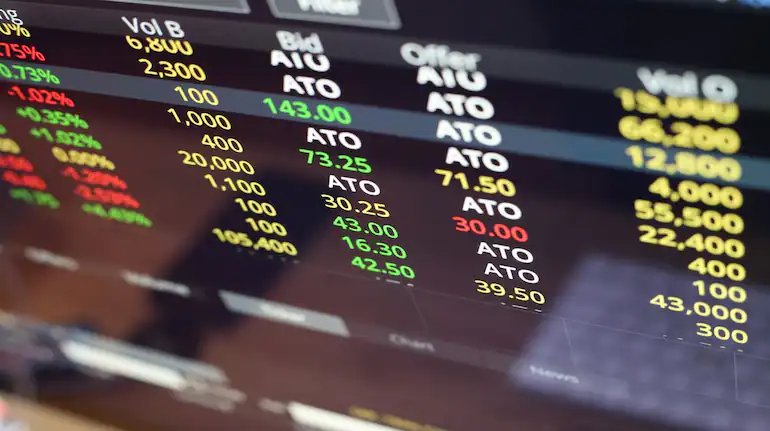
Foreign Portfolio Investors (FPIs) have made a strong comeback in the Indian stock market, investing Rs 84,290 crore in equities over nine trading sessions between November 2 and November 13. The latest buying marks a sharp reversal after two consecutive months of substantial foreign outflows and has helped strengthen sentiment across benchmark indices.
The renewed interest comes as global investors reassess their exposure to technology-heavy markets amid a sell-off in artificial intelligence-linked stocks. Falling crude oil prices, improving earnings visibility and attractive valuations in selected large-cap companies have also contributed to the shift in investment flows.
Key Highlights
- FPIs invested Rs 84,290 crore in Indian equities between November 2 and November 13.
- Foreign investors had withdrawn Rs 34,843 crore in October and Rs 35,861 crore in September.
- Global AI-linked stock selling and declining crude oil prices supported the return of foreign buying.
- Financial services, telecom, capital goods, pharmaceuticals and automobile stocks attracted strong foreign interest.
- Investors are monitoring US Federal Reserve signals, crude oil prices, rupee movements and developments in West Asia.
FPIs Reverse Two Months of Selling
Depository data showed that foreign investors made net equity purchases worth Rs 84,290 crore during the first 13 days of November, covering nine trading sessions. This represents a significant turnaround from the previous two months, when overseas investors remained net sellers of Indian equities.
FPIs withdrew Rs 34,843 crore in October and Rs 35,861 crore in September. The latest inflows have reduced cumulative foreign portfolio investor withdrawals from Indian equities in 2026 to approximately Rs 2.1 lakh crore, compared with nearly Rs 3 lakh crore recorded a few weeks earlier.
Despite the strong buying, market participants remain cautious about interpreting the latest figures as the beginning of a long-term foreign investment cycle. The recent inflows may partly reflect short-term portfolio adjustments rather than a permanent shift in overseas investors’ allocation strategies.
Vedant Gupte, Co-Founder and CEO of investment platform Trackk, described November’s buying as a tactical shift rather than a structural return of foreign capital. He attributed the movement to falling crude prices and money moving away from crowded Asian AI-related investments, with much of the buying concentrated in large companies that carry significant weight in benchmark indices.
Global AI Sell-Off and Lower Crude Prices Support Buying
The correction in global artificial intelligence-linked stocks has emerged as one of the important factors behind the change in foreign investment flows. As investors reassess their positions in technology-heavy markets, some capital appears to be moving towards other emerging market opportunities, including India.
Rohan Goyal, Investment Research Analyst at MIRA Money, attributed the renewed interest in Indian equities to the unwinding of global AI-related trades, softer crude prices, improving earnings visibility and attractive valuations in selected large-cap stocks.
Crude oil prices have also supported sentiment. Brent crude declined around 13% during the first week of November to nearly $97 per barrel. Lower oil prices can benefit India by reducing the pressure of imported energy costs, although the broader impact depends on how long the decline continues and how global supply conditions develop.
The combination of these factors has encouraged foreign investors to increase their exposure to Indian equities after months of withdrawals. However, further investment decisions are likely to depend on global market conditions and the performance of domestic companies.
Nifty Crosses 25,000 as Foreign Buying Strengthens
The return of foreign capital has supported a recovery in Indian benchmark indices, with the Nifty moving above the 25,000 mark. Buying interest has extended across several large-cap sectors, helping improve market sentiment.
Financial services, telecommunications, capital goods, pharmaceuticals and automobile companies attracted significant foreign investment. Some power-related stocks also advanced, supported by strong earnings performance, according to VK Vijayakumar, Chief Investment Strategist at Geojit Investments.
Vijayakumar also highlighted short-covering in frontline large-cap stocks, particularly selected leading banking shares, as an important factor behind the benchmark index’s recovery. Short-covering occurs when investors who have sold stocks expecting prices to fall buy them back, potentially adding to upward market momentum.
Domestic Institutional Investors Book Profits
While foreign investors have returned as net buyers, domestic institutional investors (DIIs) have used the market recovery to book profits. This difference in investment activity highlights the changing balance between domestic and overseas institutional flows.
Domestic institutions have played an important role in supporting Indian equities during periods of foreign selling. Their profit-booking during the latest rally suggests that investors are reassessing their positions as share prices recover.
Market participants will therefore watch whether domestic buying remains strong enough to absorb any potential foreign selling if global sentiment weakens again. The balance between FPI and DII activity could influence the sustainability of the market rally.
US Fed Policy and West Asia Developments in Focus
Several domestic and international factors are expected to influence the direction of Indian equities in the coming sessions. Investors will closely examine the minutes of the US Federal Reserve’s latest policy meeting for clues about the central bank’s approach to interest rates and inflation.
Crude oil prices will also remain important, particularly amid tensions involving Iran and the Gulf region. Any escalation in geopolitical risks could affect energy supplies and push oil prices higher, potentially creating pressure for oil-importing economies such as India.
Currency movements, particularly fluctuations in the rupee against the US dollar, will be another factor to monitor. Investors are also watching expectations surrounding a possible Reserve Bank of India rate hike next week, along with the remaining second-quarter corporate earnings announcements.
The ability of the Nifty to sustain levels above 25,000 and the extent of participation across different market segments will provide further indications of the strength of the recovery.
Dheeraj Gaur, Chief Investment Strategy Officer at Choice Wealth, said FPI flows, corporate earnings and broader market participation would remain important factors shaping investor sentiment, alongside the global unwinding of AI-linked investments.
Foreign Investors Record Mixed Activity in Debt Market
Foreign investors also recorded mixed activity in India’s debt market during the reporting period. Their investment decisions varied across different routes available for overseas participation in Indian government securities and other eligible debt instruments.
Through the Fully Accessible Route (FAR), overseas investors made net investments of Rs 7,815 crore. Investments through the general route stood at Rs 1,167 crore.
However, foreign investors withdrew Rs 702 crore through the Voluntary Retention Route (VRR). These figures indicate that overseas investment activity was not uniformly positive across all debt investment channels, despite the strong buying recorded in equities.
Will the FPI Buying Trend Continue?
The investment of Rs 84,290 crore in Indian equities over nine sessions has provided a significant boost to market sentiment following two months of heavy foreign selling. The movement has also helped reduce cumulative FPI outflows recorded during 2026.
However, the sustainability of this trend remains uncertain. The latest buying has been supported by a combination of lower crude prices, global portfolio reallocation and interest in selected Indian large-cap stocks. A change in any of these conditions could influence foreign investment decisions.
Investors will continue to monitor US Federal Reserve policy signals, developments in West Asia, currency movements, corporate earnings and domestic institutional activity. Whether November’s inflows represent a sustained return of overseas capital or a temporary tactical adjustment will remain a key question for the Indian stock market.
For breaking news and live news updates, like us on Facebook or follow us on Twitter and Instagram. Read more on Latest Business on thefoxdaily.com.






COMMENTS 0