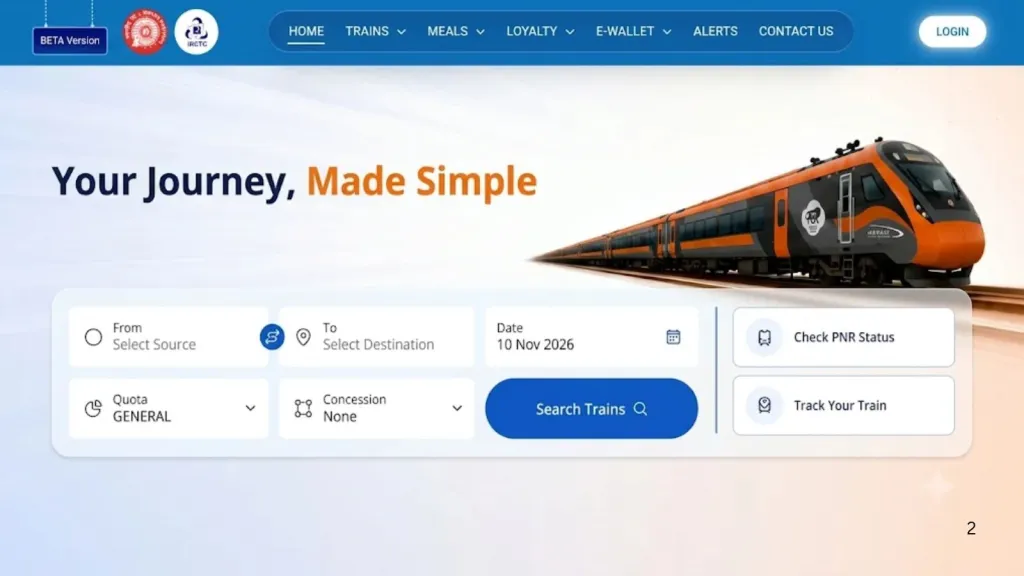
The Indian Railway Catering and Tourism Corporation (IRCTC) has clarified reports of disruptions to its online train ticket booking platform after several users complained about login difficulties on Tuesday, November 10. The railway public sector undertaking said its reservation portal remained operational, although some passengers may have experienced delays because of an unusually high number of simultaneous login attempts.
The clarification came after users raised concerns on social media platform X about difficulties accessing the Indian Railways ticket booking website. IRCTC attributed the temporary problems to heavy traffic during the festive and peak booking period, particularly around Diwali and Chhath Puja, when millions of passengers attempt to reserve tickets.
The corporation said its e-ticketing services across different channels had returned to normal. It also highlighted ongoing Technology upgrades intended to improve the platform’s capacity, reliability and ability to handle heavy booking demand.
IRCTC Says Ticket Booking Website Was Operational
IRCTC rejected reports suggesting that its entire online reservation platform had gone down. According to the corporation, the website and mobile applications remained operational, but a high volume of concurrent login requests may have caused delays for some users.
In its clarification, the company explained that railway ticket demand rises significantly during festive seasons, holidays and other peak travel periods. Diwali and Chhath Puja are particularly busy periods because large numbers of passengers travel to their hometowns and other destinations across the country.
When millions of users attempt to access the booking platform at the same time, the volume of requests can put additional pressure on its infrastructure. This may result in slower login responses and temporary difficulties accessing booking services, even when the platform itself remains operational.
IRCTC described the reported issues as temporary and said its e-ticketing services through all channels were functioning normally at the time of its statement.
The clarification suggests that the complaints were related to access delays caused by heavy traffic rather than a confirmed complete shutdown of the reservation system. However, individual passengers may still have experienced difficulties while attempting to log in.
Why IRCTC Login Problems Increase During Diwali and Chhath Puja
Festive travel creates a substantial surge in demand for railway tickets in India. During Diwali and Chhath Puja, passengers from major cities often travel to their hometowns, increasing pressure on the reservation system.
IRCTC operates the online booking platform used by passengers to search for trains, check seat availability, reserve tickets and manage their journeys. Its website and mobile applications must handle large numbers of requests, particularly when advance reservations or Tatkal bookings open.
During these periods, users may access the platform simultaneously to secure limited available seats. The resulting traffic can affect login response times and make the booking process slower for some passengers.
Such delays can be especially frustrating when travellers are trying to book tickets for popular routes with limited availability. Even a short delay can make it harder to complete a reservation during a high-demand booking window.
IRCTC’s explanation highlights the challenge of managing demand spikes on a platform used by millions of railway passengers. Maintaining normal operations during these periods requires sufficient server capacity, reliable network infrastructure and systems capable of handling large volumes of simultaneous requests.
Nearly 89% of Reserved Train Tickets Are Booked Online
The scale of online railway reservations helps explain the pressure on IRCTC’s digital infrastructure. According to figures shared by the corporation, nearly 89 per cent of reserved train tickets are now booked online.
Between June 2025 and June 2026, passengers booked 65.08 crore reserved tickets through the Passenger Reservation System (PRS). Of these, 57.90 crore tickets were booked online.
The figures demonstrate how central digital booking has become to India’s railway reservation process. Millions of passengers depend on online services instead of visiting physical reservation counters, making the availability and reliability of the IRCTC platform increasingly important.
As online bookings account for such a large share of reservations, even temporary access problems can affect a significant number of travellers. The challenge becomes more pronounced during festive periods and other occasions when demand rises sharply.
Improving the platform’s ability to handle simultaneous users is therefore an important part of maintaining a smooth passenger experience.
Peak Booking Hours Can Put Additional Pressure on IRCTC
IRCTC has previously acknowledged that heavy traffic during specific booking windows has sometimes caused disruptions to its website. Two particularly busy periods are the opening of the Advance Reservation Period (ARP) and the start of Tatkal reservations.
Advance reservations generally open at 8 am on the applicable booking date. Tatkal reservations begin at 10 am for air-conditioned classes and 11 am for non-air-conditioned classes.
These opening times attract large numbers of passengers who want to secure seats on popular trains. Because many users attempt to log in and complete transactions within a short period, the platform can experience exceptionally high demand.
During such periods, passengers may encounter slower page loading, delayed login responses or difficulties completing the booking process. These problems can become more noticeable when available seats are limited and competition for reservations is high.
IRCTC is working to address these challenges through upgrades to its Next Generation e-Ticketing system, commonly known as NGET.
IRCTC Upgrading Its Next Generation e-Ticketing System
The NGET platform was launched in 2014 to improve online railway ticket booking capacity and provide passengers with a better reservation experience. IRCTC is now working on further upgrades to strengthen the system and improve its ability to handle growing demand.
The corporation has identified two major areas of improvement: an infrastructure upgrade and the introduction of an active-active disaster recovery system.
1. Infrastructure Upgrade to Improve Booking Capacity
The first upgrade focuses on strengthening the technical infrastructure supporting the online reservation platform. This includes improvements to servers, storage, networking and software.
These components play an important role in processing passenger requests and keeping the booking platform responsive. Better infrastructure is intended to help the system manage larger volumes of simultaneous logins and transactions, particularly during peak booking hours.
As online railway reservations continue to grow, improving these underlying systems is important for reducing delays and maintaining service reliability.
2. Active-Active Disaster Recovery System
The second major upgrade involves an active-active disaster recovery system. Its purpose is to help keep services running if one system experiences an outage or technical failure.
In this arrangement, multiple systems can remain active rather than relying entirely on a single primary setup. If one part encounters a problem, another active system can help maintain service availability.
For passengers, the intended benefit is greater continuity when accessing the reservation platform. Such an arrangement can reduce the risk of a technical failure affecting the entire online booking service.
The two upgrades address different but related challenges. Improved infrastructure is intended to support higher traffic volumes, while the disaster recovery arrangement is designed to strengthen service continuity during system failures.
What Passengers Should Know About IRCTC Booking Delays
IRCTC’s November 10 clarification indicates that the reported login difficulties were temporary and that e-ticketing services had returned to normal. Passengers experiencing similar problems during peak booking periods should distinguish between a complete service outage and delays caused by heavy traffic.
When large numbers of users access the platform simultaneously, some passengers may face slower responses even if the website or app remains operational. Repeated login attempts during a busy period can also make the booking experience more frustrating.
Passengers planning journeys during major festivals should allow sufficient time for reservations, particularly when booking popular routes. Checking train availability in advance and preparing journey details before the booking window opens can help make the process more organised.
However, successful access cannot be guaranteed during periods of exceptionally high demand. The availability of seats and the responsiveness of the platform may vary depending on traffic and technical conditions.
Can IRCTC’s Technology Upgrades Prevent Future Website Disruptions?
The proposed upgrades are aimed at addressing two important challenges facing the online railway reservation system: increasing booking demand and the need for reliable service during technical failures.
Improved servers, storage, networking and software could help the platform process more requests during busy booking windows. Meanwhile, an active-active disaster recovery arrangement could provide additional protection against disruptions caused by failures in one part of the system.
However, the effectiveness of these improvements will depend on their implementation and the platform’s ability to handle real-world traffic conditions. Large-scale booking surges during festive seasons and Tatkal reservation windows will remain important tests of the upgraded infrastructure.
The growing share of online reservations also means that passengers increasingly depend on IRCTC for access to India’s railway network. Maintaining a stable and responsive booking service is therefore not simply a technical requirement but an essential part of the passenger experience.
IRCTC Website Status on November 10: What Is Confirmed?
IRCTC said its online reservation platform remained operational on November 10, despite complaints from users who experienced login difficulties. The corporation attributed the temporary delays to heavy traffic associated with the festive booking period and confirmed that e-ticketing services across its channels were normal at the time of its statement.
The company also reiterated that it is upgrading its NGET infrastructure and working on an active-active disaster recovery system to improve the reliability of its website and mobile applications.
With nearly 89 per cent of reserved train tickets now being booked online, the performance of IRCTC’s digital platform has become increasingly important for passengers across the country. The planned improvements will be closely watched as the corporation works to manage rising demand and reduce disruptions during peak booking hours.
For breaking news and live news updates, like us on Facebook or follow us on Twitter and Instagram. Read more on Latest India on thefoxdaily.com.






COMMENTS 0