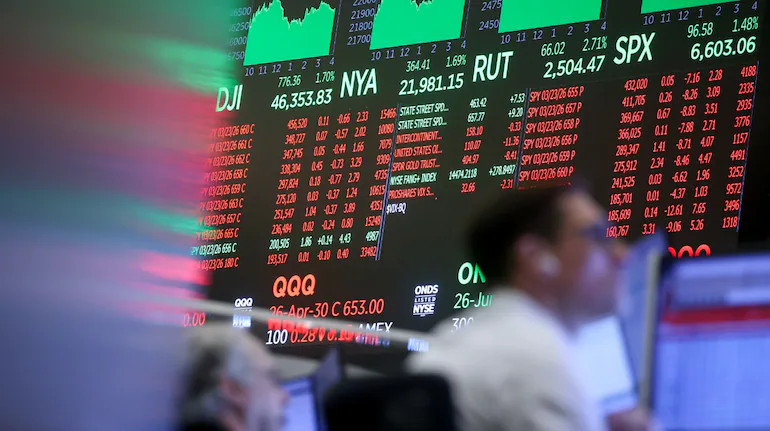
Major Technology companies suffered massive losses in market value on Thursday as Wall Street recorded its steepest selloff in more than a year. Nvidia alone lost approximately $440 billion in market capitalisation, while Tesla and SpaceX together shed around $420 billion amid growing concerns about tighter Artificial Intelligence (AI) regulation and a potential slowdown in data centre investments following the US midterm elections.
The sharp decline wiped out as much as $1 trillion in combined market value from the Magnificent Seven technology stocks. Companies in the S&P 500 collectively lost approximately $3 trillion, highlighting the scale of the selling pressure across the US Stock Market.
Key Highlights
- Nvidia lost approximately $440 billion in market capitalisation after its shares fell more than 9%.
- Tesla and SpaceX together shed around $420 billion in market value.
- The Nasdaq Composite plunged 5.52% to 24,315, entering correction territory.
- The Magnificent Seven lost as much as $1 trillion in combined market value.
- AI infrastructure and data centre stocks faced heavy selling amid regulatory concerns.
Nasdaq Crashes 5.52% as Wall Street Suffers Heavy Losses
The Nasdaq Composite plunged 5.52% to close at 24,315 on Thursday, marking its biggest one-day decline in 19 months. The index entered correction territory after falling more than 10% from its October 6 record closing high.
The broader market also recorded significant losses. The S&P 500 dropped 4.36% to 7,353.73, while the Dow Jones Industrial Average declined 3.44% to finish at 51,523.06.
The selloff erased approximately $3 trillion in market capitalisation from S&P 500 companies. The technology-heavy Nasdaq faced particularly intense pressure as investors reduced exposure to AI-related stocks and other major technology companies.
Nvidia Loses $440 Billion in Market Value
Nvidia was among the biggest casualties of Thursday’s technology selloff. Shares of the world’s leading supplier of AI accelerators fell more than 9%, wiping out approximately $440 billion in market capitalisation.
The decline reflects growing investor caution toward companies closely linked to the expansion of artificial intelligence infrastructure. Nvidia’s chips are widely used in AI computing systems, making the company’s business outlook closely connected to spending on data centres and advanced computing capacity.
Other major technology companies also recorded losses. Meta Platforms declined 4%, while Amazon and Alphabet, Google’s parent company, each fell approximately 2.2%.
Tesla and SpaceX Together Lose Around $420 Billion
Tesla and SpaceX also faced significant selling pressure, with both companies recording losses of up to 9% in their respective market valuations. Together, they shed approximately $420 billion in market value.
The declines added to the broader pressure on technology and growth-oriented companies as investors reassessed the outlook for AI investment and the potential impact of tighter regulation.
The combined losses across Tesla, SpaceX and other major technology businesses demonstrate how concerns about the future of AI infrastructure spending have affected companies beyond semiconductor manufacturers.
Semiconductor Stocks Face Double-Digit Declines
The semiconductor industry experienced some of the sharpest losses during the session. The Philadelphia Semiconductor Index plunged more than 12%, reflecting widespread selling across companies supplying chips and equipment for artificial intelligence infrastructure.
Qualcomm shares fell 9.5% after the company’s fourth-quarter smartphone chip sales missed Wall Street expectations. The decline added company-specific pressure to an already weak semiconductor market.
The steep losses across chipmakers highlighted investor concerns about the outlook for technology spending, including demand for processors and other components used in AI systems.
AI Data Centre Stocks Suffer Heavy Selling
Companies directly exposed to the rapid expansion of AI data centres were among the worst performers. Investors questioned whether the enormous investments required to build and operate these facilities would generate sufficient returns.
- IREN: Shares plunged more than 14%.
- Applied Digital: The stock declined more than 14%.
- CoreWeave: Shares dropped almost 10%.
- GE Vernova: The stock fell 7.5%.
- Constellation Energy: Shares declined 2.5%.
The weakness extended beyond companies operating data centres to businesses supplying electricity and equipment for these facilities. This reflects the interconnected nature of AI infrastructure investment, which depends on computing hardware, power generation and supporting services.
Why Did Big Tech Stocks Crash After the US Midterm Elections?
The selloff followed major Democratic gains in the US midterm elections. The results raised concerns among investors about the possibility of tighter restrictions on data centre construction and other AI infrastructure projects.
Democratic victories in states where opposition to new data centres has increased added to uncertainty surrounding future construction plans. Investors are concerned that additional regulation could delay projects, affect investment decisions and slow the expansion of computing capacity.
These political concerns came at a time when technology stocks were already facing questions about the financial returns from large AI investments. Companies have committed substantial capital to chips, data centres and computing infrastructure, but investors are increasingly examining whether the resulting revenue will justify the spending.
The combination of regulatory uncertainty and profitability concerns contributed to the sharp reversal in technology shares.
Asian Markets Also Fall as Technology Selloff Spreads
The weakness on Wall Street extended into Asian markets on Friday, November 6, as investors continued selling semiconductor and technology stocks.
South Korea’s KOSPI plunged as much as 8.8%, triggering a circuit breaker that temporarily halted trading. Japan’s Nikkei also dropped more than 5% as semiconductor stocks faced continued selling pressure.
The declines highlighted how concerns about AI investment and global technology valuations were affecting markets beyond the United States.
What the Big Tech Selloff Means for Investors
The latest market decline shows that investors are becoming more selective about companies benefiting from the AI boom. Strong demand for artificial intelligence technology has supported major stock valuations, but questions about infrastructure costs, regulation and profitability are creating uncertainty.
Investors will be watching whether technology companies can convert their AI investments into sustainable revenue and profits. Developments in data centre construction, semiconductor demand and government regulation could also influence market sentiment in the coming weeks.
The sharp decline does not by itself establish that the AI investment cycle is ending. However, it demonstrates the risks associated with high market expectations when uncertainty over future returns increases.
Conclusion
Thursday’s Wall Street selloff wiped out trillions of dollars in market value, with Nvidia losing approximately $440 billion and Tesla and SpaceX together shedding around $420 billion. The Nasdaq Composite fell 5.52%, while semiconductor and AI infrastructure stocks recorded particularly steep declines.
Concerns about tighter AI regulation following the US midterm elections, possible delays in data centre construction and uncertainty over the profitability of large AI investments contributed to the market rout. Investors will now focus on whether technology companies can sustain their expansion plans while delivering the financial returns expected by the market.
For breaking news and live news updates, like us on Facebook or follow us on Twitter and Instagram. Read more on Latest Business on thefoxdaily.com.






COMMENTS 0