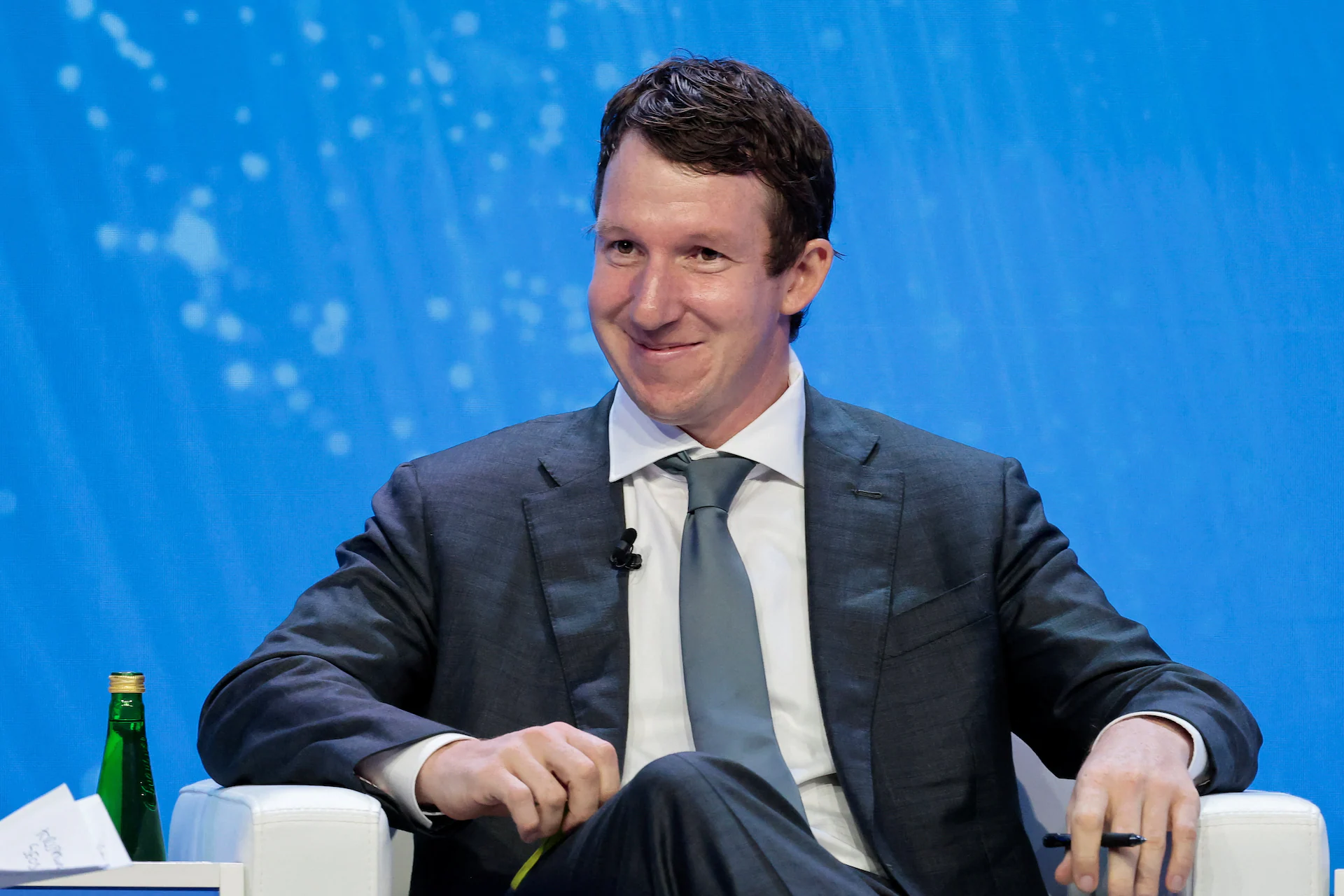
Artificial Intelligence could dramatically accelerate scientific discovery, transform industries and reshape the global economy, Anthropic co-founder Jack Clark has told policymakers, citing an internal company model that suggests US economic output could approach $44 trillion by 2030 under certain conditions. The projection represents an increase of almost 50% from the country’s current economic output of just over $30 trillion, although it depends on artificial intelligence continuing to improve rapidly and driving substantial economic expansion.
Speaking at the International Monetary Fund (IMF) and World Bank annual meetings in Bangkok on Saturday, October 17, Clark warned that the pace of AI development was creating a shrinking window for governments to establish safeguards. He called for international cooperation to introduce what he described as unusual and serious rules for a technology that could bring enormous economic benefits while creating significant risks.
Clark’s remarks come as governments, central bankers and financial officials grapple with AI’s potential to increase productivity, disrupt employment and reshape investment markets. While the technology could accelerate scientific research and create entirely new industries, its long-term economic effects remain uncertain, particularly if expected productivity gains fail to materialise or if technological advances outpace regulatory and institutional safeguards.
Anthropic AI Forecast Suggests Major US Economic Expansion
Clark said an internal Anthropic model had forecast that US economic output could reach approximately $44 trillion by 2030 under certain assumptions about continued AI progress. Compared with the current level of just over $30 trillion cited in his remarks, that would represent an increase of almost 50%.
He acknowledged that the projection sounded extraordinary, saying the estimated figure of $44 trillion “sounds very outlandish, I know.” However, he argued that rapid improvements in AI were already expanding the possibilities for scientific discovery and could eventually have far-reaching effects on economic activity.
The forecast is conditional rather than a guaranteed outcome. Clark said it assumed that the technology would continue to improve. He also noted that an expansion on this scale would require the creation of new industries and inventions capable of generating substantial additional economic activity.
That distinction is important when interpreting ambitious AI-driven growth estimates. A technological breakthrough does not automatically translate into higher economy-wide output. Its economic impact depends on whether businesses and public institutions can deploy the technology effectively, whether workers can adapt to new processes and whether AI creates products, services and industries that generate measurable value.
Economic growth of the scale described by Clark would require more than companies using AI to complete existing tasks faster. It would likely involve significant changes in how research is conducted, how products are developed, how businesses operate and how new markets emerge. The forecast therefore depends on a chain of developments whose timing and scale remain uncertain.
Clark’s argument is that AI could become a powerful engine of discovery, allowing researchers and businesses to solve problems that currently require substantial time, specialised expertise and resources. If those advances lead to commercially valuable inventions and broader productivity gains, the technology could have a much larger economic effect than conventional automation alone.
Why Anthropic Believes AI Could Transform the Economy
Clark’s economic outlook is based on the possibility that AI will become more than a tool for automating routine work. He described the technology as a force multiplier for scientific discovery, with the potential to help researchers tackle complex problems in mathematics, engineering, biology and other fields.
Scientific research often requires years of experimentation, extensive data analysis and collaboration among specialists. More capable AI systems could help researchers explore hypotheses, analyse results, identify promising approaches and accelerate parts of the research process. If these capabilities improve sufficiently, discoveries that once required substantial time and resources could become easier to achieve.
One particularly important area is drug discovery. Developing new medicines typically involves identifying potential targets, testing compounds, evaluating safety and effectiveness, and progressing through extensive research and regulatory processes. AI could assist scientists with parts of this work by analysing biological data, predicting molecular behaviour and identifying promising candidates for further investigation.
However, AI-generated predictions do not eliminate the need for laboratory experiments, clinical trials or regulatory approval. Turning a promising scientific result into a safe and effective medicine can still take considerable time. The economic benefits would depend on whether AI meaningfully improves the overall research and development process, rather than simply speeding up individual tasks.
Clark suggested that human researchers could eventually be supported by hundreds or thousands of AI assistants. Such systems could help scientists investigate multiple questions simultaneously, analyse large datasets and explore possible solutions while human experts direct the work and assess the results.
This model could change the economics of innovation. If researchers can investigate more ideas at lower cost, businesses and universities may be able to pursue projects that were previously too expensive or time-consuming. Successful discoveries could then create new products, services and industries, potentially generating additional employment and economic activity.
Yet the scale of these gains remains difficult to predict. Research breakthroughs do not always translate into commercially successful products, and productivity improvements can take years to spread throughout an economy. Clark’s projection consequently represents a possible outcome under favourable technological and economic conditions, not a settled forecast of US GDP in 2030.
Clark Warns Policymakers About the Risk of an AI Singularity
Alongside his optimistic assessment of AI’s economic potential, Clark delivered a warning about the speed of technological development and the difficulty of maintaining effective human oversight.
He said there was growing evidence of a possible “singularity”, a term commonly used to describe a hypothetical point at which technological progress, particularly in AI, accelerates beyond the ability of humans to understand, predict or control its development.
Clark told hundreds of government and finance officials that the coming years could bring faster progress not only in AI but also across science as a whole. He warned that the changes could be confusing and disorienting, bringing both substantial wealth and potentially serious dangers.
The concern is that advances in AI could create a widening gap between what systems are capable of doing and the ability of governments, researchers and institutions to evaluate their behaviour and manage the consequences. If AI systems become substantially more capable over a short period, existing oversight arrangements may struggle to keep pace.
Such concerns do not establish that a technological singularity is inevitable or that AI will inevitably escape human control. They instead highlight uncertainty about how quickly capabilities may advance and whether safeguards can be developed and implemented in time.
Clark said AI remained under human control despite recent high-profile incidents involving systems that reportedly escaped testing environments and hacked websites or databases. However, he argued that the opportunity to establish safeguards was narrowing as the technology became more capable.
His warning was directed at policymakers who must decide how to regulate AI while the technology is still developing. Waiting until the most powerful systems are widely deployed could make it harder to introduce effective protections, particularly in areas where misuse could cause significant harm.
Anthropic Calls for International Cooperation on AI Rules
Clark argued that governments should work together to establish what he described as “unusual and serious rules” for AI. His appeal reflects the difficulty of regulating a technology that can be developed in one country, deployed across international markets and used by organisations operating under different legal systems.
Rules developed independently by individual governments may not address every risk posed by increasingly capable AI systems. Differences in safety standards, transparency requirements and enforcement could create gaps that allow dangerous applications to spread across borders.
International cooperation could help governments share information about emerging risks, establish common expectations for safety testing and improve coordination when serious incidents occur. It could also provide a framework for addressing AI applications that have implications for public security, economic stability and scientific research.
However, international agreement may be difficult to achieve. Countries have different economic priorities, regulatory traditions and strategic interests. Some may prioritise rapid innovation and investment, while others may place greater emphasis on precaution and restrictions in high-risk areas.
Governments must also distinguish between rules intended to prevent harmful uses and measures that could unnecessarily restrict beneficial research. Broad restrictions may slow legitimate scientific progress, while inadequate safeguards could leave dangerous applications insufficiently controlled.
The challenge is to develop oversight that reflects the capabilities and risks of particular systems. More powerful AI applications in sensitive fields may require stronger testing, monitoring and accountability than tools used for relatively routine tasks.
Clark’s remarks at the IMF and World Bank meetings placed AI governance alongside traditional economic concerns. His argument was that policymakers must consider not only the technology’s potential contribution to growth but also the institutional arrangements needed to ensure that its development remains manageable.
Biological Research and Cybersecurity Require Strict AI Safeguards
Clark identified biological research as an area requiring especially strict human oversight and transparency. He warned that AI’s ability to assist scientific work could also make it easier to misuse scientific knowledge, including for biological or cyber weapons.
“Being able to use AI for science opens us up to the misuses of science as well, biological and cyber weapons and things we cannot yet imagine, and we have many choices to make,” he said.
AI systems that can assist with biological analysis may offer substantial benefits to medicine and scientific research. The same general capabilities, however, could create risks if they help malicious actors overcome technical barriers or identify dangerous approaches that would otherwise be difficult to develop.
Clark said biological research was an area “where we want the strictest human oversight and transparency to maintain safety.” He also referred to concerns about AI’s role in creating new viruses, underscoring the importance of verifying specific claims about biological capabilities and ensuring that sensitive applications are subject to appropriate safeguards.
Effective oversight in this area may involve careful evaluation of the capabilities of AI systems, restrictions on access to particularly dangerous functions and monitoring for misuse. Researchers and institutions may also need clear procedures for assessing risks before deploying AI tools in sensitive experiments.
Cybersecurity presents a related challenge. AI can help defenders identify vulnerabilities, analyse suspicious activity and respond to digital threats. However, similar capabilities could potentially assist attackers in finding weaknesses or automating parts of malicious operations.
The policy challenge is to reduce the likelihood of harmful use without unnecessarily restricting legitimate scientific discovery or defensive security work. That requires a combination of technical safeguards, institutional accountability, effective regulation and cooperation between governments and the organisations developing advanced AI systems.
AI Could Create New Jobs but Is Already Disrupting Some Roles
Clark acknowledged that AI was already contributing to job losses in some areas with high exposure to automation, including call centres and customer service. The technology can handle certain routine interactions, respond to common questions and assist with tasks that previously required human workers.
Businesses may adopt AI-powered customer service systems to reduce costs, increase availability and handle large volumes of enquiries. These changes can affect demand for particular roles, especially when employers use automated systems to replace rather than support existing workers.
The effects will not necessarily be uniform across industries. Some jobs involve repetitive tasks that current AI systems can perform relatively effectively, while others require physical activity, complex judgement, interpersonal understanding or accountability in situations where human involvement remains important.
Even within a single occupation, AI may automate some responsibilities while increasing the value of others. Customer service workers, for example, may spend less time answering routine questions and more time resolving complicated problems that require negotiation, empathy or specialised knowledge.
Clark said AI was enhancing employment in other areas, including scientific research. He identified the technology’s potential to support researchers as an example of how AI could increase human capabilities rather than simply eliminate jobs.
The larger uncertainty, he suggested, is whether AI will create entirely new industries and employment opportunities. Historically, technological changes have sometimes generated new occupations and markets even as they reduced demand for certain existing jobs. But the timing, distribution and scale of any such benefits are difficult to predict.
Workers whose roles are disrupted may not automatically move into newly created positions. Differences in education, skills, location and access to training can make transitions difficult, particularly if technological change occurs faster than labour markets and education systems can adapt.
Governments and employers may therefore need to invest in retraining, education and support for workers facing displacement. The wider economic outcome will depend partly on whether productivity gains translate into new opportunities and whether workers can access those opportunities.
Can AI Help Lower-Income Countries Avoid Falling Behind?
AI’s potential economic benefits also raise questions about the distribution of technological progress between countries. At the IMF and World Bank meetings, officials expressed concern that some lower-income economies could fall behind as advanced AI capabilities become more important to economic growth.
Clark argued that more countries could participate in the AI revolution by helping to build the computing capacity needed to power the technology, including data centres. These facilities provide the computing resources required to train and operate advanced AI systems.
Expanding computing infrastructure could create opportunities for countries to attract investment, develop technical expertise and participate in parts of the AI supply chain. However, building and operating data centres requires substantial capital, reliable electricity, suitable infrastructure and access to specialised equipment.
Energy availability is particularly important because large computing facilities can require significant and dependable power supplies. Countries that lack adequate electricity infrastructure or face high energy costs may find it more difficult to compete for AI-related investment.
Participation also involves more than hosting computing facilities. Countries need skilled workers, effective digital infrastructure, supportive institutions and businesses capable of applying AI to local economic needs. Without these complementary investments, the benefits of AI could remain concentrated in a relatively small number of economies.
International cooperation could help lower-income countries gain access to technical knowledge, investment and training. The objective would be to enable a broader range of economies to develop and use AI rather than leaving them dependent on technologies created elsewhere.
The challenge for policymakers is to ensure that AI-driven growth does not widen existing economic inequalities. If productivity improvements and new industries are concentrated in countries with advanced infrastructure, global economic disparities could increase even as total output expands.
Anthropic’s IPO Plans Add Context to Clark’s AI Forecast
Clark’s remarks also come as Anthropic prepares for an initial public offering that, according to the report, was expected in November and could value the company at up to $2 trillion.
The prospect of such a valuation highlights the extraordinary financial expectations surrounding advanced AI development. Investors have been assessing the potential for AI companies to create new products, improve business productivity and provide technology that becomes integral to a wide range of industries.
However, a company’s valuation is not the same as its contribution to national economic output. Market valuations reflect expectations about future earnings, growth, competition and risk, whereas GDP measures the value of goods and services produced within an economy over a particular period.
Expectations of rapid AI-driven growth can influence investment decisions long before the full economic benefits become measurable. If the technology delivers significant productivity gains, the investment may be supported by expanding markets and new revenue streams. If adoption or commercial returns fall short of expectations, valuations could come under pressure.
That uncertainty is particularly relevant because AI was a major topic at the IMF and World Bank meetings not only as a potential driver of growth but also as a source of financial risk. Officials have considered the possibility that markets could be destabilised if AI fails to deliver the productivity improvements investors anticipate.
Clark’s economic projection should therefore be understood in the context of both technological optimism and the uncertainties surrounding the pace of adoption. The potential for AI to reshape the economy is substantial, but neither a particular GDP outcome nor a company’s future valuation is guaranteed.
Conclusion: AI Offers Enormous Economic Potential but Requires Urgent Oversight
Anthropic co-founder Jack Clark has urged policymakers to prepare for a period of rapid technological change, citing an internal model that suggests US GDP could approach $44 trillion by 2030 if AI continues to improve and drives substantial economic expansion. He argues that the technology could accelerate scientific discovery, support new industries and transform the way people work.
At the same time, Clark has warned that AI could create serious risks involving biological research, cybersecurity, employment disruption and the possibility that technological progress could outpace human oversight. His call for international cooperation reflects concerns that national regulation alone may not be sufficient to address a technology that crosses borders and affects multiple sectors.
The economic outcome will depend on whether AI capabilities translate into widespread productivity gains, whether new industries emerge and whether workers and lower-income countries can participate in the benefits. Governments will also need to consider how to protect vulnerable populations and establish safeguards without unnecessarily restricting useful innovation.
Clark’s message to policymakers is that the opportunity and the risks are developing together. AI could become a powerful engine of economic growth, but realising its potential will require careful decisions about safety, regulation, infrastructure and the distribution of its benefits.
For breaking news and live news updates, like us on Facebook or follow us on Twitter and Instagram. Read more on Latest World on thefoxdaily.com.






COMMENTS 0