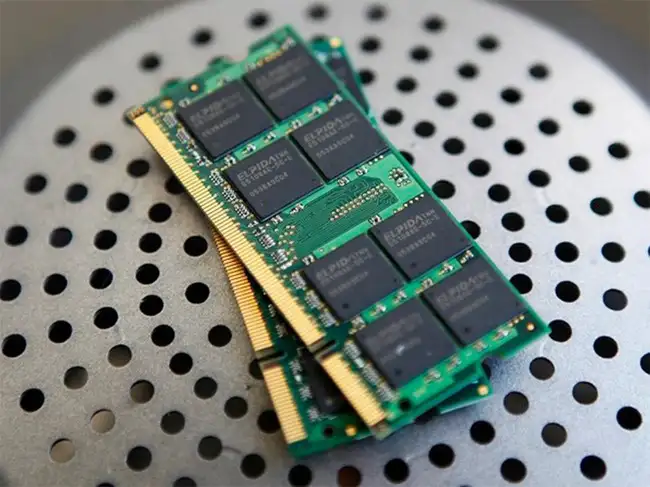
The rapid expansion of Artificial Intelligence (AI) infrastructure is creating an unexpected challenge for consumers: higher prices of smartphones, laptops and other electronic devices. As technology companies invest heavily in data centres to support AI services, demand for memory chips is rising sharply, tightening global supplies and putting pressure on electronics manufacturers.
India is also feeling the impact of this global shift. Memory chips are essential components in smartphones, laptops, tablets and other consumer devices. When their prices rise, manufacturers face higher production costs, some of which can eventually be passed on to customers through more expensive products.
Consumer electronics inflation rises sharply in India
According to the Department of Economic Affairs’ Monthly Economic Review for November 2026, inflation in India’s information and communication equipment category increased to 7.75% in October, compared with 4.94% in September. The category covers smartphones, laptops, tablets, televisions and other electronic accessories.
The increase reflects a sustained change in price trends over recent months. Inflation in this category stood at negative 0.66% in April, indicating that prices were lower than a year earlier. It subsequently moved into positive territory and climbed to 7.75% by October.
This shift is significant for consumers because electronic devices have become essential for communication, education, entertainment and work. Higher prices can make it more expensive for households to replace ageing smartphones, purchase laptops for students or upgrade computers for professional use.
The figures also show how developments in the global technology industry can influence India’s domestic inflation trends. Even when the underlying cause is a shortage of a particular component, its impact can spread across several categories of finished products.
Why AI data centres are creating a memory chip shortage
The expansion of AI data centres is one of the major factors behind the growing demand for memory chips. These facilities require large quantities of advanced computing equipment to train and operate artificial intelligence models, process information and deliver AI-powered services.
Memory is an essential part of this infrastructure. Data centres use specialised memory products, including high-bandwidth memory (HBM), alongside other semiconductor components to handle demanding computing workloads. As technology companies expand their AI capabilities, demand for these products has increased.
At the same time, semiconductor manufacturers have commercial incentives to prioritise products that serve the rapidly expanding AI market. Advanced memory products can offer higher margins than conventional memory components used in everyday Consumer Electronics. This has encouraged manufacturers to allocate more production capacity and investment towards AI-related requirements.
The resulting supply pressure can affect conventional memory products as well. Smartphones, laptops and personal computers rely on standard DRAM and other memory components. When the availability of these products becomes tighter, device manufacturers may have to compete more aggressively for supplies or accept higher procurement costs.
This is an important distinction: AI data centres do not use exactly the same memory configurations as ordinary consumer devices. However, the shift in manufacturing priorities can affect the broader memory supply chain, contributing to higher prices for components used in both markets.
DRAM prices record a sharp year-on-year increase
The scale of the pressure is visible in the movement of DRAM prices. According to the November 2026 Monthly Economic Review, spot prices of DRAM memory chips were approximately 112% higher year-on-year as of November 16.
DRAM, or Dynamic Random Access Memory, is a type of semiconductor memory used to temporarily store data that a device or processor needs to access quickly. It plays an important role in smartphones, laptops, desktop computers and servers.
When DRAM becomes more expensive, electronics manufacturers face an increase in their bill of materials, commonly known as BOM. This refers to the cost of the components required to manufacture a finished product.
Memory is only one part of a device’s overall production cost. However, a sharp increase in its price can put pressure on manufacturers, particularly in segments where profit margins are already limited. Companies may respond by increasing retail prices, changing product specifications, negotiating different supply arrangements or absorbing some of the additional cost.
Spot prices reflect transactions in the market for immediate or near-term delivery. They do not necessarily represent the exact prices paid by every smartphone or laptop manufacturer, as large companies may have long-term contracts and different procurement arrangements. Nevertheless, a substantial increase in spot prices indicates tightening market conditions.
How the shortage could affect smartphone and laptop buyers
Higher memory costs can influence consumer electronics in several ways. The most visible impact may be an increase in the retail prices of new devices, although the timing and extent of any increase will depend on individual manufacturers and their supply agreements.
Smartphones could become more expensive
Modern smartphones depend on memory to run applications, manage background processes and support multitasking. Devices with larger RAM capacities generally require more memory components, making their manufacturing costs sensitive to changes in DRAM prices.
Budget and mid-range smartphone manufacturers could face particular pressure because their customers are often more sensitive to price increases. A company operating in a competitive price segment may find it difficult to pass on the entire increase in component costs without affecting demand.
Manufacturers could respond by keeping the prices of certain models unchanged while offering less memory, limiting upgrades or adjusting other specifications. This means consumers may experience the impact not only through higher prices but also through changes in the features available at a particular price point.
Laptops and personal computers face higher input costs
Laptops and desktop computers also require memory to operate software, handle multiple tasks and process data. Rising DRAM prices can therefore increase the cost of manufacturing these products.
The impact could be relevant for students, professionals, businesses and educational institutions planning to purchase new computers. Organisations that buy devices in large quantities may need to reconsider procurement budgets if component prices remain elevated.
Computer manufacturers could also adjust configurations across different price segments. For example, companies may review the amount of memory included in entry-level products or change the pricing of models with higher specifications.
Other electronic products may also be affected
The pressure is not limited to smartphones and laptops. Tablets, televisions, servers and other electronic products use memory components in different quantities and configurations.
The extent of the impact will vary depending on the memory requirements of each product, the availability of alternative components and the manufacturer’s ability to manage procurement costs. Products with relatively high memory requirements may face different cost pressures from devices that use smaller amounts of DRAM.
Rising electronics prices add to inflation concerns
The increase in electronics prices comes amid broader inflationary pressure in India. The November review also highlighted rising prices in other household-related categories.
Output Producer Price Index-based inflation for batteries increased to 5% in October from 4% in September. Inflation for electrical appliances rose to 7% from 6% over the same period.
These figures indicate that price pressures are appearing across multiple categories of household and consumer products. However, the causes may differ between categories, and the increase in memory chip costs should not be treated as the sole explanation for all electronics-related inflation.
India’s headline retail inflation also rose to 6.09% in October from 5.54% in September, while core inflation increased to 4.51% from 4.33%. The Department of Economic Affairs noted that higher demand during the wedding season could add further pressure to food and non-food prices in the coming months.
For households, higher prices for electronic devices can affect purchasing decisions even when these products are not bought frequently. Consumers may postpone upgrades, repair existing devices for longer or choose lower-priced models. Businesses may similarly delay equipment purchases when replacement costs increase.
India’s dependence on imported components remains a challenge
The global memory shortage also highlights the importance of strengthening India’s domestic electronics and semiconductor manufacturing capabilities. Although the country has expanded its electronics assembly industry, several critical components continue to depend on international supply chains.
Heavy reliance on imported components exposes manufacturers to global price fluctuations, supply disruptions and changes in production priorities at overseas semiconductor companies. Even when a finished device is assembled in India, the cost of imported memory and other components can influence its final price.
Developing domestic manufacturing capacity could help improve supply-chain resilience over the longer term. However, building a competitive semiconductor ecosystem requires substantial investment, advanced technology, skilled workers, reliable infrastructure and access to specialised materials and equipment.
Government initiatives aim to strengthen domestic electronics manufacturing
The government has been taking steps to expand domestic production of electronic components and reduce import dependence. According to the November review, the Ministry of Electronics and Information Technology approved 12 additional applications under the Electronics Component Manufacturing Scheme during the month.
These applications involve projected investments of Rs 7,503 crore and expected production of Rs 39,045 crore. With the additional approvals, the total number of approved applications reached 118, representing expected investments of Rs 77,051 crore.
The projected figures reflect planned investment and production rather than completed manufacturing output. Their eventual contribution will depend on how quickly approved projects are established, become operational and achieve their production targets.
Applications have also opened under Semicon 2.0, covering areas such as semiconductor equipment, materials, fabrication, assembly, testing and packaging. These segments are important for developing a broader domestic semiconductor ecosystem rather than relying primarily on the assembly of imported components.
Such initiatives could help India build greater capabilities in the electronics supply chain. However, domestic production cannot immediately eliminate the impact of a global memory shortage. Semiconductor manufacturing projects generally require significant capital, technical expertise and time before they can contribute meaningfully to supply.
Will phone and laptop prices remain high?
The near-term outlook for consumer electronics prices will depend largely on how quickly global memory supply responds to demand from AI infrastructure companies. If major chipmakers continue prioritising high-margin AI-related products, conventional DRAM supplies could remain constrained.
The Department of Economic Affairs’ review noted that some industry estimates expect memory chip prices to remain elevated as manufacturers prioritise production for AI data centres. This suggests that cost pressures may not disappear immediately.
However, the eventual direction of retail prices will depend on several factors, including new manufacturing capacity, long-term supply contracts, inventory levels, currency movements and competition among device makers. A reduction in memory chip prices could ease pressure on manufacturers, but retail prices may not fall at the same pace because other production and distribution costs also matter.
For Indian consumers, the current situation highlights the growing connection between the global AI industry and everyday technology purchases. Investments in data centres may support the development of advanced digital services, but the competition for semiconductor resources is also creating costs for manufacturers of conventional electronic devices.
What consumers should watch next
The most important indicators to monitor are global DRAM prices, memory supply commitments from major chipmakers and the pricing strategies of smartphone and computer manufacturers. The inflation trend in India’s information and communication equipment category will also provide a useful indication of how component-cost pressures are reaching consumers.
India’s domestic manufacturing initiatives could improve resilience over time, but their impact will depend on actual production capacity and the availability of locally manufactured components. Until global supply conditions improve, higher memory costs may remain a challenge for the consumer electronics industry.
The AI data centre boom is therefore creating a wider economic effect beyond the technology companies building advanced computing infrastructure. Its influence is reaching the prices of smartphones, laptops and other devices used by millions of Indian households, making memory chip supply an increasingly important factor in the country’s electronics market.
For breaking news and live news updates, like us on Facebook or follow us on Twitter and Instagram. Read more on Latest Business on thefoxdaily.com.






COMMENTS 0