100 Years of Animated Films: From Prince Achmed to Pixar and AI
100 Years of Animated Films: From The Adventures of Prince Achmed to Pixar and AI
From Lotte Reiniger’s hand-crafted silhouettes in 1926 to Disney classics, Studio Ghibli, Pixar and emerging AI tools, a century of animation has transformed how filmmakers bring impossible worlds and unforgettable characters to life.
There is something magical about watching an animated character fly across the sky, transform into another creature or survive situations that would be impossible in a live-action film. Animation allows filmmakers to move beyond the limitations of physical reality and create worlds governed entirely by imagination. Yet behind that apparent freedom lies an extraordinary amount of work, patience and artistic skill.
Every movement, expression and background detail must be carefully constructed. For much of the medium’s history, this meant drawing thousands of individual images by hand, with artists working frame after frame to create the illusion of movement. The results could be extraordinary, but the process was expensive and time-consuming.
A century after the release of The Adventures of Prince Achmed in 1926, animation has travelled from delicate cardboard silhouettes to computer-generated characters, visually elaborate fantasy worlds and experiments involving Artificial Intelligence. The technology has changed dramatically, but the medium’s ability to make audiences empathise with imaginary characters remains central to its appeal.
As animation marks this milestone, its history offers a fascinating look at how artistic imagination, technological innovation and human storytelling have shaped one of cinema’s most enduring forms.
The Adventures of Prince Achmed: Where the Animated Feature Film Story Began
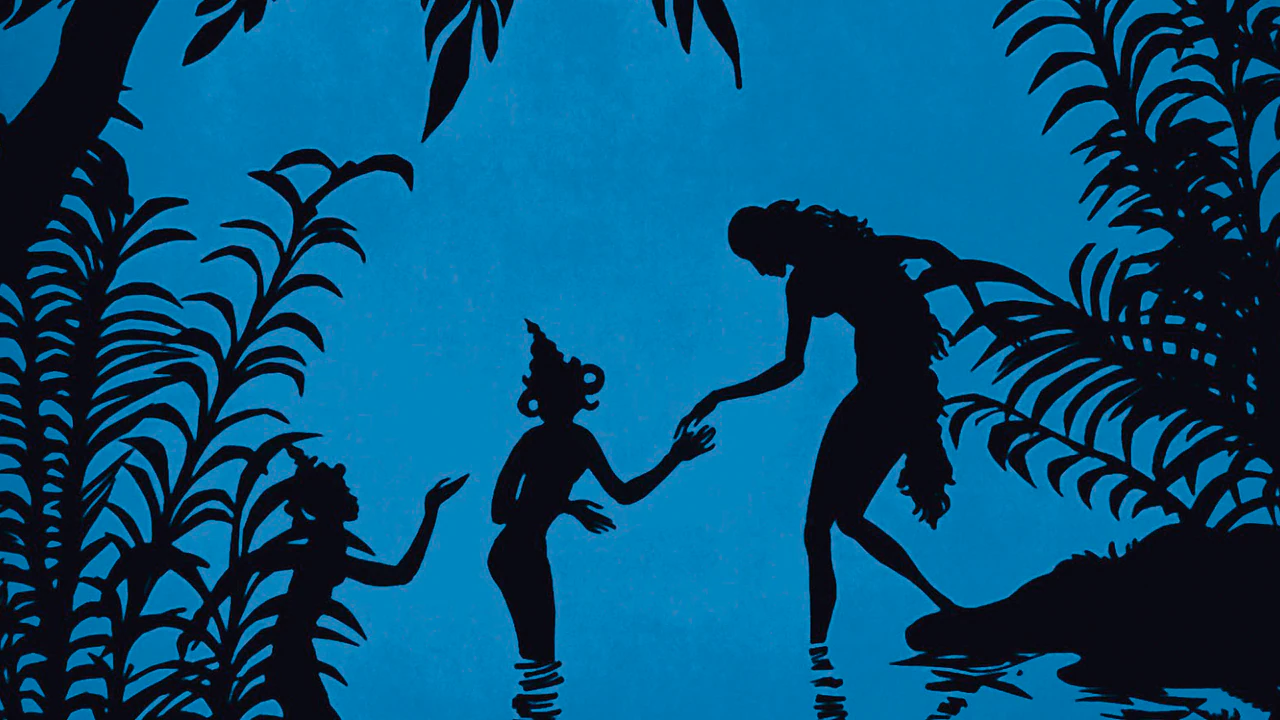
The history of animated cinema has an important milestone in the work of German filmmaker Lotte Reiniger. In 1926, she completed The Adventures of Prince Achmed, widely recognised as the oldest surviving animated feature film.
Reiniger worked with a team of six others over approximately three years to create the film. Instead of relying on the painted characters and backgrounds that later became common in animation, the filmmakers manipulated intricate cardboard cut-outs to produce elaborate silhouettes.
The result was a fantasy world populated by flying horses, enchanted kingdoms and shape-shifting sorcerers. Its visual language was distinctive, using the movement of carefully designed silhouettes to create an atmosphere of mystery and wonder.
The film was presented at a private premiere in Berlin, where audiences experienced a form of storytelling that demonstrated how animation could sustain a feature-length narrative. Its achievement was particularly significant because the production process demanded immense patience and precision.
At a time when animation was still developing as a cinematic medium, Reiniger demonstrated that illustrated movement could do much more than entertain audiences between live-action features. It could carry an entire story, create an imaginative universe and hold viewers’ attention over a full-length film.
Her contribution also highlights the important role women played in the development of animation. Reiniger’s work remains a landmark in film history, showing how artistic experimentation can establish possibilities that later generations of filmmakers continue to explore.
Why Animation Makes the Impossible Feel Real
One of animation’s greatest strengths is its ability to create characters and situations that do not have to obey the rules of the physical world. A character can stretch, disappear, change shape, fly or return to life without requiring the explanations that a live-action film might need.
But animation’s appeal is not limited to spectacle. It also allows audiences to connect emotionally with characters that may look nothing like human beings.
Film historian and professor emeritus Donald Crafton, of the University of Notre Dame in Indiana, argues that animation is connected to the human desire to identify with characters beyond our own species. In his book Shadow of a Mouse: Performance, Belief, and World-Making in Animation (2013), he explores how viewers project themselves onto animated figures and imagine what it might be like to inhabit their worlds.
This explains why audiences can become emotionally invested in a mouse, a robot, a talking animal or an imaginary creature. The character’s appearance may be fictional, but its fears, hopes, relationships and struggles can feel recognisably human.
Animated films have used this quality to explore subjects such as loneliness, belonging, family, survival and the desire for acceptance. By moving beyond realistic settings, filmmakers can sometimes approach familiar human concerns from unexpected perspectives.
How Up Turned Everyday Life Into an Emotional Story
Pixar’s Up (2009) offers a memorable example of animation’s emotional power. Its opening montage follows the relationship between two characters across the different stages of their lives, using a largely wordless sequence to communicate love, shared dreams, disappointment and loss.
The montage does not depend on elaborate dialogue to explain the relationship. Instead, small visual details, changing surroundings and the passage of time allow viewers to understand the emotional journey.
Its impact demonstrates that animation does not always need spectacular action or complex visual effects to make an impression. Sometimes, a carefully constructed sequence of ordinary moments can communicate more than an extended conversation.
From The Wild Robot to Flow
More recent animated films have continued to explore the relationship between non-human characters and deeply human experiences. The Wild Robot uses the story of a robot caring for a young gosling to explore connection, responsibility and the meaning of family.
Meanwhile, Flow (2024), directed by Latvian filmmaker Gints Zilbalodis, follows a cat and other animals navigating a flooded world that appears to have been abandoned by humans. The film uses the animals’ struggle for survival to explore uncertainty, cooperation, isolation and belonging.
These stories illustrate how animation can make audiences care about characters whose experiences are far removed from everyday human life. Their fictional worlds become a way of examining emotions and challenges that viewers recognise.
From Ancient Cave Drawings to the First Animated Experiments
Although animated feature films are a relatively recent development, the desire to represent movement through sequential images is much older. Human beings have used visual storytelling for thousands of years, creating images that communicate actions, events and stories across surfaces and spaces.
Ancient cave paintings, including depictions of animals such as galloping stags and boars, offer examples of early attempts to represent movement. Archaeological examples dating back around 30,000 BCE show that people were interested in capturing the appearance and behaviour of living creatures long before cinema existed.
Monuments, temples and historical structures also preserve visual narratives through sequences of images. These works were not animated films in the modern sense, but they demonstrate the longstanding human interest in telling stories through pictures.
During the 19th century, technological developments created new ways to experiment with the illusion of movement. Painted images, mirrors, lenses and optical devices allowed inventors to display sequences of pictures in ways that made still illustrations appear animated.
Émile Reynaud and the Rise of Projected Animation
French inventor Émile Reynaud was among the pioneers who brought moving illustrated stories to paying audiences. Using hand-painted images and a system involving mirrors, lenses and a lantern, he developed a way to project short animated narratives.
His work included Pauvre Pierrot (1892), a roughly 15-minute story about a love triangle set in a Paris courtyard. The film used around 500 hand-painted images, demonstrating how a sequence of individually created pictures could become a sustained visual performance.
Reynaud’s experiments helped establish the idea that audiences could gather to watch animated stories projected on a screen. They also provided an important link between earlier optical entertainment and the emerging Film Industry.
As cinema developed, new materials and production methods would make it possible to create longer and more elaborate animated works.
How Disney and Snow White Changed Animation Forever
A major transformation came with the use of transparent celluloid sheets, commonly known as cels. Before this development, artists often had to redraw large portions of a scene for each frame. Transparent cels allowed characters to be painted separately and placed over a background, reducing the need to recreate the entire image repeatedly.
This approach made animation production more manageable and helped studios organise the work among larger teams of artists. It did not remove the need for painstaking drawing, but it made the process more efficient.
Disney’s Snow White and the Seven Dwarfs (1937) became a defining achievement in the history of animated feature films. Its success demonstrated that audiences would embrace a full-length animated production as a major theatrical event.
The film’s production involved a large team of artists and specialists, including key animators, assistants, voice performers, musicians, composers and camera operators. Its creation took approximately three years and involved around 750 artists.
The commercial success of Snow White also helped Disney expand its specialised studio system. Animation could now be organised as a large-scale production process, with different teams responsible for distinct parts of the finished film.
Feature-length releases brought the possibility of theatrical revenue on a scale that short cartoons could not easily match. The film therefore helped establish animation as a significant part of the commercial film industry.
Its success also demonstrated an important reality: even when new techniques reduce repetitive work, creating an animated feature remains a labour-intensive undertaking.
From Mickey Mouse to Tom and Jerry: Animation Finds a Mass Audience
As animated filmmaking developed, studios introduced characters that would become familiar to generations of audiences. Short cartoons were commonly screened in theatres before the main feature, giving viewers regular opportunities to encounter new animated stories.
Disney’s Steamboat Willie (1928) marked the debut of Mickey Mouse and became an important moment in the studio’s history. Donald Duck followed in 1934, adding another distinctive personality to the growing collection of animated characters.
Other studios also created figures that became part of popular culture. Paramount’s Popeye appeared in 1933, while MGM introduced Tom and Jerry in 1940, created by William Hanna and Joseph Barbera.
Warner Bros. added another memorable pair with Wile E. Coyote and the Road Runner, whose cartoons began in 1949. Their comic encounters relied on exaggerated movement, timing and visual humour rather than lengthy dialogue.
These characters demonstrated how animation could develop its own recognisable styles. Some stories depended on music and expressive movement, while others used slapstick comedy, recurring visual jokes and exaggerated physical reactions.
Television Opens a New Chapter
From the 1950s onwards, television created another major audience for animated entertainment. Cartoons that had once been shown mainly in cinemas could now reach children and families at home.
This change expanded the role of animation in everyday entertainment. Instead of waiting for a theatrical screening, viewers could encounter animated characters through television programming and recurring broadcasts.
Television also helped establish animation as a familiar part of childhood across different generations. Characters that began in theatrical shorts could develop a longer life through repeated screenings and new productions.
How Japanese Animation Created a Distinctive Visual Language
Technological progress did not make traditional animation techniques disappear. Hand-drawn animation and stop-motion continued to develop alongside digital graphics and computer-generated imagery.
Japanese animation, in particular, demonstrated that visually compelling storytelling did not always require elaborate movement or the most expensive production methods. Studios working with limited resources developed distinctive approaches that placed emphasis on expressive characters, carefully composed scenes and meaningful pauses.
Suresh Eriyat, founder of Mumbai-based animation studio Eeksaurus, points to the way Japanese animators used fewer frames to create memorable scenes. Rather than relying on constant movement, they often made individual images more expressive and allowed moments to linger.
This approach shows that animation’s emotional impact is not determined simply by how much movement appears on screen. A quiet expression, a change in posture or an unhurried shot can communicate a character’s feelings just as effectively as a complex sequence.
Studio Ghibli remains an important example of the continuing relevance of hand-drawn animation. Films such as Kiki’s Delivery Service (1989) and When Marnie Was There (2014) demonstrate how detailed backgrounds, atmospheric settings and expressive character animation can create immersive worlds.
The popularity of such films as comforting viewing during the pandemic also highlighted animation’s ability to offer audiences a sense of escape and emotional familiarity during uncertain times.
Pixar, CGI and the New Possibilities of Animated Filmmaking
The arrival of digital graphics and computer-generated imagery transformed the way animation could be produced. Instead of relying exclusively on drawings or physical models, artists could create characters, environments, lighting and movement within digital systems.
Computer animation opened up new possibilities for complex textures, detailed environments and realistic visual effects. Snowflakes, water, reflections and other difficult elements could be constructed and manipulated digitally, giving filmmakers greater control over the appearance of their fictional worlds.
Pixar became one of the most recognisable names associated with computer-animated storytelling. Its films demonstrated that technological sophistication could work alongside emotional narratives, humour and character development.
Yet digital tools did not eliminate the creative work involved in animation. Artists still needed to design characters, develop performances, plan camera movements, create believable environments and make decisions about timing and storytelling.
The shift from hand-drawn animation to CGI therefore changed the tools available to filmmakers rather than removing the need for imagination and specialised skills.
Why Animated Films Remain Expensive to Produce
Despite advances in technology, animation continues to depend on skilled labour and detailed creative planning. Volker Helzle, a researcher and director of the Carl Laemmle Institute for Research and Media Innovation at Germany’s Filmakademie Baden-Württemberg, points out that animation still requires substantial human effort and imagination.
Each scene may involve several stages of work, from concept development and character design to modelling, movement, lighting, sound and final production. Even when digital tools make certain tasks faster, the overall process can involve large teams working over extended periods.
Some animated productions can cost upwards of $150 million, according to the industry discussion cited in the source material. Such budgets reflect the scale of work involved in producing elaborate feature films, although costs vary considerably between projects.
High production expenses have also influenced where studios choose to carry out their work. Moshe Mahler, an animator and associate teaching professor at Carnegie Mellon University, notes that more production work is being undertaken overseas, including by studios in India, where production can be carried out at lower costs.
This reflects the international nature of the animation business. Projects can involve creative and technical teams working across different countries, allowing studios to organise production according to available skills, budgets and resources.
AI Could Transform the Next Century of Animation
As animation enters its second century as a feature-film medium, generative artificial intelligence is emerging as a technology that could change how productions are developed and completed.
The global animation industry is estimated in the supplied material to be worth around $400 billion. With production costs remaining high, AI tools are attracting attention because they may help automate certain tasks and reduce the time required for parts of the creative process.
One example is Dear Upstairs Neighbors, an animated short directed by Connie He, who has worked on Inside Out 2 and Love, Death + Robots. Developed with researchers at Google DeepMind, the project was previewed at the Sundance Film Festival in January 2026.
The story follows a young woman who is desperate for a good night’s sleep but is repeatedly disturbed by noisy neighbours. The project offers an example of how AI research is being explored in an animation-production setting.
Major entertainment companies are also examining the possibilities. Netflix is building an AI animation studio, while Disney has said it is exploring the technology. Companies such as Fable Studios and Utopai Studios are also investigating alternative production models.
Could AI Reduce Animation Production Costs?
Supporters of AI-assisted production believe the technology could make animation faster and less expensive. In 2023, Jeffrey Katzenberg, CEO of DreamWorks Animation, suggested at a Bloomberg event in Singapore that AI could reduce the time and labour involved in production by as much as 90%.
Such a reduction would have significant implications if it could be achieved across substantial parts of the production process. It could change how studios plan projects, allocate budgets and organise creative teams.
However, a prediction about potential efficiency should not be confused with proof that every stage of animation can be automated to the same degree. Story development, artistic direction, character performance and emotional storytelling involve decisions that go beyond generating individual images or visual sequences.
The practical impact of AI will depend on how the tools develop, how studios adopt them and how creative professionals decide to use them.
Why AI Animation Has Divided the Creative Community
The possibility of AI-generated animation has also raised questions about artistic ownership and the value of human creativity. One major concern is that generative systems can produce images by learning from existing artwork, raising difficult questions about the use of artists’ work and the rights of creators.
Filmmaker Hayao Miyazaki has strongly criticised certain approaches to AI-generated animation, describing the approach as an insult to life itself. His reaction reflects a wider concern about whether automated systems can reproduce the thought, observation and personal expression that human artists bring to their work.
His son, Goro Miyazaki, offered a different perspective in an interview with Bloomberg in August, saying that Studio Ghibli was then neutral about using AI. The comments illustrate that even within the same creative family, views about the technology’s role can differ.
For animators, the debate is not simply about whether AI can produce an appealing image. It also concerns how creative labour is valued, whether artists retain control over their work and what happens to traditional skills if studios increasingly automate production.
Will Human-Made Animation Survive the AI Era?
Suresh Eriyat compares the future of human-led animation with the survival of handloom textiles after the introduction of power looms. Industrial production changed the textile industry, but handmade fabrics continued to be valued for their craftsmanship and distinctive qualities.
He suggests that animation could follow a similar path, with audiences continuing to appreciate films created through traditional human-led processes even as AI-assisted productions become more common.
The comparison raises an important question about how viewers will respond to an entertainment landscape containing both human-made and AI-generated animation. If automated tools make it possible to produce more content at lower costs, audiences may have a wider range of films to choose from.
At the same time, the value of a film is not determined only by how quickly or cheaply it was made. Artistic vision, emotional depth, memorable characters and the ability to tell a compelling story remain important parts of the viewing experience.
AI could become another tool in the animator’s creative process, just as digital graphics and CGI became part of the medium’s development. But the technology’s long-term role will depend on how it is used and whether studios can balance efficiency with creative independence.
From Prince Achmed to Pixar: A Century of Reinventing Imagination
The journey from Lotte Reiniger’s silhouette animation to Pixar’s digital worlds reflects a century of experimentation. Each major technological development has changed how filmmakers create movement, build characters and bring stories to the screen.
Yet the emotional foundations of animation have remained remarkably consistent. Audiences continue to respond to characters who experience love, loss, fear, hope and the search for belonging, whether those characters are human, animal, mechanical or entirely imaginary.
The medium has also shown that technological complexity is not the only measure of artistic achievement. A carefully drawn image, a quiet pause or a simple sequence can have an impact that elaborate visual effects cannot guarantee.
As AI enters the production landscape, animation faces another period of change. The coming years may bring new ways to create films, but the questions that have guided the medium for a century remain relevant: What makes a character memorable? How can an imaginary world feel real? And how does a story make audiences care?
From The Adventures of Prince Achmed to Snow White, Up, Studio Ghibli and Pixar, animation’s greatest achievement has been its ability to turn impossible images into deeply recognisable human experiences. Whatever tools shape its next chapter, that creative connection is likely to remain at the heart of the art form.
Correct animation history details Fix the 100-year timeline framing Tighten repetitive historical sections
For breaking news and live news updates, like us on Facebook or follow us on Twitter and Instagram. Read more on Latest Lifestyle on thefoxdaily.com.






COMMENTS 0