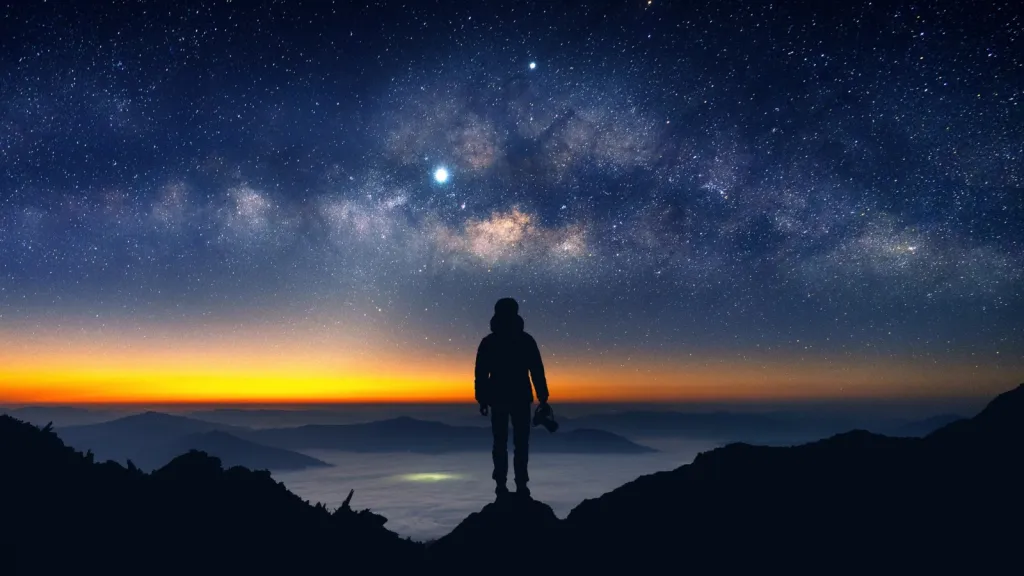
As urban areas expand and artificial lighting becomes an increasingly prominent part of modern life, truly dark night skies are becoming harder to find. Streetlights, illuminated buildings, vehicles and commercial spaces create light pollution that can obscure stars and other celestial objects. For travellers who want to experience the night sky in its natural splendour, dark sky reserves offer an opportunity to escape this constant illumination.
These protected destinations are recognised for the quality of their night skies and their efforts to control artificial lighting. Beyond offering memorable Stargazing experiences, they also promote environmental conservation, Astronomy education and responsible tourism. Some are located in remote deserts, while others encompass mountain ranges, forests and coastal landscapes.
For visitors, the appeal extends beyond simply looking at the stars. A night under a dark sky can reveal the Milky Way, familiar constellations, meteor activity and, under suitable conditions, celestial objects that are difficult to see from populated areas. Many reserves also provide access to observatories, guided astronomy experiences and outdoor activities during the day.
Here are five dark sky reserves around the world worth exploring for an unforgettable stargazing experience.
1. Aoraki Mackenzie International Dark Sky Reserve, New Zealand
Located on New Zealand’s South Island, the Aoraki Mackenzie International Dark Sky Reserve is one of the world’s most celebrated destinations for observing the night sky. Covering approximately 4,367 square kilometres, it includes Aoraki/Mount Cook National Park and the Mackenzie Basin. Its remote setting, expansive landscapes and efforts to limit artificial lighting contribute to its exceptional stargazing conditions.
On a clear night, visitors may be able to see the Milky Way stretching across the sky, alongside prominent constellations and numerous stars that are difficult to distinguish in brightly illuminated cities. The surrounding mountains and open landscapes also create a striking setting for night-sky photography.
The reserve’s appeal is not limited to its astronomical features. The region is also culturally significant to the Māori people, whose traditional knowledge connects the night sky with navigation, seasonal changes and cultural practices. Stars have long played an important role in understanding the natural world and travelling across the Pacific.
This connection between astronomy, landscape and cultural heritage gives the reserve a distinctive identity. Visitors interested in learning about the night sky can explore astronomy experiences in the wider region, while daytime activities include discovering the alpine environment and taking in views of Aoraki/Mount Cook.
What makes it worth visiting?
- Expansive views of the Milky Way and southern celestial objects.
- A large protected area with relatively limited artificial illumination.
- Opportunities to explore Māori astronomical knowledge and cultural heritage.
- Mountain scenery that complements nighttime observation and photography.
For travellers visiting New Zealand, Aoraki Mackenzie offers an opportunity to combine mountain exploration with an appreciation of the southern night sky.
2. NamibRand Nature Reserve, Namibia
In southwestern Namibia, the NamibRand Nature Reserve offers a very different kind of stargazing experience. Rather than mountains and alpine scenery, its setting is defined by vast desert landscapes, open horizons and a sense of isolation from heavily populated areas.
NamibRand is one of Africa’s largest private nature reserves. Its remote location and limited artificial lighting help preserve the darkness of the surrounding environment, making it an attractive destination for people interested in astronomy and night-sky photography.
One of the most memorable aspects of stargazing in a desert environment is the uninterrupted view of the sky. With relatively few sources of artificial light nearby, visitors can look upwards and observe stars against the expansive darkness. On suitable nights, the Milky Way can become a prominent feature, creating an impressive contrast with the desert landscape.
The reserve’s conservation work also extends beyond its night skies. Protecting natural habitats and wildlife is an important part of maintaining the region’s ecological character. Responsible lighting practices help reduce unnecessary disturbance to the natural environment while preserving the conditions that make the reserve special.
Visitors can experience open-air stargazing and enjoy the unusual combination of desert scenery and celestial observation. The experience is particularly appealing to travellers seeking a quieter alternative to conventional sightseeing destinations.
What makes it worth visiting?
- Remote desert surroundings with limited artificial lighting.
- Wide-open landscapes that provide an expansive view of the night sky.
- Opportunities for outdoor stargazing and astrophotography.
- A conservation-focused setting that combines wildlife protection with dark-sky preservation.
NamibRand is an appealing choice for travellers who want to experience the night sky in a landscape that feels far removed from urban life.
3. Kerry International Dark Sky Reserve, Ireland
For those who prefer coastal scenery and green landscapes, the Kerry International Dark Sky Reserve in Ireland offers a distinctive setting for stargazing. Situated on the Iveragh Peninsula in County Kerry, the reserve encompasses an area known for its mountains, rugged coastline and rural communities.
Its relatively low levels of artificial lighting allow visitors to experience a night sky that is considerably darker than those found in many populated parts of the country. When weather conditions are favourable, stargazers can observe constellations, individual stars and the Milky Way.
The landscape adds another dimension to the experience. Mountains and coastal surroundings create natural viewing locations, while the region’s rural character helps maintain a sense of separation from urban illumination. For photographers, the combination of a dark sky and dramatic terrain can provide opportunities to capture both celestial objects and the landscape beneath them.
Kerry also has an interesting connection with the history of astronomy. Ancient stone monuments in the wider region suggest that early inhabitants paid attention to celestial movements and the changing patterns of the sky. Although the precise purpose of individual monuments can vary, their presence offers a reminder that observing the heavens has been part of human life for thousands of years.
The reserve therefore offers more than a chance to see stars. It provides an opportunity to consider how people in earlier periods understood their surroundings through the movements of the Sun, Moon and stars.
What makes it worth visiting?
- Dark skies across a scenic coastal and mountainous region.
- Opportunities to observe the Milky Way and prominent constellations.
- Historical connections with ancient monuments and celestial observation.
- A combination of stargazing, rural exploration and coastal travel.
Kerry is particularly attractive to visitors who want to combine astronomy with a broader journey through Ireland’s natural and historical landscapes.
4. Mont-Mégantic International Dark Sky Reserve, Canada
Located in Quebec, Canada, the Mont-Mégantic International Dark Sky Reserve holds a special place in the history of dark-sky conservation. Designated in 2007, it was the world’s first International Dark Sky Reserve, helping establish an approach to protecting exceptional night skies through coordinated conservation and lighting policies.
The reserve is centred around Mont-Mégantic and is known for its astronomical observatory. Its designation reflects efforts to reduce light pollution and preserve conditions that allow people to observe celestial objects more clearly.
One of the distinctive features of Mont-Mégantic is the involvement of surrounding municipalities in controlling artificial lighting. Outdoor lighting regulations and responsible illumination practices help limit unnecessary brightness, demonstrating how communities can work together to protect the night sky.
The region also offers an educational dimension through its observatory and astronomy-related facilities. Visitors can learn about celestial objects, astronomical observation and the importance of dark skies. This makes the destination suitable for both experienced astronomy enthusiasts and people who are discovering stargazing for the first time.
During the day, the surrounding mountain environment provides opportunities to explore the landscape. Visitors can combine an astronomy-focused visit with outdoor activities and time in the natural surroundings.
What makes it worth visiting?
- Recognition as the world’s first International Dark Sky Reserve in 2007.
- An astronomical observatory that supports learning and observation.
- Regional efforts to control artificial lighting and reduce light pollution.
- Mountain scenery and opportunities for outdoor exploration.
Mont-Mégantic is an especially interesting destination for travellers who want to understand how astronomy, scientific education and local conservation efforts can work together.
5. Central Idaho Dark Sky Reserve, USA
In the United States, the Central Idaho Dark Sky Reserve offers an opportunity to experience naturally dark skies in a remote wilderness setting. Its rugged terrain, low population density and limited infrastructure help preserve the darkness that makes the region attractive to stargazers.
One of the places visitors can explore is Stanley Lake, where the surrounding mountains provide a dramatic backdrop for observing the night sky. Away from significant sources of artificial illumination, the area can offer impressive views of stars and constellations when the weather and visibility conditions are favourable.
The reserve is also appealing because it allows travellers to combine nighttime astronomy with a wide range of outdoor activities. During daylight hours, visitors can explore the region through hiking, backpacking and horseback riding. This makes it a suitable destination for people who enjoy wilderness travel as much as looking at the stars.
Its remote character is an important part of the experience. Unlike destinations built around large visitor centres or extensive urban infrastructure, Central Idaho offers a more wilderness-oriented setting. Travellers should therefore plan their visits carefully, particularly when considering accommodation, transport, weather conditions and access to viewing locations.
For photographers and astronomy enthusiasts, the combination of mountain silhouettes and a dark sky can create memorable opportunities. However, the quality of any stargazing experience depends on factors such as cloud cover, atmospheric conditions, Moon brightness and the time of year.
What makes it worth visiting?
- Remote wilderness landscapes with limited artificial lighting.
- Stargazing opportunities around locations such as Stanley Lake.
- Mountain views that create an impressive setting for night-sky photography.
- Daytime activities including hiking, backpacking and horseback riding.
Central Idaho is a strong option for travellers who want a combination of wilderness adventure and opportunities to observe the night sky.
Why are dark sky reserves important?
Dark sky reserves are valuable not only because they offer beautiful views of the stars but also because they help protect an increasingly threatened natural resource: darkness. Artificial lighting has become widespread in residential areas, commercial districts, roads and industrial spaces. Although outdoor lighting supports visibility and safety, poorly directed or excessive illumination can brighten the night sky far beyond the areas where it is needed.
This phenomenon, known as light pollution, affects how people experience the night sky. It can make faint stars and celestial objects difficult to see, limiting opportunities for amateur astronomy and scientific observation.
Artificial light can also influence wildlife. Many animals rely on natural patterns of daylight and darkness for feeding, movement, reproduction and navigation. Excessive nighttime illumination can interfere with these behaviours, particularly for species that are active after sunset or use natural light cues to move through their habitats.
Dark-sky protection therefore has benefits that extend beyond astronomy. By encouraging better lighting practices, these reserves support efforts to preserve natural habitats, reduce unnecessary illumination and maintain the character of nighttime environments.
How to plan a dark sky stargazing trip
Visiting a dark sky reserve does not automatically guarantee a perfect view of the stars. Weather, seasonal conditions, Moon phases and local access arrangements can all influence the experience. A little preparation can make a significant difference.
Choose a night with favourable conditions
Clear skies are essential for stargazing. Before travelling, check the local weather forecast and look for nights with minimal cloud cover. The Moon’s brightness also matters: a bright full Moon can make faint stars and parts of the Milky Way harder to see. Travellers hoping to observe fainter celestial features may prefer dates closer to the new Moon.
Allow your eyes to adjust to darkness
Human eyes need time to adapt to low-light conditions. Avoid looking directly at bright phone screens, vehicle headlights or torches while observing the sky. If you need a light source, use a suitable low-intensity red light where permitted, as it is generally less disruptive to night vision than bright white light.
Check local rules and guided experiences
Some reserves have designated viewing areas, observatory programmes or guided astronomy activities. Check official visitor information before arriving, including opening hours, access restrictions, booking requirements and seasonal arrangements. Visitors should also respect private property, protected habitats and any rules governing night-time access.
Dress appropriately and prepare for outdoor conditions
Stargazing often involves spending extended periods outdoors without much movement. Even in warmer destinations, temperatures can fall after sunset. Carry suitable clothing, water and any essential equipment, and plan transport carefully if visiting remote locations after dark.
Practise responsible lighting
One of the simplest ways to support dark-sky conservation is to avoid unnecessary artificial light. Keep torches pointed towards the ground, switch off lights when they are not needed and follow local guidance. Visitors should also avoid disturbing wildlife or leaving waste behind.
More than a view of the stars
Dark sky reserves offer a rare opportunity to experience the night as part of the natural environment rather than as a backdrop to artificial illumination. Whether it is the mountains of New Zealand, the deserts of Namibia, the coastline of Ireland, the observatory landscape of Canada or the wilderness of Idaho, each destination offers a different way to appreciate the night sky.
These places also demonstrate that protecting darkness requires more than choosing a remote location. Conservation initiatives, responsible outdoor lighting and community participation all contribute to preserving the conditions that make stargazing possible.
For travellers, a visit to a dark sky reserve can become more than another sightseeing stop. It can offer a chance to slow down, look beyond the immediate landscape and reconnect with the stars that have guided human curiosity and exploration for generations.
Disclaimer: Stargazing conditions vary depending on weather, season, Moon phase and local light levels. Visitors should check current access arrangements and official guidance before planning a trip.
For breaking news and live news updates, like us on Facebook or follow us on Twitter and Instagram. Read more on Latest Lifestyle on thefoxdaily.com.



COMMENTS 0