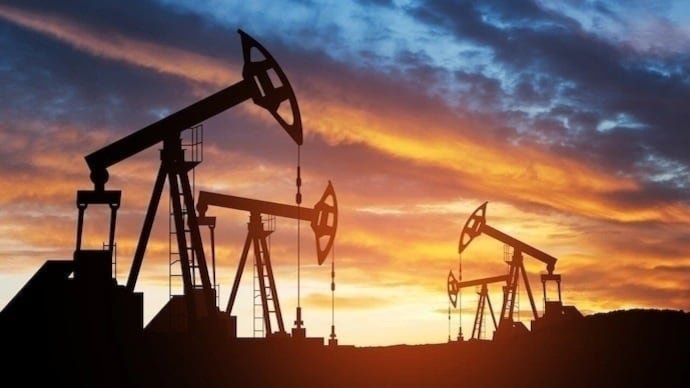
Asian Markets fell on Thursday as Oil Prices remained above $100 a barrel, extending a global bout of risk aversion triggered by the escalating conflict between the United States and Iran. Wall Street had ended lower in the previous session, while higher energy costs and rising US Treasury yields added to concerns that inflation could remain stubborn for longer.
Brent crude, the international oil benchmark, jumped 3.4 per cent on Wednesday and moved above the psychologically important $100 level for the first time since July. It eased slightly in early Asian trading but remained close to $101 a barrel as investors assessed the impact of continuing attacks and disruptions around the Strait of Hormuz.
The market reaction highlights how quickly a geopolitical shock can spread from the energy sector into equities, bonds, currencies and ultimately household budgets. With major central banks already watching inflation carefully, a prolonged oil shock could complicate decisions on interest rates and keep borrowing costs elevated.
Asian stocks retreat as oil stays above $100
Most major Asian benchmarks moved lower on Thursday as investors responded to the combination of geopolitical uncertainty, higher energy prices and weaker US equities.
Japan’s Nikkei 225 fell 0.8 per cent to 64,597.46, while South Korea’s Kospi declined 0.9 per cent to 6,989.06. Hong Kong’s Hang Seng dropped 1.4 per cent to 24,932.95, and the Shanghai Composite slipped 0.3 per cent to 3,939.43.
Australia’s S&P/ASX 200 lost 1.5 per cent to 8,774.50, making it one of the weaker major markets in the region. Taiwan’s Taiex also fell 0.8 per cent.
The declines show that investors are increasingly treating the oil shock as a wider economic problem rather than simply a temporary disruption confined to energy companies.
US stock futures were modestly higher early Thursday, but the overnight recovery was not enough to remove concerns created by the previous day’s losses.
Wall Street retreats as energy costs reshape market expectations
On Wednesday, the S&P 500 fell 0.5 per cent, the Dow Jones Industrial Average declined 0.8 per cent, and the Nasdaq Composite lost 0.6 per cent. All three major US indexes were heading toward weekly losses.
Oil prices were a central driver of the session because higher crude prices can affect almost every part of the Economy. Energy becomes more expensive for transport companies, manufacturers, airlines, retailers and households, while businesses often pass at least some of those increases to consumers.
The market also showed a clear divide between sectors. Every sector in the S&P 500 declined except energy, which benefited directly from the jump in crude prices.
Exxon Mobil gained 2.2 per cent, while Chevron rose 1.9 per cent. By contrast, retail-related companies came under pressure. Amazon fell 1.8 per cent, Starbucks lost 1.9 per cent and Home Depot declined 1 per cent.
That contrast is important because it illustrates how an oil shock can redistribute market gains rather than simply push every asset lower. Producers can benefit from stronger commodity prices, while companies and consumers facing higher operating costs may experience margin pressure.
Why oil has climbed above $100
The immediate catalyst is the intensifying US-Iran Conflict and the effect of military attacks on oil transportation through the Gulf.
The Strait of Hormuz is one of the world’s most important energy chokepoints. Before the war began, a large share of global oil and gas shipments passed through the narrow waterway. Continued attacks have sharply reduced traffic, raising fears that the disruption could last rather than being resolved quickly.
On Tuesday, the United States destroyed five Iranian tankers in a series of attacks. Iran later claimed it had attacked 10 ships around the strategic waterway in retaliation. The competing military actions have increased uncertainty for tanker operators, traders and energy companies.
The result has been a stronger risk premium in oil prices. Traders are no longer focused only on current production volumes. They are also pricing the possibility of additional disruptions, longer Shipping routes, damaged Infrastructure and further military escalation.
Trump says oil prices may stay high through the midterm elections
US President Donald Trump said Wednesday that oil prices were unlikely to fall until after the US midterm elections. The comment adds a political dimension to an already serious economic problem.
Higher fuel costs are highly visible to voters because they affect daily travel, transport and household spending. A sustained period of expensive gasoline and diesel could therefore become an economic and political liability for the administration.
The timing is also significant because the conflict has already lasted for months. Investors are increasingly concerned that the disruption may be structural for the energy market rather than a brief spike caused by a single military event.
Fuel prices are already hitting American households
The rise in crude prices is moving beyond financial markets and into the real economy.
US gasoline prices have climbed to about $4.22 a gallon, roughly 32 per cent above the level a year earlier. Diesel has become an even bigger concern for businesses because it is widely used in freight transportation, shipping, agriculture and industrial activity.
The average US diesel price reached about $5.94 a gallon overnight and remained above its earlier levels.
These increases matter because fuel is an input into the entire supply chain. A higher diesel bill raises the cost of moving goods from factories and ports to warehouses and stores. That can eventually raise the price of food, manufactured products and other consumer goods even when crude oil itself accounts for only part of the final price.
This is why markets often react to oil shocks before inflation data fully reflects them. Investors understand that energy costs can move through the economy with a lag.
Inflation was already a problem before the latest oil shock
The latest energy surge is particularly uncomfortable because inflation was already proving difficult to bring under control in the United States.
The US economy had been dealing with price pressures linked to trade restrictions and higher costs before the latest escalation with Iran. Another sharp increase in energy prices risks making that challenge harder.
The Producer Price Index for August was due on Thursday, offering a reading on the prices businesses pay for goods before they reach consumers. The Consumer Price Index for August was scheduled for Friday and is more directly connected to household inflation.
The latest data were expected to show inflation remaining above 3 per cent, well above the Federal Reserve’s 2 per cent target.
For investors, the concern is not simply that inflation may rise in one month. The bigger issue is whether higher energy and transportation costs become embedded across the broader economy and prevent inflation from returning to the central bank’s target as quickly as expected.
Oil prices create a difficult problem for the Federal Reserve
Higher oil prices can complicate monetary policy because they create a difficult balance between inflation control and economic growth.
If energy prices push inflation higher, the Federal Reserve may have less room to reduce interest rates. Higher rates, in turn, can slow borrowing, investment, housing activity and consumer demand.
That creates an uncomfortable chain reaction: geopolitical conflict raises oil prices, expensive energy increases inflation, inflation keeps monetary policy tighter, and tighter financial conditions weigh on economic activity.
Investors therefore watch crude oil not only as a commodity but also as a signal for what central banks might do next.
Rising Treasury yields add another layer of pressure
Stocks were also pressured by higher US Treasury yields during Wednesday’s session.
The US Treasury Department said it would buy back up to $6 billion in long-term debt. The announcement followed a plan outlined in August for a relatively large buyback intended in part to manage market conditions and address pressure from rising yields.
However, Treasury yields moved higher after the latest announcement. The benchmark 10-year yield remained close to 4.84 per cent.
Higher bond yields matter for equity investors because they increase the return available from relatively lower-risk government securities. They can also raise borrowing costs for companies and households.
For growth-oriented companies, higher yields can be particularly uncomfortable because investors often place a lower value on future earnings when interest rates rise.
The oil shock could spread through shipping and manufacturing
The consequences of the Strait of Hormuz disruption extend beyond crude oil itself.
Shipping companies face greater operational and insurance risks when commercial traffic passes through a conflict zone. If vessels are diverted or voyages become more expensive, the cost of transporting goods rises.
Manufacturers can then face a double pressure: higher fuel costs and more expensive logistics. Businesses may respond by raising prices, reducing production or delaying investment.
The effect can be particularly significant for economies that import large quantities of crude oil. Currency depreciation can amplify the impact because a weaker local currency makes dollar-priced oil even more expensive in domestic terms.
That is one reason oil-related geopolitical shocks can affect countries differently even when they face the same global crude price.
Energy stocks provide one of the few bright spots
While most sectors came under pressure, energy companies benefited from the strongest part of the market’s immediate reaction.
Higher crude prices can improve revenue expectations for producers when production volumes remain stable. This helps explain why shares of major oil companies rose while consumer-facing businesses declined.
However, even energy stocks are not immune to a prolonged crisis. If higher prices eventually weaken global economic activity enough to reduce fuel demand, producers can face a different set of pressures.
The market is therefore not simply betting on higher oil prices. It is trying to determine whether the price shock will remain temporary or become a sustained drag on global growth.
Meta’s AI launch offers a reminder that markets remain selective
Amid the broader weakness, some companies continued to attract strong investor interest for company-specific reasons.
Meta Platforms rose 6.6 per cent after the parent company of Facebook and Instagram launched a personal artificial intelligence agent called Muse for users aged 18 and above. The tool is intended to assist with everyday activities such as scheduling and shopping.
The gain highlights an important feature of the current market: geopolitical risk does not eliminate interest in technology and artificial intelligence. Investors can still reward companies when they see strong potential in new products, even while the broader market is under pressure.
That creates a more complicated picture than a simple risk-off selloff. Capital continues to move toward businesses that investors believe can deliver growth despite higher costs and uncertain economic conditions.
Currency markets reflect growing uncertainty
Currency trading was relatively subdued but still reflected the broader shift in market sentiment.
The US dollar slipped slightly to about 153.42 Japanese yen from 153.54 yen, while the euro edged higher to around $1.1640 from $1.1632.
Currency markets are particularly sensitive to changes in interest-rate expectations and geopolitical risk. If investors expect US rates to remain higher because of inflation, the dollar can receive support. But shifts in risk appetite and safe-haven demand can produce competing forces.
That makes the currency market another indicator investors are watching alongside crude oil and Treasury yields.
What investors are watching next
The immediate focus is on whether oil can remain above $100 and how long disruptions around the Strait of Hormuz continue.
Investors will also be looking closely at the latest US inflation data. A stronger-than-expected reading would reinforce fears that higher energy costs are feeding into broader prices, while a softer reading could provide some relief.
At the same time, Treasury yields will remain important. The combination of expensive oil and higher borrowing costs is more damaging to markets than either factor alone because both can constrain corporate profitability and consumer spending.
The geopolitical picture remains the biggest variable. Any credible reduction in military tensions could quickly remove some of the risk premium from crude prices. Further attacks, additional shipping disruptions or damage to energy infrastructure could have the opposite effect.
Why the $100 oil threshold matters
Oil crossing $100 a barrel is significant not simply because it is a round number, but because it changes how investors think about inflation and economic risk.
At lower prices, a temporary geopolitical spike can often be absorbed by businesses and consumers. Sustained triple-digit crude prices are different because they can influence transportation, manufacturing, food distribution and household spending at the same time.
That is why Thursday’s decline in Asian markets should be viewed as part of a broader financial reaction rather than an isolated regional selloff.
For now, the market is caught between two competing forces. Energy prices are rising because the global supply outlook has become more uncertain, while higher inflation expectations are pushing up bond yields and making investors more cautious about stocks.
Unless tensions around the Strait of Hormuz ease and oil flows begin returning toward normal levels, the pressure is likely to remain visible across global markets. The next phase of the US-Iran conflict could therefore determine not only the direction of crude prices, but also how investors assess inflation, interest rates and economic growth in the months ahead.
For breaking news and live news updates, like us on Facebook or follow us on Twitter and Instagram. Read more on Latest World on thefoxdaily.com.






COMMENTS 0