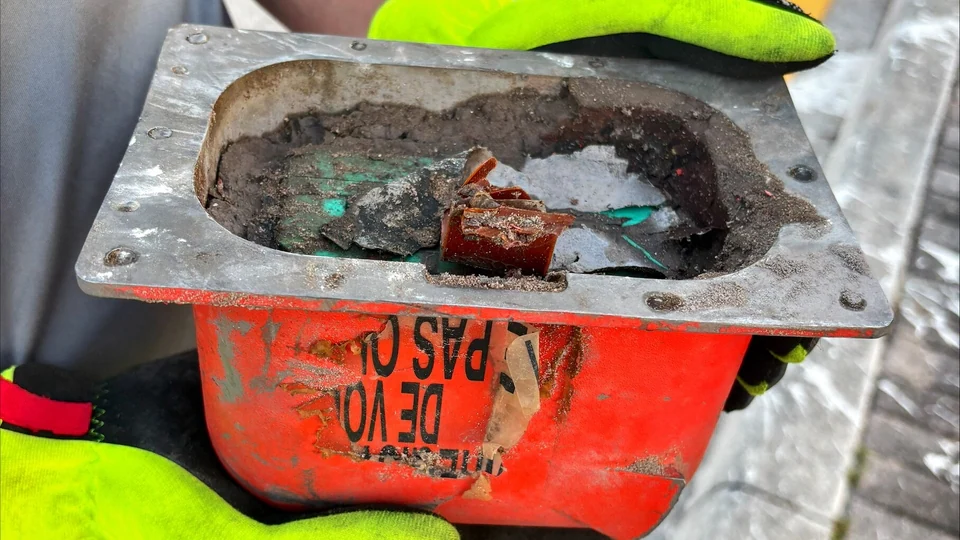
Investigators have recovered the cockpit voice recorder from a business jet that crashed in Florida last week, killing all nine people aboard. The National Transportation Safety Board (NTSB) said Monday that the device was found at the crash site in Greenacres, where the Bahamas-bound Learjet 60 struck the ground and erupted into flames on November 1.
The recovery could provide investigators with an important source of evidence as they work to establish what caused the aircraft to lose control. If the recorder’s data remains intact and can be retrieved, it may reveal conversations between the pilots during the flight, including their reactions to severe turbulence, ice formation and the aircraft’s changing flight conditions.
However, investigators have not yet confirmed whether the recorder was functioning during the flight or whether the crash damaged its internal components. The device is being evaluated at a laboratory in Washington, where specialists will determine whether usable information can be recovered.
NTSB Recovers Cockpit Voice Recorder at Florida Crash Site
The NTSB announced the recovery of the cockpit voice recorder in a statement posted on social media. The device was located at the site where the Learjet crashed in Greenacres, Florida, on November 1.
Images released by the agency show an investigator holding the recorder, which is housed inside an orange-painted metal casing. The device is designed to preserve cockpit audio, including communications between pilots and other sounds that may help reconstruct the final stages of a flight.
The recorder’s condition is now a major focus for investigators. Although its external casing appeared to be in relatively good condition in photographs, its appearance alone cannot establish whether the internal recording system survived the impact or whether it captured the accident flight.
The NTSB is evaluating the device at a Washington laboratory. The agency has not announced whether the data has been successfully retrieved.
Why the Cockpit Voice Recorder Could Be Crucial to the Investigation
The cockpit voice recorder could help investigators understand how the pilots responded as the Learjet encountered increasingly difficult weather conditions. If the recordings are recoverable, they may provide details about cockpit conversations, warnings, decisions and the crew’s assessment of the aircraft’s behaviour.
Investigators are particularly interested in the reported turbulence and ice formation during the flight. The co-pilot told air traffic controllers that the aircraft was being thrown up and down by more than 700 feet, or approximately 213 metres. She also requested a better route through the weather.
These communications indicate that the crew was experiencing serious difficulties before the crash. However, air traffic control recordings cannot necessarily reveal everything that happened inside the cockpit. A functioning voice recorder could provide additional information about the pilots’ discussions and their understanding of the developing emergency.
The recordings could also help clarify the sequence of decisions made as the aircraft encountered storm activity. Investigators are examining why the Learjet appeared to steer around a large storm cell before heading directly towards a smaller storm system that was rapidly developing.
Understanding the aircraft’s route, the weather conditions and the pilots’ responses will be important in determining how the flight progressed towards the fatal impact.
Aviation Expert Says Recorder’s Data May Have Survived
Aviation safety expert Jeff Guzzetti told The Associated Press that photographs released by the NTSB suggested the recorder’s external casing was in reasonably good condition.
He said it was plausible that information stored on the device had survived the crash. Recovering the data, if it belongs to the accident flight, could significantly assist investigators in reconstructing the final moments of the aircraft.
However, the condition of the casing does not guarantee that the recorder was operational. Guzzetti pointed to a previous investigation involving a medical transport aircraft that crashed in Philadelphia in January 2025, killing seven people.
In that case, the NTSB recovered a cockpit voice recorder that was subsequently found to have likely not been functioning for several years. The example illustrates why investigators must establish both whether a recorder was working during a flight and whether its stored information can be recovered after an accident.
The Florida investigation faces the same basic questions. Even if the recorder appears physically intact, specialists must determine whether it contains usable audio from the Learjet’s final flight.
Severe Turbulence and Ice Formation Before the Learjet Crash
Severe weather is an important part of the investigation into the November 1 crash. Information from air traffic control indicates that the aircraft encountered significant turbulence before the accident.
The co-pilot reported that the plane was moving up and down by more than 700 feet. She asked controllers for a better route through the area, suggesting that the flight crew was attempting to navigate difficult conditions.
The source information also indicates that ice formed on the aircraft’s wings. Ice accumulation can be an important aviation safety concern because it can affect the aerodynamic characteristics of an aircraft. Investigators will need to examine the available evidence before determining what role, if any, icing played in the accident.
The cockpit voice recorder may help establish what the pilots observed and discussed as conditions changed. Investigators will also need to compare any recovered audio with other evidence, including air traffic control communications, aircraft records and physical findings from the crash site.
At this stage, the reported weather conditions are important investigative factors, but they do not by themselves establish the cause of the crash.
Witness Videos Captured the Learjet’s Final Moments
Witnesses recorded dramatic video showing the business jet plunging nose-first towards the ground. The footage provides visual evidence of the aircraft’s final descent, while air traffic control transmissions capture communications between the crew and controllers before the impact.
These recordings could help investigators establish the aircraft’s movements and the timing of the emergency. However, they cannot provide a complete explanation of what happened inside the cockpit or identify every factor that contributed to the crash.
The cockpit voice recorder could fill some of those gaps if its data is successfully recovered. Investigators may be able to compare the pilots’ conversations with the timing of the aircraft’s movements and the communications already available from air traffic control.
Combining these sources could help establish a more detailed sequence of events. The NTSB will need to examine the evidence as a whole rather than rely on any single recording or witness account.
Aircraft Tail Components Found More Than a Mile From Main Crash Site
Investigators have also identified physical evidence indicating that the Learjet began breaking apart before it struck the ground.
Pieces of an important component in the aircraft’s tail, known as the elevator, were discovered more than a mile away from the main crash crater. The elevator helps control an aircraft’s pitch, which determines whether its nose moves upwards or downwards.
The discovery of these components away from the main impact area indicates that parts of the aircraft separated before the final collision with the ground.
Investigators will need to examine the recovered pieces to establish when and how the separation occurred. They will also assess whether structural damage, flight-control problems, weather conditions or other factors contributed to the aircraft’s loss of control.
The physical evidence could be particularly important when compared with information from the cockpit voice recorder, air traffic control communications and other aircraft data. Together, these findings may help investigators reconstruct the aircraft’s condition during the final stages of the flight.
Investigators to Examine Maintenance Records and Interview Flight Operator
The NTSB investigation will extend beyond the crash site and the recovered recorder. Investigators plan to review the aircraft’s maintenance records and examine whether it had experienced any previous mechanical or operational problems.
Maintenance records can help establish the aircraft’s service history, including inspections, repairs and reported defects. This information may help investigators determine whether any technical issues existed before the flight.
Investigators will also interview officials at Upper Jets, the company that operated the flight. Their inquiries will include people connected with the aircraft’s operation and the circumstances surrounding its departure.
Air traffic controllers who communicated with the Learjet will also be interviewed. Their accounts may help clarify the information available to the crew, the requests made during the flight and the sequence of communications before the crash.
The investigation will also involve people working at the airport in Austin, Texas, from where the aircraft departed. Examining the flight’s departure and operational background will form part of the broader effort to establish what happened.
How Long Will the NTSB Take to Complete the Investigation?
Completing an aircraft accident investigation can take considerable time, particularly when investigators must examine several possible contributing factors.
According to the information provided by the NTSB, investigations generally take between 12 and 18 months to complete. More complicated cases can take longer, depending on the amount of evidence that needs to be collected and analysed.
The agency has approximately 400 employees working on more than 1,200 active investigations. These cases require investigators to examine evidence, review technical records, interview witnesses and analyse information from different sources.
In the Florida Learjet crash, the recovery of the cockpit voice recorder is an important development, but it does not mean the investigation is close to completion. The device must first be evaluated, and any recovered recordings will need to be assessed alongside the aircraft wreckage, weather information and maintenance history.
Investigators must also establish whether the recorder was operating during the flight. If it was not functioning or its data cannot be recovered, the NTSB will have to rely more heavily on other available evidence.
What Investigators Still Need to Establish
Several important questions remain unanswered following the fatal crash. The immediate priority is to determine whether the cockpit voice recorder contains usable information from the Learjet’s final flight.
Investigators will also need to establish how the aircraft responded to the severe weather, what role turbulence and ice formation may have played, and why the flight’s route brought it towards a rapidly developing storm system.
The discovery of elevator components more than a mile from the main crash site adds another important area of investigation. Specialists will examine the evidence to understand when the aircraft began breaking apart and what caused the components to separate.
Maintenance records, interviews with Upper Jets officials, air traffic controllers and airport personnel will provide additional information about the aircraft and its operation.
No final cause of the crash has been established in the information released so far. Investigators will need to complete their technical examinations before reaching conclusions about the factors that led to the loss of all nine people aboard.
Florida Learjet Crash Investigation: What Happens Next?
The recovery of the cockpit voice recorder marks a significant step in the investigation into the Learjet 60 crash in Greenacres. If its recordings survived, they could help explain the pilots’ actions and the aircraft’s behaviour as it encountered severe weather before plunging to the ground.
For now, the device remains under evaluation at an NTSB laboratory in Washington. Investigators will continue examining the aircraft’s wreckage, flight communications, maintenance history and the circumstances surrounding its departure from Austin, Texas.
The investigation is expected to take months, with a typical NTSB timeline of 12 to 18 months and the possibility of a longer process if the case proves particularly complicated. Until the evidence has been fully analysed, the precise circumstances behind the crash and the deaths of all nine people aboard remain under investigation.
For breaking news and live news updates, like us on Facebook or follow us on Twitter and Instagram. Read more on Latest World on thefoxdaily.com.





COMMENTS 0