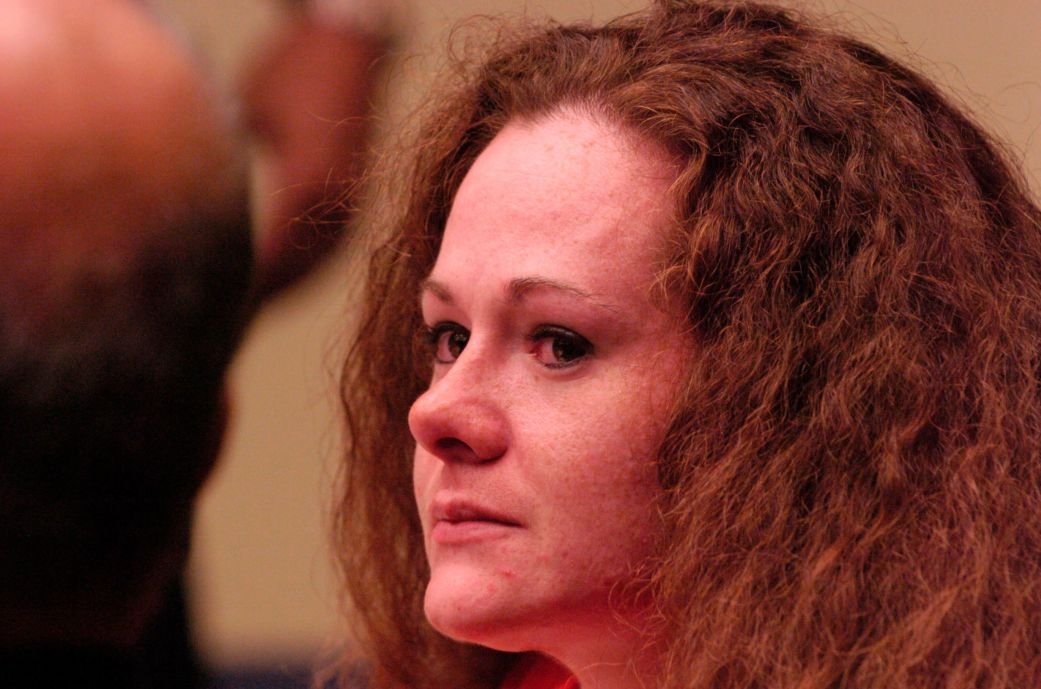
Christa Pike’s case has entered an unprecedented chapter in the history of capital punishment in the United States. After spending nearly three decades on Tennessee’s death row for the 1995 murder of 19-year-old Colleen Slemmer, Pike was scheduled to become the first woman executed by the state in approximately 200 years. However, the lethal injection attempt on September 30, 2026, did not proceed as intended.
The 50-year-old survived two doses of pentobarbital, the drug Tennessee uses for lethal injections, and was taken unconscious to a Nashville-area hospital. She remained there for more than a week before returning to prison on October 10. Her survival has raised serious questions about the execution procedure, the medical response inside the prison and whether the state can legally attempt to execute her again.
The case has also renewed scrutiny of Tennessee’s Death Penalty system. State officials ordered an independent review, the next scheduled execution was halted, and Pike’s lawyers began preparing a legal challenge against another attempt. The circumstances have placed the reliability and administration of lethal injection under renewed examination.
On October 30, Pike made her first public comments since the failed execution, describing continuing physical and psychological pain. Her statement offered a glimpse into the aftermath of an event she had expected would end her life.
Christa Pike Case: What Happened After the Failed Execution?
The failed execution has left several important questions unresolved. Tennessee officials have maintained that the execution team followed the state’s established procedure, including the provision for administering a second dose of pentobarbital if an inmate survives the first. However, the protocol reportedly did not explain what should happen if the second dose also fails.
Pike’s attorneys have argued that problems establishing intravenous access may have prevented the drug from entering her bloodstream as intended. They have also raised concerns about the condition of her veins and the possibility that the medication entered surrounding tissue instead.
These competing accounts are central to the investigation and the legal proceedings that followed. The state must determine what happened during the procedure, while Pike’s legal team is expected to argue that another execution attempt would raise constitutional and medical concerns.
Timeline of Christa Pike’s Case
October 30, 2026: Pike speaks publicly about pain and isolation
One month after Tennessee attempted to execute her, Pike issued her first public statement through her attorneys. She said she had prepared herself to die but instead regained consciousness in a hospital, confused and in pain.
In the statement, Pike described spending much of the preceding month isolated in the prison’s medical ward. She said the separation from other people and the loss of ordinary human connections had created an additional source of suffering.
Pike also compared her current circumstances with the years she had spent in solitary confinement. According to her statement, the isolation following the failed execution brought back experiences associated with her long imprisonment.
Her comments added a personal dimension to the continuing debate over the execution attempt. While officials and lawyers have focused on the procedure, medical questions and constitutional issues, Pike’s statement highlighted the psychological consequences of surviving an event she believed would be fatal.
October 22, 2026: Attorney raises concerns about damaged veins
Pike’s attorney, Randy Spivey, submitted a detailed account of the execution attempt in a court filing. He said members of Tennessee’s execution team had indicated that some of Pike’s veins may have ruptured or “blown” while they were trying to establish intravenous access.
The allegation is significant because lethal injection depends on delivering the drugs into the bloodstream through a functioning IV line. If an IV is incorrectly placed or fails during administration, the medication may not reach the circulatory system in the intended way.
Pike’s legal team has maintained that difficulties with the IV lines could explain why the two injections did not produce the expected result. The precise medical circumstances, however, remain a matter for investigation and legal examination.
October 13, 2026: Emergency response procedures come under scrutiny
The Nashville Department of Emergency Communications said it followed standard procedures after receiving a 911 call from the maximum-security prison on the night of the attempted execution.
According to the department, emergency responders were sent to stage in the area while dispatchers worked to verify the situation. Officials explained that calls originating from the prison require a verification code, a safeguard intended to prevent false emergency reports and possible escape-related disruptions.
The caller did not provide the required code, officials said. The explanation brought attention to the communication procedures that apply when an emergency occurs inside a correctional facility.
The issue became particularly important because Pike had reportedly been experiencing serious medical distress after the execution drugs were administered. Questions about how quickly outside medical assistance was requested and dispatched became part of the broader examination of the failed procedure.
October 12, 2026: 911 recordings reveal confusion over medical assistance
Audio and transcripts of emergency dispatch recordings obtained by The Associated Press revealed confusion and miscommunication between prison officials and emergency responders following the attempted execution.
The recordings provided a closer look at the process through which medical assistance was requested. They also intensified questions about whether the prison’s emergency communication arrangements were adequate for a medical crisis during an execution.
The recordings did not, by themselves, establish the medical cause of the failed execution. However, they became an important part of the public record surrounding the response to Pike’s condition.
October 10, 2026: Pike leaves hospital and returns to prison
After more than a week in hospital, Pike was discharged and transferred back to prison. Her attorneys said she was experiencing profound psychological trauma after surviving the execution attempt.
They described the experience as involving terror, physical pain and uncertainty, particularly because Pike had believed she was about to die. Her legal team also warned that doctors might need months to determine whether she had suffered lasting cognitive injuries.
The return to prison did not resolve the questions surrounding her medical condition or legal status. Instead, it marked the beginning of another stage in the case, with her attorneys preparing to challenge any further effort by Tennessee to carry out the death sentence.
October 7, 2026: Lawyers begin preparing a legal challenge
Pike’s attorneys appeared in a Nashville courthouse to take the initial steps in a legal battle aimed at preventing another execution attempt.
At that point, it remained unclear whether Tennessee would try to execute Pike again. The decision could depend on the outcome of judicial proceedings, the findings of the state’s review or intervention by Governor Bill Lee.
Legal experts identified constitutional questions that could become central to the dispute. If Pike is found competent to participate in proceedings, her lawyers could argue that another attempt would violate protections against double jeopardy or other constitutional safeguards.
The legal argument is likely to involve difficult questions about whether a failed execution can be treated as a completed punishment, an incomplete procedure or an event that creates separate constitutional protections. The outcome will depend on how courts interpret the relevant legal principles and the specific facts of Pike’s case.
October 6, 2026: Pike regains consciousness
Pike regained consciousness while receiving hospital treatment. Her attorneys described her recovery as medically unprecedented and said her prognosis remained uncertain.
The statement indicated that her recovery could be prolonged. Doctors would need time to assess the effects of the drugs and the medical complications associated with the failed procedure.
Her survival was unusual because the state had administered two doses of the drug intended to cause death. The event raised questions about how the medication was delivered, whether the IV access remained functional and whether the execution team had followed the required procedures.
October 3, 2026: Tennessee corrections commissioner prepares to step down
Tennessee Governor Bill Lee announced that Frank Strada, commissioner of the Tennessee Department of Correction, would soon leave his position.
Strada had been appointed less than three years earlier and was tasked with reforming the department’s execution system following concerns about the state’s approach to capital punishment. The failed attempt on Pike was described as the second botched execution under his department’s oversight.
The announcement came as the state faced growing scrutiny over the administration of lethal injections. Although the timing placed Strada’s departure in the middle of the controversy, the announcement alone did not establish the findings or conclusions of the independent review.
October 1, 2026: Tennessee halts the next scheduled execution
Following the failed execution, Tennessee halted its next scheduled execution and Governor Lee ordered an independent review of the Department of Correction’s actions.
The decision created a pause in the state’s execution schedule while officials examined what had happened during Pike’s procedure. The review was expected to address the execution process and the department’s handling of the incident.
The suspension also reflected the wider implications of the case. If the state could not establish why its execution procedure had failed, carrying out another lethal injection without addressing the problems could create further legal and operational challenges.
September 30, 2026: The Lethal Injection Attempt Fails
The attempted execution took place at Riverbend Maximum Security Institution in Nashville, Tennessee. Pike was scheduled to be put to death using pentobarbital, a drug used by the state in its lethal injection procedure.
According to her attorneys, the execution team struggled to establish working IV lines. They said staff spent approximately an hour trying to secure access and used around 10 needles during the process.
The problems with intravenous access became a central issue after Pike survived the procedure. Her lawyers believe the drug may have entered body tissue instead of being delivered properly into her bloodstream. The state, meanwhile, maintained that its team followed the established protocol.
6:41 p.m.: Witnesses enter the viewing room
Media representatives and official witnesses were brought into the witness room at the prison, according to accounts from media witnesses.
The presence of witnesses is part of the formal execution process, allowing designated individuals to observe the procedure from a separate area.
7:26 p.m.: Pike delivers her final statement
The blinds to the execution chamber opened for the first time. Pike delivered what was expected to be her final statement, saying she wanted to leave the world with love, the way she had spent much of her life.
The execution drugs were administered after her statement. However, the procedure did not produce the expected outcome.
7:34 p.m.: Pike reports severe discomfort
Witnesses said Pike remained conscious and reported that her arm felt as though it was about to burst. Over the following minutes, she appeared to be talking, breathing, moaning and snoring.
Her reported discomfort raised concerns about whether the IV line was functioning properly. Her attorneys later pointed to the difficulties with establishing intravenous access as a possible explanation for the failed execution.
7:46 p.m.: The chamber blinds close for a second dose
The execution chamber blinds were closed, apparently indicating that a second dose of pentobarbital was being administered under Tennessee’s protocol. Pike’s attorneys later said a second dose was given.
The state’s procedure allowed for a second injection if the inmate survived the first dose. However, the incident exposed a critical gap: the protocol did not provide a clear procedure for what should happen if the second injection also failed to cause death.
7:49 p.m.: The blinds reopen
The execution chamber blinds reopened after the second administration. Witnesses continued observing Pike’s condition, and the procedure remained unresolved.
8:05 p.m.: Pike appears to lose consciousness
Pike appeared to lose consciousness, according to witnesses. The blinds were closed, but those observing the procedure could still hear her breathing heavily.
At this stage, the execution had not resulted in the expected confirmation of death. The continued signs of breathing and the subsequent emergency response would become central to accounts of what happened inside the chamber.
8:15 p.m.: Attorney asks prison staff to stop the execution
Witnesses continued hearing sounds from Pike. Her attorney told prison staff that the execution needed to be stopped.
Spivey was escorted to a separate room, where he used a telephone to contact other members of Pike’s legal team and ask them to help intervene. His account later became part of the court record concerning the events inside the prison.
Approximately 8:40 p.m.: Emergency medical assistance is requested
A 911 call requesting medical assistance at the maximum-security prison was made at approximately 8:40 p.m., according to the Nashville Department of Emergency Communications.
The call initiated the emergency response that would eventually take Pike to hospital. Later recordings and official explanations raised questions about the communication process between prison staff and emergency dispatchers.
8:50 p.m.: Attorney is told an ambulance is on the way
Spivey, who was in the witness room, was informed that an ambulance was on its way to the prison.
By then, the situation had moved beyond the normal execution procedure and into an emergency medical response. Pike was subsequently taken to a hospital unconscious.
8:53 p.m.: Witnesses are removed from the viewing area
The microphone in the execution chamber was switched off, and witnesses were led out of the viewing area.
The removal of witnesses marked the end of their direct observation of the procedure. Pike was later transported to a Nashville-area hospital, where she received treatment.
Last-Minute Legal Appeals Before the Execution
The attempted execution was preceded by a series of legal challenges. Earlier on September 30, the US Supreme Court overturned a stay issued by an appeals court, allowing Tennessee to proceed with the execution.
The appeals court had paused the execution to examine whether allegations that Pike had experienced sexual abuse as a child were adequately considered during the proceedings that resulted in her death sentence.
Her attorneys had repeatedly sought to have the sentence commuted during her years on death row. A formal clemency petition emphasised that Pike was 18 when the murder occurred in 1995 and argued that her age and personal history should be considered.
The legal team also raised concerns about her history of difficulties with vein access. That issue became especially significant after the execution team reportedly struggled to establish IV lines on September 30.
The Supreme Court’s decision to overturn the stay cleared the immediate legal obstacle to the execution, but it did not resolve the separate questions that emerged after the procedure failed.
The Crime That Put Christa Pike on Death Row
January 1995: The murder of Colleen Slemmer
The case began in January 1995, when 18-year-old Christa Pike and her boyfriend lured 19-year-old Colleen Slemmer to an isolated area away from the Job Corps training programme they attended.
According to a Tennessee Supreme Court opinion, Pike and her boyfriend tortured and killed Slemmer by beating and stabbing her. The killing attracted widespread attention because of the brutality described in court records, including the carving of a satanic symbol into Slemmer’s body.
Slemmer was a fellow student in the training programme. The circumstances of the crime, the ages of those involved and the extreme violence made the case one of the most widely discussed murder prosecutions in Tennessee during the period.
Pike’s boyfriend was later convicted in connection with the killing. Pike, meanwhile, faced a separate prosecution that resulted in a death sentence.
March 1996: Pike is sentenced to death
In March 1996, Pike was sentenced to death for Slemmer’s murder. At 20 years old, she became one of the youngest women in the United States to receive a death sentence and the youngest person on Tennessee’s death row at the time.
Her age at the time of the crime became a recurring issue in later appeals and clemency efforts. Her attorneys argued that the fact she was only 18 when Slemmer was killed should be considered when evaluating whether the death sentence remained appropriate.
However, the seriousness of the crime and the suffering inflicted on Slemmer remained central to the prosecution and the victim’s family. The case has continued to involve two distinct human realities: the killing of a young woman and the long-term consequences of the death sentence imposed on Pike.
Who Was Colleen Slemmer?
Colleen Slemmer was 19 years old when she was killed. Her mother, May Martinez, has described her daughter as kind, nurturing and passionate.
Martinez also remembered Slemmer as someone who enjoyed computers. In an interview with The Associated Press, she recalled that her daughter and her husband would regularly build and take apart computers together.
Martinez said Slemmer trusted people, a quality she believes contributed to her vulnerability. Her recollections have helped keep attention on the victim behind the legal and political debate surrounding Pike’s sentence.
As the case moves into another legal phase, Slemmer’s family’s loss remains an essential part of its history. The failed execution does not change the crime for which Pike was convicted or the consequences suffered by the victim and her loved ones.
Can Tennessee Legally Attempt to Execute Christa Pike Again?
One of the most significant unresolved questions is whether Tennessee can make another attempt to execute Pike. Her attorneys are expected to challenge any further execution, potentially arguing that the failed procedure has already subjected her to an unconstitutional punishment.
The double jeopardy protection in the US Constitution generally prevents a person from being prosecuted or punished twice for the same offence. However, whether that protection bars a second execution after a failed lethal injection is a complicated legal question.
Courts may need to examine whether the first attempt legally counts as an execution or punishment for constitutional purposes, what happened during the procedure and whether another attempt would violate other protections against cruel or unusual punishment.
The precise arguments and their prospects will depend on the legal filings, medical evidence and judicial decisions. Pike’s attorneys may also rely on the reported IV complications and the psychological and physical effects of the failed attempt.
Another possible factor is executive intervention. Tennessee Governor Bill Lee could become involved through the state’s clemency process, although the case’s future will depend on decisions that have not yet been announced.
Why the Failed Execution Has Renewed Debate Over Lethal Injection
Lethal injection is widely used in the United States as a method of carrying out death sentences, but its administration has repeatedly faced legal, medical and ethical scrutiny. Pike’s case has brought those concerns into sharp focus because she survived two doses of the drug intended to kill her.
The central medical question concerns the delivery of pentobarbital. A lethal injection procedure relies on the medication reaching the bloodstream in the required manner. If an IV line is not correctly placed, becomes damaged or fails during administration, the drug may not be delivered as intended.
Pike’s attorneys have alleged that problems with her veins and the placement of IV lines contributed to the failure. Those claims require examination alongside the state’s account that its team followed established procedures.
The incident also highlights the importance of emergency planning. Tennessee’s protocol reportedly addressed the possibility that a second dose might be needed, but did not specify what should happen if that dose also failed. The emergency response and communication issues revealed in the 911 recordings have added another layer to the investigation.
Beyond the technical questions, the case raises broader ethical concerns about the experience of people subjected to capital punishment. Pike’s statement about pain and isolation has intensified discussion over the physical and psychological consequences of a failed execution.
What Happens Next in the Christa Pike Case?
As of October 30, 2026, Pike remains alive and back in prison, while the legal and administrative consequences of the failed execution remain unresolved.
The independent review ordered by Governor Lee is expected to examine the Department of Correction’s handling of the procedure. Its findings could help establish whether execution protocols were followed, what went wrong with the IV access and whether changes are required before Tennessee considers resuming executions.
Pike’s attorneys are pursuing legal avenues to prevent another attempt. Their arguments could involve the circumstances of the failed procedure, her medical condition, the psychological consequences and constitutional protections against repeated or cruel punishment.
Her long-term medical prognosis has also remained uncertain. Her attorneys previously warned that it could take months to determine whether the incident caused lasting cognitive injuries. Pike’s latest statement indicates that physical pain and psychological distress continue to affect her.
The state has not established a new execution date, and the next steps will depend on the review, court proceedings and any decision by the governor. The case could become an important legal test of how American courts address a failed execution and whether a state can attempt to carry out a death sentence again after an inmate survives lethal injection.
Why Christa Pike’s Case Matters Beyond Tennessee
Pike’s case has implications beyond the state where she was convicted. It raises questions about the safeguards required when governments carry out executions, the reliability of lethal injection procedures and the legal status of an execution attempt that does not result in death.
For death penalty opponents, the incident has renewed concerns about the possibility of severe suffering during lethal injection and the difficulty of guaranteeing that a procedure will be carried out as intended. Supporters of capital punishment, meanwhile, may focus on whether the failure resulted from a specific procedural breakdown that can be identified and corrected.
Those positions are part of a wider debate over the death penalty in the United States. Pike’s case adds a rare and consequential example to that debate because the execution attempt proceeded through two administrations of the lethal drug without producing the intended outcome.
The legal question is now as significant as the medical one. Tennessee must confront what happened during the procedure, while the courts may have to determine what constitutional protections apply to someone who has survived an attempted execution.
For Pike, the immediate consequences are personal: continued imprisonment, medical uncertainty and the psychological effects she described in her October 30 statement. For Slemmer’s family, the case remains rooted in the loss of a 19-year-old woman whose murder led to a decades-long legal process.
Until the investigation and court proceedings establish what comes next, the future of Christa Pike’s death sentence remains uncertain. Her survival has transformed a scheduled execution into a major legal and ethical controversy over the limits, risks and consequences of capital punishment.
For breaking news and live news updates, like us on Facebook or follow us on Twitter and Instagram. Read more on Latest World on thefoxdaily.com.






COMMENTS 0