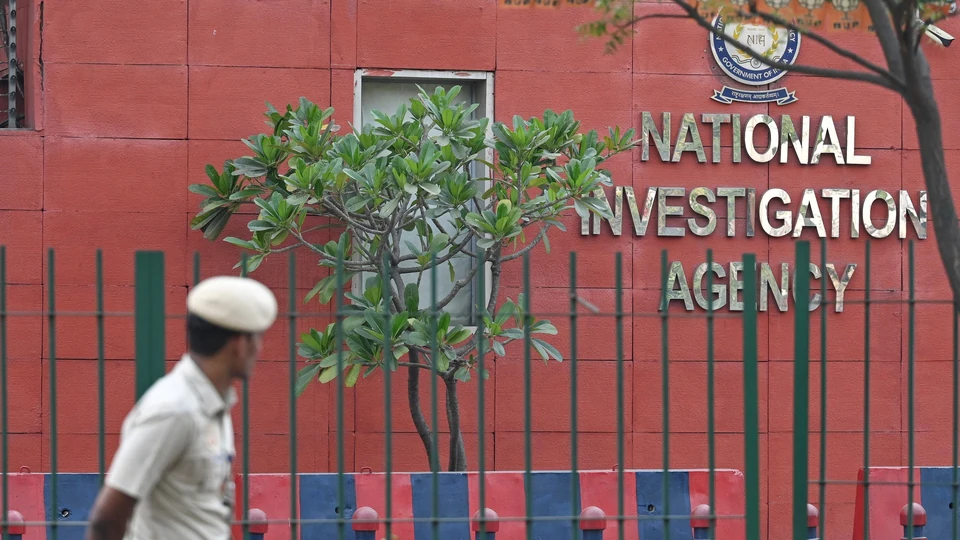
The National Investigation Agency (NIA) has arrested a man from Assam’s Silchar who it describes as the alleged mastermind of a cross-border Drug Trafficking network operating between Myanmar and India. The arrest is linked to the seizure of 236.33 kg of methamphetamine tablets in Mizoram’s Champhai district in May 2025.
The accused, identified as Nurul Islam, was arrested on November 15, according to an official statement issued by the NIA. During the operation, investigators also seized several digital devices, including mobile phones and memory cards, which could help establish communication links and other details of the alleged trafficking operation.
The seizure involved methamphetamine tablets valued at approximately ₹30.72 crore. The NIA is investigating how the consignment was transported from Myanmar, who coordinated its movement through different states and whether the proceeds from the drug trade were connected to insurgent or terrorist organisations operating in the region.
Why the NIA Identifies Nurul Islam as the Network’s Alleged Mastermind
According to the NIA, its preliminary investigation indicates that Islam played a central role in arranging the movement of the seized methamphetamine tablets from Myanmar to mainland India. The agency believes the operation involved an interstate network rather than an isolated drug transportation attempt.
In its statement, the NIA described Islam as the alleged mastermind behind the cross-border trafficking of the seized consignment. Investigators are examining his role in coordinating the supply chain and identifying other individuals who may have participated in the operation.
The digital devices recovered during his arrest are likely to form an important part of the investigation. Mobile phones and memory cards can contain communication records, contact details and other digital information relevant to tracing the people involved. However, the NIA has not publicly disclosed the contents of the seized devices.
The agency has said that its investigation is continuing to identify additional suspects and establish the full extent of the alleged trafficking network. The arrest is therefore a further development in a case that began with the interception of a vehicle in Mizoram more than a year earlier.
How Police Seized 236.33 Kg of Methamphetamine in Champhai
The case originated on May 4, 2025, when personnel from Dungtlang police station intercepted a vehicle travelling towards Bungzung village along the Thinghrangkawn-Vanzau road in Mizoram’s Champhai district.
The area is close to the Myanmar border, making it an important location in the investigation into the alleged cross-border movement of narcotics. During a search of the vehicle, police recovered 236.33 kg of methamphetamine tablets packed in eight nylon sacks containing 199 bundles.
Authorities also seized ₹2.89 lakh in cash and the vehicle allegedly used to transport the drugs. Two people from Champhai were arrested at the location.
The recovery prompted further investigation into the intended recipients of the consignment and the people responsible for arranging its transportation. Investigators subsequently conducted a follow-up operation in Mizoram’s Kolasib district.
Follow-Up Operation Led to Five Arrests Across Three States
The follow-up operation in Kolasib district resulted in the arrest of three additional individuals who were allegedly waiting to receive the drug consignment. Together with the two people arrested in Champhai, the operation brought the number of initial arrests in the case to five.
According to the NIA, the five accused included two people from Mizoram, two from Tripura and one from Assam. They were subsequently chargesheeted in connection with the case.
The interstate backgrounds of the accused became an important part of the investigation. The alleged movement of the consignment through multiple locations suggested that investigators needed to examine the network beyond the point where the drugs were seized.
The later arrest of Nurul Islam in Silchar has added another dimension to the probe. The NIA’s claim that he coordinated the trafficking operation from Myanmar to mainland India indicates that investigators are examining the alleged organisers and wider supply chain, not only the individuals involved in transporting or receiving the consignment.
Why the Case Was Transferred to the NIA
The case was initially registered at Dungtlang police station in Champhai district under Sections 22(c), 25 and 29 of the Narcotic Drugs and Psychotropic Substances (NDPS) Act. These provisions cover offences involving commercial quantities of prohibited narcotic or psychotropic substances, the use of premises or vehicles in drug-related offences, and criminal conspiracy or abetment.
In January 2026, the case was transferred to the NIA after the central government determined that suspected cross-border connections required investigation as part of a larger conspiracy.
On January 13, the agency registered a fresh case under Section 17 of the Unlawful Activities (Prevention) Act (UAPA), which deals with raising funds for terrorist acts. The addition of this provision reflects the investigation’s wider focus on whether the alleged drug trafficking operation had links to the financing of unlawful activities.
The transfer significantly expanded the scope of the investigation. Instead of focusing only on the recovery of methamphetamine and the people directly involved in its transportation, the NIA is examining the possible financial and organisational links behind the alleged cross-border operation.
Suspected Link Between Myanmar Drug Trade and Insurgent Funding
One of the most significant aspects of the case is the suspected connection between proceeds from methamphetamine trafficking and the financing of insurgent or terrorist organisations operating in the region.
While transferring the case, the Union Home Ministry reportedly stated that methamphetamine originating in Myanmar was suspected of being used to fund insurgent and terrorist organisations. This concern prompted investigators to examine whether the drug trade was connected to a broader network that extended beyond conventional narcotics trafficking.
The suspected terror-funding angle remains an allegation under investigation. The available details do not establish that the seized consignment or its proceeds were definitively linked to any particular organisation. The NIA’s investigation is intended to establish whether such financial connections existed and identify anyone involved.
The distinction is important because a drug trafficking case and a suspected terror-financing conspiracy involve different investigative questions. Establishing the source of the drugs, identifying the people who transported them and tracing the money generated by their sale are separate steps in determining whether the alleged network supported other unlawful activities.
Why the Myanmar Border Is Important to the Investigation
Mizoram’s location along the international border with Myanmar makes the state an important focus of investigations into suspected cross-border narcotics trafficking. The Champhai district seizure placed the alleged drug supply route at the centre of the NIA’s inquiry.
Myanmar has been a major source of concern for Indian law enforcement agencies investigating the movement of synthetic drugs into the Northeast. Methamphetamine, commonly known as meth, is a powerful synthetic stimulant that is frequently trafficked in tablet or crystal form. Large consignments can generate substantial illicit proceeds, making the trade a significant concern for enforcement and security agencies.
For investigators, the challenge is not limited to intercepting drugs at border areas. They must also identify the people arranging supplies, transporters moving consignments through different locations, intermediaries coordinating deliveries and intended recipients. Financial investigations can then help determine where the proceeds went and whether they supported other criminal activities.
NIA Continues Search for Other Members of the Network
Nurul Islam’s arrest is a significant development in the investigation, but the NIA has indicated that the wider probe is still underway. The agency is seeking to identify other people allegedly involved in the conspiracy and determine how the network operated across state boundaries.
Investigators will also need to examine the digital evidence recovered from Islam, establish the alleged route of the methamphetamine consignment and trace any financial transactions connected to the operation. The suspected links to insurgent and terrorist funding remain a key part of the inquiry.
The case highlights how a major narcotics seizure can lead to a wider investigation into cross-border supply chains, interstate criminal networks and possible links between drug trafficking and security threats. The NIA’s findings will determine whether the alleged operation was part of a larger organised network and whether its proceeds were used to finance other unlawful activities.
For breaking news and live news updates, like us on Facebook or follow us on Twitter and Instagram. Read more on Latest India on thefoxdaily.com.





COMMENTS 0