Retired FBI special agent Jennifer Coffindaffer has offered a new theory about how Nancy Guthrie may have been removed from her Arizona home during her abduction, focusing on a detail that has attracted attention in the investigation: the absence of visible footprints in the blood found at the property.
Coffindaffer believes the person captured in surveillance images at Guthrie’s home, widely referred to as “Porch Guy,” may have moved the 84-year-old woman while walking backwards, keeping her body in front of him and partially slumped over. According to the former agent, this method could have allowed the suspect to move her without stepping into or disturbing the blood.
She shared the explanation in a post on X, describing it as the most probable way she believes Nancy could have been taken out of the house without leaving footprints in the blood. However, her explanation is an investigative theory, not a conclusion announced by law enforcement. Authorities have not publicly confirmed how the suspect may have physically removed Nancy from the property.
Jennifer Coffindaffer’s Theory: Suspect May Have Walked Backwards
In her post, Coffindaffer suggested that the suspect could have positioned Nancy in front of him, with her body slumped over, and then moved backwards while taking her away from the house.
She wrote that the absence of footprints in Nancy’s blood was the detail that led her to reconsider how the abduction might have happened. Coffindaffer had previously believed that the suspect carried Nancy out of the property. After physically acting out different possibilities, she said she now considered the backwards-walking method more likely.
The former FBI agent also referred to her experience during SWAT tryouts, explaining that she had used a similar physical technique to lift and move larger individuals. She said this made her think the method could have helped someone move Nancy, whose listed weight was approximately 150 pounds.
Coffindaffer said she intended to share demonstrations of the movement to explain her reasoning. Her central argument is that keeping Nancy in front of the suspect while moving backwards could have reduced the chances of disturbing the blood on the ground.
Her explanation offers one possible interpretation of the physical evidence, but it does not establish what happened inside the house or identify the method actually used during the abduction. Only investigators with access to the complete crime-scene evidence can assess whether the theory is consistent with the forensic findings.
Why the Blood Evidence Matters in the Nancy Guthrie Case
Blood discovered at Nancy Guthrie’s property became an important part of the investigation after authorities confirmed that it belonged to her. The discovery supported investigators’ belief that she had been taken against her will rather than simply leaving the home voluntarily.
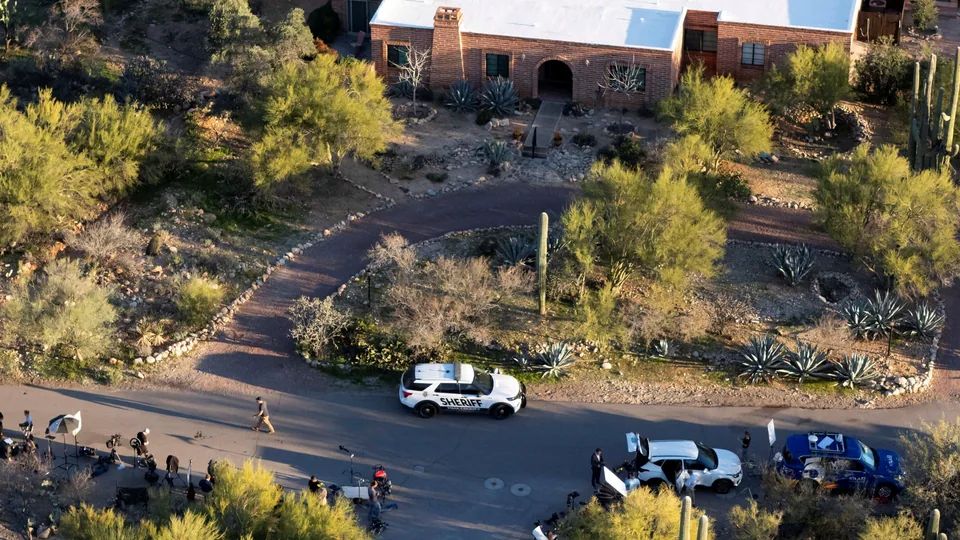
Nancy was last seen at her residence in the Catalina Foothills area near Tucson, Arizona, on the evening of January 31, 2026. Her family reported her missing on February 1 after she could not be located.
Investigators subsequently treated the disappearance as a suspected abduction. Surveillance material recovered from the property showed an unidentified person near the front door, prompting widespread attention to the individual now commonly described as Porch Guy.
The blood evidence has drawn particular interest because it may help investigators reconstruct the events at the property. The location, distribution and condition of bloodstains can potentially provide information about movement and physical contact. However, the absence of visible footprints alone cannot establish exactly how a person was carried or moved.
Coffindaffer’s theory is therefore one interpretation of a crime-scene detail rather than verified evidence about the suspect’s actions. Investigators have not publicly endorsed her proposed method.
Who Is ‘Porch Guy’ in the Nancy Guthrie Investigation?
The nickname “Porch Guy” refers to the unidentified individual captured in doorbell-camera material associated with Nancy Guthrie’s home. The FBI released images of an armed person who appeared to tamper with the camera around the time of her disappearance.
The individual was shown wearing a face covering, gloves and a backpack. The person appeared to approach the camera and attempt to obstruct its view. Investigators have sought public assistance in identifying the individual and determining what happened to Nancy.
The footage became one of the most recognisable pieces of evidence in the case. Images circulated widely across news reports and social media, while authorities continued to seek information that could help identify the person.
Despite the public attention surrounding the images, the suspect’s identity and the precise sequence of events leading to Nancy’s disappearance have remained unresolved in the publicly reported investigation. The nickname is a reference to the surveillance footage and should not be treated as an official identification.
What Jennifer Coffindaffer Previously Said About Suspicious Ransom Messages
Coffindaffer has also spoken publicly about messages she said she received after Nancy’s disappearance. She previously told NewsNation that she received ransom-related emails in April, including a disturbing image that appeared to depict Nancy.
According to Coffindaffer, the messages demanded payment in Bitcoin and contained personal information about her that she said was not readily available online. She also said the emails included Bible verses that appeared intended to appeal to her personal beliefs.
She initially chose not to discuss the messages publicly and instead reported them to the FBI. Coffindaffer said the FBI informed her that the Bitcoin address included in the messages did not match the address associated with ransom communications believed to be legitimate.
She became more concerned about the messages after learning that Lauren Serpa, a neighbour of Nancy Guthrie, had received a similar note. Serpa subsequently posted about the communication on social media. Coffindaffer said the image included in the neighbour’s message appeared nearly identical to the one she had received.
Explaining why she decided to speak publicly, Coffindaffer said she was worried that other people following the case could be contacted and persuaded to send money.
She described the image as emotionally disturbing, saying it appeared to show Nancy with a shaved head, dirt on her face and a tear running down her cheek. In her view, the imagery was designed to make recipients believe Nancy was alive and that sending money could help her.
Coffindaffer also suggested that the people behind those messages could be operating as an organised group. That remains her assessment; the messages she described should not automatically be treated as communications from the people responsible for Nancy’s disappearance.
Difference Between Coffindaffer’s Emails and the Ransom Notes Investigators Examined
It is important to distinguish the messages Coffindaffer said she received from the ransom communications examined by investigators in the Nancy Guthrie Case.
Authorities investigated ransom notes sent to media outlets shortly after Nancy disappeared. One message demanded millions of dollars in Bitcoin in exchange for her release. A later message claimed that she had died shortly after being taken. Investigators examined details in those communications, including information about Nancy’s home.
The FBI’s reported assessment of the Bitcoin address in Coffindaffer’s emails was a separate matter. She said the address in those messages did not match the one associated with communications believed to be legitimate. This distinction is significant because people attempting to exploit a high-profile disappearance can imitate the language, imagery and demands associated with an actual investigation.
Her warning was directed at members of the public who might receive similar messages. People who are contacted with purported ransom information should avoid sending cryptocurrency or sharing personal and financial details without verifying the communication through law enforcement.
Coffindaffer Previously Called for Wider Public Exposure of the Suspect’s Images
Before sharing her latest theory about how Nancy may have been removed from the house, Coffindaffer had called for a broad public effort to identify the person seen in the surveillance images.
She urged investigators to circulate the suspect’s photographs widely across traditional and social media platforms. She also suggested reaching Spanish-speaking communities as part of an effort to expand the search for information.
Her argument was that increasing the visibility of the images could help someone recognise the individual or provide investigators with a useful lead. The suggestion reflected her view that public awareness could play an important role in identifying the person captured on camera.
However, public circulation of surveillance images can also generate speculation and mistaken identifications. Any potential lead needs to be checked by investigators rather than treated as proof of someone’s involvement.
Nancy Guthrie’s Disappearance: What Happened on January 31 and February 1?
Nancy Guthrie, the 84-year-old mother of television journalist and Today show co-anchor Savannah Guthrie, was last seen at her Tucson-area residence on January 31, 2026. She had spent the evening with family before returning home.
Her disappearance was reported on February 1 after family members became concerned that she could not be located. Authorities found signs indicating that she may have been taken against her will, and the discovery of blood at the property became a significant part of the investigation.
Investigators also examined surveillance-camera information and other evidence from the home. The FBI later released images of the unidentified person near the front door, asking the public to help establish the individual’s identity.
The case attracted national attention because of Nancy’s age, her family connection to Savannah Guthrie and the unusual circumstances surrounding her disappearance. The family has made public appeals for information, while investigators have continued examining evidence and pursuing leads.
What Happens Next in the Nancy Guthrie Investigation?
Coffindaffer’s latest comments have added another theory to the public discussion surrounding Nancy Guthrie’s disappearance. Her proposed explanation focuses on the physical mechanics of moving a person without disturbing blood at a crime scene. It may prompt further discussion, but it does not independently resolve the questions investigators are trying to answer.
The most important unanswered issues remain the identity of the person captured in the surveillance images, the precise sequence of events inside and outside the property, and what happened to Nancy after she was taken.
Forensic evidence, surveillance material, credible witness accounts and verified communications remain central to establishing those details. Speculation based on individual interpretations of crime-scene evidence cannot replace the findings of the official investigation.
For now, Coffindaffer’s backwards-walking explanation remains her personal theory about how the abduction may have been carried out. Whether it matches the evidence is a question that only further investigative findings can answer.
For breaking news and live news updates, like us on Facebook or follow us on Twitter and Instagram. Read more on Latest World on thefoxdaily.com.




COMMENTS 0