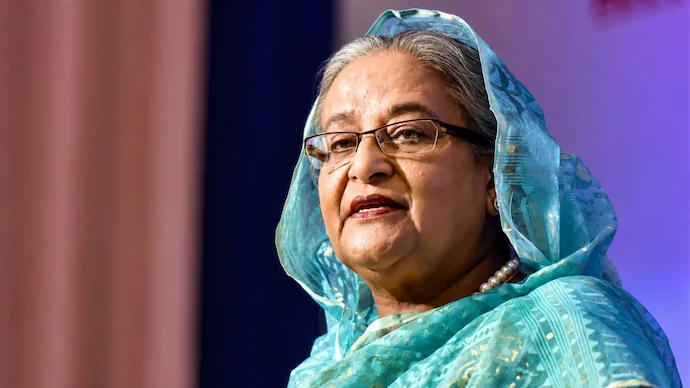
Bangladesh has completed the legal procedures required to seek the extradition of former prime minister Sheikh Hasina from India, Law Minister Md Asaduzzaman said on Saturday, November 14. With Dhaka claiming that it has fulfilled its responsibilities under the bilateral extradition framework, the next move rests with the Indian government.
The latest statement comes amid renewed diplomatic strain between the two neighbours over Hasina’s continued presence in India. Bangladesh has been seeking her return since she fled the country in August 2024 following a student-led uprising that brought an end to her government.
India has acknowledged receiving Bangladesh’s extradition requests but has not announced a decision on handing her over. On Friday, the Ministry of External Affairs reiterated that the matter would be dealt with through the appropriate legal process.
Bangladesh Says All Legal Formalities Are Complete
Law Minister Md Asaduzzaman said Bangladesh had completed everything required from its side to pursue Hasina’s return. He made the remarks while speaking to reporters after an event at the Bangladesh-China Friendship Conference Centre in Dhaka.
“We have completed everything required from our side as part of the legal process. What they (India) will do is up to them,” the minister said, according to reports cited by news agency Press Trust of India.
Asaduzzaman maintained that Hasina would return through legal means and that her extradition under the bilateral treaty would itself constitute a legal process. Asked whether she would be given an opportunity to return through established procedures, he reiterated that her return would take place within the legal framework.
His comments indicate that Dhaka considers its formal steps complete and is now waiting for New Delhi to respond to the extradition request. However, the minister did not provide details of any new communication between the two governments or indicate when India might announce its position.
Asked whether India had discussed the possibility of sending Hasina to a third country instead of Bangladesh, Asaduzzaman said the Indian government would be in a position to answer that question.
Minister Says Hasina Cannot Appeal Death Sentence
Asaduzzaman was also questioned about whether Hasina would have the right to challenge her death sentence if she were returned to Bangladesh. According to the Dhaka Tribune, the law minister said she would not have that opportunity under the relevant legal provisions.
The minister’s remarks relate to the legal framework governing cases involving crimes against humanity and the deadlines for challenging verdicts. International Crimes Tribunal Chief Prosecutor Md Aminul Islam had also said earlier that Hasina had no legal option left to avoid execution of the sentence.
These statements represent the position of Bangladesh’s government and prosecution authorities. Hasina has rejected the charges against her and disputed the proceedings conducted in her absence.
The question of her legal options is likely to remain central to any discussion about her possible return. Her case involves not only the extradition treaty between Bangladesh and India but also the domestic legal procedures that would apply if she were handed over.
Hasina Was Sentenced to Death in November 2025
Bangladesh’s International Crimes Tribunal convicted Hasina in November 2025 of crimes against humanity linked to the crackdown on protesters during the July-August 2024 uprising. The proceedings took place in her absence after she left Bangladesh for India.
The tribunal sentenced her to death on one charge and life imprisonment on another. The case concerned her alleged role in the government’s response to the mass protests that eventually led to the collapse of her administration.
Hasina has rejected the allegations as well as the legitimacy of the proceedings. Her conviction and sentence have since become major points of contention in Bangladesh’s domestic politics and its relationship with India.
Dhaka’s extradition demand has continued despite the change in government. The interim administration that took over after Hasina’s departure handed power to an elected government led by Prime Minister Tarique Rahman in February 2026.
The new administration has maintained the demand for Hasina’s return, indicating that the issue is not limited to the policies of the interim government that preceded it.
India Says Extradition Will Be Handled Through Legal Channels
India has so far avoided announcing whether it will accept Bangladesh’s request. On Friday, November 13, Ministry of External Affairs spokesperson Randhir Jaiswal described Hasina’s extradition as a legal matter that would be dealt with accordingly.
“India desires a positive, constructive and forward-looking relationship with Bangladesh,” Jaiswal said, according to PTI.
New Delhi’s response signals that it intends to address the extradition request through the applicable legal framework rather than announce an immediate political decision. However, the Indian government has not publicly outlined a timeline or disclosed the details of its examination of the request.
The extradition issue is particularly sensitive because Hasina has been living in India since leaving Bangladesh in August 2024. Any decision on her transfer would have legal and diplomatic consequences for both countries.
Hasina Says She Plans to Return to Bangladesh in December
Hasina has said she intends to return to Bangladesh in December. She made the announcement during an audio-only virtual press conference with journalists organised in New Delhi on August 5.
The event triggered a fresh diplomatic reaction from Dhaka. Bangladesh’s Foreign Ministry said it was “outraged” that Hasina had been allowed to interact with the media from Indian territory despite the government having conveyed its concerns to New Delhi in advance.
India distanced itself from the press conference, saying it had been organised by a private media organisation and that the government had “no involvement whatsoever” in the event.
The exchange highlighted the continuing disagreement between the two countries over Hasina’s activities in India. For Bangladesh, her public statements and continued presence have remained sensitive issues, particularly as its government pursues her extradition.
Hasina’s stated intention to return in December has also brought renewed attention to the question of whether India will act on Dhaka’s request before the end of the year. Neither government has announced an agreed date or arrangement for her return.
Passport Request Adds Another Legal Dimension
The extradition dispute has developed alongside a separate issue involving Hasina’s request for new identity and travel documents. Earlier this month, she approached the Bangladesh High Commission in New Delhi through a London-based legal chamber, seeking a new passport and national identity card.
Her request came shortly before the latest statements from Bangladesh’s law and prosecution authorities. International Crimes Tribunal Chief Prosecutor Md Aminul Islam rejected the possibility of issuing her a passport or travel document, arguing that she had no legal option left other than to face the consequences of the tribunal’s judgment.
Home Minister Salahuddin Ahmed said the government was examining the authenticity and legal basis of the applications submitted on Hasina’s behalf. State Minister for Foreign Affairs Humaiun Kobir, meanwhile, reiterated that Bangladesh would seek her return from India through the existing extradition treaty.
The passport issue and the extradition request are separate matters, but both concern Hasina’s legal status and ability to travel. Dhaka’s latest position suggests that it continues to regard the treaty mechanism as the route for securing her return rather than relying on alternative arrangements.
Extradition Dispute Complicates India-Bangladesh Relations
Hasina’s case has become one of the most difficult issues in the relationship between New Delhi and Dhaka. The two countries have longstanding ties involving trade, transport, border management, water resources, security cooperation and people-to-people exchanges.
Bangladesh has also linked progress on the extradition issue to the diplomatic environment surrounding a possible visit to India by Prime Minister Tarique Rahman. Dhaka has indicated that New Delhi would need to accelerate Hasina’s handover and return other fugitives sought by Bangladesh to help create favourable conditions for such a visit.
The position reflects how the extradition request has moved beyond a bilateral legal issue and become part of wider diplomatic discussions. Any prolonged disagreement could complicate efforts to restore regular high-level engagement between the two governments.
The fifth India-Bangladesh consular dialogue, which was expected to take place in Dhaka on November 17 and 18, has also been postponed. The meeting was intended to provide a channel for discussing consular matters and related issues, including travel arrangements.
India has said the next round of talks will take place at a mutually convenient time. New Delhi has also maintained that it remains ready to discuss bilateral matters through existing diplomatic mechanisms.
What Happens Next?
Bangladesh’s latest announcement places the focus firmly on India’s response. Dhaka says it has completed the necessary legal procedures and intends to pursue Hasina’s return through the bilateral extradition treaty. New Delhi, however, has not confirmed whether it will approve the request or when it might reach a decision.
The legal implications of Hasina’s conviction, her death sentence and the proceedings conducted in her absence are likely to remain important considerations in the dispute. The two governments have not publicly provided a detailed account of the legal assessment currently being undertaken by India.
For Bangladesh, securing Hasina’s return remains a stated objective of the elected government led by Tarique Rahman. For India, the matter involves its legal obligations as well as its broader relationship with a neighbouring country with which it has extensive political, economic and security interests.
As of November 14, no decision to extradite Hasina had been announced by New Delhi. Bangladesh says its part of the process is complete, leaving the next stage dependent on India’s examination of the request and its response under the applicable legal framework.
For breaking news and live news updates, like us on Facebook or follow us on Twitter and Instagram. Read more on Latest World on thefoxdaily.com.






COMMENTS 0