Israeli Drone Strike Kills Two Palestinians in Jabaliya
The Israeli drone strike hit two Palestinians who were walking along a street in Jabaliya, an area on the northern edge of Gaza City. Mohamed Abu Selmiya, director of Shifa Hospital in Gaza City, said the victims were taken to the medical facility.
The American field hospital in Gaza reported that several other people were wounded in the incident. However, it did not provide an exact number of casualties.
The Israeli military said it had targeted two Hamas militants in the area. The statement came after hospital officials reported the deaths of the two Palestinians.
The incident highlights the continued insecurity in Gaza despite a ceasefire agreement reached between Israel and Hamas more than a year ago. Israeli fire and airstrikes have continued across the territory, with Palestinian health authorities reporting further casualties since the truce began.
More Than 1,600 Palestinians Killed Since Ceasefire
Gaza’s Health Ministry says at least 1,600 Palestinians have been killed since the ceasefire took effect. The ministry operates under the Hamas-run administration but maintains detailed casualty records that have generally been considered reliable by United Nations agencies and independent experts.
The figures do not distinguish between civilians and combatants. However, the ministry says women and children account for approximately half of those killed during the post-ceasefire period.
The reported death toll reflects the continuing human cost of the conflict, even after the agreement was expected to reduce violence and create conditions for a more stable situation in the enclave.
Israel has maintained that its military operations are directed against Hamas militants. Palestinian officials and residents, meanwhile, continue to report deaths and injuries from Israeli attacks in different parts of Gaza.
Families Gather in Jabaliya to Honour 70 Palestinians
Saturday also saw an emotional gathering in Jabaliya, where dozens of mourners came together to honour 70 Palestinians whose remains had been recovered from the rubble of buildings destroyed during the war.
The remains were found in recent weeks as recovery efforts continued in areas heavily damaged by Israeli strikes. More than a dozen families had been waiting for their relatives to be located and returned to them.
Draped in Palestinian flags, the recovered remains were laid out for the ceremony. Relatives placed candles beside them and gathered to say their final goodbyes after months of uncertainty and loss.
Among those attending was Wael al-Dibs, whose wife and other relatives were among the people recovered from the rubble. However, the remains of his three-year-old daughter had still not been found.
Mahmoud Nabhan also attended the gathering after losing 16 members of his family, including children and grandchildren, when his home was struck early in the conflict.
The recovery of remains has become an important part of the aftermath of the destruction across Gaza. Families continue to search damaged buildings and collapsed structures for missing relatives, while the scale of destruction has made recovery efforts difficult.
Gaza War Began After Hamas-Led Attack on Israel
The current conflict began on October 7, 2023, when Hamas-led militants attacked southern Israel, killing around 1,200 people and taking 251 hostages, according to the figures cited in the report.
Israel launched a large-scale military offensive in response, targeting Hamas and carrying out airstrikes and ground operations across the Gaza Strip.
Gaza’s Health Ministry says Israel’s retaliatory offensive has killed more than 74,600 people in the territory since the war began. The figure includes civilians and combatants and does not provide a separate breakdown of the two groups.
The destruction of residential buildings and infrastructure has left large parts of Gaza severely damaged. The recovery of bodies from collapsed structures continues to bring the scale of the conflict’s human losses into focus for families across the enclave.
Iran Reports Three Oil Tankers Hit Naval Mines Near Strait of Hormuz
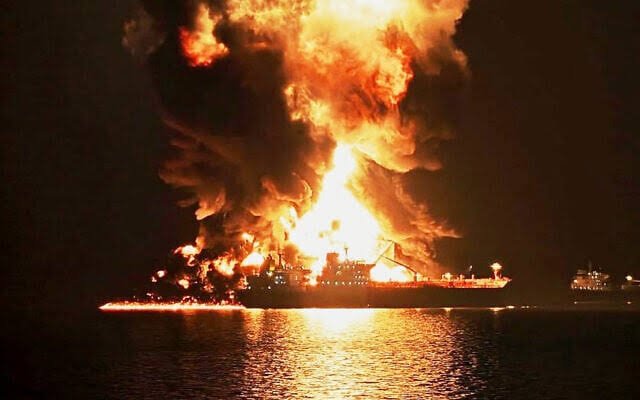
Separately, Iranian state television reported that three oil tankers struck Iranian naval mines and caught fire in waters around the Strait of Hormuz. The report cited statements from Iran’s paramilitary Revolutionary Guard and Navy.
According to the broadcast, two tankers were hit inside the strategic waterway, while a third vessel was burning east of the narrow passage connecting the Persian Gulf with the Gulf of Oman.
Iranian state media did not provide details about the vessels’ nationalities, destinations or the number of people who may have been injured. The circumstances surrounding the reported incidents were also not independently established in the initial report.
The Revolutionary Guard and the Iranian Navy warned that vessels attempting to use shipping routes through the strait without Iran’s approval could face similar consequences.
The warning adds to concerns over commercial shipping in one of the world’s most important maritime energy corridors. The Strait of Hormuz is a major route for oil and gas shipments from the Persian Gulf to international markets, making disruptions there significant for global energy supplies.
Iran-US Conflict Raises Risks for Commercial Shipping
The reported tanker incidents come amid an ongoing war between Iran and the United States. Iranian forces have targeted oil tankers and other commercial shipping in the Strait of Hormuz, according to the report, while Washington has imposed a blockade on Iranian ports that has severely disrupted the country’s economy.
The confrontation has increased uncertainty for shipping companies operating in and around the Persian Gulf. Threats against vessels, attacks at sea and restrictions on maritime movement have made the region increasingly difficult for commercial operators.
Iranian authorities have warned ships against travelling through the strait without their approval. Such warnings create additional uncertainty for international shipping operators, particularly those transporting energy supplies through the waterway.
October recorded the highest number of incidents involving commercial vessels in the contested waters since the war began in February, according to the report. The rise in incidents underscores the growing security risks facing ships and their crews.
Why the Strait of Hormuz Matters to Global Energy Markets
The Strait of Hormuz is a critical passage for international energy trade because a substantial share of oil exports from Gulf producers moves through the waterway. Any prolonged disruption can affect shipping schedules, insurance costs and the availability of energy supplies.
When vessels face threats or are unable to use established routes, shipping companies may have to reconsider their operations. Delays, rerouting and higher security costs can add pressure to energy transportation and potentially affect prices in international markets.
The reported fires involving three tankers could therefore have implications beyond the immediate maritime incidents. However, the absence of information about the vessels, casualties and the extent of damage means the wider impact cannot yet be assessed.
Two Conflicts Keep Middle East Tensions High
The developments in Gaza and near the Strait of Hormuz reflect separate but overlapping security crises across the Middle East. In Gaza, the ceasefire has not ended deadly incidents, while families continue to recover the remains of relatives lost during the war.
At sea, Iran’s reported mine incidents and warnings to commercial vessels add another layer of uncertainty to an already tense regional environment. The confrontation involving Iran and the United States has also placed pressure on shipping through a vital energy route.
Further details about the Jabaliya strike and the reported tanker fires are expected to clarify the scale of the latest incidents. For now, the developments underline the continuing risks to civilians in Gaza and commercial shipping across the Persian Gulf.
For breaking news and live news updates, like us on Facebook or follow us on Twitter and Instagram. Read more on Latest World on thefoxdaily.com.






COMMENTS 0