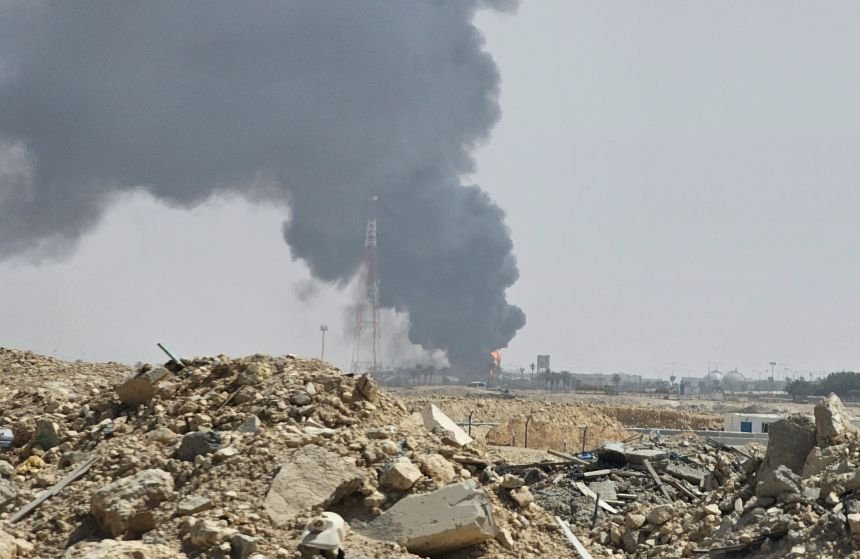
Residents across the Middle East are increasingly anxious about the possibility of renewed fighting between Iran and the United States, as uncertainty surrounding Washington’s military intentions and Tehran’s warnings keep the region on alert ahead of the November 3 US midterm elections.
Although diplomatic contacts between the two countries are continuing, neither side has publicly indicated that it is ready to make the concessions needed for a lasting agreement. US President Donald Trump has suggested that military action will not resume before the midterm elections, but his comments have left open the possibility of further strikes afterwards.
The uncertainty has created a tense atmosphere across Gulf Arab countries, where residents, businesses and foreign workers are trying to prepare for possible school closures, flight disruptions and another period of regional instability.
The conflict, which began in February 2026 after the United States and Israel launched strikes against Iran, has already disrupted daily life across the region. With both sides maintaining hardline positions and military preparations continuing, residents are watching political statements, troop movements and diplomatic developments for clues about what could happen next.
Trump’s Midterm Comments Fuel Uncertainty About Renewed Strikes
Trump has offered mixed signals about the next phase of the conflict. Earlier in October, he wrote on social media that Washington “will not be attacking Iran at any time prior to the midterm elections.” However, he did not provide a clear assurance that military action would remain suspended after November 3.
The absence of a definite commitment has contributed to fears that the period immediately following the elections could become a turning point. Residents across the Gulf are trying to understand whether the pause represents a genuine opportunity for diplomacy or simply a temporary break in military operations.
Hasan Alhasan, a senior fellow for Middle East policy at the International Institute for Strategic Studies, told CNN that Washington’s repeated signals about possible escalation were contributing to regional anxiety.
He said it was becoming increasingly difficult to distinguish between pressure tactics intended to influence negotiations and genuine indications that another round of military action was being considered.
The uncertainty is particularly difficult for people who experienced the first phase of the conflict. Many residents who remained in Gulf countries during the earlier attacks are now reconsidering their travel plans and preparing for the possibility that everyday routines could be disrupted again.
Iran Warns of a Wider Response if War Resumes
Iran has also intensified its public warnings, with military commanders claiming that the country has strengthened its weapons capabilities and built up stockpiles since the earlier fighting.
Tehran’s messaging appears intended to demonstrate that another confrontation would carry serious consequences for the United States and its regional partners. Iranian officials have warned that any renewed conflict could involve targets beyond conventional military and oil infrastructure.
A senior Iranian security official told CNN that Tehran could consider targeting infrastructure across the region, including facilities connected with artificial intelligence. The official described a possible renewed confrontation as a prolonged “war of surprises”.
On Saturday, Iran’s Supreme Leader Mojtaba Khamenei ordered a response “without geographical limitations” to any new threat, according to Iranian state messaging. The statement was presented as a warning that Tehran would not necessarily restrict its response to the locations directly involved in an attack.
Iran’s claims about its expanded military capabilities have not independently established the scale or effectiveness of its new weapons stockpiles. Nevertheless, the warnings have added to concerns among neighbouring countries that a renewed conflict could spread beyond Iran and Israel.
Netanyahu’s Political Position Adds to Regional Concerns
Israeli Prime Minister Benjamin Netanyahu remains another important factor in the uncertainty surrounding the conflict. Netanyahu’s government partnered with the United States in the February strikes against Iran, and he has continued to advocate a hardline approach towards Tehran.
Although Netanyahu’s political position has been weakened by recent election results, he is expected to remain in office while negotiations over the formation of a new government begin. The results suggest that opposition parties may face difficulties removing him quickly.
His continued presence in power means that Israel’s position could remain a significant influence on Washington’s decisions. Any renewed military action would therefore involve not only the calculations of the Trump administration but also Israel’s security priorities and political considerations.
For residents across the Middle East, the possibility of further US-Israeli coordination against Iran creates additional uncertainty about the scale and geographical reach of any future confrontation.
Gulf Residents Prepare for Possible Disruptions
The uncertainty is affecting everyday life across Gulf Arab countries, where millions of foreign workers and expatriates have built their lives around the region’s economic opportunities and relative stability.
During the earlier phase of the conflict, Iranian missile and drone attacks disrupted schools, air travel and business operations in several Arab countries. The attacks also caused casualties and damage to infrastructure, leaving residents concerned about the possibility of another round of strikes.
Many people remained in the region despite the fighting, expressing confidence in the defensive capabilities of Gulf governments. However, the possibility of renewed hostilities has prompted some families and workers to reconsider their plans.
A 36-year-old American resident in Saudi Arabia told CNN that she intended to leave before the November 3 elections. She said people had become more cautious and were treating the coming days as a waiting period in which they were trying to anticipate what might happen.
In Saudi Arabia, some workplaces have reportedly shifted to remote operations or reduced staffing, while remote learning arrangements have been introduced in certain schools. Residents have also expressed concerns about possible flight cancellations and travel disruption during the holiday season.
The situation is particularly sensitive for Saudi Arabia because the country has also faced security concerns linked to attacks by Iran-aligned Houthi rebels. Renewed fighting involving Iran could add pressure to a country already dealing with regional security challenges.
US Diplomatic Families Leave the Region Again
Another development adding to the anxiety has been the discreet departure of family members of US diplomats from parts of the region. Some families reportedly began leaving without widespread public announcements, with their departures becoming apparent when children said goodbye to classmates at school.
The departures have reminded residents of March, when families of American diplomats were ordered to leave during the earlier phase of the conflict. Some had only recently returned to their posts before another round of departures began.
Reports that thousands of additional US troops have been dispatched to the region have also raised questions about Washington’s intentions. The Associated Press reported that US officials had warned several Middle Eastern countries and regional allies to prepare for possible renewed military action after the midterm elections, as well as potential Iranian retaliation.
The warnings did not mean that Trump had made a final decision to order new strikes. However, they indicated that regional governments were being asked to consider the consequences of a possible escalation. :chatgpt-content-reference{index=”0″}
Bahrain Still Feeling the Psychological Impact of Earlier Attacks
Bahrain was among the Gulf countries heavily affected by Iran’s attacks during the earlier phase of the war. Even where immediate security conditions have improved, residents say the psychological impact of the strikes has not disappeared.
A 21-year-old resident identified as Fawaz told CNN that the sound of explosions had left people frightened and struggling to sleep. He said some residents had become accustomed to the situation, but that the experience remained deeply unsettling.
The concerns extend beyond the possibility of physical damage. Families are also worried about school closures, business interruptions, travel restrictions and the uncertainty of living through another prolonged period of military escalation.
For foreign workers and expatriates, the prospect of renewed fighting creates difficult decisions about whether to remain in their jobs, travel home temporarily or relocate their families. Many have invested years in building careers and businesses in the Gulf, making sudden departures financially and personally challenging.
Major Regional Events Continue Despite Security Concerns
Despite the heightened tensions, several international gatherings and business events in the Gulf remain scheduled to proceed. However, companies and executives are reassessing travel plans because of the possibility that a new military confrontation could disrupt flights and regional operations.
In Abu Dhabi, two US oil companies reportedly cancelled plans for their executives to attend one of the region’s major oil conferences, citing security concerns. The event’s organiser, DMG, told Reuters that the conference would continue as planned, with strong US participation and more than 120 American exhibiting companies.
The organisers expected the conference to attract nearly 240,000 people. Its continuation reflects an effort to maintain business activity despite the uncertainty surrounding regional security.
However, the decisions by some companies to cancel executive travel demonstrate that the possibility of renewed fighting is already influencing commercial planning. Even without fresh attacks, uncertainty can affect investment decisions, international travel and confidence among businesses operating in the region.
Quiet Diplomacy Continues Through Qatar
Alongside military warnings and political statements, diplomatic efforts to prevent renewed fighting have continued. Qatar has played a central role in facilitating communication between Washington and Tehran, with Iranian representatives holding discussions with Qatari officials over possible ways to reduce tensions.
Iranian negotiators met Qatari mediators in Doha on October 31 after more than 12 hours of discussions in Tehran the previous day. The talks were being coordinated through regular contacts with Washington, although no US delegation was present at the Doha meeting.
Qatar has reportedly proposed a seven-day sequence of confidence-building measures, under which the United States and Iran would take gradual steps towards restoring trust before beginning broader negotiations. Tehran has not accepted the proposal in its current form.
Iran has also put forward its own seven-day plan, which includes demands that Washington lift its blockade of Iranian ports, unfreeze Iranian assets and approve an Iranian-backed arrangement for the Strait of Hormuz. President Trump has rejected that proposal so far. :chatgpt-content-reference{index=”1″}
JD Vance’s Letter Raises Hopes of Renewed Negotiations
Diplomatic activity has also included direct outreach from US Vice President JD Vance to Mohsen Rezaei, a senior Iranian security official. Vance sent a letter seeking to explore whether Washington and Tehran could restart negotiations and find common ground to prevent another round of military action.
The communication was reportedly delivered through Qatari mediators. Its contents have not been made public in full, but reports indicate that the proposed diplomatic framework would need to address Iran’s nuclear programme.
Trump said the letter was connected to the possibility of allowing medical supplies into Iran. However, the outreach has been viewed as a possible opening for renewed negotiations at a time when military escalation remains a serious concern.
Iranian officials have confirmed that the communication is under review. Foreign Minister Abbas Araqchi said Tehran was examining the letter, while maintaining that Iran’s own proposal remained the basis for reopening the Strait of Hormuz. :chatgpt-content-reference{index=”2″}
US Officials Say a Diplomatic Solution Remains Possible
US Ambassador to Turkey and special envoy for Syria and Iraq Tom Barrack expressed optimism about the possibility of progress. Speaking to CNN, he said there could be “dramatic steps” within the next two weeks and suggested that the two sides were approaching a possible pause in the conflict.
He nevertheless acknowledged that trust remained a major obstacle, particularly over which side would make the first move.
US Secretary of State Marco Rubio also said Washington remained open to a diplomatic solution. Speaking at a press conference in Atlanta, he confirmed that discussions had continued through direct contacts and intermediaries.
Rubio declined to say whether meaningful progress had been achieved during the previous 48 hours. He also said the administration did not have a fixed timetable for negotiations, adding that the decision on any renewed military action ultimately rested with the president.
He emphasised that any agreement would need to address US national security concerns, particularly those relating to Iran’s nuclear programme. The administration’s position suggests that Washington is prepared to continue discussions but is not willing to accept an agreement that leaves its central concerns unresolved.
Iran Says It Will Not Accept Pressure During Negotiations
Iran has also expressed doubts about the reliability of negotiations with Washington. Iranian officials have repeatedly argued that previous diplomatic engagements were followed by military strikes, making it difficult for Tehran to trust American assurances.
Mohammad Bagher Ghalibaf, the speaker of Iran’s parliament and a leading figure in negotiations with the United States, said Tehran’s conditions had been communicated clearly to mediators.
Ghalibaf rejected what he described as a carrot-and-stick approach and said progress would depend on agreement to Iran’s seven conditions. His remarks underline the difficulty of reaching a compromise when both governments continue to insist that the other side must address its demands first.
The main disagreements include Iran’s nuclear programme, US sanctions, the naval blockade, access to frozen Iranian assets and arrangements for the Strait of Hormuz. These issues are closely connected, making it difficult for either side to accept partial concessions without assurances about the next stage of negotiations.
Why the Strait of Hormuz Remains a Major Point of Dispute
The Strait of Hormuz is one of the world’s most important energy shipping routes, connecting the Persian Gulf with international markets. Any disruption to commercial traffic through the narrow waterway can affect oil and gas supplies, shipping costs and global energy prices.
Iran’s demands concerning the strait have therefore become a central part of the diplomatic deadlock. Tehran wants changes to the US blockade and an arrangement that would allow shipping to resume under conditions acceptable to Iran.
Washington, meanwhile, is seeking assurances over maritime security and Iran’s nuclear activities. Gulf countries also have a major interest in keeping the waterway open because their economies depend heavily on energy exports and international trade.
A renewed military confrontation could create risks far beyond the immediate battlefield. Attacks on shipping, energy facilities or regional infrastructure could affect international markets and increase economic pressure on countries that are not directly involved in the fighting.
What Could Happen After the November 3 Midterms?
The November 3 US midterm elections have become an important reference point in discussions about the possible next phase of the Iran conflict. Trump has said that military strikes will not resume before the vote, while officials have warned regional partners to prepare for the possibility of renewed action afterwards.
However, the president has not announced a final decision to restart military operations. Diplomatic contacts remain active, and regional governments are continuing efforts to prevent another escalation.
Several possible developments remain on the table. The United States and Iran could reach an interim understanding that creates space for broader negotiations. They could also remain locked in a prolonged stalemate, with sanctions, military pressure and limited diplomatic contacts continuing. A failure to make progress could increase the risk of renewed strikes and Iranian retaliation.
For Gulf residents, businesses and foreign workers, the uncertainty is already affecting decisions about travel, education and daily operations. Governments across the region are also concerned that they could face the consequences of a conflict involving Washington and Tehran, even if they are not directly participating in military operations.
Middle East Faces a Difficult Choice Between Diplomacy and Escalation
The region is approaching another uncertain period as the United States and Iran continue to exchange warnings while keeping diplomatic channels open. Trump’s comments about the midterm elections, Iran’s military threats and the reported preparations by US forces have all contributed to fears that the conflict could intensify again.
At the same time, the meetings in Qatar, Vance’s letter to Rezaei and continued communication through intermediaries show that neither side has completely abandoned diplomacy.
The biggest obstacle remains a lack of trust and disagreement over the conditions needed to end the conflict. Washington wants assurances on Iran’s nuclear programme and regional security, while Tehran is demanding changes to sanctions, the blockade and arrangements governing the Strait of Hormuz.
Until those differences are addressed, residents across the Middle East are likely to remain uncertain about what comes next. The days following the November 3 elections could become an important test of whether diplomacy can prevent another round of fighting or whether the region will face a renewed military confrontation.
For breaking news and live news updates, like us on Facebook or follow us on Twitter and Instagram. Read more on Latest World on thefoxdaily.com.




COMMENTS 0