- Why Iran Chose BRICS for This Message
- The ‘Empire in Decline’ Remark Was Highly Symbolic
- The Speech Was Also Directed at Domestic and Regional Audiences
- BRICS Is Becoming More Political Than Economic
- The Strait of Hormuz Crisis Loomed Over the Meeting
- India Wants BRICS to Remain Stable and Practical
- Iran Wants BRICS to Challenge Western Sanctions
- The Global South Narrative Is Becoming More Influential
- The US Still Retains Enormous Influence
- The Real Challenge for BRICS Is Unity
- Conclusion: Iran Used BRICS to Push a Bigger Geopolitical Message
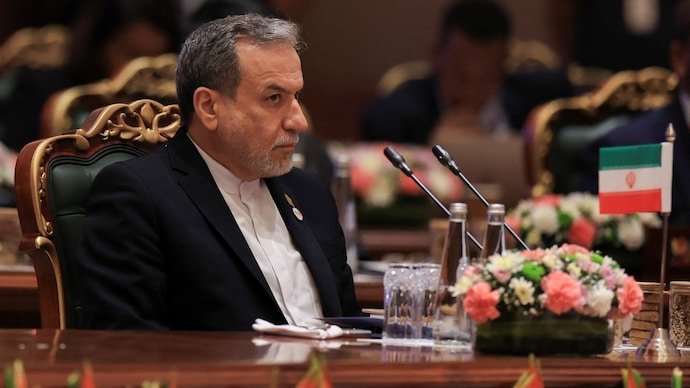
The BRICS Foreign Ministers’ Meeting in New Delhi became a platform for one of Iran’s strongest diplomatic attacks on the United States since the start of the ongoing Middle East conflict.
Iranian Foreign Minister Abbas Araghchi accused Washington of “bullying,” condemned what he described as American-led destabilisation, and referred to the US as behaving like “an empire in decline.”
His remarks were not just rhetorical flourishes aimed at domestic audiences. They reflected a broader geopolitical shift unfolding across parts of the Global South, where growing frustration with Western sanctions, military interventions, and financial dominance is increasingly shaping international diplomacy.
By delivering those comments at a BRICS gathering hosted by India, Araghchi was sending a carefully calculated message:
Iran wants BRICS to evolve into a stronger political counterweight to Western influence.
Why Iran Chose BRICS for This Message
The location and audience of Araghchi’s speech were as important as the remarks themselves.
BRICS has gradually transformed from an economic grouping into a broader geopolitical platform where emerging economies increasingly discuss:
- Alternative financial systems
- Reduced dependence on the US dollar
- Global governance reform
- Sanctions resistance
- Multipolar diplomacy
For Iran, the bloc offers a valuable diplomatic space.
After joining the expanded BRICS grouping, Tehran has tried to position itself not merely as a regional power under sanctions, but as part of a wider coalition challenging Western dominance in global affairs.
Araghchi’s comments therefore served multiple purposes:
- Rallying political sympathy
- Framing Iran as resisting coercion
- Seeking diplomatic backing
- Strengthening anti-sanctions narratives
- Linking Iran’s struggle to broader Global South concerns
The speech was carefully tailored to resonate with countries that have themselves experienced pressure through sanctions, trade restrictions, or geopolitical competition.
The ‘Empire in Decline’ Remark Was Highly Symbolic
Perhaps the most widely noticed part of Araghchi’s speech was his reference to “empires in decline.”
Without directly naming the United States in that specific sentence, the implication was unmistakable.
“History has shown that empires in decline will stop at nothing to arrest their inevitable fates,” he said.
The language reflects a growing narrative increasingly promoted by countries seeking a multipolar world order where US dominance is reduced.
Iran, China, and Russia have all, at various times, framed recent geopolitical tensions as evidence that the post-Cold War unipolar era led by Washington is weakening.
In Tehran’s messaging, resistance against sanctions and military pressure is often portrayed not only as national defense, but as part of a broader historical transition away from Western-led global systems.
The “empire in decline” phrase was therefore not just criticism — it was ideological positioning.
The Speech Was Also Directed at Domestic and Regional Audiences
While the speech targeted international audiences, it also carried domestic political importance for Iran.
After more than two months of conflict involving the United States, Israel, and Iran, Tehran’s leadership faces pressure to demonstrate resilience and strategic confidence.
Strong rhetoric against Washington helps Iranian leaders:
- Project internal unity
- Reinforce anti-Western narratives
- Demonstrate defiance under pressure
- Maintain political legitimacy during conflict
At the same time, the remarks were intended for audiences across West Asia and the broader Global South, where skepticism toward US Foreign Policy remains widespread in some political circles.
BRICS Is Becoming More Political Than Economic
One major takeaway from the Delhi meeting is how BRICS is steadily evolving beyond its original economic focus.
The grouping was initially designed around cooperation among emerging economies. However, geopolitical crises are increasingly pulling BRICS into sensitive diplomatic territory.
Topics dominating recent BRICS discussions include:
- Wars and conflicts
- Sanctions policy
- Energy security
- Alternative payment systems
- De-dollarisation
- Global institutional reform
Iran’s inclusion has accelerated that political shift.
Tehran views BRICS not simply as an economic club, but as a potential platform for resisting Western diplomatic and financial pressure.
| Key Theme at BRICS Delhi Meeting | Why It Matters |
|---|---|
| Iran-US tensions | Rising geopolitical instability |
| Strait of Hormuz disruptions | Threat to global energy supplies |
| Sanctions criticism | Concern among developing economies |
| Global South cooperation | Push for multipolar influence |
| Alternative financial systems | Reducing dependence on Western mechanisms |
| BRICS expansion | Growing geopolitical significance |
The Strait of Hormuz Crisis Loomed Over the Meeting
Although Araghchi’s remarks grabbed headlines, the larger backdrop was the worsening crisis surrounding the Strait of Hormuz.
The strategic waterway remains one of the world’s most important energy chokepoints, handling nearly a fifth of Global Oil shipments.
Disruptions linked to the ongoing conflict have already:
- Pushed oil prices higher
- Raised inflation concerns globally
- Increased shipping risks
- Triggered energy-security fears
That is why India’s External Affairs Minister S Jaishankar adopted a noticeably cautious tone during the meeting.
Rather than directly endorsing Iran’s rhetoric, Jaishankar focused on:
- Regional stability
- Maritime security
- Uninterrupted trade routes
- Economic uncertainty
India’s position reflects its difficult balancing act.
New Delhi maintains strategic relations with:
- The United States
- Iran
- Israel
- Gulf Arab states
- Russia
That makes outright alignment with any single side politically sensitive.
India Wants BRICS to Remain Stable and Practical
As the current BRICS chair, India appears eager to prevent the grouping from becoming dominated entirely by geopolitical confrontation.
New Delhi generally prefers BRICS to focus on:
- Economic cooperation
- Development financing
- Trade expansion
- Global South representation
- Institutional reform
However, Iran’s entry into BRICS and escalating global conflicts are making it harder to keep politics separate from economics.
The Delhi meeting highlighted growing internal tensions within BRICS itself.
Not all members share identical positions on:
- Iran
- US relations
- Sanctions
- Middle East conflicts
- Global power structures
That diversity makes achieving unified BRICS statements increasingly difficult.
Iran Wants BRICS to Challenge Western Sanctions
One of Tehran’s biggest long-term goals inside BRICS is building alternatives to Western-controlled financial systems.
Iran has faced years of sanctions affecting:
- Banking access
- Oil exports
- International payments
- Trade financing
- Investment flows
That explains why Iranian officials frequently emphasize:
- Independent trade mechanisms
- Alternative payment systems
- Local-currency trade
- Financial sovereignty
BRICS expansion creates opportunities for Tehran to strengthen economic links outside traditional Western financial structures.
Whether BRICS can realistically create effective alternatives at scale remains uncertain, but the political ambition is clearly growing.
The Global South Narrative Is Becoming More Influential
Araghchi’s speech also reflects the rising importance of “Global South” diplomacy.
Many developing countries increasingly argue that global institutions remain disproportionately shaped by Western interests.
Issues frequently raised include:
- Unequal sanctions impact
- Trade imbalances
- Debt pressures
- Dollar dependence
- Representation gaps in global institutions
Iran is attempting to position itself within that broader political conversation.
By framing its confrontation with Washington as part of a larger struggle against coercion, Tehran seeks to transform a regional conflict into a symbol of wider geopolitical resistance.
The US Still Retains Enormous Influence
Despite Iran’s rhetoric about declining empires, the reality remains more complicated.
The United States still dominates in many critical areas, including:
- Global finance
- Military spending
- Reserve currency status
- Technology ecosystems
- International alliances
However, Washington’s rivals increasingly believe global power is becoming more fragmented and multipolar.
That perception itself is shaping diplomacy.
Countries like Iran, China, and Russia increasingly see opportunities to build parallel partnerships and institutions outside Western influence.
BRICS has become one of the most visible platforms for those ambitions.
The Real Challenge for BRICS Is Unity
The Delhi meeting also exposed a central challenge facing BRICS:
Can such a diverse group maintain strategic unity?
The expanded bloc now includes countries with very different political systems, economic interests, and foreign-policy priorities.
Some members maintain close ties with Washington, while others openly challenge Western influence.
That diversity gives BRICS global weight but also creates internal friction.
Iran’s confrontational rhetoric may resonate with some members more than others.
As geopolitical crises intensify, balancing those competing interests will become increasingly difficult.
Conclusion: Iran Used BRICS to Push a Bigger Geopolitical Message
Abbas Araghchi’s sharp attack on the United States at the BRICS Delhi meeting was about far more than rhetoric.
It reflected Iran’s broader strategy of positioning itself as part of a growing coalition seeking to challenge Western dominance, sanctions pressure, and US-led global systems.
By invoking “empires in decline,” Tehran attempted to frame current geopolitical tensions as evidence of a shifting global order where emerging powers and Global South nations demand greater influence.
At the same time, the meeting revealed the increasingly political nature of BRICS itself, as conflicts involving Iran, energy security, sanctions, and global governance dominate discussions once focused mainly on economics.
Whether BRICS can evolve into a truly unified geopolitical force remains uncertain.
But one thing is becoming increasingly clear: the bloc is no longer just an economic acronym. It is steadily becoming one of the most important diplomatic arenas shaping debates about the future balance of global power.
For breaking news and live news updates, like us on Facebook or follow us on Twitter and Instagram. Read more on Latest World on thefoxdaily.com.






COMMENTS 0