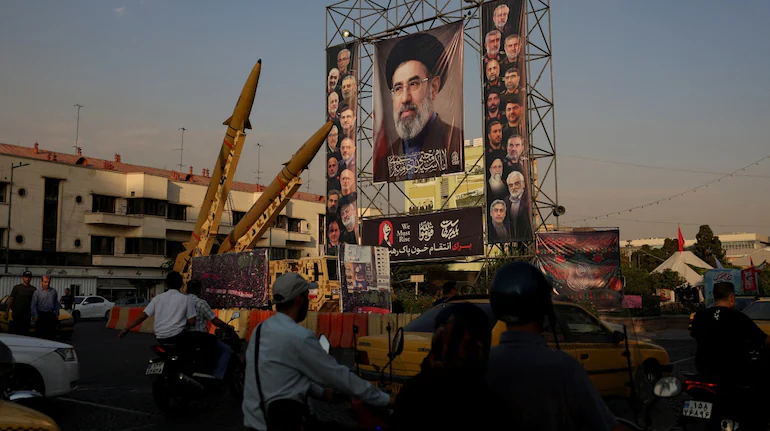
Iran’s Islamic Revolutionary Guard Corps (IRGC) on Sunday, November 15, claimed that it had launched six drones targeting a US air-defence radar installation at a military base in Bahrain. The announcement came as Bahraini authorities issued security alerts warning residents of potential threats amid rising tensions across the Gulf region.
According to a statement carried by Iranian state television, the alleged operation targeted a radar system at the Al-Riffa helicopter base. However, neither US nor Bahraini authorities immediately confirmed the reported attack. The extent of any damage and whether the drones reached their intended target remain unverified.
Key Highlights
- Iran’s Revolutionary Guards claim six drones targeted a US radar installation at Bahrain’s Al-Riffa helicopter base.
- Bahrain’s Interior Ministry issued two security alerts on Sunday, urging residents to follow official instructions.
- The reported drone attack has not been independently confirmed by US or Bahraini authorities.
- US Central Command previously rejected Iran’s claim that it had destroyed an American early-warning radar system in Bahrain.
- Continuing tensions over the Strait of Hormuz and attacks on military facilities are adding to regional security concerns.
Iran Claims Six-Drone Attack on US Radar Installation
The IRGC said its Aerospace Force had targeted a US air-defence radar system at the Al-Riffa helicopter base in Bahrain using six drones. Iranian state television carried the statement, which described the operation as the second phase of Iran’s response to what it called US military aggression.
The claim has not been independently verified. There was no immediate confirmation from Washington or Manama, and details about the reported strike, including possible damage to the radar installation, remain unclear.
The latest announcement comes amid continuing military tensions between Iran and the United States. American military facilities across the Gulf have been a focus of Iranian threats and reported attacks during the conflict, increasing security concerns among regional governments.
Bahrain Issues Security Alerts to Residents
Bahrain’s Interior Ministry issued two security warnings on Sunday, according to Reuters. These were the country’s first such alerts since September and came as Iran announced the alleged drone operation.
The ministry urged citizens and residents to remain calm, move to the nearest safe location and follow instructions issued by the authorities. However, it did not provide specific details about the nature of the threats.
Bahrain is strategically important to the United States because it hosts the US Navy’s Fifth Fleet. The country has also been among the Gulf states affected by attacks targeting American military facilities during the conflict with Iran.
The security warnings underline the potential risks to civilian areas and military installations as regional tensions continue. Authorities have not publicly established a direct connection between the alerts and Iran’s latest attack claim.
US Previously Rejected Iran’s Radar Destruction Claim
Sunday’s announcement followed another statement by the IRGC on November 13, when Iranian forces claimed they had destroyed a US early-warning radar system in Bahrain.
Iran described that operation as retaliation for an airstrike on a telecommunications tower in Sirik, located in the southern Hormozgan province near the Strait of Hormuz.
The US military rejected Iran’s claim. US Central Command (CENTCOM) said American forces had intercepted two Iranian one-way attack drones heading towards Bahrain.
CENTCOM also stated that there had been no injuries or damage. The conflicting accounts highlight the difficulty of independently establishing the details of military operations during the ongoing conflict.
US-Iran Tensions Continue Over the Strait of Hormuz
The conflict began on February 28 with US and Israeli strikes on Iran. Tehran responded with missile and drone attacks targeting American military facilities across the Gulf, widening the security crisis in the region.
Iran also moved to restrict shipping through the Strait of Hormuz, a critical international route for oil and gas shipments. In response, Washington imposed a naval blockade on Iranian ports, adding another dimension to the confrontation.
US President Donald Trump has indicated that Washington could refrain from further strikes if Iran and the Iran-backed Houthis in Yemen avoid additional provocations. However, he has maintained that the naval blockade will continue.
The Strait of Hormuz remains particularly important to global energy markets because disruptions to shipping through the waterway can affect international oil and gas supplies. Continued military escalation could therefore have consequences beyond the immediate region.
Saudi Arabia Reports Interception of Houthi Missiles and Drones
Regional security concerns also intensified after the Saudi-led coalition reported intercepting two Houthi ballistic missiles directed towards Riyadh and three drones targeting Saudi Arabia’s Eastern Province on Sunday, according to Reuters.
The reported interceptions add to concerns about the possibility of the conflict spreading further across the Gulf. Saudi Arabia and other regional countries remain exposed to security risks linked to attacks involving missiles and unmanned aerial vehicles.
Regional Security Situation Remains Uncertain
Iran’s latest claim of a six-drone attack on a US radar installation in Bahrain has added to tensions, although the reported strike remains unconfirmed. Bahrain’s security alerts and the earlier exchange of claims between Tehran and Washington underline the continuing uncertainty surrounding military developments in the Gulf.
Diplomatic efforts to end the conflict remain an important factor in determining what happens next. However, disagreements over military operations, shipping restrictions and security guarantees continue to complicate the situation.
For now, the reported attack, the status of the radar installation and the broader security situation require further confirmation from official sources. Any escalation involving the Strait of Hormuz or military facilities across the Gulf could have wider implications for regional stability and international energy markets.
For breaking news and live news updates, like us on Facebook or follow us on Twitter and Instagram. Read more on Latest World on thefoxdaily.com.





COMMENTS 0