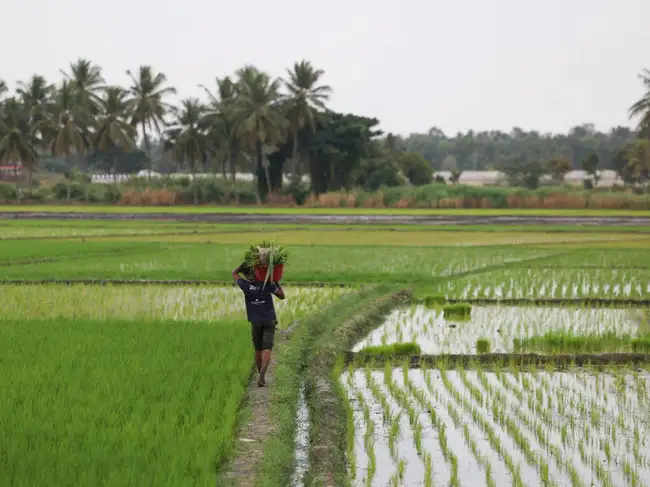
India’s transformation into one of the world’s leading rice producers has been a major achievement for its food and agricultural system. Higher production, improved crop varieties and government support have helped farmers increase output while strengthening the country’s position in international rice markets.
But the success is creating a difficult policy challenge. India is now producing more rice than its domestic market can comfortably absorb, leaving the government to manage large procurement volumes, maintain stocks and find buyers for the surplus. These responsibilities come with substantial public costs, particularly because the government supports farmers through minimum support prices, procurement operations and other subsidies.
The debate is no longer simply about how to grow more rice. It is increasingly about how much rice India needs, how to manage the surplus and who should bear the financial burden of supporting production.
How Government Support Helped India Become a Rice Powerhouse
India’s rise as a global rice powerhouse did not happen overnight. It is the result of decades of agricultural policies designed to increase food production, protect farmers from price fluctuations and ensure that the country could feed its growing population.
In the mid-1960s, India faced serious food shortages and depended heavily on imported grain. The government responded by strengthening agricultural production through improved seeds, irrigation, fertiliser availability, minimum support prices and large-scale procurement.
The Minimum Support Price (MSP) system became a central part of this strategy. Under the system, the government announces a guaranteed price for paddy and purchases eligible produce through the Food Corporation of India and state procurement agencies. This gives farmers an assured market and reduces the risk of selling their harvest at distress prices.
Over time, these policies encouraged farmers to increase rice cultivation, particularly in states where government procurement was widely available. Public investment in agricultural research, improved farming practices and crop varieties further strengthened production.
The result has been a dramatic expansion in output. India’s Rice Production reached an estimated record of 154 million tonnes in 2025-26, representing an increase of approximately 50% over a decade.
Government support has therefore helped India move from a country once concerned about food shortages to one of the world’s most important rice producers and exporters. However, the policies that encouraged higher production are now contributing to a different challenge: managing a surplus that continues to grow faster than domestic demand.
New Rice Varieties Opened Up More Areas for Cultivation
Government subsidies and procurement guarantees explain only part of India’s production growth. Agricultural research and improvements in rice varieties have also played an important role.
One important development has been the introduction of flood-tolerant rice varieties, including Swarna-Sub1. These varieties can survive periods of flooding that would otherwise damage conventional crops, helping farmers in flood-prone regions protect their harvests.
This has been particularly important in eastern India, where seasonal flooding and unpredictable rainfall can make agricultural production difficult. Improved varieties have helped farmers cultivate rice more reliably in areas that previously faced greater production risks.
Researchers are also working on varieties that can tolerate both flooding and drought. Such developments could help farmers deal with increasingly unpredictable weather conditions while maintaining production.
Higher yields and more reliable harvests have contributed to the expansion of rice cultivation in states such as Bihar and Odisha. Bihar’s rice production increased by approximately 182% over 15 years to 8.75 million tonnes in 2025-26, while Odisha’s output rose around 50% to 10.2 million tonnes.
Scientists and government officials cited in recent reporting expect new varieties to add at least another 10 million tonnes to India’s rice output over the next five years. If those estimates materialise, the country could face even greater pressure to find markets for its surplus production.
India Now Produces More Rice Than It Consumes
The central problem is the growing gap between rice production and domestic consumption. India’s output has expanded considerably, but demand has not increased at the same pace.
Production reached approximately 154 million tonnes in 2025-26, while domestic consumption was estimated at around 107 million tonnes. This difference has created a substantial surplus that must be managed through exports, government distribution programmes, industrial use and public stockpiling.
India’s population continues to grow, but that does not automatically translate into a similar increase in rice consumption. Dietary diversification, changing food habits and the availability of alternative grains influence how much rice households purchase and consume.
As a result, continued increases in production do not necessarily mean that the domestic market will absorb the additional supply. If output keeps rising while consumption remains relatively stable, the government and farmers will have to depend more heavily on alternative markets.
The problem is particularly complicated because rice production is supported by public procurement. When government agencies purchase large quantities from farmers, they must also arrange storage, transportation and distribution. If the grain is not released or sold quickly enough, stocks accumulate and create additional financial pressure.
India’s Rice Exports Have Doubled in a Decade
International markets have provided an important outlet for India’s growing rice surplus. The country has strengthened its position as a major global supplier, benefiting from competitive production costs, large harvests and established export networks.
India exported approximately 22.3 million tonnes of rice in 2025, around twice the volume recorded a decade earlier. Its share of global rice trade reached approximately 40%, making the country a major influence on international supply and prices.
These exports generate foreign exchange and provide an outlet for rice that cannot be absorbed by domestic consumers. They also support farmers, traders, rice millers, transport companies and businesses involved in agricultural exports.
However, the growing export surplus has raised questions about the financial logic of India’s support system. The government purchases rice from farmers at supported prices and spends public money on procurement, storage and distribution. When surplus grain is eventually exported, critics argue that taxpayers are indirectly helping supply international consumers.
Ashok Gulati, an agricultural economist and former government adviser on crop prices, has criticised this arrangement, arguing that public support can effectively subsidise foreign consumers when surplus rice is sold into international markets at competitive prices.
The concern is not simply that India exports large quantities of rice. Exports are an important part of agricultural trade. The issue is whether the cost of producing, purchasing and storing the surplus is justified when the country has other agricultural needs and competing demands on public finances.
‘Unfair Competition’: Why India’s Rice Surplus Is Creating International Tensions
India’s growing influence in the international rice market has also raised concerns among competing exporters. When a country with such a large production base releases substantial quantities of rice into global markets, it can affect prices and the competitiveness of other suppliers.
India’s procurement system provides farmers with a degree of price protection, while government support helps sustain production even when market conditions are weak. Critics argue that this creates an advantage over exporters whose farmers operate with less extensive price support.
The concern becomes more pronounced when government-supported surplus rice is sold abroad at prices that competing producers find difficult to match.
For importing countries, additional Indian supplies can improve availability and help moderate food prices. But for competing exporters, large volumes of relatively low-priced rice can put pressure on their farmers and export revenues.
This creates a difficult balance for Indian policymakers. Restricting exports could leave domestic stocks even higher and put pressure on storage facilities. Allowing exports to expand, meanwhile, can intensify competition in global markets and raise questions about the role of agricultural subsidies in international trade.
India’s export performance is therefore closely connected to its domestic procurement and subsidy policies. The more rice the government purchases, the greater the importance of finding ways to distribute or sell that grain.
‘We Grow More Rice Than We Can Eat’: The Storage Crisis
India’s growing rice surplus is putting increasing pressure on the country’s food storage infrastructure. Government agencies must store procured grain safely until it can be distributed through welfare programmes, sold to private buyers or exported.
But storage capacity has not expanded at the same pace as procurement. Large quantities of rice are accumulating in government warehouses, creating logistical difficulties for agencies and private millers waiting for previously purchased grain to be collected.
Government rice stocks reportedly reached a record 55.47 million tonnes on October 1, more than four times the prescribed buffer requirement for that date.
Buffer stocks are essential for national Food Security. They allow the government to maintain supplies for welfare programmes, respond to emergencies and intervene when market conditions threaten food availability or price stability.
However, holding stocks far above required levels for extended periods creates additional costs. Grain must be stored, inspected, transported and protected from deterioration. Warehouses occupied by old stocks also have less space available for new harvests.
The problem has become particularly visible in rice-producing states such as Odisha. Private millers have reported delays in the collection of rice already purchased by government agencies, leaving them with limited room to process and store new supplies.
The government has responded by considering additional storage capacity. Plans include adding approximately 13.1 million tonnes of storage infrastructure to address the mismatch between procurement and the movement of grain out of government warehouses.
But building more warehouses addresses only part of the problem. Unless procurement, consumption and distribution become better balanced, additional storage could simply allow the government to accumulate even larger quantities of surplus rice.
Why Rice Subsidies Are Becoming a Fiscal Burden
The financial implications of India’s rice surplus are becoming increasingly difficult to ignore. The government spends substantial amounts supporting farmers, purchasing grain and supplying food to eligible households through welfare programmes.
Rice subsidies account for more than two-thirds of India’s federal food subsidy bill, which has more than doubled over a decade to approximately ₹2.28 trillion in 2025-26.
This expenditure reflects the cost of maintaining a system that was originally designed to address food shortages and protect vulnerable consumers. The government purchases grain at supported prices and distributes it through public food security programmes, often at prices significantly below procurement and handling costs.
That system remains important for millions of households that depend on subsidised foodgrains. But when procurement continues to exceed the quantities needed for distribution and buffer requirements, the government must find additional ways to manage the excess.
The financial pressure also extends beyond the food subsidy budget. Rice cultivation requires significant quantities of fertilisers, and the government subsidises fertiliser to make agricultural inputs more affordable for farmers.
As production expands, the associated demand for fertilisers can add to the public expenditure required to support agriculture. The fertiliser subsidy bill is expected to exceed ₹3 trillion in 2026-27, according to estimates cited by the fertiliser ministry.
This creates a wider policy question: should public money continue supporting ever-higher rice production when the country already has more than enough grain for domestic requirements?
State Bonuses Put the Centre and States on a Collision Course
One of the biggest obstacles to changing India’s rice production pattern is the growing disagreement between the central government and several state administrations over agricultural bonuses.
The Centre announces the Minimum Support Price for paddy, but state governments can offer additional payments to farmers. These bonuses increase the effective price received by cultivators and make rice production more attractive.
For farmers, additional payments can provide income support and reduce the uncertainty associated with agricultural markets. For state governments, they are also a way to demonstrate support for farming communities.
However, the Centre is concerned that these additional incentives encourage production beyond what the country needs. When multiple states offer higher payments for rice, farmers have fewer financial reasons to shift towards crops that are in shorter supply.
The central government’s finance and food departments have reportedly raised concerns about state-level bonuses and urged administrations to align their agricultural incentives with national priorities.
Officials have argued that public support should encourage a more balanced crop mix, particularly by increasing the production of pulses and oilseeds, which India continues to import in large quantities.
But persuading states to reduce bonuses is politically difficult. Farmers have strongly opposed changes to agricultural support systems in the past, particularly when they fear that guaranteed prices or procurement arrangements could be weakened.
State governments also face political pressure to maintain benefits that are popular among farming communities. Cutting bonuses could create dissatisfaction among farmers, making administrations reluctant to change their policies.
The result is a policy conflict in which the Centre wants to control surplus production and public expenditure, while states have incentives to continue supporting rice cultivation.
Why India Imports Pulses and Oilseeds Despite Exporting So Much Rice
Perhaps the most important consequence of India’s rice surplus is the pressure it places on the country’s broader agricultural priorities.
Land, water, labour and fertilisers are limited resources. When farmers receive stronger financial incentives to grow rice, they may choose it over alternative crops even when those alternatives are more important for domestic consumption.
India remains dependent on imports of several agricultural commodities, particularly edible oils and pulses. This creates an unusual situation in which the country exports large quantities of rice while spending billions of dollars importing other food products.
India’s imports of oilseeds and pulses cost approximately $22.7 billion in 2025, an increase of around 120% over a decade. During the same year, rice exports generated approximately $12 billion.
These figures highlight the imbalance in the country’s agricultural production and trade. India has developed enormous capacity to produce rice, but it continues to rely on international markets for commodities that could potentially be cultivated more extensively at home.
Increasing domestic production of pulses and oilseeds could help reduce import dependence, improve agricultural diversification and make better use of resources in suitable farming regions.
However, shifting farmers away from rice is not straightforward. They need reliable buyers, competitive prices, access to seeds and protection against crop losses. Without these conditions, asking farmers to switch crops could expose them to greater financial uncertainty.
Water Consumption Adds an Environmental Dimension
The rice surplus is not only a financial and trade issue. It also raises concerns about the environmental sustainability of India’s agricultural model.
Rice cultivation, particularly in regions where farmers rely on intensive irrigation, can place considerable pressure on groundwater resources. Continuous cultivation of water-intensive crops can contribute to falling groundwater levels, especially in areas where water extraction exceeds natural replenishment.
Punjab is one of the states where the concentration of rice and wheat cultivation has long been associated with concerns about groundwater depletion. The economics of assured procurement can encourage farmers to continue growing these crops even when local environmental conditions suggest the need for diversification.
Fertiliser use adds another layer to the problem. Rice production requires substantial agricultural inputs, and excessive or inefficient application can increase environmental pressure while raising the government’s subsidy expenditure.
Moving towards a more balanced crop system could therefore deliver several benefits. Greater cultivation of pulses, oilseeds and suitable less water-intensive crops could help reduce import dependence while easing pressure on groundwater in regions where rice cultivation is environmentally difficult to sustain.
However, crop diversification must account for differences in rainfall, soil conditions, irrigation access and local markets. A policy that works in one state may not be suitable for another.
Can India Reduce Rice Production Without Hurting Farmers?
Reducing the rice surplus will require more than asking farmers to plant fewer paddy fields. The government will need to make alternative crops financially attractive and create dependable markets for them.
One possible approach is to expand procurement and price support for pulses and oilseeds. If farmers can receive reliable prices and access government purchasing arrangements for these crops, they may become more willing to diversify their production.
Another priority is improving processing, storage and market infrastructure for alternative agricultural commodities. Farmers are less likely to change crops if they cannot find buyers or face significant price uncertainty after harvesting.
Water-saving farming methods could also help reduce the environmental cost of rice cultivation. Direct-seeded rice, improved irrigation management and suitable crop varieties can reduce water requirements in some farming conditions, although results depend on local soil, climate and farming practices.
The government could also review procurement levels and state bonus arrangements to ensure that public incentives do not encourage production far beyond domestic requirements and export opportunities.
At the same time, any change must protect farmers who have built their livelihoods around rice cultivation. Abrupt reductions in support could affect household incomes and create serious resistance, particularly in regions where alternative agricultural markets remain underdeveloped.
What Lies Ahead for India’s Rice Industry?
India’s rice production is expected to remain substantial as agricultural research continues to develop higher-yielding and climate-resilient varieties. Domestic consumption, however, is not expected to rise at the same pace as production.
Estimates cited in recent reporting suggest that India’s rice output could reach approximately 171 million tonnes by 2036, while domestic demand may increase only to around 110 million tonnes. If these projections materialise, the gap between production and consumption could become even wider.
Exports will remain an important outlet for surplus grain, but relying on overseas buyers alone may not solve the financial and environmental problems associated with excessive production.
The government will have to balance several competing objectives: protecting farmers’ incomes, maintaining food security, controlling subsidy expenditure, managing public stocks and reducing dependence on imported pulses and edible oils.
India’s transformation into a rice powerhouse demonstrates what sustained agricultural investment, scientific research and public procurement can achieve. But the next stage of agricultural policy will require a different focus.
The challenge is no longer simply to produce more rice. It is to produce the right mix of crops, in the right regions, while ensuring that farmers earn reliable incomes and public resources are used efficiently. Without that shift, India’s success in rice production could continue generating a surplus that becomes increasingly expensive to manage.
For breaking news and live news updates, like us on Facebook or follow us on Twitter and Instagram. Read more on Latest India on thefoxdaily.com.






COMMENTS 0