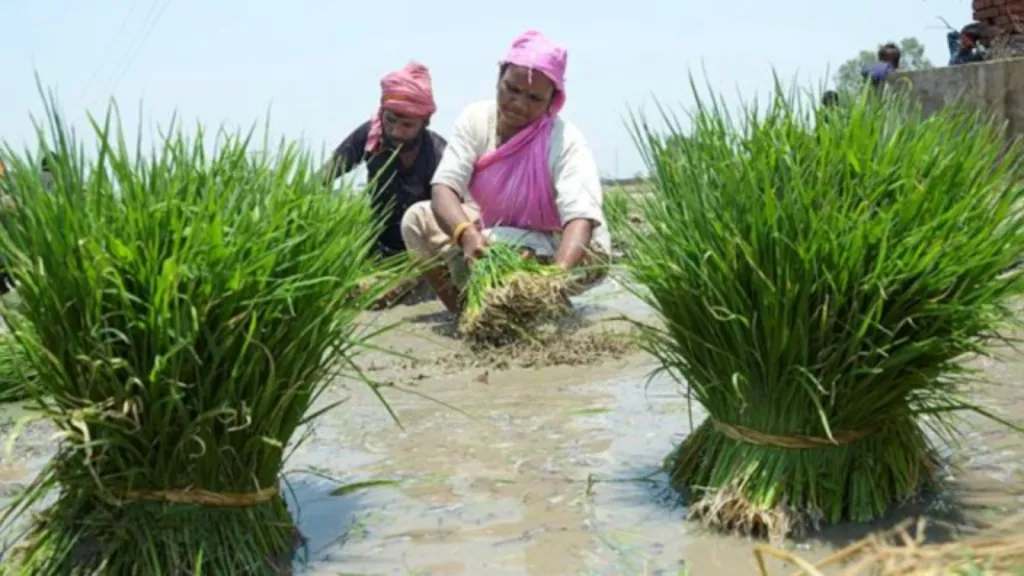
India has achieved its target of creating 11 crore Farmer IDs, reaching the milestone five months ahead of the scheduled deadline of March 31, 2027, the Union Ministry of Agriculture and Farmers’ Welfare announced on Saturday. The initiative is a major step towards building digital infrastructure for the agricultural sector and simplifying farmers’ access to Government Schemes and services.
The Farmer ID system provides farmers with a unique digital identity linked dynamically to state land records. It brings together information such as demographic details, land ownership and crops sown, creating a digital record intended to make agricultural services easier to access.
Agriculture Minister Shivraj Singh Chouhan said the system would significantly reduce the need for farmers to repeatedly visit government offices and banks or submit the same documents when applying for different schemes.
The database built through the initiative, known as the Farmers’ Registry, forms part of Agri-Stack, one of the core components of the Union Government’s Digital Agriculture Mission. The milestone marks progress in the government’s effort to develop digital public infrastructure for farming, although the next phase will also need to address the inclusion of cultivators who do not own the land they farm.
What Is a Farmer ID and How Does It Work?
The Farmer ID is an Aadhaar-like unique digital identity designed to help identify farmers and connect relevant agricultural information through a digital system. According to the ministry, the identity is dynamically linked to state land records and includes details such as a farmer’s demographic information, ownership details and crops sown.
The system is intended to make it easier for farmers to access government services without repeatedly providing the same information to different departments or institutions. By connecting records digitally, the initiative could reduce administrative steps involved in applying for eligible agricultural schemes.
Agriculture Minister Shivraj Singh Chouhan highlighted this potential benefit while discussing the achievement of the 11 crore registration target. Farmers frequently interact with different public agencies and financial institutions for agricultural assistance and other services. A common digital identity could help reduce repeated visits and paperwork where participating systems are integrated.
However, the extent of these benefits will depend on how effectively the Farmer ID is connected to the relevant schemes, departments and banking processes. The ministry’s announcement establishes the number of IDs created, but the supplied information does not quantify reductions in paperwork, travel or processing times following registration.
Farmers’ Registry Forms Part of the Digital Agriculture Mission
The database created through Farmer IDs is known as the Farmers’ Registry. It is one of three core registries under Agri-Stack, which forms part of the Union Government’s Digital Agriculture Mission.
The Union Cabinet approved the Digital Agriculture Mission on September 2, 2024, as a digital public infrastructure initiative for the agricultural sector. The mission aims to establish digital systems that can support the management and delivery of agricultural services.
The three core registries under Agri-Stack are:
- Farmers’ Registry: A database built through Farmer IDs, linking farmer identities with relevant agricultural information.
- Geo-referenced Village Maps: Digital village maps linked to geographical information.
- Crop Sown Registry: A registry containing information about crops sown.
Together, these components are intended to create a digital foundation for agricultural planning and service delivery. The Farmers’ Registry provides information associated with farmers, while village maps and crop records contribute geographical and cultivation-related data.
The government’s achievement of 11 crore Farmer IDs represents a major numerical milestone within this framework. However, the wider effectiveness of Agri-Stack will depend on the accuracy, updating and practical use of the information held across its different registries.
Women Account for 26% of Registered Farmers
According to ministry sources, women account for 26% of the 11 crore farmers who have received Farmer IDs. This means that women represent more than one-quarter of the registered population reported by the ministry.
The figures provide an indication of women’s representation in the Farmers’ Registry. However, the supplied data does not include a comparison with women’s share of the agricultural workforce or the total number of women engaged in farming. It therefore does not establish whether their representation in the registry matches their participation in agricultural activities.
Registration figures can also differ from the number of people actively cultivating land, particularly where land ownership and cultivation are recorded separately. This distinction is relevant to the initiative’s next stage, which includes efforts to register eligible tenants, sharecroppers and other actual cultivators who may not appear as landowners in official records.
Ensuring that agricultural digital systems reflect the people actually involved in cultivation will be important to making their information useful for the delivery of schemes and services.
Small and Marginal Farmers Make Up Around 81% of Registrations
Ministry sources said approximately 81% of the 11 crore registered farmers belong to the marginal and small operational-holding categories.
This indicates that the majority of registered farmers fall within these two categories. The figure is particularly relevant because the Farmer ID initiative is intended to simplify access to agricultural services for a large and diverse farming population.
For small and marginal farmers, repeated visits to government offices and the need to submit similar documents for different schemes can create administrative burdens. A common digital identity may help reduce some of these difficulties when the relevant services recognise and use the registry.
At the same time, registration alone does not establish whether every farmer has benefited from simpler access to schemes or financial services. The supplied announcement does not provide data on scheme approvals, payments received or changes in application processing times for registered farmers.
The 81% figure describes the composition of the registered population according to operational-holding categories. It should not be interpreted as evidence that the same proportion of all farmers nationwide has received an ID, since the supplied information does not provide a comparable national denominator.
Most Registered Farmers Are Between 30 and 70 Years Old
The age-wise analysis shared by ministry sources shows that approximately 15% of registered farmers were aged 70 or older, while 7.5% were below 30 years of age.
The majority of registered farmers fall between the ages of 30 and 70, according to a source quoted in the report.
The figures show that the Farmers’ Registry includes farmers across different age groups, including older individuals and younger people entering or participating in agriculture. However, the supplied data does not provide further details about age distribution within the 30-to-70-year range or differences in registration rates between age groups.
As the initiative expands its use across agricultural services, accessibility will remain important for farmers with different levels of familiarity with digital systems. The announcement does not specify what support is available for people who need assistance registering or using services connected to their Farmer IDs.
Government Expands Registration to Tenants and Sharecroppers
One of the emerging priorities for the Farmer ID initiative is the inclusion of actual cultivators who may not be recorded as landowners. Ministry sources said 28,680 cultivators, including eligible tenants and sharecroppers, had already been registered in five states: Uttar Pradesh, Telangana, Andhra Pradesh, Chhattisgarh and Assam.
The registrations were completed under state-decided mechanisms for identifying cultivators such as tenants and sharecroppers.
This is an important distinction for agricultural records. Land ownership and cultivation are not always held by the same person. A tenant may cultivate land owned by someone else, while a sharecropper may farm under an arrangement in which the produce or its value is shared.
If a digital registry relies exclusively on land ownership records, some people who actually cultivate crops may not be fully represented. The registration of eligible tenants and sharecroppers is intended to help address this gap, although the supplied information does not explain the specific identification procedures used by each state.
The reported 28,680 registrations show that the inclusion effort has begun in the five named states. The figures do not establish how many eligible cultivators remain unregistered or what proportion of the target population has been covered.
More Than 3.14 Lakh Forest Rights Holder Registrations Recorded
Ministry sources also reported 3,14,298 Forest Rights holder registrations across Assam, Maharashtra, Andhra Pradesh, Telangana, Madhya Pradesh and Tripura.
The registrations represent another part of the effort to include people whose relationship with agricultural land may not be adequately reflected through conventional landownership records alone.
The figures indicate that Forest Rights holder registrations have been recorded in six states. However, the supplied information does not provide a state-wise breakdown, explain the detailed registration process or specify how these registrations are distributed among different categories of forest rights.
The inclusion of eligible cultivators and Forest Rights holders is relevant to the broader objective of building a registry that can serve agricultural communities with different land-use and tenure arrangements. These efforts will need to operate alongside the existing links between Farmer IDs and state land records.
How Farmer IDs Could Support AI-Based Agricultural Services
Ministry sources said the integration of Agri-Stack with artificial intelligence, satellite data and weather forecasts could support a range of agricultural services. These include more accurate crop production forecasts, improved food security planning, personalised agricultural advisories, better market intelligence and faster disaster response.
Digital agricultural records can provide a foundation for combining information from different sources. When farmer details, crop information and geographical data are used alongside satellite observations and weather forecasts, authorities may be better positioned to assess agricultural conditions and identify emerging risks.
Crop production forecasting: Information about crops sown, combined with satellite observations and weather data, could help improve estimates of expected production. Such estimates may support planning by agricultural departments and other institutions.
Food security planning: Better crop information and production forecasts could help authorities assess potential supply conditions and prepare for possible shortfalls or disruptions.
Personalised agricultural advisories: The integration of relevant agricultural information with weather forecasts and other data could help support advice tailored to particular crops or growing conditions.
Market intelligence: Better information about cultivation and expected production could contribute to assessments of agricultural supply and market conditions.
Disaster response: Combining geographical information, crop records and weather data could help authorities identify affected areas and organise responses to agricultural risks more quickly.
These are potential applications identified by ministry sources, not outcomes that the supplied announcement confirms have already been achieved at scale. Their effectiveness will depend on the quality and timeliness of the underlying data, the way different systems are integrated and how the resulting information is used.
What the 11 Crore Milestone Means for Digital Agriculture
Reaching 11 crore Farmer IDs five months before the March 31, 2027 deadline marks progress in the government’s effort to establish a digital identity system for farmers. The registry is designed to connect relevant information and make it easier for eligible farmers to access government schemes and services.
The reported registration figures also offer a snapshot of the population included so far: 26% are women, approximately 81% belong to marginal and small operational-holding categories, around 15% are aged 70 or older, and 7.5% are below 30 years of age.
At the same time, the reported registrations of 28,680 cultivators and 3,14,298 Forest Rights holders highlight the work required to include people whose cultivation or land rights may not be captured through conventional ownership records.
The next stage of the initiative will involve more than increasing the number of digital identities. The usefulness of the Farmers’ Registry will also depend on whether information remains accurate, whether actual cultivators can be identified through appropriate state mechanisms and whether government services effectively use the digital records.
The integration of Agri-Stack with AI, satellite data and weather forecasts could eventually support agricultural planning, advisories and disaster response. For now, the ministry’s announcement confirms that the 11 crore registration target has been achieved ahead of schedule, while the wider benefits will depend on how the digital infrastructure is implemented and used.
For breaking news and live news updates, like us on Facebook or follow us on Twitter and Instagram. Read more on Latest India on thefoxdaily.com.






COMMENTS 0