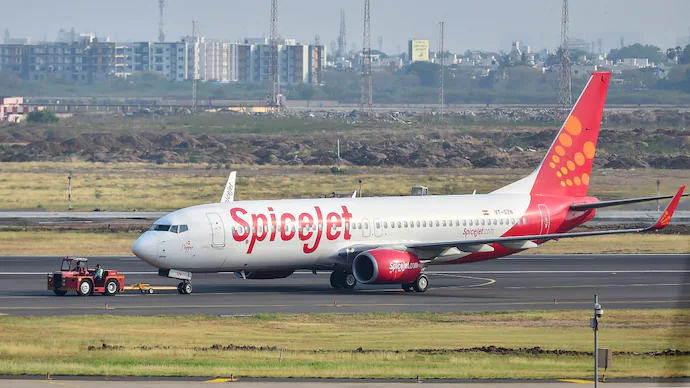
SpiceJet‘s financial difficulties have raised concerns about more than the airline’s commercial survival, with the Airline Pilots’ Association of India (ALPA India) warning that prolonged financial instability could affect Flight Safety, employee welfare and regulatory oversight.
ALPA India president Sam Thomas has urged the Ministry of Civil Aviation and the Directorate General of Civil Aviation (DGCA) to examine the potential safety implications of financial distress at SpiceJet and other similarly affected airlines. He cited persistent salary delays, possible disruptions in aircraft maintenance and increasing pressure on frontline employees as areas requiring urgent attention.
Speaking to India Today TV, Thomas said an airline’s financial problems could have consequences for its operational safety. He argued that pilots and cabin crew should not be expected to perform safety-critical duties while facing uncertainty over their salaries and financial commitments.
The concerns come as SpiceJet attempts to strengthen its financial position through a proposed Rs 5,500 crore fundraising plan. The airline’s board has also approved an increase in its authorised share capital, as the company looks to address operational challenges and support its future requirements.
ALPA India Warns Financial Instability Could Affect Flight Safety
According to Thomas, financial instability in an airline should not be treated solely as a commercial issue. He said prolonged financial difficulties could create conditions that affect the working environment of aviation professionals and potentially have wider operational consequences.
One of the main concerns raised by ALPA India relates to delays in salary payments. Pilots and cabin crew are responsible for safety-critical duties that require alertness, concentration and sound decision-making. Thomas argued that prolonged salary delays can create financial insecurity and psychological stress among these employees.
He warned that employees struggling to meet basic financial commitments because of unpaid salaries may face additional pressure while carrying out their professional responsibilities.
“Financial instability in an airline is not merely a commercial issue. Its consequences can directly affect operational safety,” Thomas said.
He added that aviation professionals should not be expected to discharge safety-critical responsibilities while dealing with uncertainty caused by an employer’s failure to pay salaries.
ALPA India’s position is that employee welfare and operational safety are closely connected. The association believes that financial difficulties affecting frontline staff deserve attention from both airline management and aviation authorities.
Concerns Over Aircraft Maintenance and Spare Parts
Another major concern raised by the pilots’ body involves the possible impact of financial constraints on aircraft maintenance and the availability of essential spare parts.
Thomas said difficulties in making timely payments to maintenance organisations, spare-part suppliers and other service providers could create operational challenges. Such difficulties may contribute to aircraft groundings, flight disruptions and additional pressure on engineering personnel.
Aircraft maintenance depends on the timely availability of technical services, equipment and replacement components. Financial constraints that affect payments to suppliers or maintenance providers could therefore create complications for an airline’s operations.
However, ALPA India’s warning concerns the potential consequences of financial distress. It does not establish that SpiceJet has compromised aircraft maintenance or airworthiness standards.
Thomas stressed that an airline’s financial condition should never influence the standards required to keep aircraft safe for operation.
“Aircraft maintenance and airworthiness standards must remain uncompromised, irrespective of an airline’s financial condition,” he said.
The association has called for closer regulatory attention to the availability of aircraft maintenance resources and the potential operational consequences of financial difficulties.
Frontline Employees Face Pressure During Operational Disruptions
ALPA India has also highlighted the working conditions of pilots, cabin crew and ground staff who deal directly with passengers during flight delays, cancellations and other operational disruptions.
Thomas said frontline employees often have little control over management decisions but are left to handle passenger frustration when services are disrupted. At the same time, they may be dealing with uncertainty over unpaid salaries and their own working conditions.
This combination can create additional pressure for employees who are expected to maintain professional standards while managing difficult situations.
The association’s concerns extend beyond salary payments to the broader treatment of aviation professionals during periods of financial instability. It argues that employee welfare should remain an important consideration when assessing the operational health of an airline.
ALPA India Questions DGCA’s Approach to Employment Regulations
A key issue raised by ALPA India concerns what it describes as an imbalance in the DGCA’s enforcement of employment-related aviation regulations.
Thomas questioned why the regulator strictly enforces Civil Aviation Requirements (CAR) concerning notice periods and no-objection certificates (NOCs) when pilots seek to leave an airline, while salary-related disputes are reportedly treated as contractual matters outside its intervention.
According to Thomas, pilots are expected to comply with notice-period requirements and obtain the necessary NOCs when changing employers. However, when airlines delay or fail to pay salaries, employees are reportedly informed that the matter falls outside the regulator’s responsibility.
“How can the regulator enforce an employee’s contractual obligations while remaining indifferent to an employer’s failure to honour the same contract?” Thomas asked.
He argued that if notice periods are considered important for flight safety, persistent salary non-payment should also be examined for its potential safety implications.
ALPA India believes regulatory provisions should not become instruments that compel pilots to continue working for employers that have failed to meet their financial obligations.
The association has called for an expedited release and NOC mechanism in cases where employers have demonstrably defaulted on contractual obligations.
What ALPA India Wants the Aviation Regulator to Do
ALPA India has called for stronger regulatory oversight in areas that could be affected by an airline’s financial condition. Its requests include:
- Closer monitoring of aircraft maintenance: The association wants authorities to examine whether airlines have adequate maintenance resources and access to essential spare parts.
- Timely payment of crew salaries: It has called for attention to salary delays affecting pilots and other frontline aviation employees.
- Faster NOC and release procedures: The association wants an expedited mechanism for pilots whose employers have demonstrably failed to meet contractual obligations.
- Greater attention to operational safety: It has urged the regulator to consider the possible safety implications of prolonged financial instability.
Thomas said flight safety should not be enforced selectively. He argued that airlines must meet their obligations towards employees while expecting workers to comply with applicable professional and regulatory requirements.
He added that commercial survival should never take precedence over flight safety, employee dignity or regulatory fairness.
SpiceJet Board Approves Rs 5,500 Crore Fundraising Plan
The concerns raised by ALPA India come as SpiceJet faces financial and operational challenges and seeks to strengthen its balance sheet. The airline’s board on Wednesday approved a proposal to raise up to Rs 5,500 crore through a combination of equity and other permitted instruments.
The proposed fundraising remains subject to the necessary approvals. The board also approved a proposal to increase the airline’s authorised share capital from Rs 2,000 crore to Rs 7,500 crore, subject to shareholder and regulatory approvals.
During the board meeting, management informed directors about investment discussions with potential new investors. The board directed the management to work towards completing the proposed fundraising process as quickly as possible.
The planned capital raise is intended to provide the airline with additional financial resources to address its challenges and support its operational requirements.
Why SpiceJet Says It Needs Additional Capital
SpiceJet has described its operating environment as exceptionally challenging. The airline cited geopolitical disturbances and airspace restrictions as factors putting pressure on its operations.
It also pointed to a sharp increase in aviation turbine fuel (ATF) prices, which it said had more than doubled over the past few months. Higher fuel prices can increase an airline’s operating expenses, adding pressure to an already difficult financial situation.
According to SpiceJet, the proposed Rs 5,500 crore fundraising would provide additional financial headroom to manage these challenges. The airline plans to use the resources to strengthen its balance sheet, support fleet expansion and meet operational requirements.
The proposed increase in authorised share capital would also provide the company with a larger capital base, subject to the required approvals. However, the board’s decision to pursue fundraising does not mean that the entire amount has already been raised.
Financial Recovery and Flight Safety Remain Key Issues
The developments highlight two connected challenges facing SpiceJet: improving its financial position and addressing concerns raised about the possible operational consequences of prolonged financial instability.
The proposed fundraising could provide additional resources if completed successfully. However, the airline’s ability to translate new capital into improved financial and operational conditions will be important for its recovery.
At the same time, ALPA India’s concerns place employee welfare, aircraft maintenance and regulatory oversight at the centre of the discussion. The association has called for authorities to examine whether financial difficulties could affect the conditions required for safe airline operations.
It is important to distinguish between the pilots’ body’s warnings and established safety violations. The concerns raised by Thomas identify potential risks associated with financial distress; they do not, by themselves, demonstrate that SpiceJet has breached aircraft safety or maintenance requirements.
The next developments will depend on the progress of the proposed fundraising, the airline’s ability to meet its financial obligations and the response of aviation authorities to the concerns raised by ALPA India. For the airline, financial recovery and maintaining operational safety will remain critical priorities.
For breaking news and live news updates, like us on Facebook or follow us on Twitter and Instagram. Read more on Latest Business on thefoxdaily.com.






COMMENTS 0